Streak and Plume from SpaceX Crew2 Launch


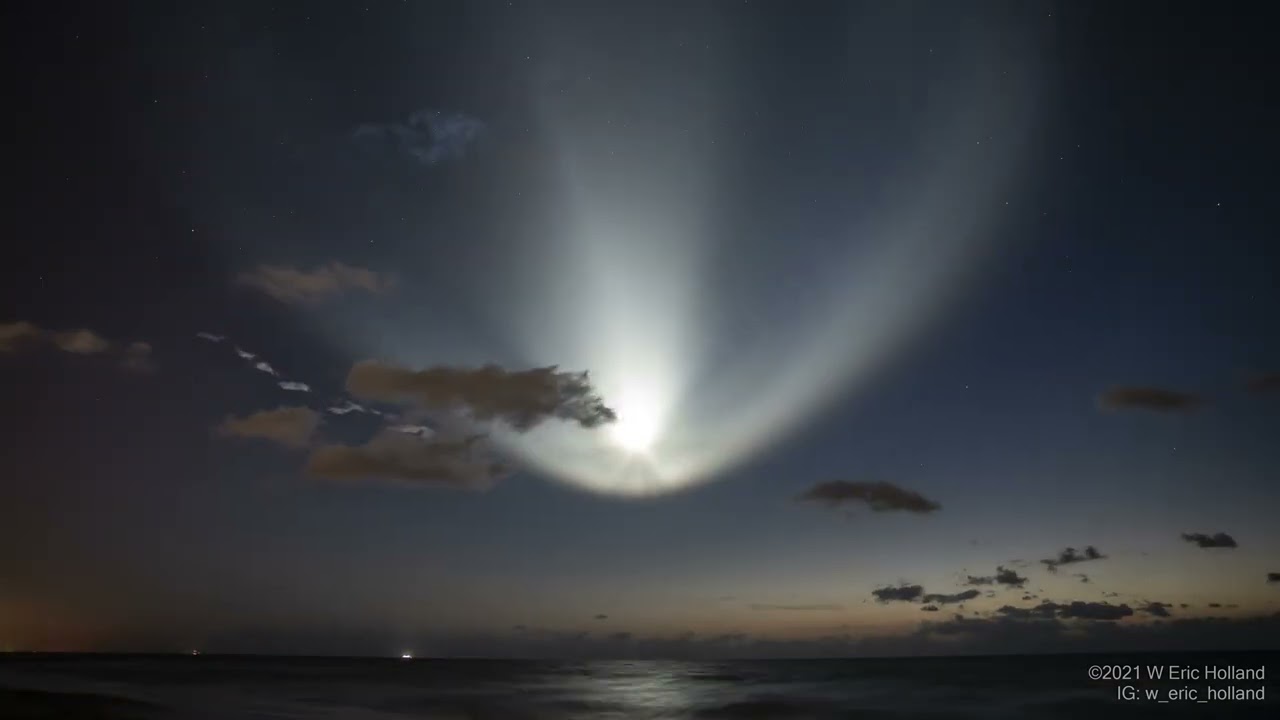
What’s happening in the sky? The pre-dawn sky first seemed relatively serene yesterday morning over Indian Harbor Beach in Florida, USA. But then it lit up with a rocket launch. Just to the north, NASA’s SpaceX Crew-2 Mission blasted into space aboard a powerful Falcon 9 rocket. The featured time-lapse videocompressing 12-minutes into 8-seconds — shows the bright launch plume starting on the far left. The rocket rises into an increasingly thin atmosphere, causing its plume to spread out just as it is lit by the rising Sun. As the Crew-2 capsule disappears over the horizon, the landing plume of the returning first stage of the Falcon 9 descending toward the SpaceX barge in the Atlantic Ocean can be seen. Up in space, the Endeavour crew capsule is expected to dock with the International Space Station (ISS) this morning, delivering four astronauts. The Crew-2 astronauts join Expedition 65 to help conduct, among other tasks, drug tests using tissue chips — small microfluidic chips that simulate human organs — that run rapidly in ISS’s microgravity.

from NASA https://ift.tt/2QslV7k
via IFTTT
Flying Over the Earth at Night II


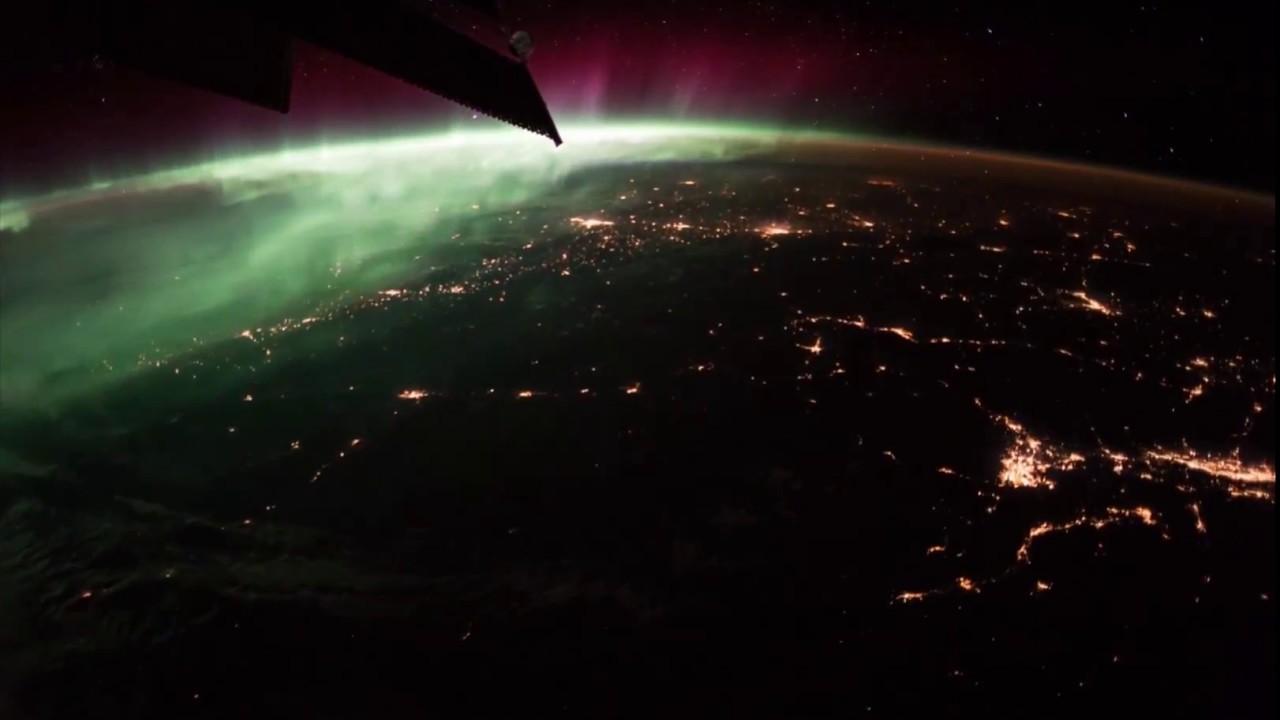
Recorded during 2017, timelapse sequences from the International Space Station are compiled in this serene video of planet Earth at Night. Fans of low Earth orbit can start by enjoying the view as green and red aurora borealis slather up the sky. The night scene tracks from northwest to southeast across North America, toward the Gulf of Mexico and the Florida coast. A second sequence follows European city lights, crosses the Mediterranean Sea, and passes over a bright Nile river in northern Africa. Seen from the orbital outpost, erratic flashes of lightning appear in thunder storms below and stars rise above the planet’s curved horizon through a faint atmospheric airglow. Of course, from home you can always check out the vital signs of Planet Earth Now.

from NASA https://ift.tt/3nf9ZBR
via IFTTT

Planet Earth at Twilight


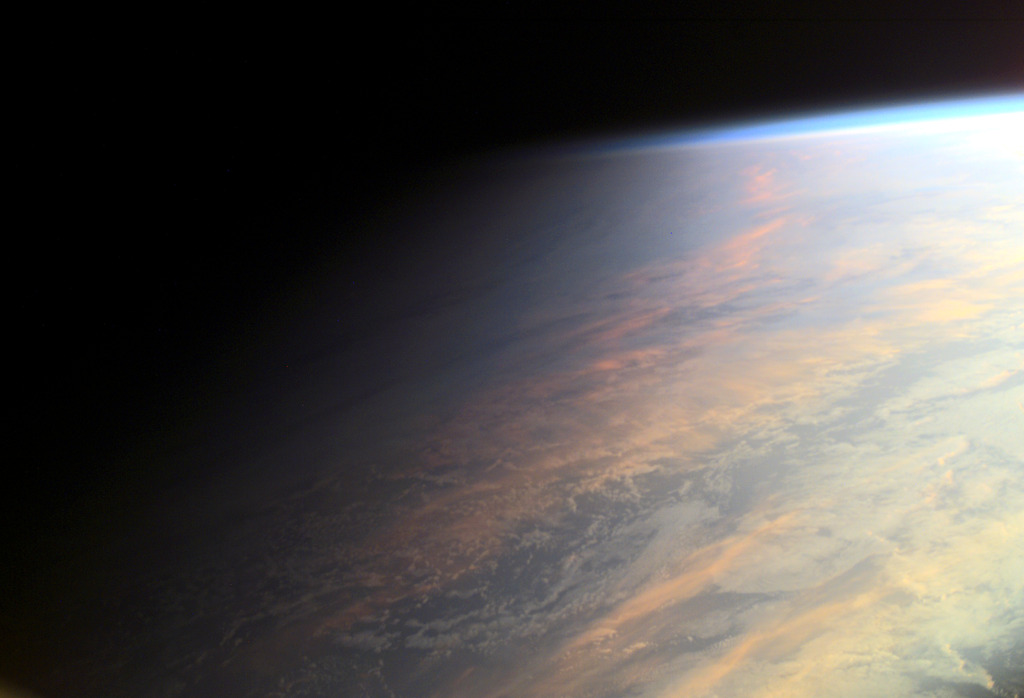
No sudden, sharp boundary marks the passage of day into night in this gorgeous view of ocean and clouds over our fair planet Earth. Instead, the shadow line or terminator is diffuse and shows the gradual transition to darkness we experience as twilight. With the Sun illuminating the scene from the right, the cloud tops reflect gently reddened sunlight filtered through the dusty troposphere, the lowest layer of the planet’s nurturing atmosphere. A clear high altitude layer, visible along the dayside’s upper edge, scatters blue sunlight and fades into the blackness of space. This picture was taken in June of 2001 from the International Space Station orbiting at an altitude of 211 nautical miles. But you can check out the vital signs of Planet Earth Now.

from NASA https://ift.tt/3awVOmt
via IFTTT

Centaurus As Warped Magnetic Fields


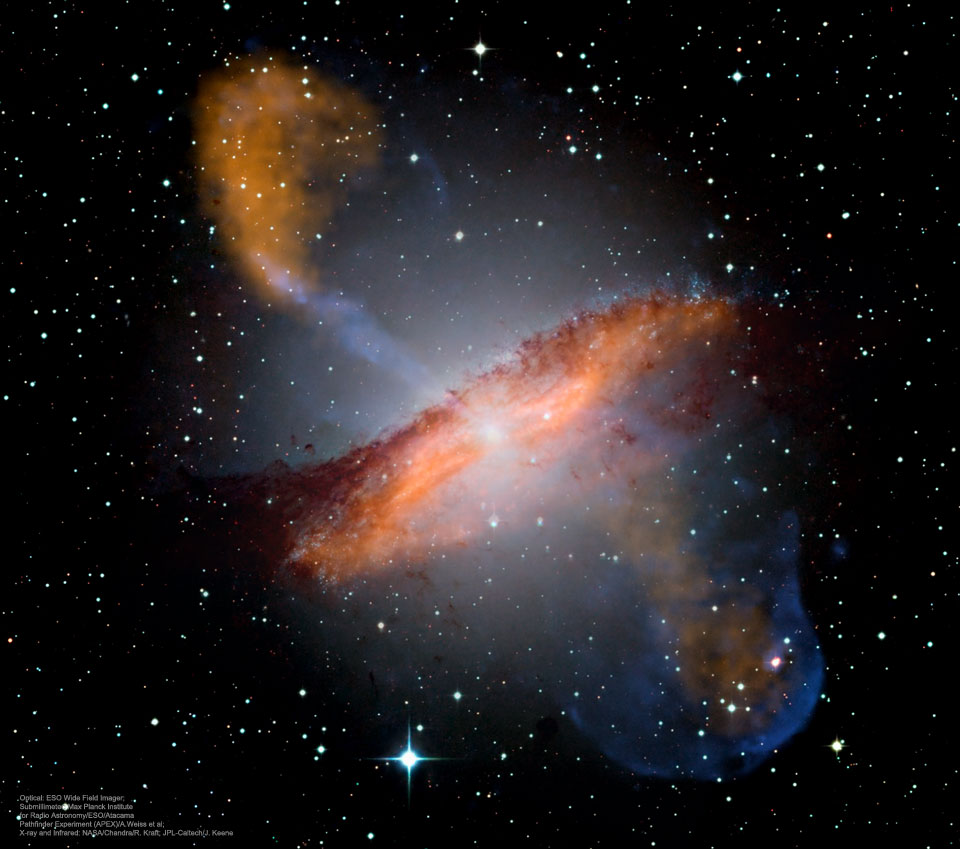
When galaxies collide — what happens to their magnetic fields? To help find out, NASA pointed SOFIA, its flying 747, at galactic neighbor Centaurus A to observe the emission of polarized dust — which traces magnetic fields. Cen A’s unusual shape results from the clash of two galaxies with jets powered by gas accreting onto a central supermassive black hole. In the resulting featured image, SOFIA-derived magnetic streamlines are superposed on ESO (visible: white), APEX (submillimeter: orange), Chandra (X-rays: blue), and Spitzer (infrared: red) images. The magnetic fields were found to be parallel to the dust lanes on the outskirts of the galaxy but distorted near the center. Gravitational forces near the black hole accelerate ions and enhance the magnetic field. In sum, the collision not only combined the galaxies�������� masses — but amplified their magnetic fields. These results provide new insights into how magnetic fields evolved in the early universe when mergers were more common.

from NASA https://ift.tt/3tEgws2
via IFTTT

Ingenuity: First Flight over Mars


What’s the best way to explore Mars? Perhaps there is no single best way, but a newly demonstrated method shows tremendous promise: flight. Powered flight has the promise to search vast regions and scout out particularly interesting areas for more detailed investigation. Yesterday, for the first time, powered flight was demonstrated on Mars by a small helicopter named Ingenuity. In the featured video, Ingenuity is first imaged by the Perseverance rover sitting quietly on the Martian surface. After a few seconds, Ingenuity‘s long rotors begin to spin, and a few seconds after that — history is made as Ingenuity actually takes off, hovers for a few seconds, and then lands safely. More tests of Ingenuity‘s unprecedented ability are planned over the next few months. Flight may help humanity better explore not only Mars, but Saturn‘s moon Titan over the next few decades.

from NASA https://ift.tt/3tDOFIA
via IFTTT

The Galactic Center in Infrared


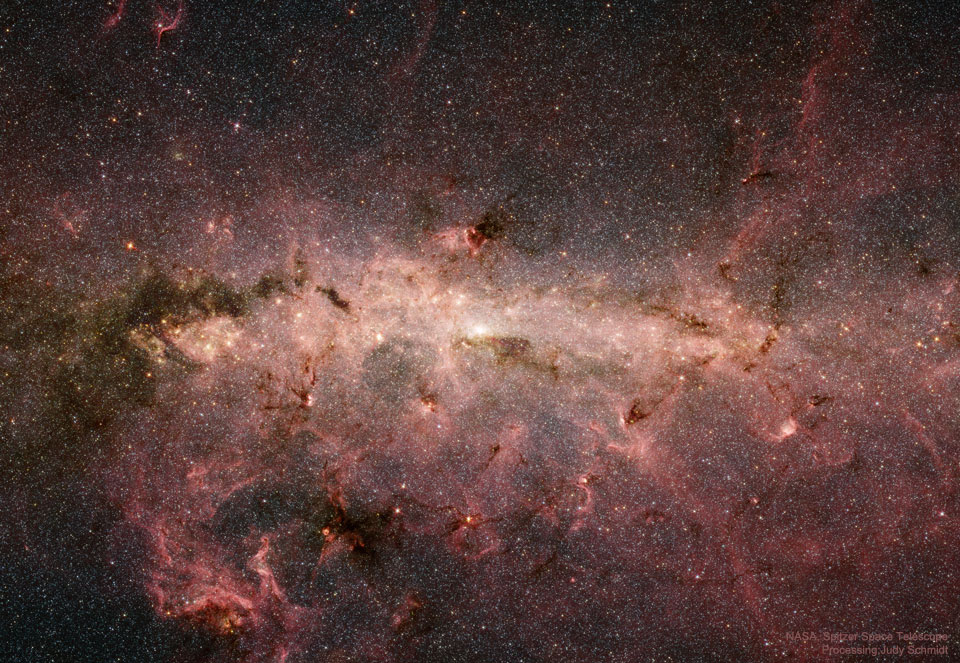
What does the center of our galaxy look like? In visible light, the Milky Way’s center is hidden by clouds of obscuring dust and gas. But in this stunning vista, the Spitzer Space Telescope‘s infrared cameras, penetrate much of the dust revealing the stars of the crowded galactic center region. A mosaic of many smaller snapshots, the detailed, false-color image shows older, cool stars in bluish hues. Red and brown glowing dust clouds are associated with young, hot stars in stellar nurseries. The very center of the Milky Way has recently been found capable of forming newborn stars. The galactic center lies some 26,700 light-years away, toward the constellation Sagittarius. At that distance, this picture spans about 900 light-years.

from NASA https://ift.tt/3tvblL5
via IFTTT

Rainbow Airglow over the Azores


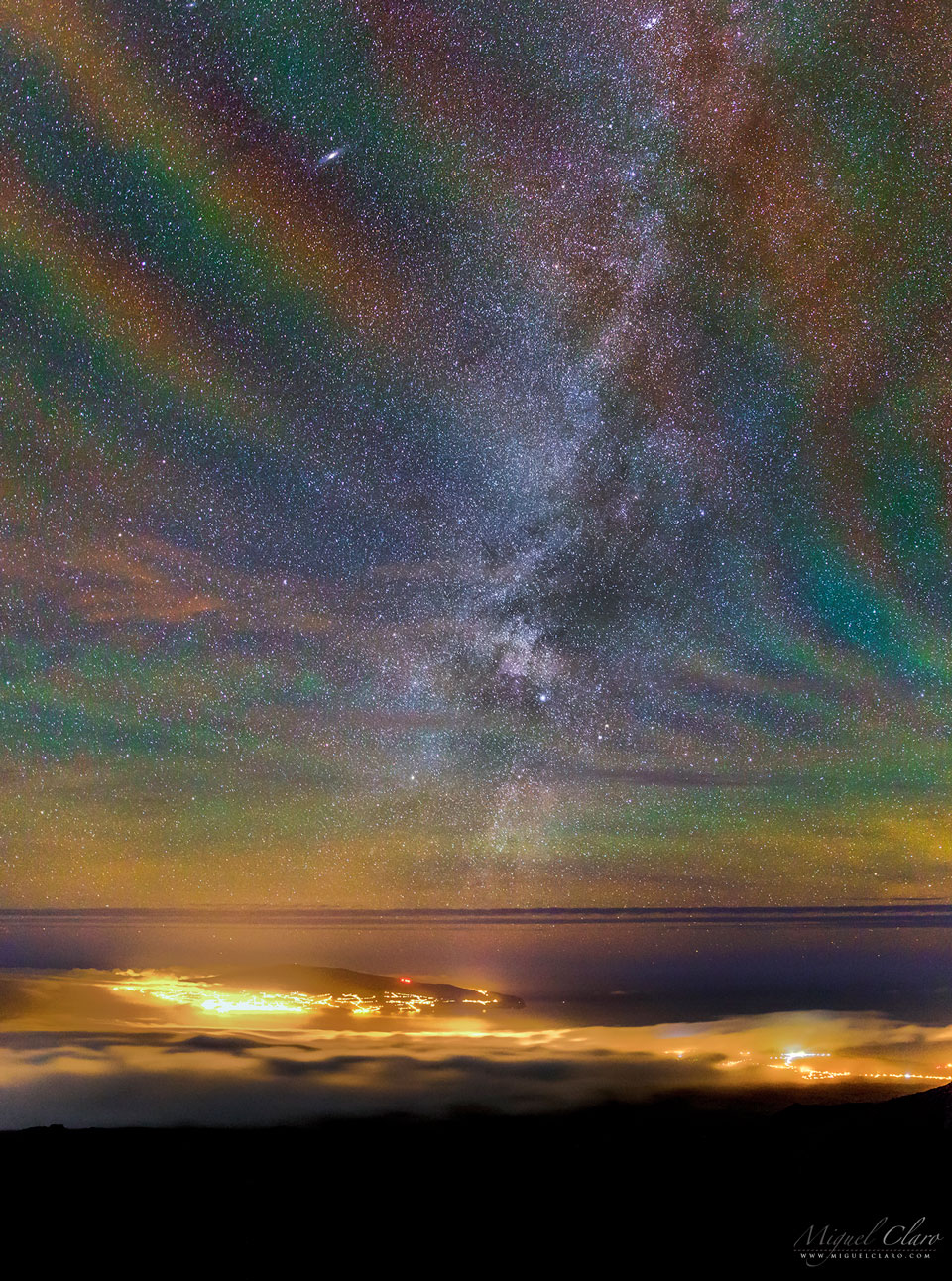
Why would the sky glow like a giant repeating rainbow? Airglow. Now air glows all of the time, but it is usually hard to see. A disturbance however — like an approaching storm — may cause noticeable rippling in the Earth’s atmosphere. These gravity waves are oscillations in air analogous to those created when a rock is thrown in calm water. The long-duration exposure nearly along the vertical walls of airglow likely made the undulating structure particularly visible. OK, but where do the colors originate? The deep red glow likely originates from OH molecules about 87-kilometers high, excited by ultraviolet light from the Sun. The orange and green airglow is likely caused by sodium and oxygen atoms slightly higher up. The featured image was captured during a climb up Mount Pico in the Azores of Portugal. Ground lights originate from the island of Faial in the Atlantic Ocean. A spectacular sky is visible through this banded airglow, with the central band of our Milky Way Galaxy running up the image center, and M31, the Andromeda Galaxy, visible near the top left.

from NASA https://ift.tt/3ttPaF4
via IFTTT

Inside the Flame Nebula


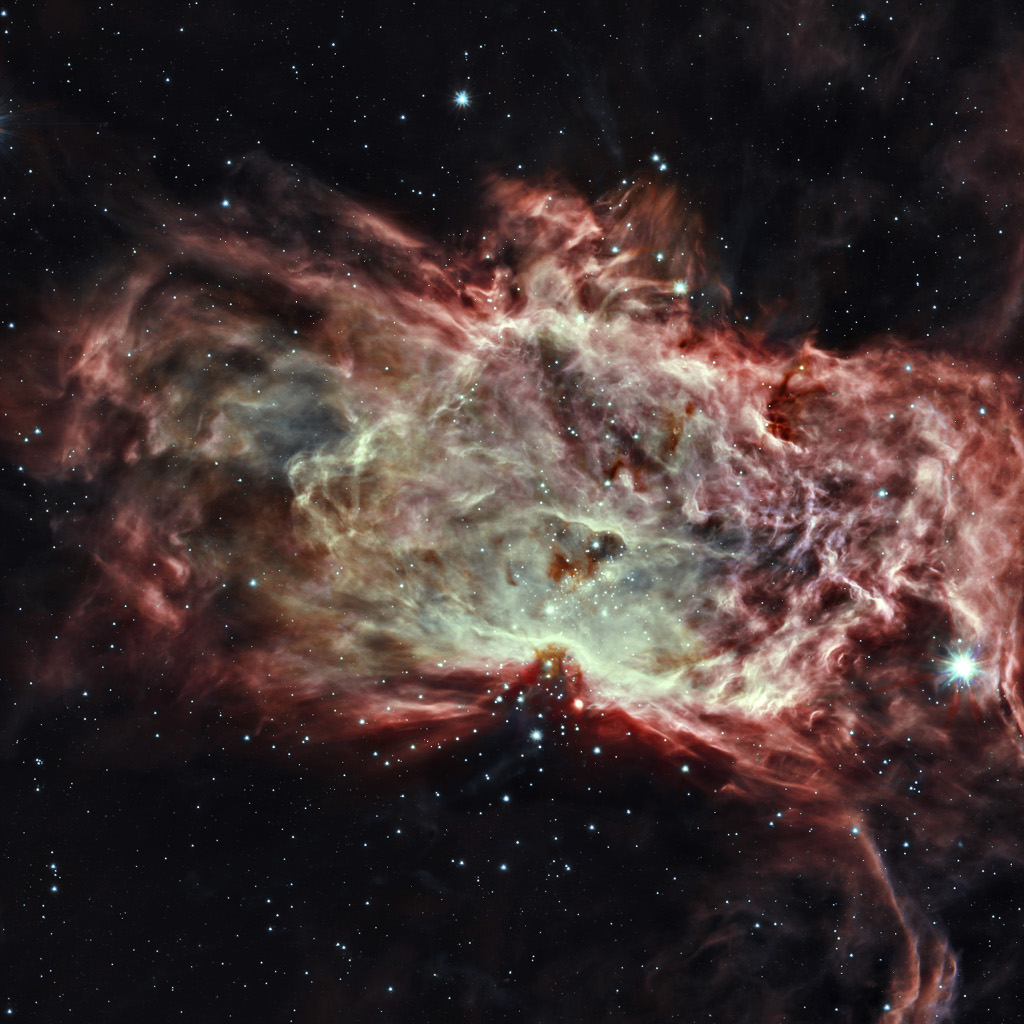
The Flame Nebula is a stand out in optical images of the dusty, crowded star forming regions toward Orion’s belt and the easternmost belt star Alnitak, a mere 1,400 light-years away. Alnitak is the bright star at the right edge of this infrared image from the Spitzer Space Telescope. About 15 light-years across, the infrared view takes you inside the nebula’s glowing gas and obscuring dust clouds though. It reveals many stars of the recently formed, embedded cluster NGC 2024 concentrated near the center. The stars of NGC 2024 range in age from 200,000 years to 1.5 million years young. In fact, data indicate that the youngest stars are concentrated near the middle of the Flame Nebula cluster. That’s the opposite of the simplest models of star formation for a stellar nursery that predict star formation begins in the denser center of a molecular cloud core. The result requires a more complex model for star formation inside the Flame Nebula.

from NASA https://ift.tt/2OVichM
via IFTTT

The Doubly Warped World of Binary Black Holes


Light rays from accretion disks around a pair of orbiting supermassive black holes make their way through the warped space-time produced by extreme gravity in this stunning computer visualization. The simulated accretion disks have been given different false color schemes, red for the disk surrounding a 200-million-solar-mass black hole, and blue for the disk surrounding a 100-million-solar-mass black hole. That makes it easier to track the light sources, but the choice also reflects reality. Hotter gas gives off light closer to the blue end of the spectrum and material orbiting smaller black holes experiences stronger gravitational effects that produce higher temperatures. For these masses, both accretion disks would actually emit most of their light in the ultraviolet though. In the video, distorted secondary images of the blue black hole, which show the red black hole’s view of its partner, can be found within the tangled skein of the red disk warped by the gravity of the blue black hole in the foreground. Because we’re seeing red’s view of blue while also seeing blue directly, the images allow us to see both sides of blue at the same time. Red and blue light originating from both black holes can be seen in the innermost ring of light, called the photon ring, near their event horizons. Astronomers expect that in the not-too-distant future they��������ll be able to detect gravitational waves, ripples in space-time, produced when two supermassive black holes in a system much like the one simulated here spiral together and merge.

from NASA https://ift.tt/3e56Lww
via IFTTT

The Galaxy, the Jet, and a Famous Black Hole


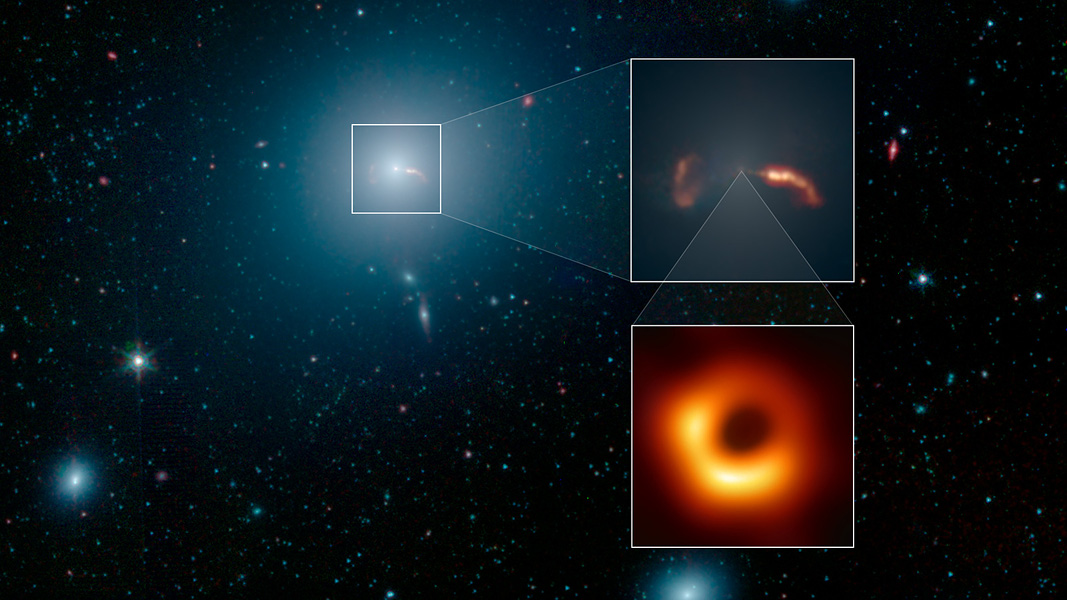
Bright elliptical galaxy Messier 87 (M87) is home to the supermassive black hole captured by planet Earth’s Event Horizon Telescope in the first ever image of a black hole. Giant of the Virgo galaxy cluster about 55 million light-years away, M87 is the large galaxy rendered in blue hues in this infrared image from the Spitzer Space telescope. Though M87 appears mostly featureless and cloud-like, the Spitzer image does record details of relativistic jets blasting from the galaxy’s central region. Shown in the inset at top right, the jets themselves span thousands of light-years. The brighter jet seen on the right is approaching and close to our line of sight. Opposite, the shock created by the otherwise unseen receding jet lights up a fainter arc of material. Inset at bottom right, the historic black hole image is shown in context, at the center of giant galaxy and relativistic jets. Completely unresolved in the Spitzer image, the supermassive black hole surrounded by infalling material is the source of enormous energy driving the relativistic jets from the center of active galaxy M87.

from NASA https://ift.tt/3a92nLF
via IFTTT