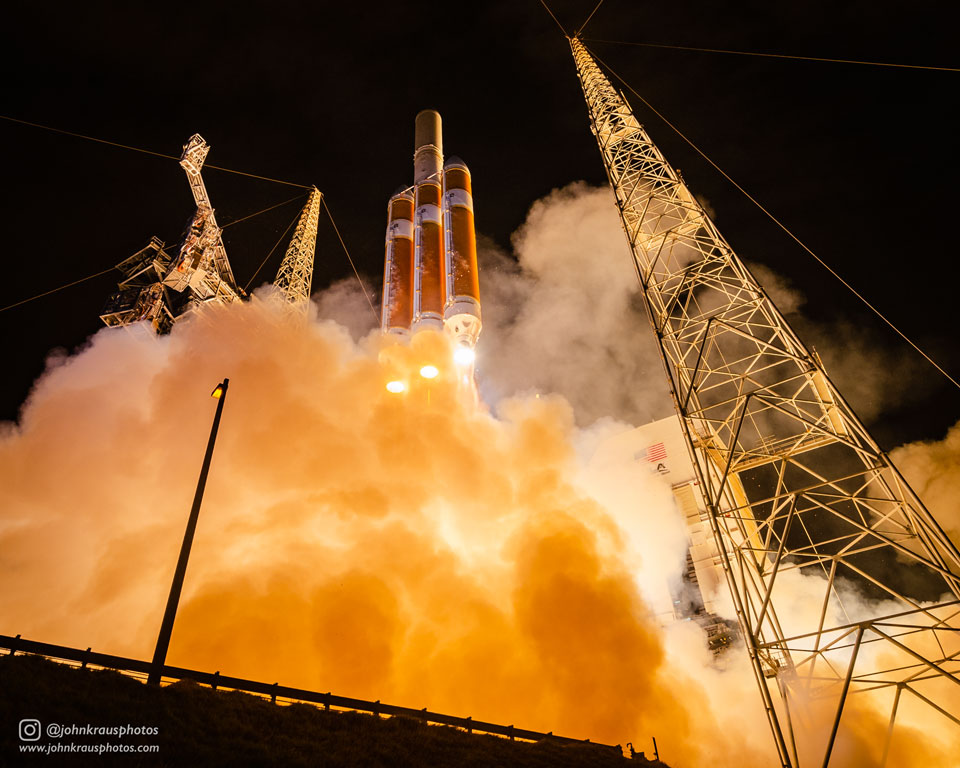
Launch of the Parker Solar Probe


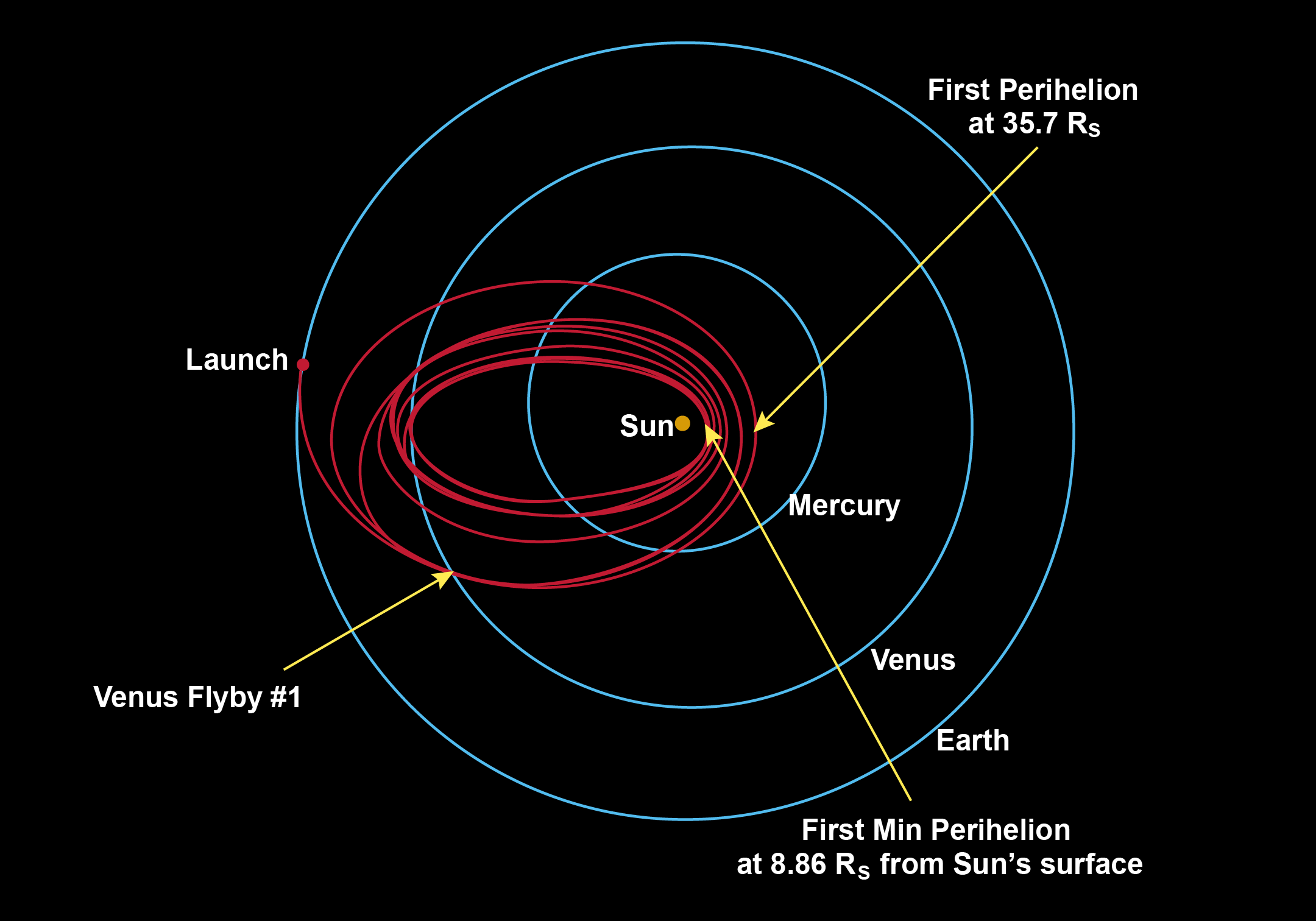
When is the best time to launch a probe to the Sun? The now historic answer — which is not a joke because this really happened this past weekend — was at night. Night, not only because NASA’s Parker Solar Probe‘s (PSP) launch window to its planned orbit occurred, in part, at night, but also because most PSP instruments will operate in the shadow of its shield — in effect creating its own perpetual night near the Sun. Before then, years will pass as the PSP sheds enough orbital energy to approach the Sun, swinging past Venus seven times. Eventually, the PSP is scheduled to pass dangerously close to the Sun, within 9 solar radii, the closest ever. This close, the temperature will be 1,400 degrees Celsius on the day side of the PSP’s Sun shield — hot enough to melt many forms of glass. On the night side, though, it will be near room temperature. A major goal of the PSP’s mission to the Sun is to increase humanity’s understanding of the Sun’s explosions that impact Earth’s satellites and power grids. Pictured is the night launch of the PSP aboard the United Launch AlliancesDelta IV Heavy rocket early Sunday morning.

from NASA https://ift.tt/2wasUDP
via IFTTT
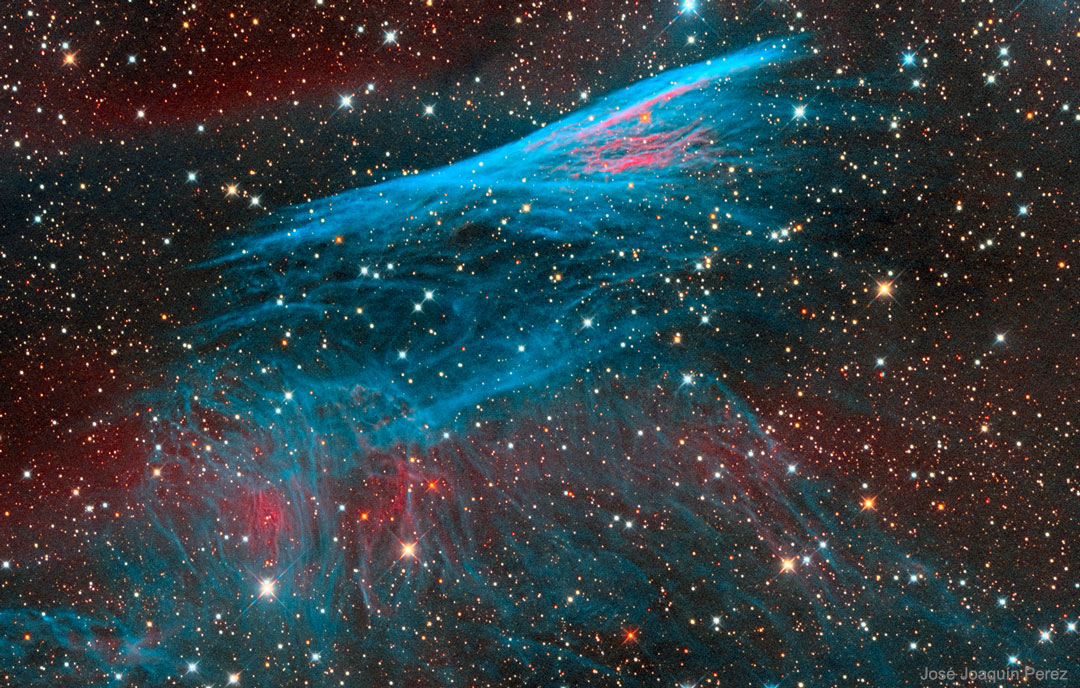
The Pencil Nebula in Red and Blue


This shock wave plows through interstellar space at over 500,000 kilometers per hour. Near the top and moving up in this sharply detailed color composite, thin, bright, braided filaments are actually long ripples in a cosmic sheet of glowing gas seen almost edge-on. Cataloged as NGC 2736, its elongated appearance suggests its popular name, the Pencil Nebula. The Pencil Nebula is about 5 light-years long and 800 light-years away, but represents only a small part of the Vela supernova remnant. The Vela remnant itself is around 100 light-years in diameter, the expanding debris cloud of a star that was seen to explode about 11,000 years ago. Initially, the shock wave was moving at millions of kilometers per hour but has slowed considerably, sweeping up surrounding interstellar material. In the featured narrow-band, wide field image, red and blue colors track the characteristic glow of ionized hydrogen and oxygen atoms, respectively.

from NASA https://ift.tt/2MlG6Ql
via IFTTT

Meteor before Galaxy


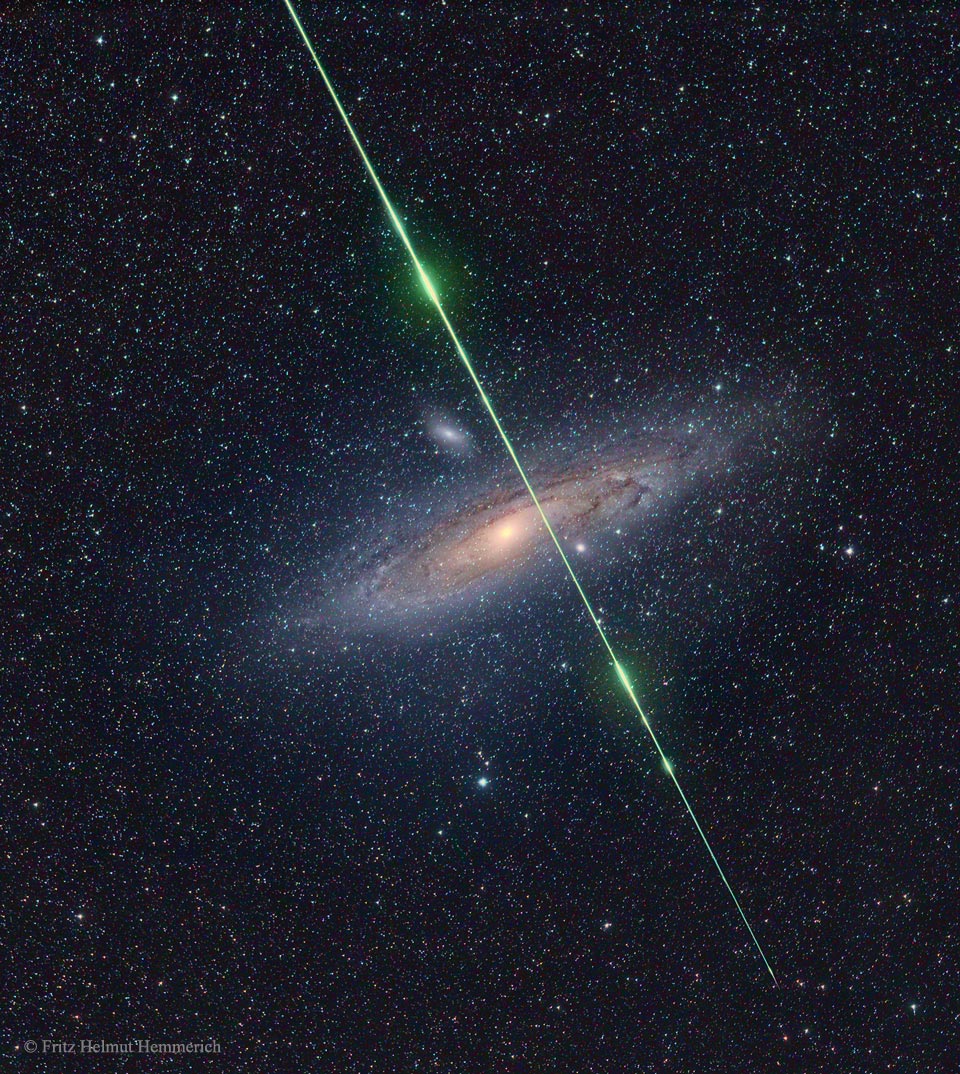
What’s that green streak in front of the Andromeda galaxy? A meteor. While photographing the Andromeda galaxy in 2016, near the peak of the Perseid Meteor Shower, a sand-sized rock from deep space crossed right in front of our Milky Way Galaxy‘s far-distant companion. The small meteor took only a fraction of a second to pass through this 10-degree field. The meteor flared several times while braking violently upon entering Earth’s atmosphere. The green color was created, at least in part, by the meteor’s gas glowing as it vaporized. Although the exposure was timed to catch a Perseids meteor, the orientation of the imaged streak seems a better match to a meteor from the Southern Delta Aquariids, a meteor shower that peaked a few weeks earlier. Not coincidentally, the Perseid Meteor Shower peaks again tonight.

from NASA https://ift.tt/2M7Uaxv
via IFTTT

Red Planet Red Moon and Mars


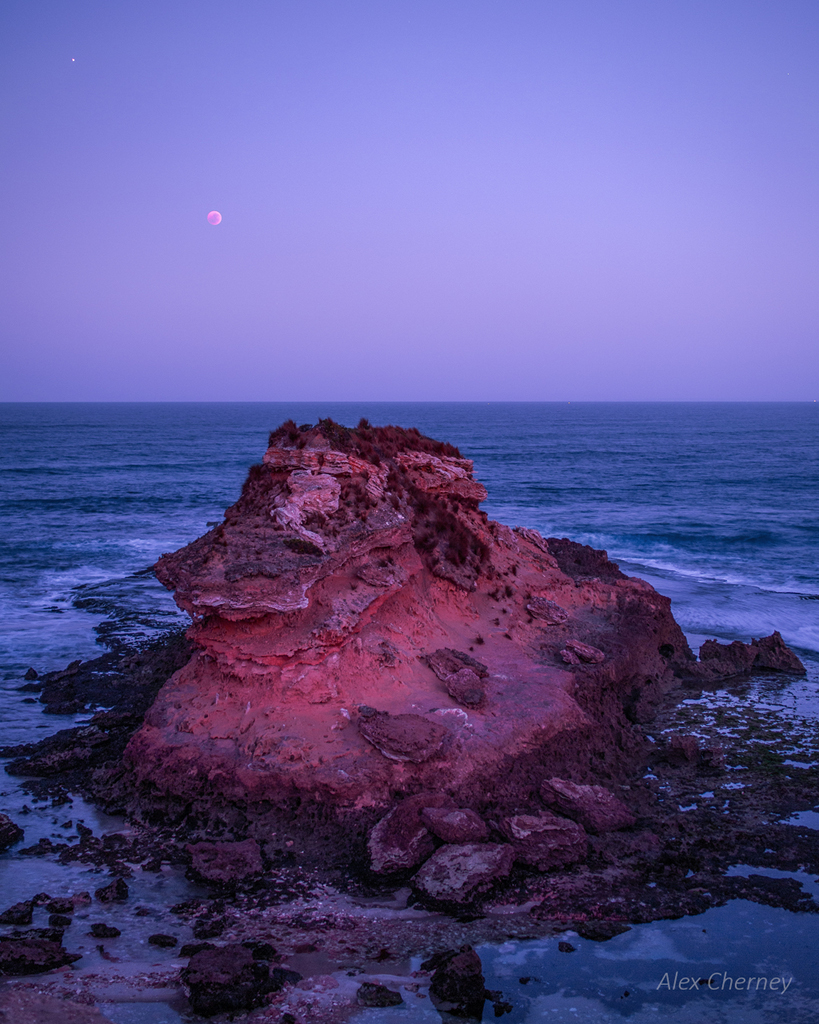
Mars is also known as The Red Planet, often seen with a reddish tinge in dark night skies. Mars shines brightly at the upper left of this gorgeous morning twilight view from Mornington Peninsula, Victoria, Australia, but the Moon and planet Earth look redder still. Taken on July 27, the totally eclipsed Moon is setting. It looks reddened because the Earth’s umbral shadow isn’t completely dark. Instead Earth’s shadow is suffused with a faint red light from all the planet’s sunsets and sunrises seen from the perspective of an eclipsed Moon. The sunsets and sunrises are reddened because Earth’s atmosphere scatters blue light more strongly than red, creating the faint bluish twilight sky. Of course, craggy seaside rocks also take on the reddened colors of this Australian sunrise.

from NASA https://ift.tt/2Mf7iA0
via IFTTT

Eclipsed Moon and Mars over Mountains


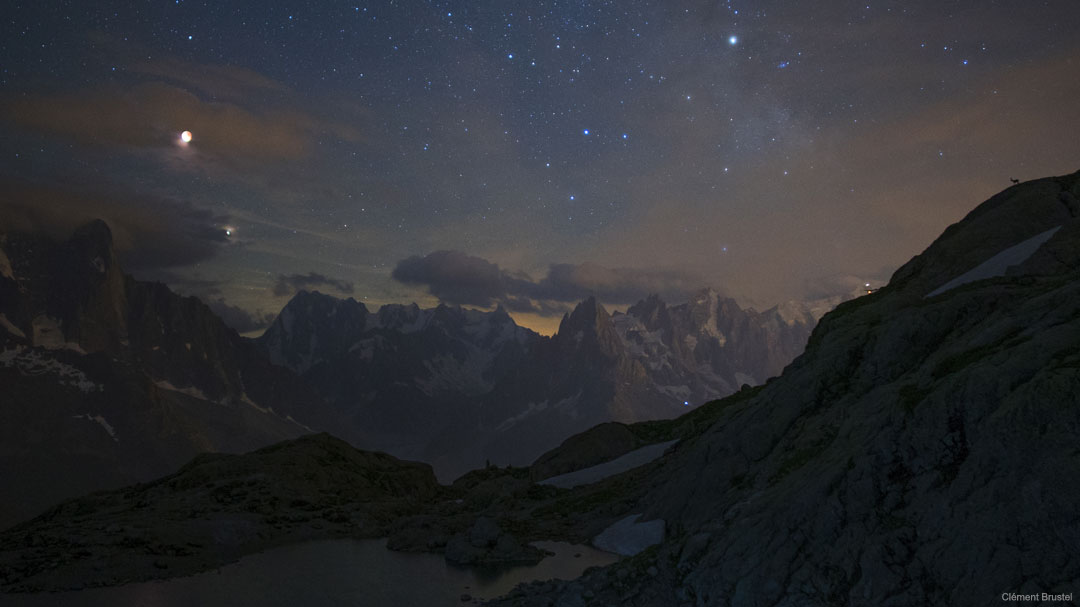
There is something unusual about this astronomically-oriented photograph. It’s not obvious — it was discovered only during post-processing. It is not the Moon, although capturing the Moon rising during a total lunar eclipse is quite an unusually interesting sight. (Other interesting images also captured during last month’s eclipse can be found here.) It is not Mars, found to the lower right of the Moon, although Mars being captured near its brightest also makes for an unusually interesting sight. (Mars is visible nearly the entire night this month; other interesting images of it can be found here.) It is not the foreground mountains, although the French Alps do provide unusually spectacular perspectives on planet Earth. (Other interesting mountainous starscapes can be found here.) It is the goat.

from NASA https://ift.tt/2M0MKMw
via IFTTT

Live: Cosmic Rays from Minnesota


Cosmic rays from outer space go through your body every second. Typically, they do you no harm. The featured image shows some of these fast moving particles as streaks going through Fermilab’s NOvA Far Detector located in Ash River, Minnesota, USA. Although the image updates every 15 seconds, it only shows cosmic rays that occurred over a (changing) small fraction of that time, and mostly shows only one type of particle: muons. The NOvA Far Detector’s main purpose is not to detect cosmic rays, though, but rather neutrinos from the NuMI beam shot through the Earth from Fermilab near Chicago, Illinois, USA, 810 kilometers away. Only a few neutrino events are expected in NOvA per week, though. The NuMI / NOvA experiment is allowing humanity to better explore the nature of neutrinos, for example how frequently they change type during their trip. Cosmic rays themselves were discovered only about 100 years ago and can not only alter computer memory, but may have helped to create DNA mutations that resulted in, eventually, humans.

from NASA https://ift.tt/2vnfeFR
via IFTTT

Trapezium: At the Heart of Orion


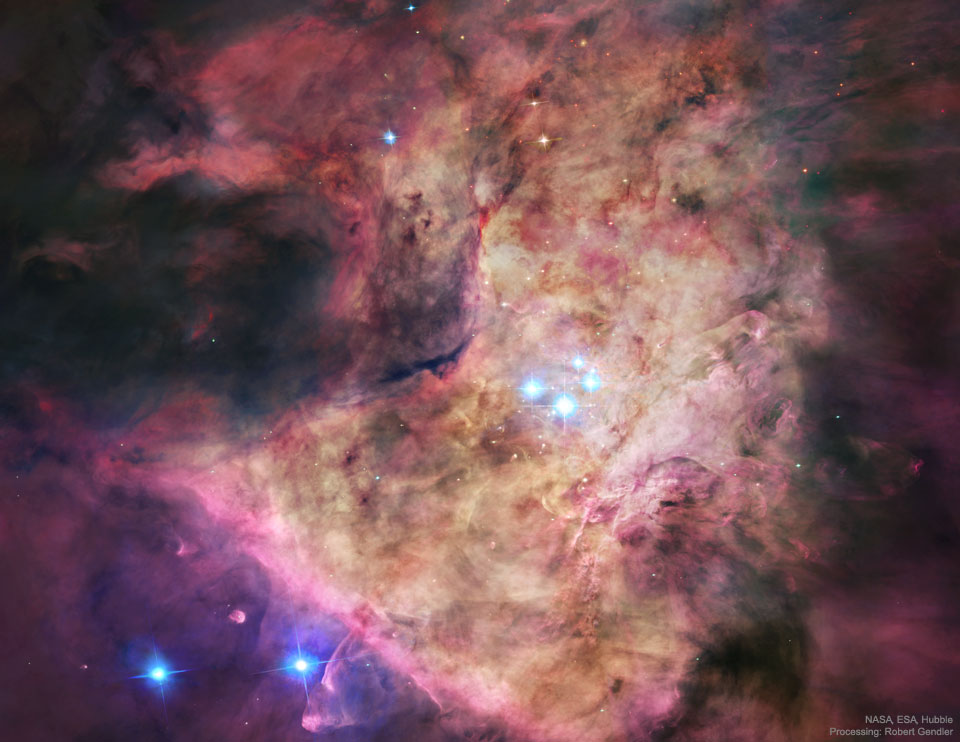
Near the center of this sharp cosmic portrait, at the heart of the Orion Nebula, are four hot, massive stars known as the Trapezium. Gathered within a region about 1.5 light-years in radius, they dominate the core of the dense Orion Nebula Star Cluster. Ultraviolet ionizing radiation from the Trapezium stars, mostly from the brightest star Theta-1 Orionis C powers the complex star forming region’s entire visible glow. About three million years old, the Orion Nebula Cluster was even more compact in its younger years and a recent dynamical study indicates that runaway stellar collisions at an earlier age may have formed a black hole with more than 100 times the mass of the Sun. The presence of a black hole within the cluster could explain the observed high velocities of the Trapezium stars. The Orion Nebula’s distance of some 1,500 light-years would make it the closest known black hole to planet Earth.

from NASA https://ift.tt/2vgjN4y
via IFTTT

Central Cygnus Skyscape


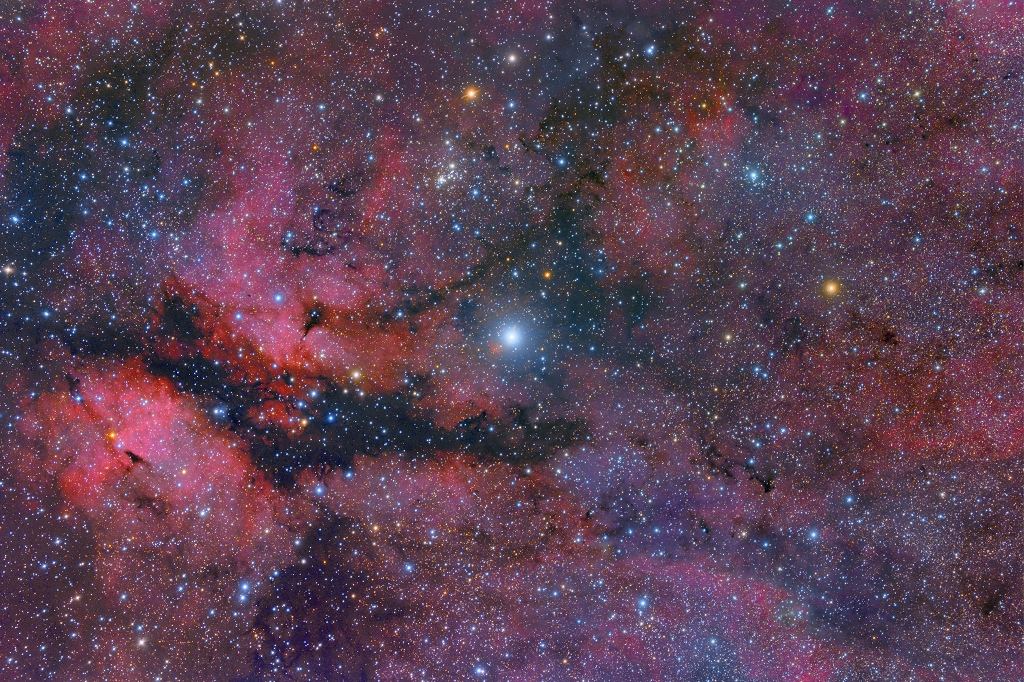
Supergiant star Gamma Cygni lies at the center of the Northern Cross, famous asterism in the constellation Cygnus the Swan. Known by its proper name, Sadr, the bright star also lies at the center of this gorgeous skyscape, featuring a complex of stars, dust clouds, and glowing nebulae along the plane of our Milky Way galaxy. The field of view spans almost 4 degrees (eight Full Moons) on the sky and includes emission nebula IC 1318 and open star cluster NGC 6910. Left of Gamma Cygni and shaped like two glowing cosmic wings divided by a long dark dust lane, IC 1318’s popular name is understandably the Butterfly Nebula. Above and left of Gamma Cygni, are the young, still tightly grouped stars of NGC 6910. Some distance estimates for Gamma Cygni place it at around 1,800 light-years while estimates for IC 1318 and NGC 6910 range from 2,000 to 5,000 light-years.

from NASA https://ift.tt/2vgpcsn
via IFTTT

Central Lunar Eclipse


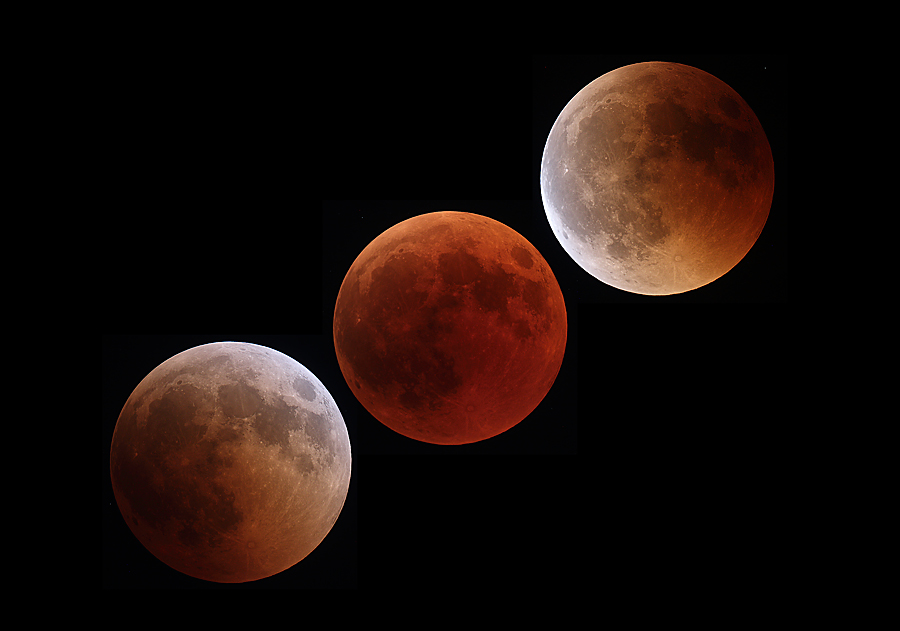
Reddened by scattered sunlight, the Moon in the center is passing through the center of Earth’s dark umbral shadow in this July 27 lunar eclipse sequence. Left to right the three images are from the start, maximum, and end to 103 minutes of totality from the longest lunar eclipse of the 21st century. The longest path the Moon can follow through Earth’s shadow does cross the shadow’s center, that’s what makes such central lunar eclipses long ones. But July 27 was also the date of lunar apogee, and at the most distant part of its elliptical orbit the Moon moves slowest. For the previous lunar eclipse, last January 31, the Moon was near its orbital perigee. Passing just south of the Earth shadow central axis, totality lasted only 76 minutes. Coming up on January 21, 2019, a third consecutive total lunar eclipse will also be off center and find the Moon near perigee. Then totality will be a mere 62 minutes long.

from NASA https://ift.tt/2AClkXW
via IFTTT

Eclipse over the Gulf of Poets


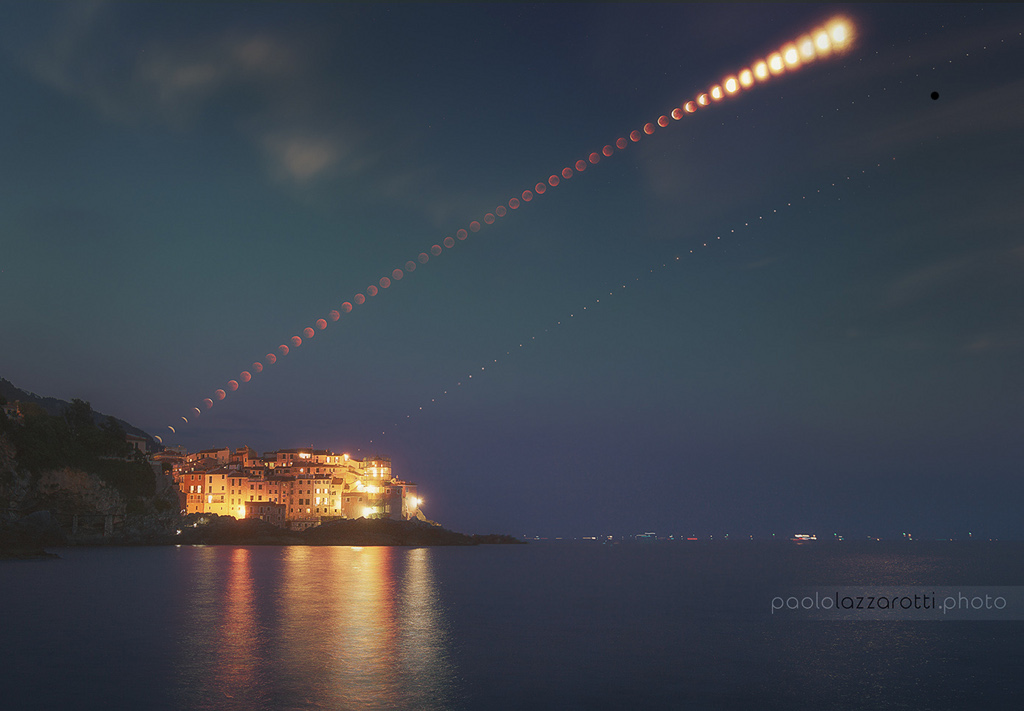
The total phase of the July 27 lunar eclipse lasted for an impressive 103 minutes. That makes it the longest total lunar eclipse of the 21st century. The Moon passed through the center of Earth’s shadow while the Moon was near apogee, the most distant point in its elliptical orbit. From start to finish, the entire duration of totality is covered in this composite view. A dreamlike scene, it includes a sequence of digital camera exposures made every three minutes. The exposures track the totally eclipsed lunar disk, accompanied on that night by bright planet Mars, as it climbs above the seaside village of Tellaro, Italy. In the foreground lies the calm mediteranean Gulf of La Spezia, known to some as the Gulf of Poets. In the 3rd century BCE, heliocentric astronomer Aristarchus also tracked the duration of lunar eclipses, though without the benefit of digital clocks and cameras. Using geometry he devised a way to calculate the Moon’s distance from the eclipse duration, in terms of the radius of planet Earth.

from NASA https://ift.tt/2LTwGLC
via IFTTT