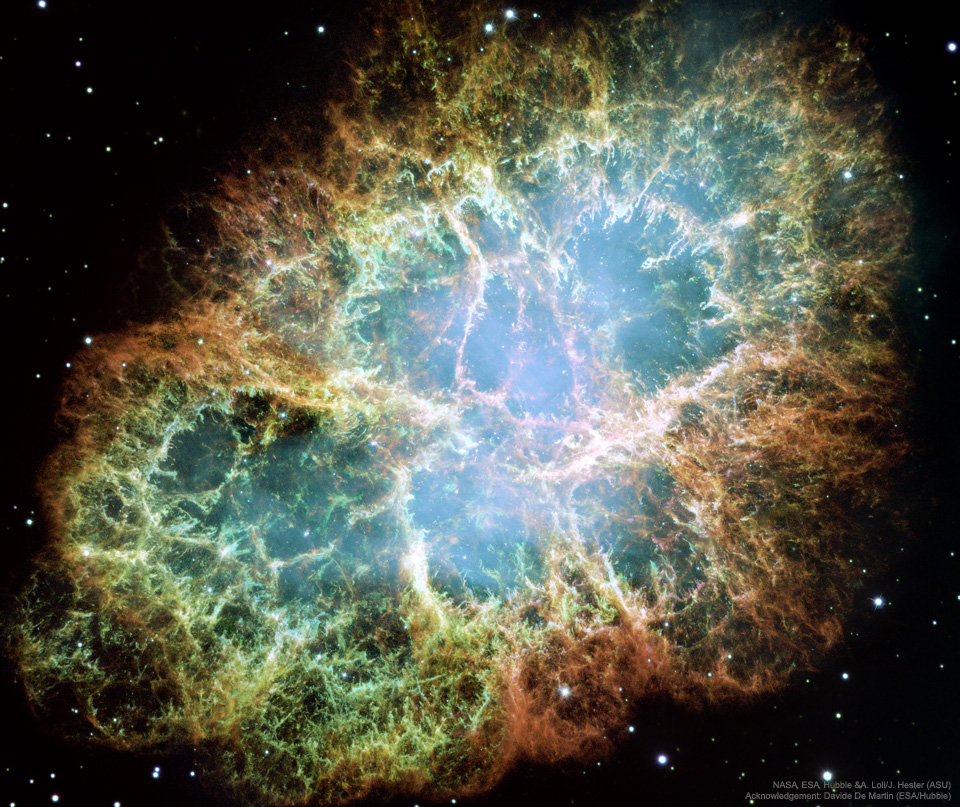
M1: The Crab Nebula from Hubble


This is the mess that is left when a star explodes. The Crab Nebula, the result of a supernova seen in 1054 AD, is filled with mysterious filaments. The filaments are not only tremendously complex, but appear to have less mass than expelled in the original supernova and a higher speed than expected from a free explosion. The featured image, taken by the Hubble Space Telescope, is presented in three colors chosen for scientific interest. The Crab Nebula spans about 10 light-years. In the nebula‘s very center lies a pulsar: a neutron star as massive as the Sun but with only the size of a small town. The Crab Pulsar rotates about 30 times each second.

from NASA https://ift.tt/2NXDR35
via IFTTT
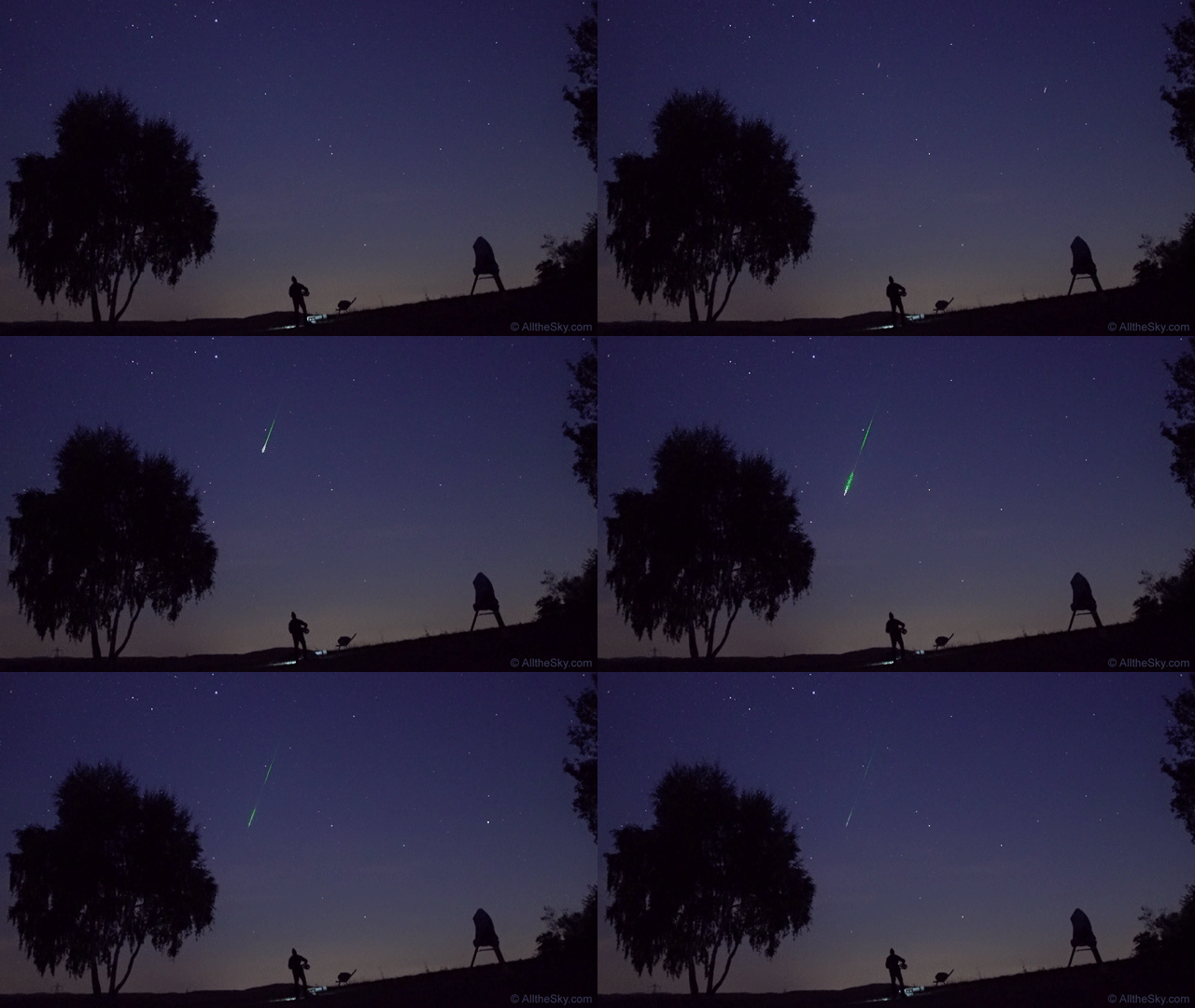
Real Time Perseid


Bright meteors and dark night skies made this year’s Perseid meteor shower a great time for a weekend campout. And while packing away their equipment, skygazers at a campsite in the mountains of southern Germany found at least one more reason to linger under the stars, witnessing this brief but colorful flash with their own eyes. Presented as a 50 frame gif, the two second long video was captured during the morning twilight of August 12. In real time it shows the development of the typical green train of a bright Perseid meteor. A much fainter Perseid is just visible farther to the right. Plowing through Earth’s atmosphere at 60 kilometers per second, Perseids are fast enough to excite the characteristic green emission of atomic oxygen at altitudes of 100 kilometers or so.

from NASA https://ift.tt/2wW3dYE
via IFTTT

Saturn s North Polar Hexagon


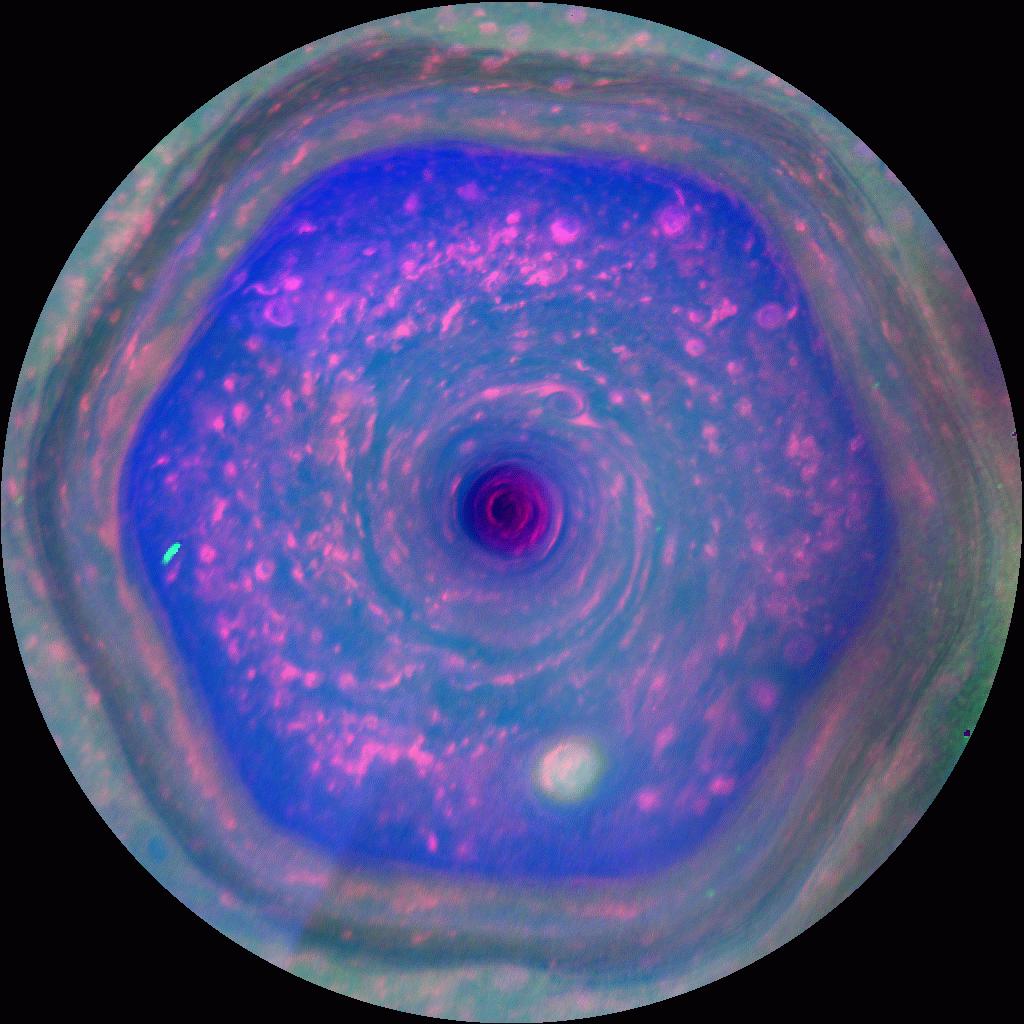
In full view, the amazing six-sided jet stream known as Saturn’s north polar hexagon is shown in this colorful Cassini image. Extending to 70 degrees north latitude, the false-color video frame is map-projected, based on infrared, visible, and ultraviolet image data recorded by the Saturn-orbiting spacecraft in late 2012. First found in the outbound Voyager flyby images from the 1980s, the bizarre, long-lived feature tied to the planet’s rotation is about 30,000 kilometers across. At its center lies the ringed gas giant’s hurricane-like north polar storm. A new long term study of Cassini data has found a remarkable higher-altitude vortex, exactly matching the outlines of the north polar hexagon, that formed as summer approached the planet’s northern hemisphere. It appears to reach hundreds of kilometers above these deeper cloud tops, into Saturn’s stratosphere.

from NASA https://ift.tt/2Q6nP8y
via IFTTT

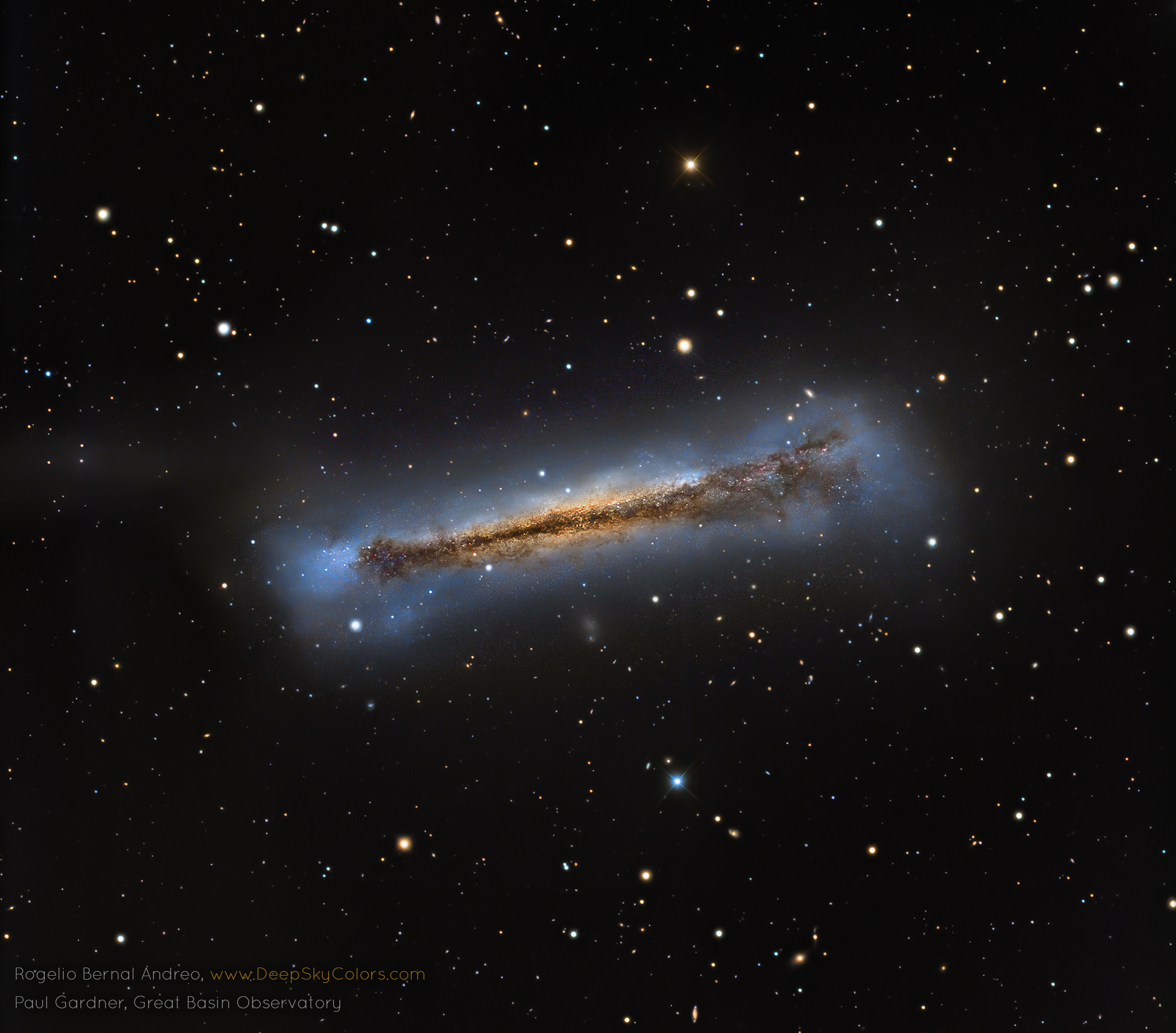
NGC 3682: Sideways Spiral Galaxy


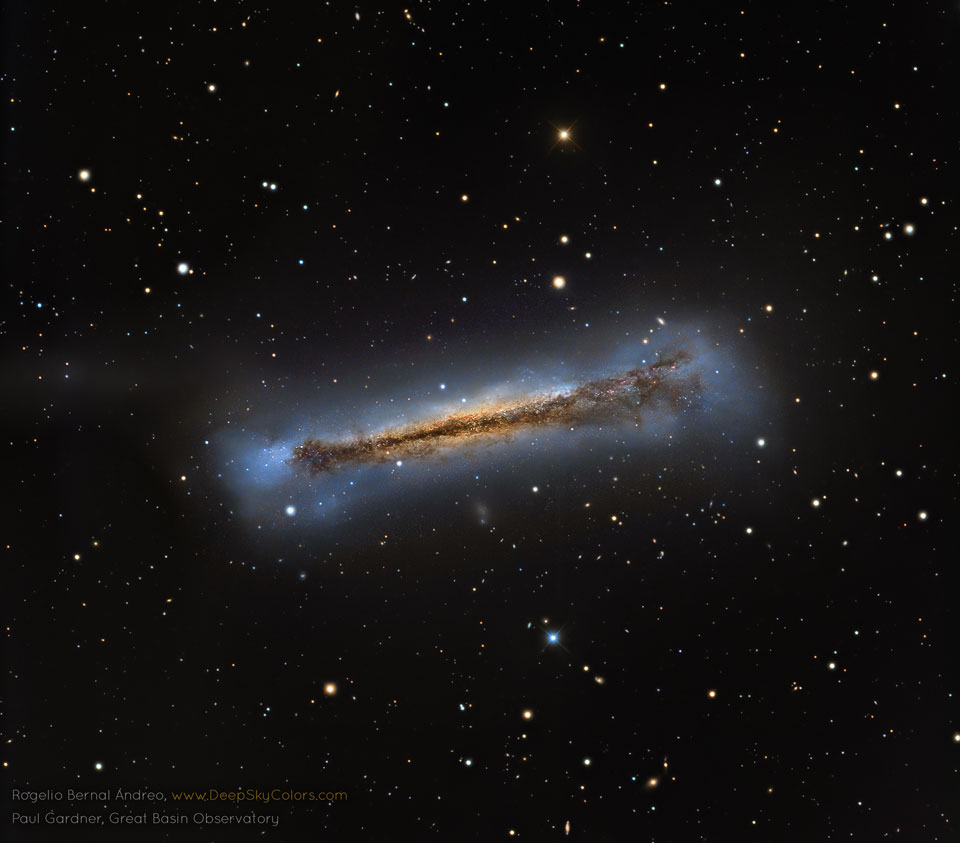
What do spiral galaxies look like sideways? Featured is a sharp telescopic view of a magnificent edge-on spiral galaxy NGC 3628, a puffy galactic disk divided by dark dust lanes. Of course, this deep galactic portrait puts some astronomers in mind of its popular moniker, The Hamburger Galaxy. The tantalizing island universe is about 100,000 light-years across and 35 million light-years away in the northern springtime constellation Leo. NGC 3628 shares its neighborhood in the local Universe with two other large spirals M65 and M66 in a grouping otherwise known as the Leo Triplet. Gravitational interactions with its cosmic neighbors are likely responsible for the extended flare and warp of this spiral’s disk.

from NASA https://ift.tt/2wHNYmi
via IFTTT

Moon behind Lava Fountain


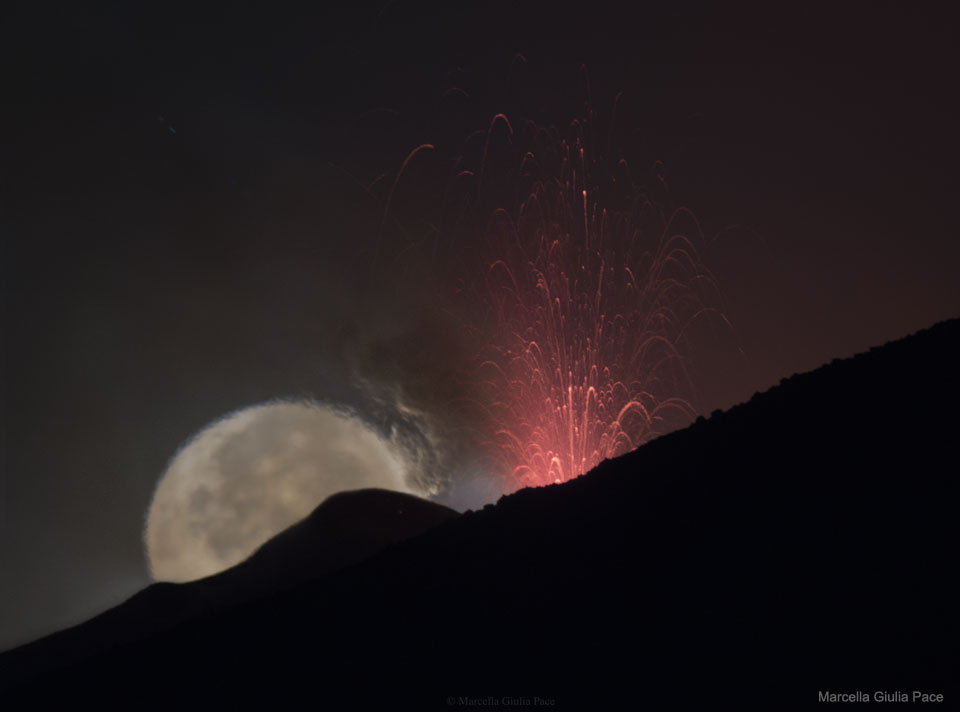
What’s happened to the Moon? Nothing, but something has happened to the image of the Moon. The heat from a volcanic lava fountain in the foreground has warmed and made turbulent the air nearby, causing passing light to refract differently than usual. The result is a lava plume that appears to be melting the Moon. The featured picture was taken as the full Sturgeon Moon was setting behind Mt. Etna as it erupted in Italy about one week ago. The picture is actually a composite of two images, one taken right after the other, with the same camera and lens. The first image was a quick exposure to capture details of the setting Moon, while the second exposure, taken after the Moon set a few minutes later, was longer so as to capture details of the faint lava jets. From our Earth, we can only see the Sun, Moon, planets, and stars as they appear through the distortion of the Earth’s atmosphere. This distortion can not only change the images of familiar orbs into unusual shapes, it can –unexpectedly at times — delay sunset and moonset by several minutes.

from NASA https://ift.tt/2LUCrEP
via IFTTT

A Powerful Solar Flare


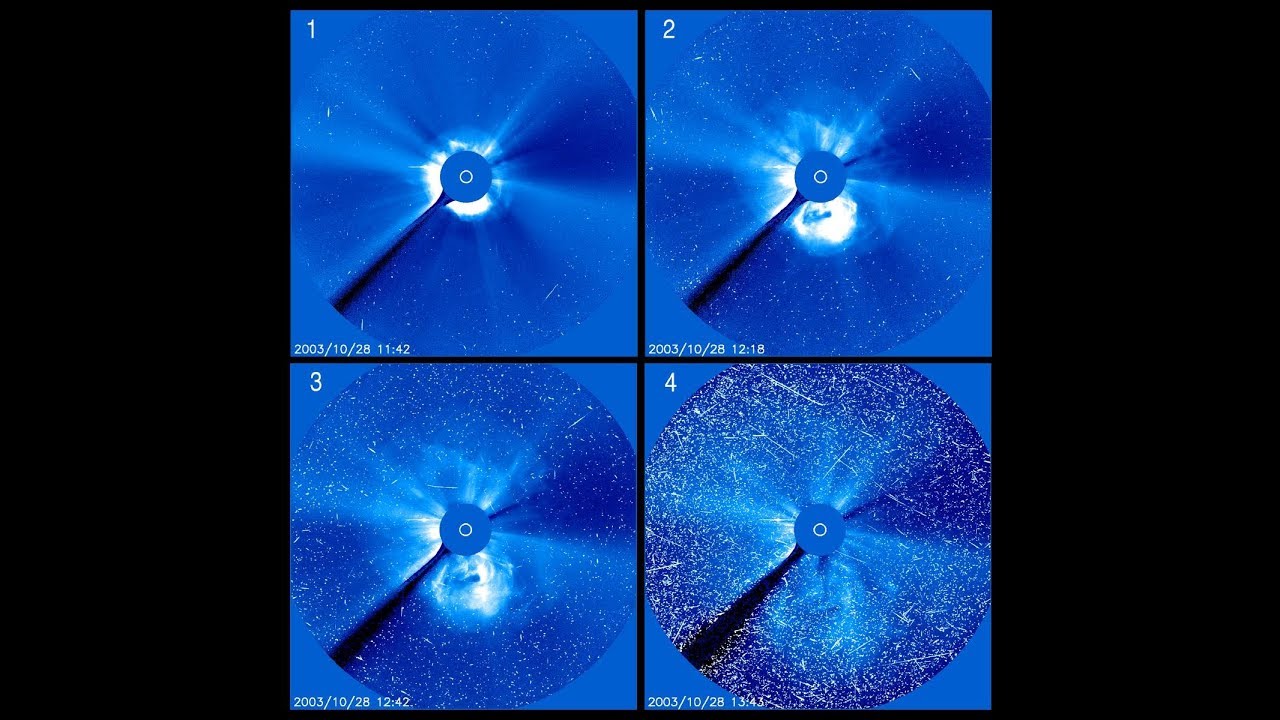
It was one of the most powerful solar flares in recorded history. Occurring in 2003 and seen across the electromagnetic spectrum, the Sun briefly became over 100 times brighter in X-rays than normal. The day after this tremendous X 17 solar flare — and subsequent Coronal Mass Ejection (CME) — energetic particles emitted from the explosions struck the Earth, creating auroras and affecting satellites. The spacecraft that took these frames — SOHO — was put in a turtle-like safe mode to avoid further damage from this and subsequent solar particle storms. The featured time-lapse movie condenses into 10 seconds events that occurred over 4 hours. The CME, visible around the central sun-shade, appears about three-quarters of the way through the video, while frames toward the very end are progressively noisier as protons from the explosions strike SOHO’s LASCO detector. One this day in 1859, the effects of an even more powerful solar storm caused telegraphs on Earth to spark in what is known as the Carrington Event. Powerful solar storms such as these may create beautiful aurora-filled skies, but they also pose a real danger as they can damage satellites and even power grids across the Earth.

from NASA https://ift.tt/2NEaX8a
via IFTTT


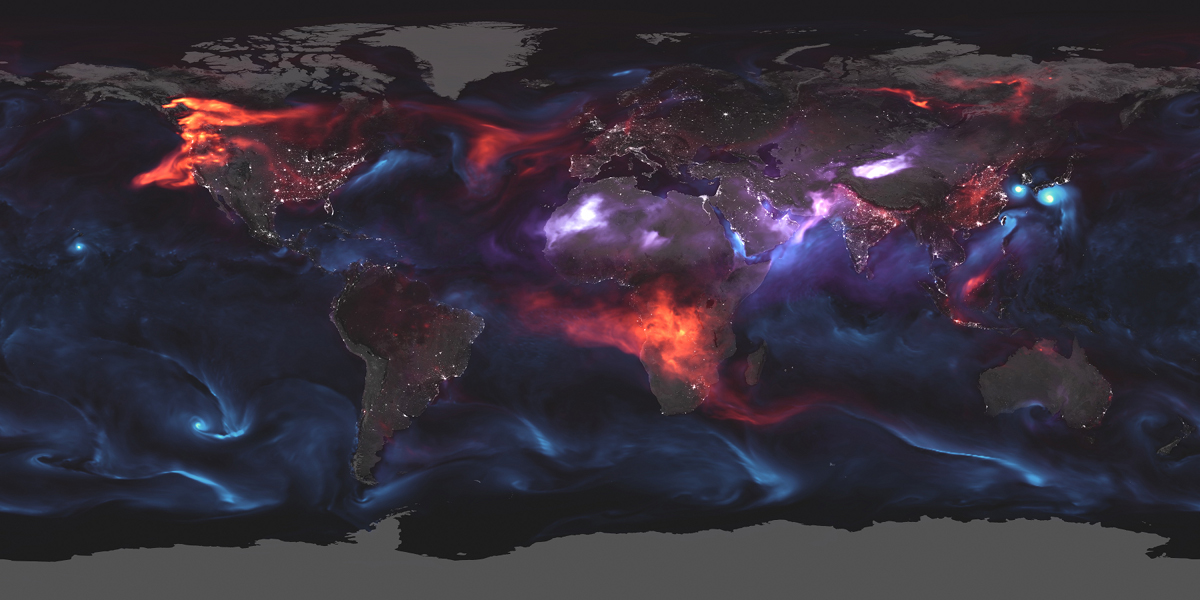
On August 23, 2018 the identification and distribution of aerosols in the Earth’s atmosphere is shown in this dramatic, planet-wide visualization. Produced in real time, the Goddard Earth Observing System Forward Processing (GEOS FP) model relies on a combination of Earth-observing satellite and ground-based data to calculate the presence of types of aerosols, tiny solid particles and liquid droplets, as they circulate above the entire planet. This August 23rd model shows black carbon particles in red from combustion processes, like smoke from the fires in the United States and Canada, spreading across large stretches of North America and Africa. Sea salt aerosols are in blue, swirling above threatening typhoons near South Korea and Japan, and the hurricane looming near Hawaii. Dust shown in purple hues is blowing over African and Asian deserts. The location of cities and towns can be found from the concentrations of lights based on satellite image data of the Earth at night.

from NASA https://ift.tt/2orIqHS
via IFTTT

Close Mars


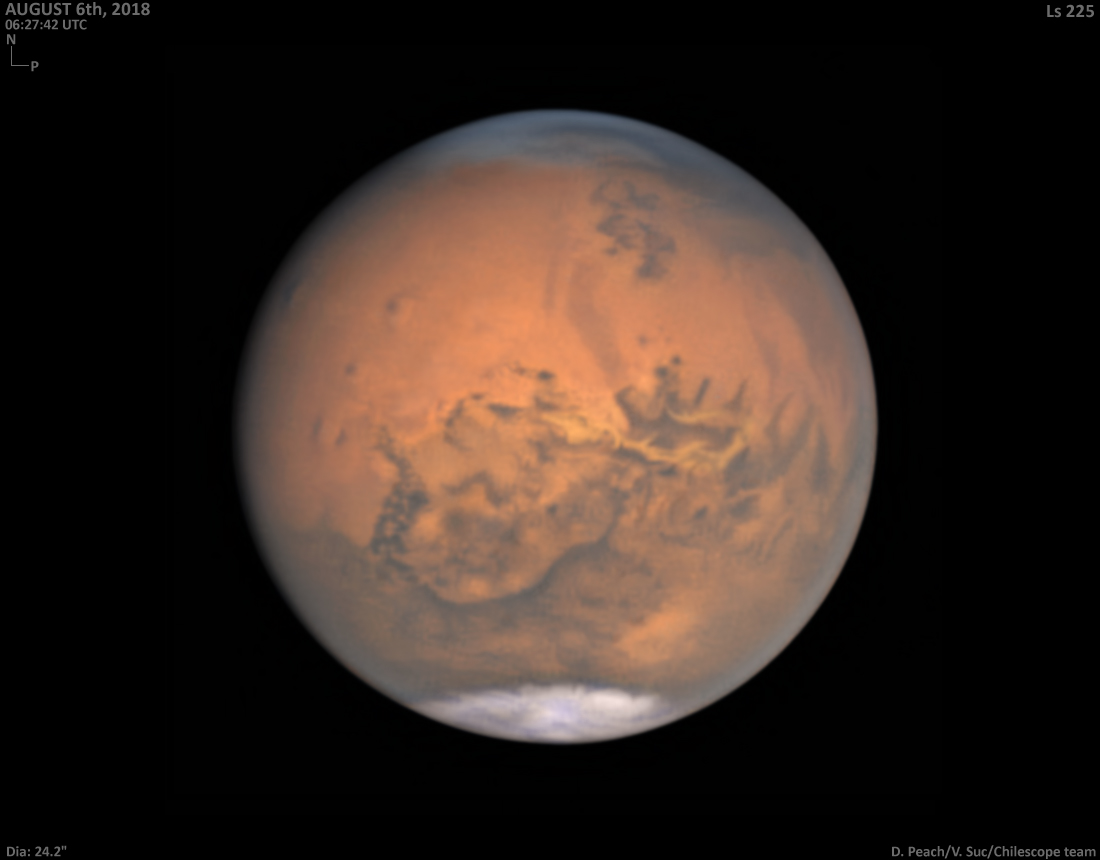
Still bright in evening skies, Mars was just past opposition and closest to Earth on July 31, a mere 57.6 million kilometers away. Captured only a week later, this remarkable image shows the Red Planet’s disk near its maximum size in earthbound telescopes, but still less than 1/74th the apparent diameter of a Full Moon. Broad regional surface shadings are starting to reappear in the tantalizing view as the latest planet-wide dust storm subsides. With the bright south polar cap at the bottom, the Valles Marineris extends along the center of the disk. Just below it lies the roughly circular Solis Lacus region sometimes known as the Eye of Mars. In a line, three prominent dark spots left of center are the volcanic Tharsis Montes.

from NASA https://ift.tt/2oqFPhw
via IFTTT

The NGC 6914 Complex


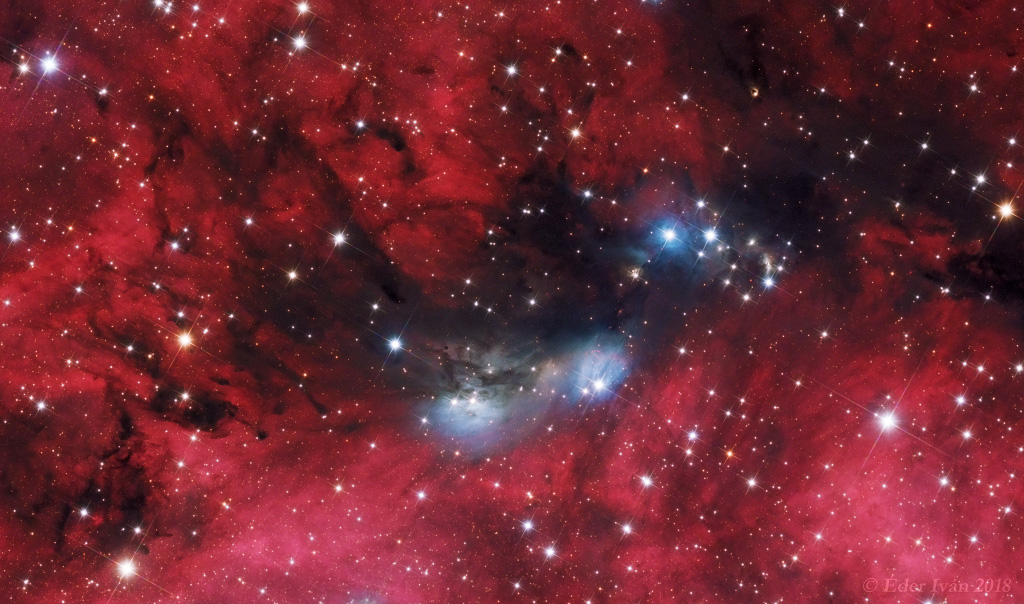
A study in contrasts, this colorful skyscape features stars, dust, and glowing gas in the vicinity of NGC 6914. The complex of reflection nebulae lies some 6,000 light-years away, toward the high-flying northern constellation Cygnus and the plane of our Milky Way Galaxy. Obscuring interstellar dust clouds appear in silhouette while reddish hydrogen emission nebulae, along with the dusty blue reflection nebulae, fill the cosmic canvas. Ultraviolet radiation from the massive, hot, young stars of the extensive Cygnus OB2 association ionize the region’s atomic hydrogen gas, producing the characteristic red glow as protons and electrons recombine. Embedded Cygnus OB2 stars also provide the blue starlight strongly reflected by the dust clouds. The nearly 1 degree wide telescopic field of view spans about 100 light-years at the estimated distance of NGC 6914.

from NASA https://ift.tt/2C13bDU
via IFTTT

Sea and Sky Glows over the Oregon Coast


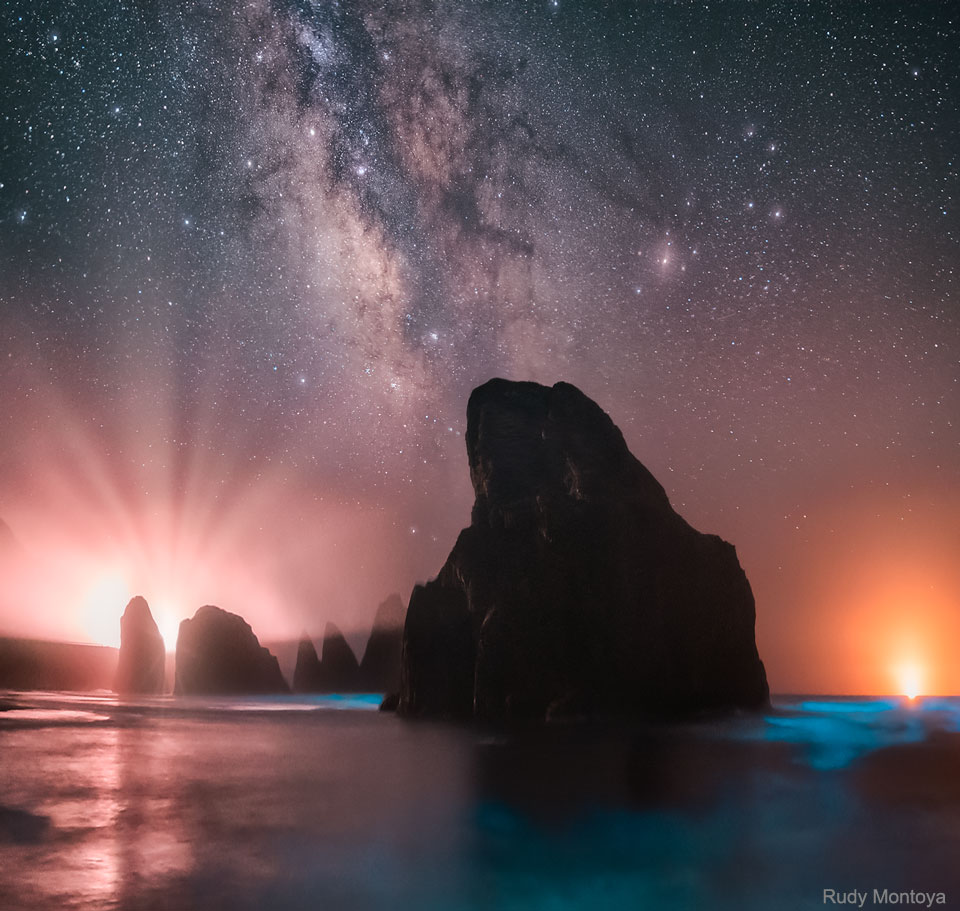
Every step caused the sand to light up blue. That glow was bioluminescence — a blue radiance that also lights the surf in this surreal scene captured last month at Meyer’s Creek Beach in Oregon, USA. Volcanic stacks dot the foreground sea, while a thin fog layer scatters light on the horizon. The rays of light spreading from the left horizon were created by car headlights on the Oregon Coast Highway (US 101), while the orange light on the right horizon emanates from a fishing boat. Visible far in the distance is the band of our Milky Way Galaxy, appearing to rise from a dark rocky outcrop. Sixteen images were added together to bring up the background Milky Way and to reduce noise.

from NASA https://ift.tt/2PadW8M
via IFTTT