Jupiter Engulfed and the Milky Way


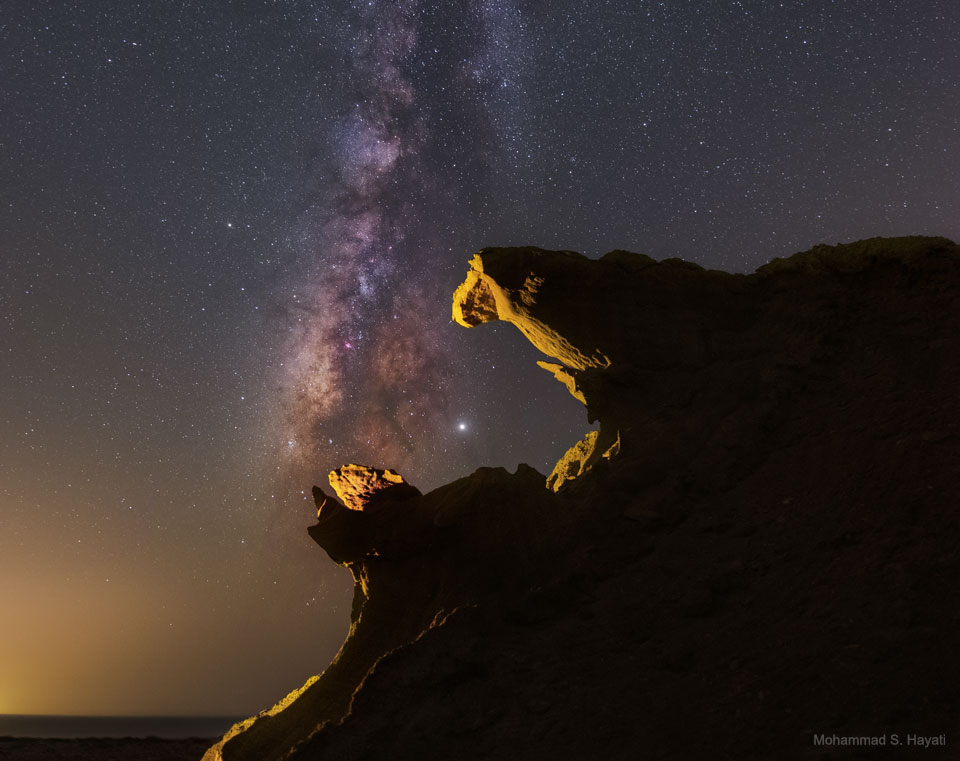
This is a good month to see Jupiter. To find our Solar System‘s largest planet in your sky, look toward the southeast just after sunset — Jupiter should be the brightest object in that part of the sky. If you have a binoculars or a small telescope, you should be able to see Jupiter‘s four brightest moons right nearby, and possibly some cloud bands. The featured image was taken about a month ago from the Persian Gulf. The image shows Jupiter just to the right of the nearly vertical band of the central disk of our Milky Way Galaxy. The unnamed rock formations appear in projection like the jaws of a giant monster ready to engulf the Jovian giant. When you see Jupiter, it may be interesting to know that NASA’s robotic Juno spacecraft is simultaneously visiting and studying the giant planet. Saturn is also visible this month, and although it is nearby to Jupiter, it is not as bright.

from NASA https://ift.tt/33fZHaf
via IFTTT
A Total Solar Eclipse Reflected


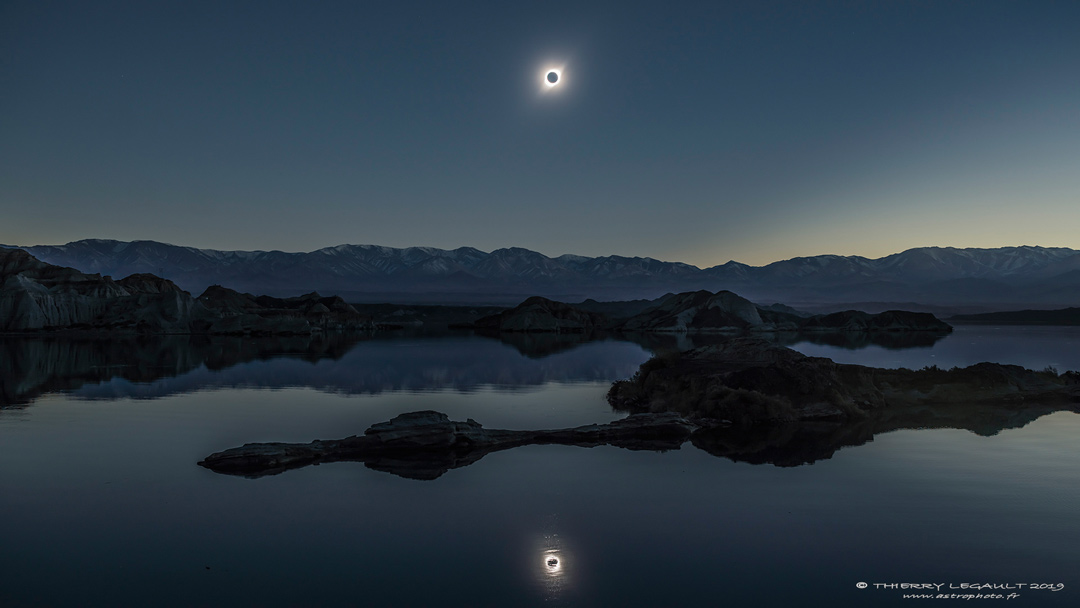
If you saw a total solar eclipse, would you do a double-take? One astrophotographer did just that — but it took a lake and a bit of planning. Realizing that the eclipse would be low on the horizon, he looked for a suitable place along the thin swath of South America that would see, for a few minutes, the Moon completely block the Sun, both directly and in reflection. The day before totality, he visited a lake called La Cuesta Del Viento (The Slope of the Wind) and, despite its name, found so little wind that the lake looked like a mirror. Perfect. Returning the day of the eclipse, though, there was a strong breeze churning up the water — enough to ruin the eclipse reflection shot. Despair. But wait! Strangely, about an hour before totality, the wind died down. This calmness may have been related to the eclipse itself, because eclipsed ground heats the air less and reduces the amount rising warm air — which can dampen and even change the wind direction. The eclipse came, his tripod and camera were ready, and so was the lake. The featured image of this double-eclipse came from a single exposure lasting just one fifteenth of a second. Soon after totality, the winds returned and the water again became choppy. No matter — this double-image of the 2019 July total solar eclipse had been captured forever.

from NASA https://ift.tt/2M0C7ZA
via IFTTT

Rumors of a Dark Universe


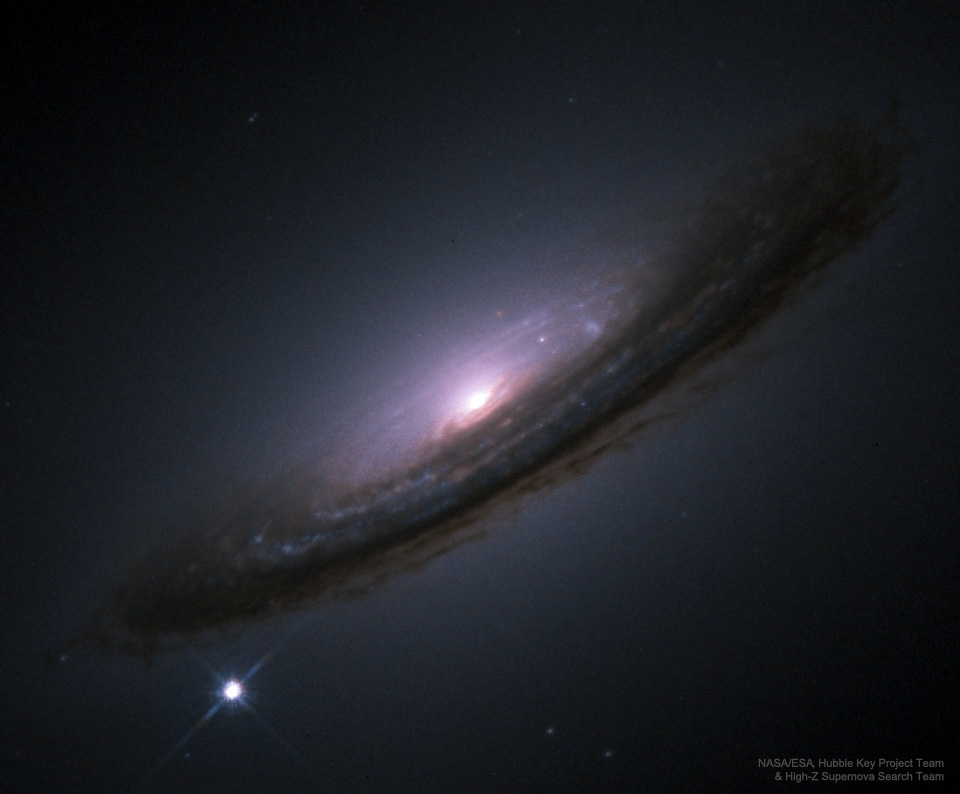
Twenty-one years ago results were first presented indicating that most of the energy in our universe is not in stars or galaxies but is tied to space itself. In the language of cosmologists, a large cosmological constant — dark energy — was directly implied by new distant supernova observations. Suggestions of a cosmological constant were not new — they have existed since the advent of modern relativistic cosmology. Such claims were not usually popular with astronomers, though, because dark energy was so unlike known universe components, because dark energy’s abundance appeared limited by other observations, and because less-strange cosmologies without a signficant amount of dark energy had previously done well in explaining the data. What was exceptional here was the seemingly direct and reliable method of the observations and the good reputations of the scientists conducting the investigations. Over the two decades, independent teams of astronomers have continued to accumulate data that appears to confirm the existence of dark energy and the unsettling result of a presently accelerating universe. In 2011, the team leaders were awarded the Nobel Prize in Physics for their work. The featured picture of a supernova that occurred in 1994 on the outskirts of a spiral galaxy was taken by one of these collaborations.

from NASA https://ift.tt/2Zvcof2
via IFTTT

Mimas in Saturnlight


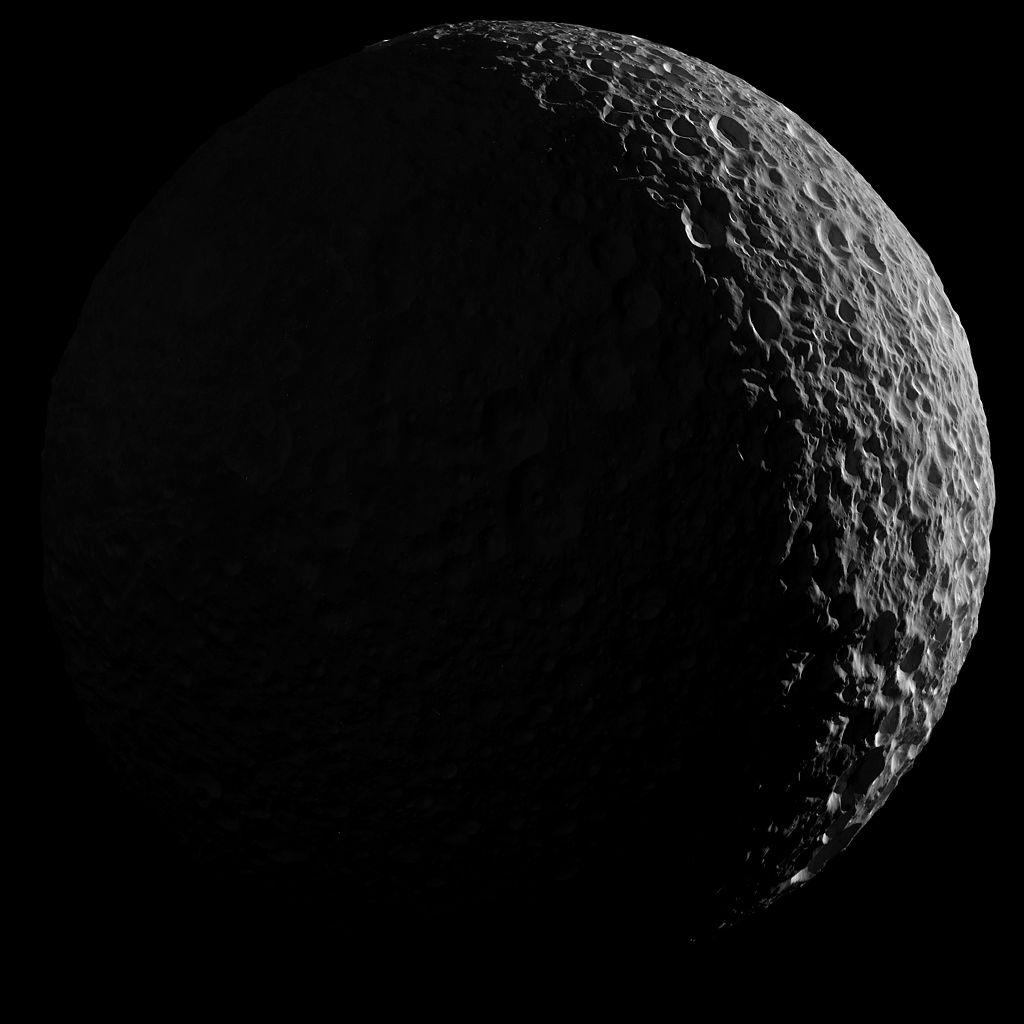
Peering from the shadows, the Saturn-facing hemisphere of Mimas lies in near darkness alongside a dramatic sunlit crescent. The mosaic was captured near the Cassini spacecraft’s final close approach on January 30, 2017. Cassini’s camera was pointed in a nearly sunward direction only 45,000 kilometers from Mimas. The result is one of the highest resolution views of the icy, crater-pocked, 400 kilometer diameter moon. An enhanced version better reveals the Saturn-facing hemisphere of the synchronously rotating moon lit by sunlight reflected from Saturn itself. To see it, slide your cursor over the image (or follow this link). Other Cassini images of Mimas include the small moon’s large and ominous Herschel Crater.

from NASA https://ift.tt/338iVhR
via IFTTT

Chamaeleon II Dark Cloud


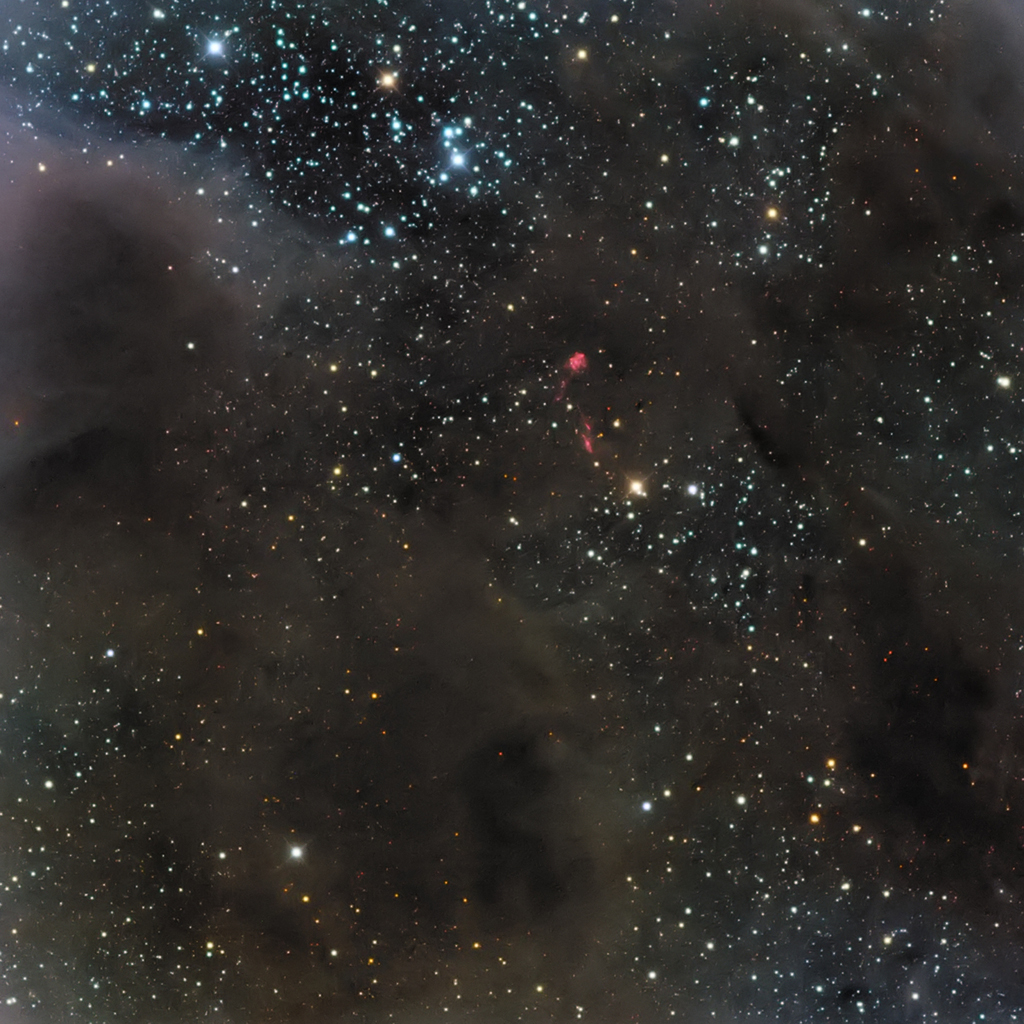
A small constellation hiding near the south celestial pole, The Chamaeleon boasts no bright stars. Stars are forming within its constellation boundaries though, in a complex of dark, dusty molecular clouds. Some 500 light-years distant, the Chamaeleon II dark nebula inhabits this view where the cosmic dust clouds standout mostly in silhouette against the starry southern sky. The telescopic frame is about the angular size of a Full Moon and so spans about 5 light-years at the dark cloud’s estimated distance. Scattered near center a telltale reddish glow from identified Herbig-Haro objects is seen in the sharp image, jets of shocked glowing gas emanating from recently formed stars.

from NASA https://ift.tt/319ePEh
via IFTTT

Star Forming Region NGC 3582 without Stars


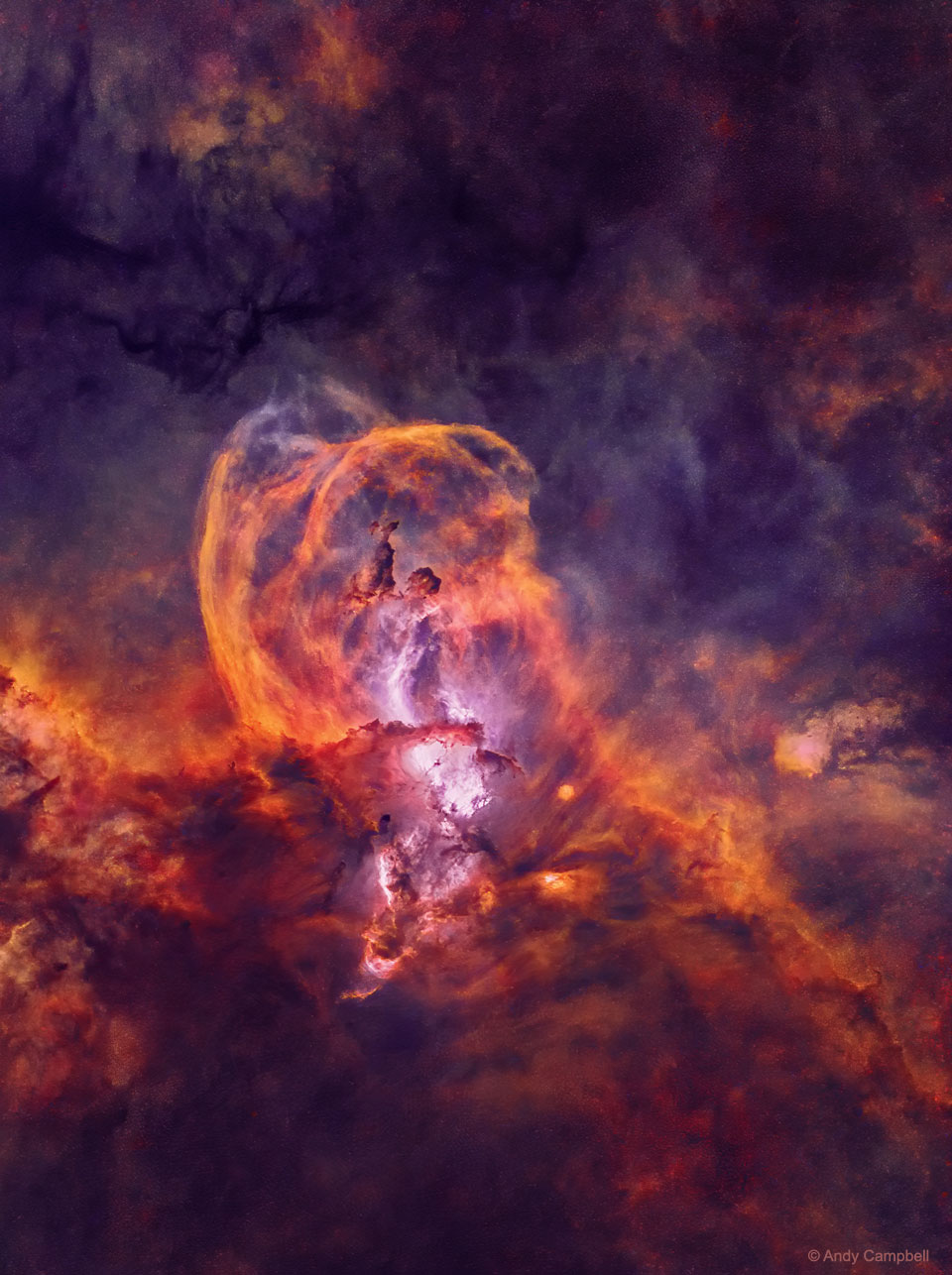
What’s happening in the Statue of Liberty nebula? Bright stars and interesting molecules are forming and being liberated. The complex nebula resides in the star forming region called RCW 57, and besides the iconic monument, to some looks like a flying superhero or a weeping angel. By digitally removing the stars, this image showcases dense knots of dark interstellar dust, fields of glowing hydrogen gas ionized by these stars, and great loops of gas expelled by dying stars. A detailed study of NGC 3576, also known as NGC 3582 and NGC 3584, uncovered at least 33 massive stars in the end stages of formation, and the clear presence of the complex carbon molecules known as polycyclic aromatic hydrocarbons (PAHs). PAHs are thought to be created in the cooling gas of star forming regions, and their development in the Sun’s formation nebula five billion years ago may have been an important step in the development of life on Earth.

from NASA https://ift.tt/2GAwOfk
via IFTTT

Lightning over the Volcano of Water


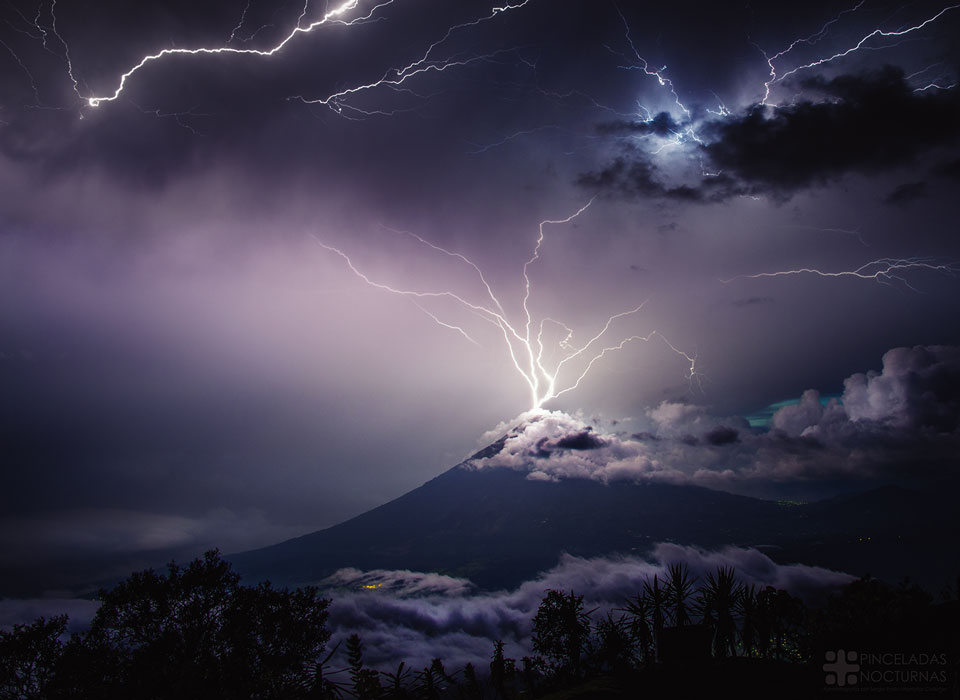
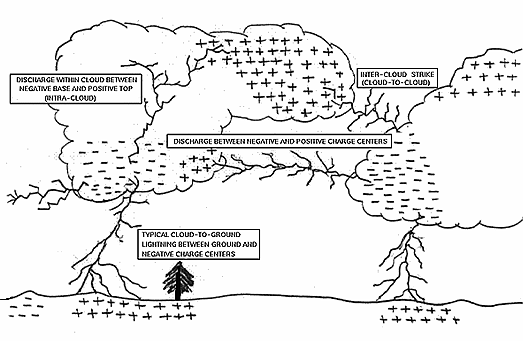
Have you ever watched a lightning storm in awe? Join the crowd. Details of what causes lightning are still being researched, but it is known that inside some clouds, internal updrafts cause collisions between ice and snow that slowly separate charges between cloud tops and bottoms The rapid electrical discharges that are lightning soon result. Lightning usually takes a jagged course, rapidly heating a thin column of air to about three times the surface temperature of the Sun. The resulting shock wave starts supersonically and decays into the loud sound known as thunder. On average, around the world, about 6,000 lightning bolts occur between clouds and the Earth every minute. Pictured earlier this month in a two-image composite, lightning stems from communication antennas near the top of Volcán de Agua (Volcano of Water) in Guatemala.

from NASA https://ift.tt/2ZcFiAp
via IFTTT

The North America Nebula in Infrared


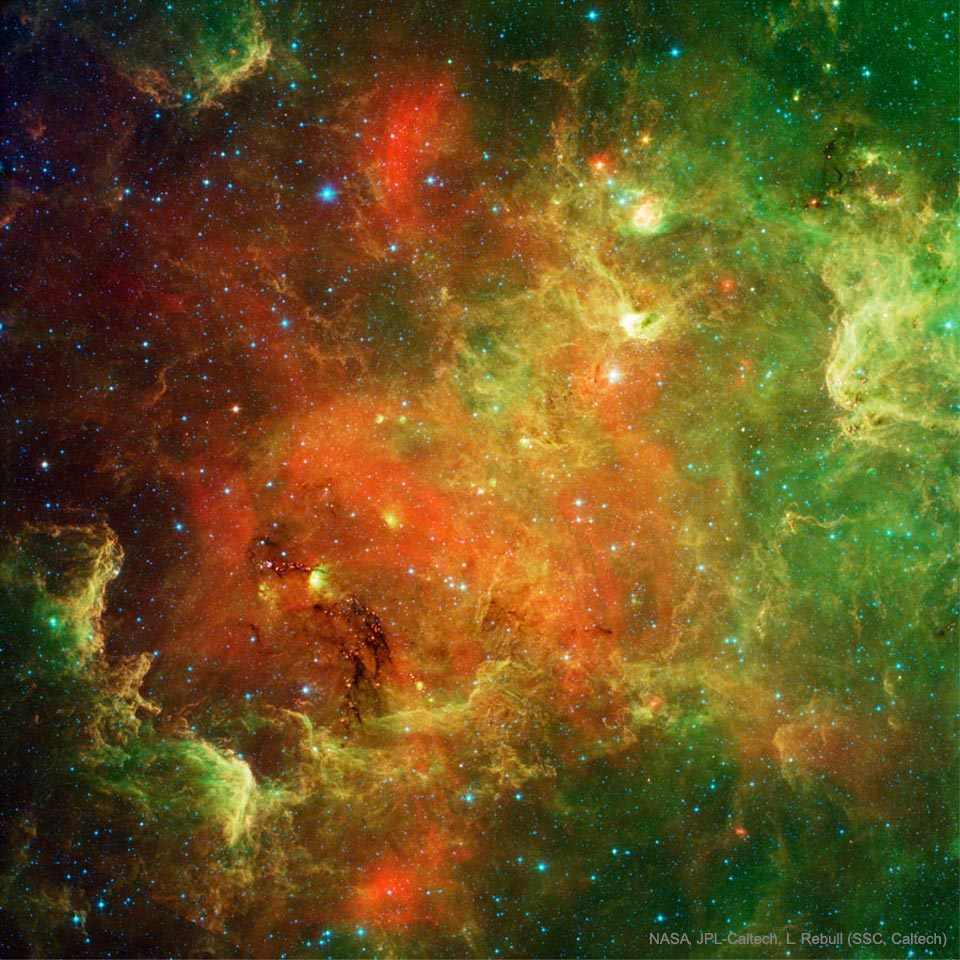
The North America Nebula can do what most North Americans cannot — form stars. Precisely where in the nebula these stars are forming has been mostly obscured by some of the nebula’s thick dust that is opaque to visible light. However, a view of the North America Nebula in infrared light by the orbiting Spitzer Space Telescope has peered through much of the dust and uncovered thousands of newly formed stars. Rolling your cursor over the above scientifically-colored infrared image will bring up a corresponding optical image of the same region for comparison. The infrared image neatly captures young stars in many stages of formation, from being imbedded in dense knots of gas and dust, to being surrounded by disks and emitted jets, to being clear of their birth cocoons. The North America Nebula (NGC 7000) spans about 50 light years and lies about 1,500 light years away toward the constellation of the Swan (Cygnus). Still, of all the stars known in the North America Nebula, which massive stars emit the energetic light that gives the ionized red glow is still debated.

from NASA https://ift.tt/2Gy6Tox
via IFTTT

Chandrayaan 2 Launch


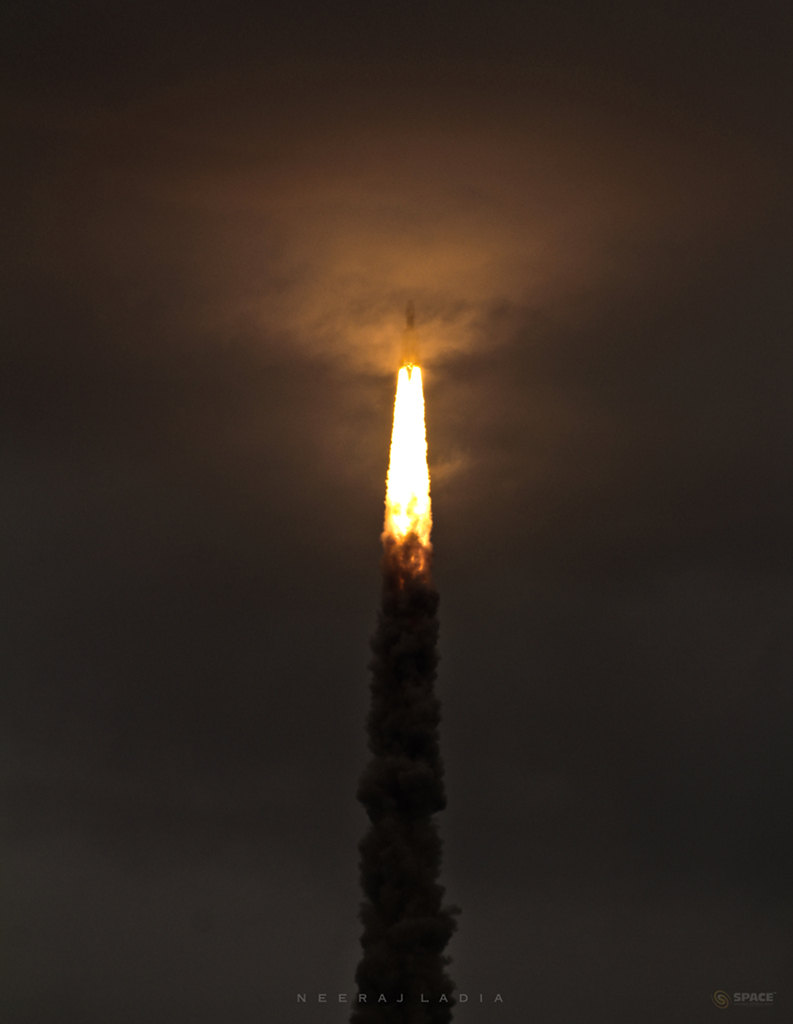
On July 22nd this GSLV (Geosynchronous Satellite Launch Vehicle) MkIII rocket vanished from sight into a cloud bank an instant after this dramatic snapshot was taken. Launched from India’s Satish Dhawan Space Centre it carried the Chandrayaan 2 mission spacecraft into Earth orbit. The spacecraft’s orbiter, lander, and rover are destined for the Moon, though. In the coming weeks it will perform a series of orbit raising maneuvers, eventually transferring to lunar orbit in early September. Carrying the solar-powered rover, the lander is scheduled to separate and attempt its autonomous soft landing at high latitudes near the lunar south pole. It should arrive on the lunar nearside near local sunrise and the start of a two Earth-week long lunar day on September 7.

from NASA https://ift.tt/2Grz8VN
via IFTTT

The Veins of Heaven


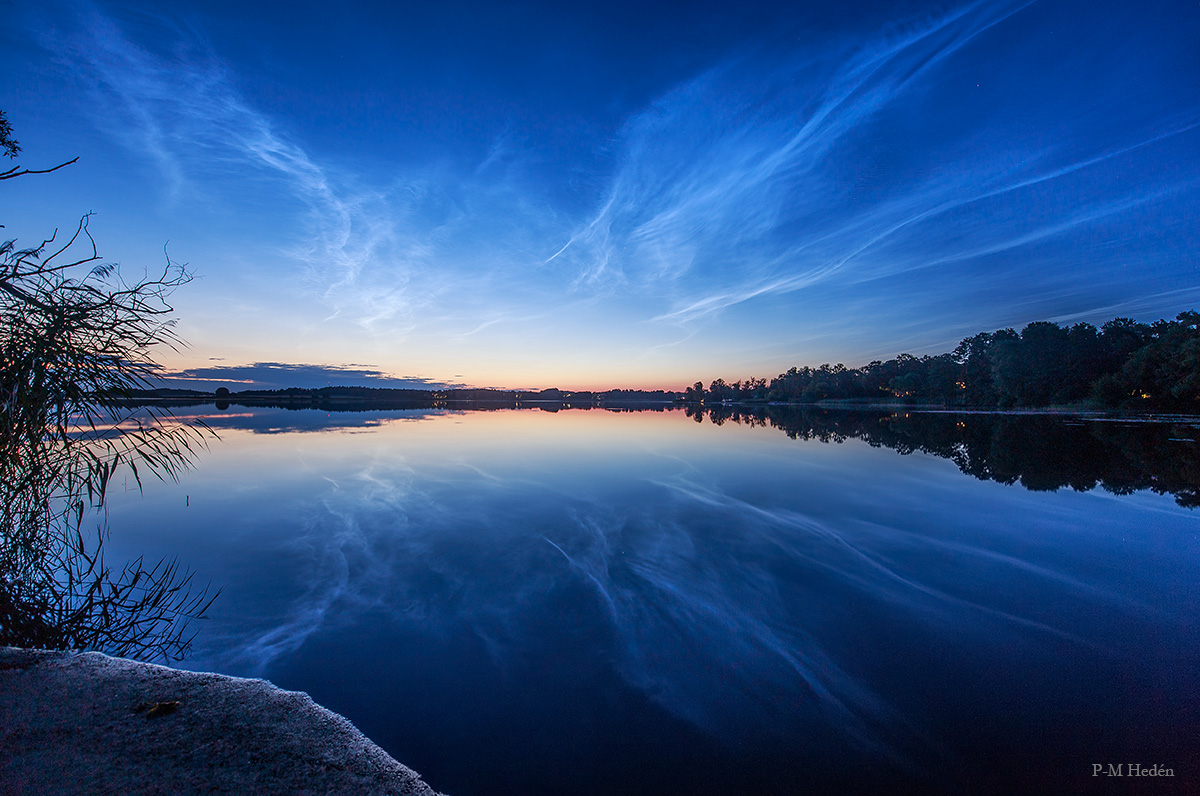
Transfusing sunlight through a still dark sky, this exceptional display of noctilucent clouds was captured earlier this month, reflected in the calm waters of Vallentuna Lake near Stockholm, Sweden. From the edge of space, about 80 kilometers above Earth’s surface, the icy clouds themselves still reflect sunlight even though the Sun is below the horizon as seen from the ground. Usually spotted at high latitudes in summer months the night shining clouds have made a strong showing so far during the short northern summer nights. Also known as polar mesopheric clouds they are understood to form as water vapor driven into the cold upper atmosphere condenses on the fine dust particles supplied by disintegrating meteors or volcanic ash. NASA’s AIM mission provides daily projections of noctilucent clouds as seen from space.

from NASA https://ift.tt/2K2znHP
via IFTTT