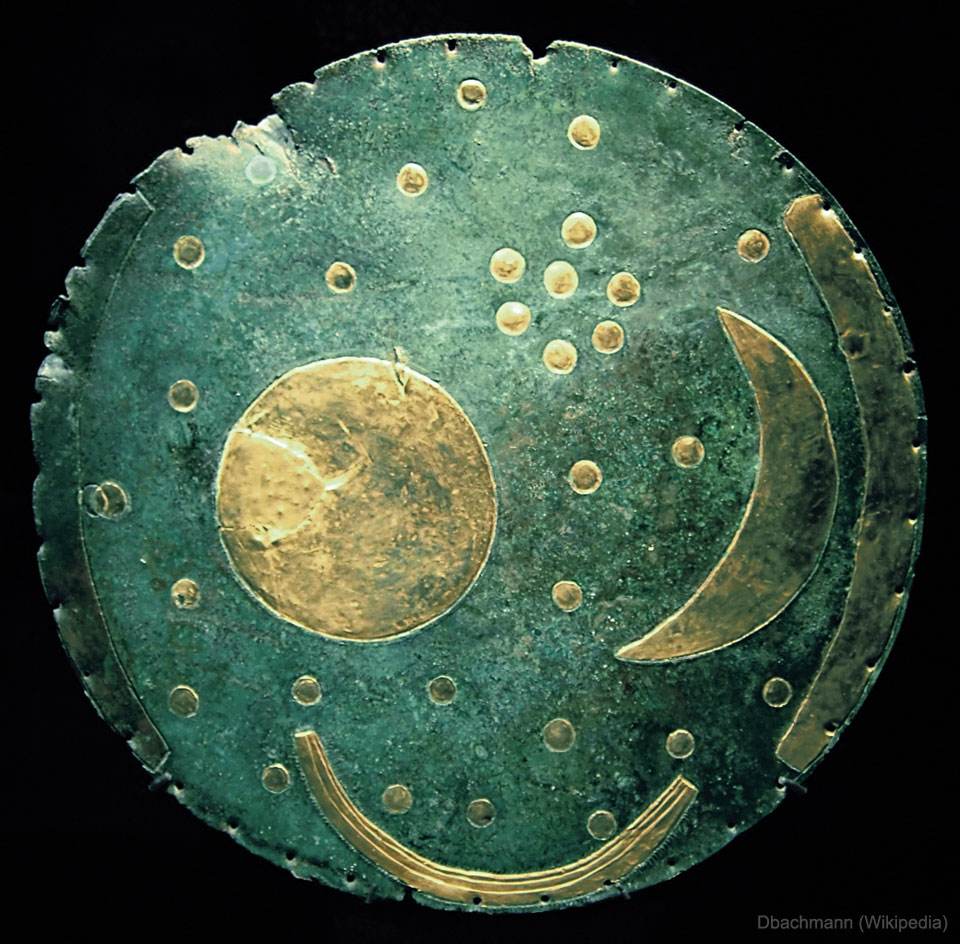
The Nebra Sky Disk


It is considered the oldest known illustration of the night sky. But what, exactly, does it depict, and why was it made? The Nebra sky disk was found with a metal detector in 1999 by treasure hunters near Nebra, Germany, in the midst of several bronze-age weapons. The ancient artifact spans about 30 centimeters and has been associated with the Unetice culture that inhabited part of Europe around 1600 BC. Reconstructed, the dots are thought to represent stars, with the cluster representing the Pleiades, and the large circle and the crescent representing the Sun and Moon. The purpose of the disk remains unknown — hypotheses including an astronomical clock, a work of art, and a religious symbol. Valued at about $11 million, some believe that the Nebra sky disk is only one of a pair, with the other disk still out there waiting to be discovered.

from NASA http://ift.tt/2FJZOCO
via IFTTT
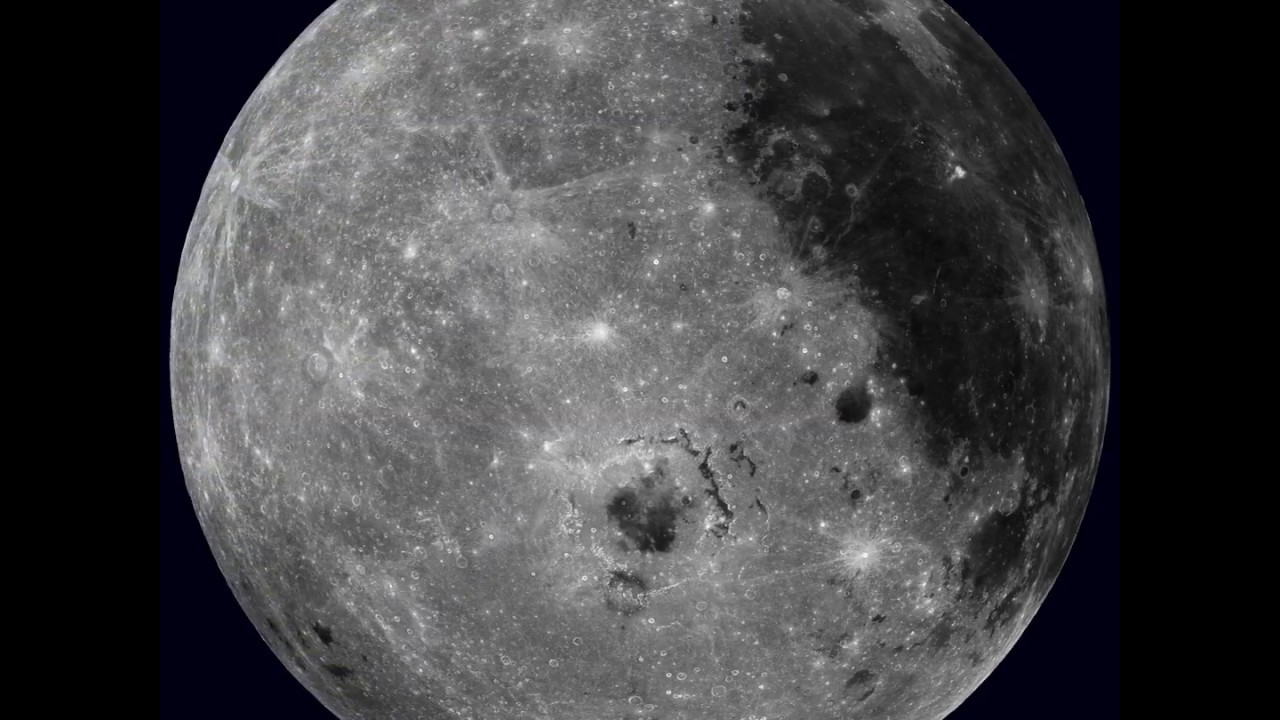
Rotating Moon from LRO


No one, presently, sees the Moon rotate like this. That’s because the Earth’s moon is tidally locked to the Earth, showing us only one side. Given modern digital technology, however, combined with many detailed images returned by the Lunar Reconnaissance Orbiter (LRO), a high resolution virtual Moon rotation movie has been composed. The above time-lapse video starts with the standard Earth view of the Moon. Quickly, though, Mare Orientale, a large crater with a dark center that is difficult to see from the Earth, rotates into view just below the equator. From an entire lunar month condensed into 24 seconds, the video clearly shows that the Earth side of the Moon contains an abundance of dark lunar maria, while the lunar far side is dominated by bright lunar highlands. Currently, over 20 new missions to the Moon are under active development from four different countries, most of which have expected launch dates either this year or next.

from NASA http://ift.tt/2FKI3Di
via IFTTT

The Crab from Space


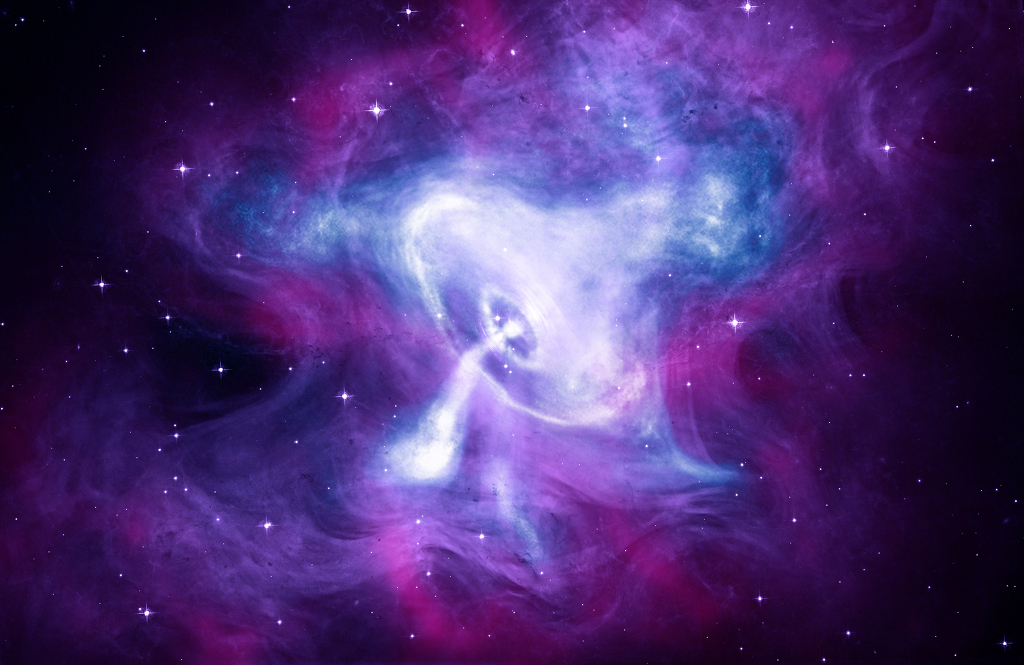
The Crab Nebula is cataloged as M1, the first object on Charles Messier’s famous list of things which are not comets. In fact, the Crab is now known to be a supernova remnant, expanding debris from the death explosion of a massive star. This intriguing false-color image combines data from space-based observatories, Chandra, Hubble, and Spitzer, to explore the debris cloud in X-rays (blue-white), optical (purple), and infrared (pink) light. One of the most exotic objects known to modern astronomers, the Crab Pulsar, a neutron star spinning 30 times a second, is the bright spot near picture center. Like a cosmic dynamo, this collapsed remnant of the stellar core powers the Crab’s emission across the electromagnetic spectrum. Spanning about 12 light-years, the Crab Nebula is 6,500 light-years away in the constellation Taurus.

from NASA http://ift.tt/2FIPDhW
via IFTTT

The Seagull and The Duck


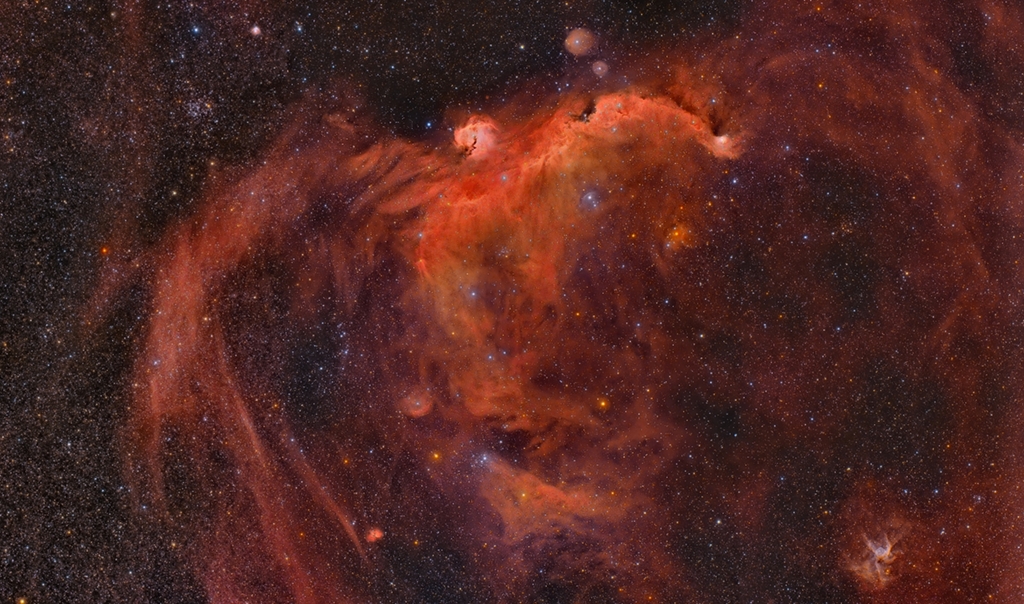
Seen as a seagull and a duck, these nebulae are not the only cosmic clouds to evoke images of flight. But both are winging their way across this broad celestial landscape, spanning almost 7 degrees across planet Earth’s night sky toward the constellation Canis Major. The expansive Seagull (top center) is itself composed of two major cataloged emission nebulae. Brighter NGC 2327 forms the head with the more diffuse IC 2177 as the wings and body. Impressively, the Seagull’s wingspan would correspond to about 250 light-years at the nebula’s estimated distance of 3,800 light-years. At the lower right, the Duck appears much more compact and would span only about 50 light-years given its 15,000 light-year distance estimate. Blown by energetic winds from an extremely massive, hot star near its center, the Duck nebula is cataloged as NGC 2359. Of course, the Duck’s thick body and winged appendages also lend it the slightly more dramatic popular moniker, Thor’s Helmet.

from NASA http://ift.tt/2tR9INp
via IFTTT

Catalog Entry Number 1


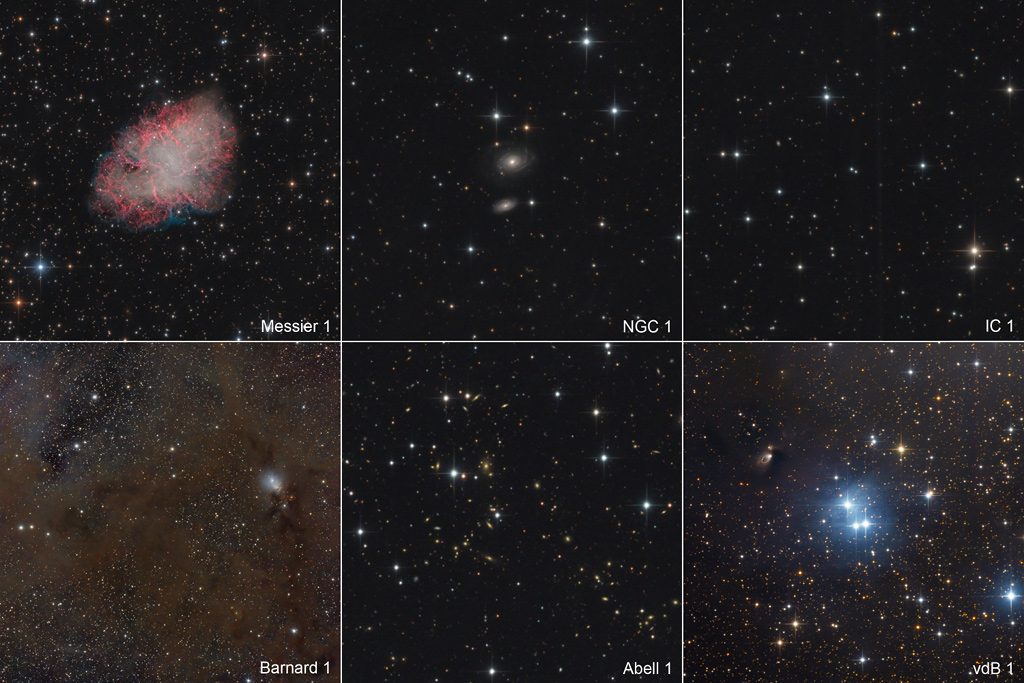
Every journey has first step and every catalog a first entry. First entries in six well-known deep sky catalogs appear in these panels, from upper left to lower right in chronological order of original catalog publication. From 1774, Charles Messier’s catalog entry number 1 is M1, famous cosmic crustacean and supernova remnant the Crab Nebula. J.L.E. Dreyer’s (not so new) New General Catalog was published in 1888. A spiral galaxy in Pegasus, his NGC 1 is centered in the next panel. Just below it in the frame is another spiral galaxy cataloged as NGC 2. In Dreyer’s follow-on Index Catalog (next panel), IC 1 is actually a faint double star, though. Now recognized as part of the Perseus molecular cloud complex, dark nebula Barnard 1 begins the bottom row from Dark Markings of the Sky, a 1919 catalog by E.E. Barnard. Abell 1 is a distant galaxy cluster in Pegasus, from George Abell’s 1958 catalog of Rich Clusters of Galaxies. The final panel is centered on vdB 1, from Sidney van den Bergh’s 1966 study. The pretty, blue galactic reflection nebula is found in the constellation Cassiopeia.

from NASA http://ift.tt/2pbQsEK
via IFTTT

Night Sky Highlights: March to May


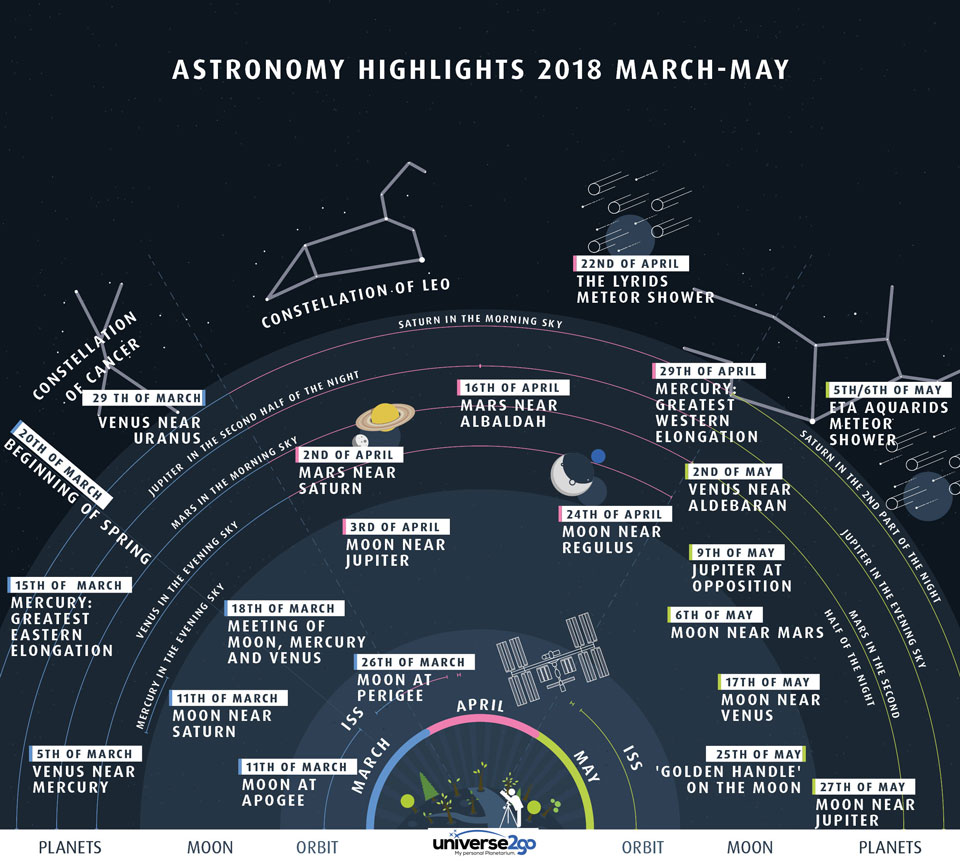
What might you see in the night sky over the next few months? The featured graphic gives a few highlights. Viewed as a clock face centered at the bottom, sky events in March fan out toward the left, April toward the top, and May toward the right. Objects relatively close to Earth are illustrated, in general, as nearer to the cartoon figure with the telescope at the bottom center — although almost everything pictured can be seen without a telescope. Sky highlights this season include a bright Venus in the evening sky during March, the Lyrids meteor shower during April, and Jupiter entering the evening sky during May. As true in every season, the International Space Station (ISS) can be sometimes be found drifting across your sky if you know just when and where to look.

from NASA http://ift.tt/2GoUphs
via IFTTT

Flying over the Earth at Night II


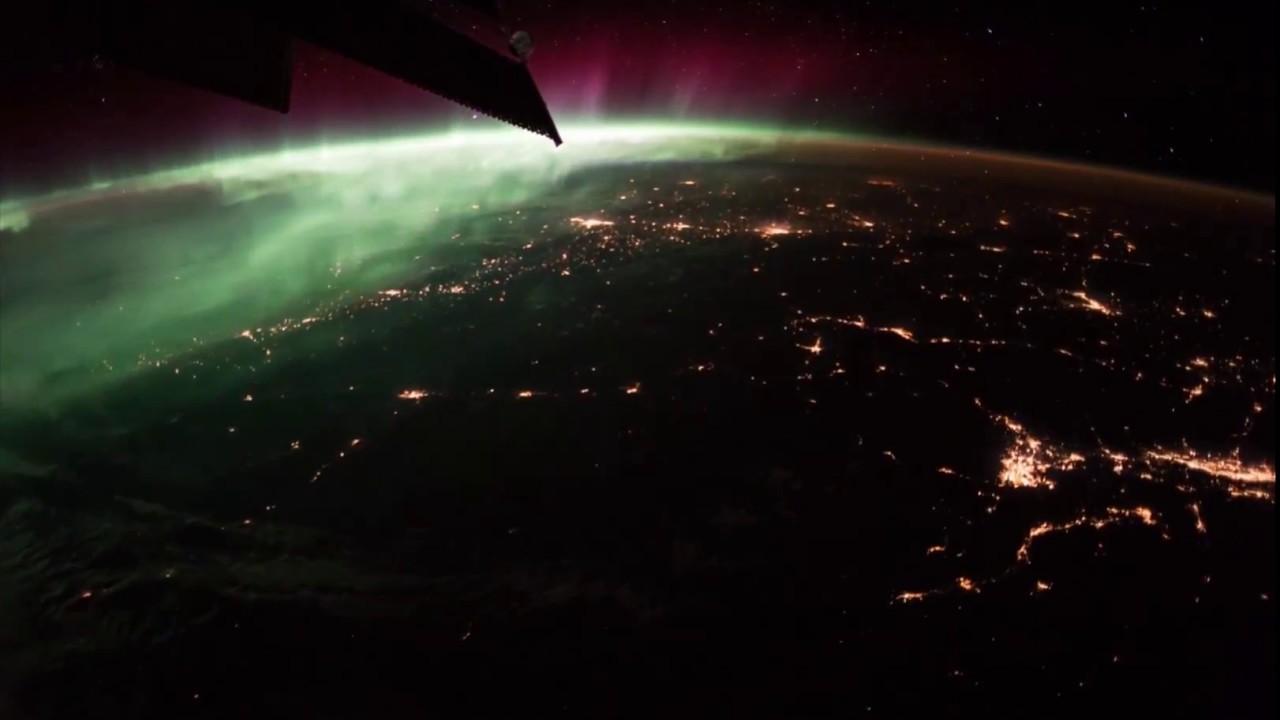
What would it be like to orbit the Earth? The International Space Station (ISS) does this every 90 minutes, and sometimes the astronauts on board take image sequences that are made into videos. The featured time-lapse video shows many visual spectacles of the dark Earth below. First, as the video begins, green and red auroras are visible on the upper left above white clouds. Soon city lights come into view, and it becomes clear you are flying over North America, eventually passing over Florida. In the second sequence you fly over Europe and Africa, eventually passing over the Nile River. Brief flashes of light are lightning in storms. Stars far in the distance can be seen rising through the greenish-gold glow of the Earth’s atmosphere.

from NASA http://ift.tt/2HrQDTJ
via IFTTT

Duel Particle Beams in Herbig Haro 24


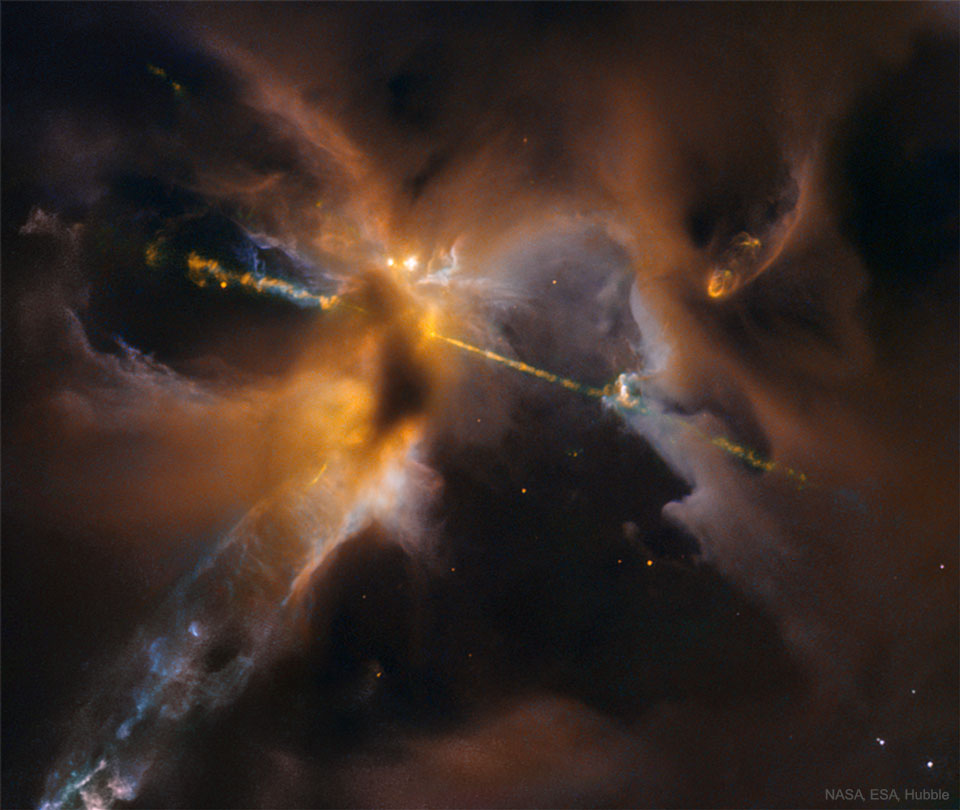
This might look like a double-bladed lightsaber, but these two cosmic jets actually beam outward from a newborn star in a galaxy near you. Constructed from Hubble Space Telescope image data, the stunning scene spans about half a light-year across Herbig-Haro 24 (HH 24), some 1,300 light-years away in the stellar nurseries of the Orion B molecular cloud complex. Hidden from direct view, HH 24‘s central protostar is surrounded by cold dust and gas flattened into a rotating accretion disk. As material from the disk falls toward the young stellar object it heats up. Opposing jets are blasted out along the system’s rotation axis. Cutting through the region’s interstellar matter, the narrow, energetic jets produce a series of glowing shock fronts along their path.

from NASA http://ift.tt/2GfBqGa
via IFTTT

Phases of the Moon


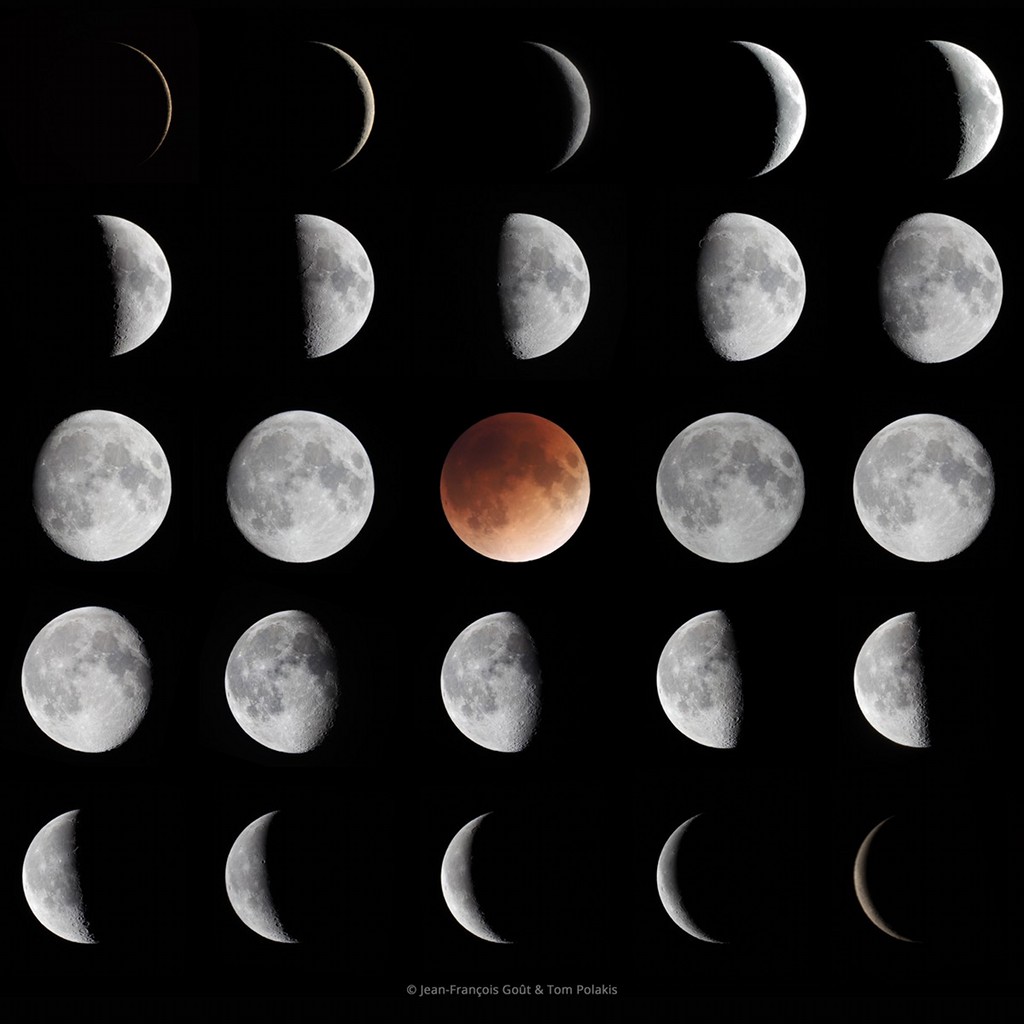
Look at the Moon every night and its visible sunlit portion gradually changes. In phases progressing from New Moon to Full Moon to New Moon again, a lunar cycle or lunation is completed in about 29.5 days. Top left to bottom right, these frames show the range of lunar phases for 25 consecutive nights beginning on January 18, following an almost complete lunation. They skip the 2 days just after and 2 days before New Moon, when the lunar phase is at best a narrow crescent, close to the Sun and really hard to see. Of course, mostly clear Arizona night skies and a little help from a friend were required to complete this lunar cycle project, imaging in early evening for the first half and late evening and early morning for the second half of the lunation. For extra credit, the cycle was centered on the Full Moon of January 31. That was the second Full Moon in January, when the Moon was near lunar orbit perigee and took on reddish hues during a total lunar eclipse.

from NASA http://ift.tt/2FvmdzH
via IFTTT

Horsehead: A Wider View


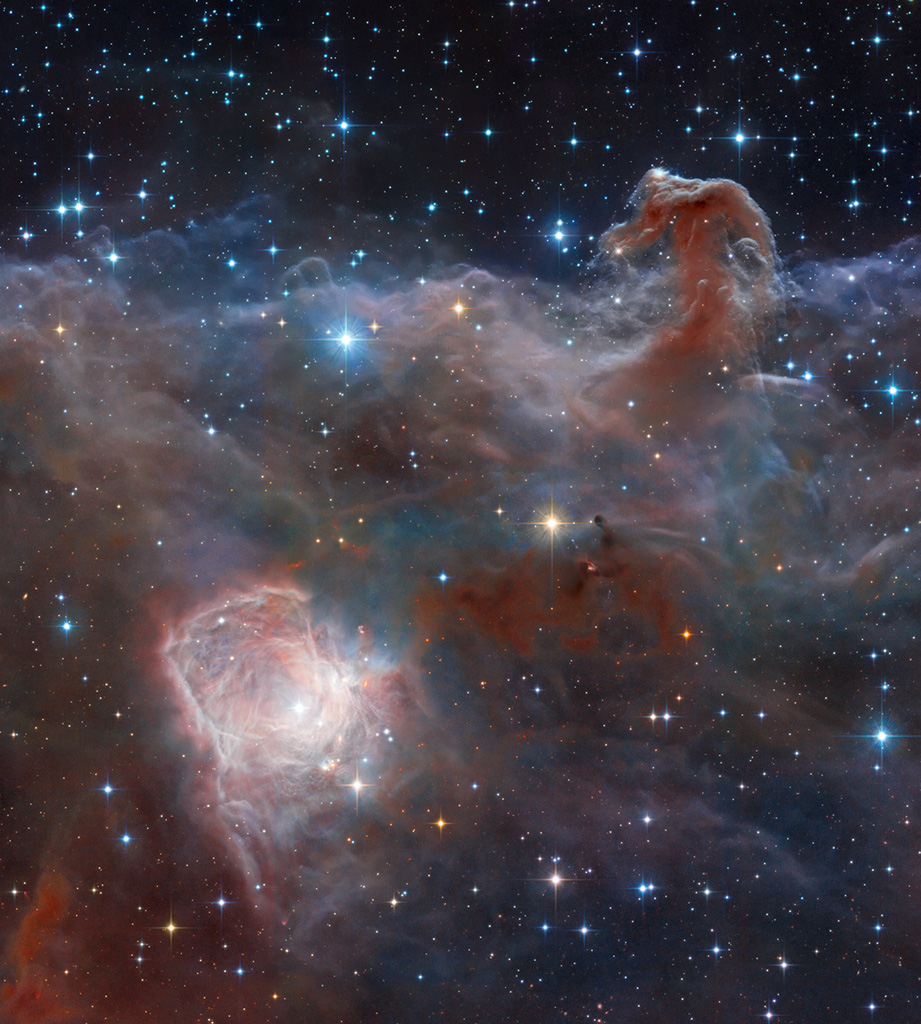
Combined image data from the massive, ground-based VISTA telescope and the Hubble Space Telescope was used to create this wide perspective of the interstellar landscape surrounding the famous Horsehead Nebula. Captured at near-infrared wavelengths, the region’s dusty molecular cloud sprawls across the scene that covers an angle about two-thirds the size of the Full Moon on the sky. Left to right the frame spans just over 10 light-years at the Horsehead’s estimated distance of 1,600 light-years. Also known as Barnard 33, the still recognizable Horsehead Nebula stands at the upper right, the near-infrared glow of a dusty pillar topped with newborn stars. Below and left, the bright reflection nebula NGC 2023 is itself the illuminated environs of a hot young star. Obscuring clouds below the base of the Horsehead and on the outskirts of NGC 2023 show the tell-tale far red emission of energetic jets, known as Herbig-Haro objects, also associated with newborn stars.

from NASA http://ift.tt/2HkOLMJ
via IFTTT