It moved across the surface of Mars — what was it? A dust devil. Such spinning columns of rising air are heated by the warm surface and are also common in warm and dry areas on planet Earth. Typically lasting only a few minutes, dust devils become visible as they pick up loose red-colored dust, leaving the darker and heavier sand beneath intact. Dust devils not only look cool — they can leave visible trails, and have been credited with unexpected cleanings of the surfaces of solar panels. The images in the featured AI-interpolated video were captured in early August by the Perseverance rover currently searching for signs of ancient life in Jezero Crater. The six-second time-lapse video encapsulates a real duration of just over one minute. Visible in the distance, the spinning dust devil was estimated to be passing by at about 20 kilometers per hour and extend up about 2 kilometers high.

from NASA https://ift.tt/wN2z1ZW
via IFTTT
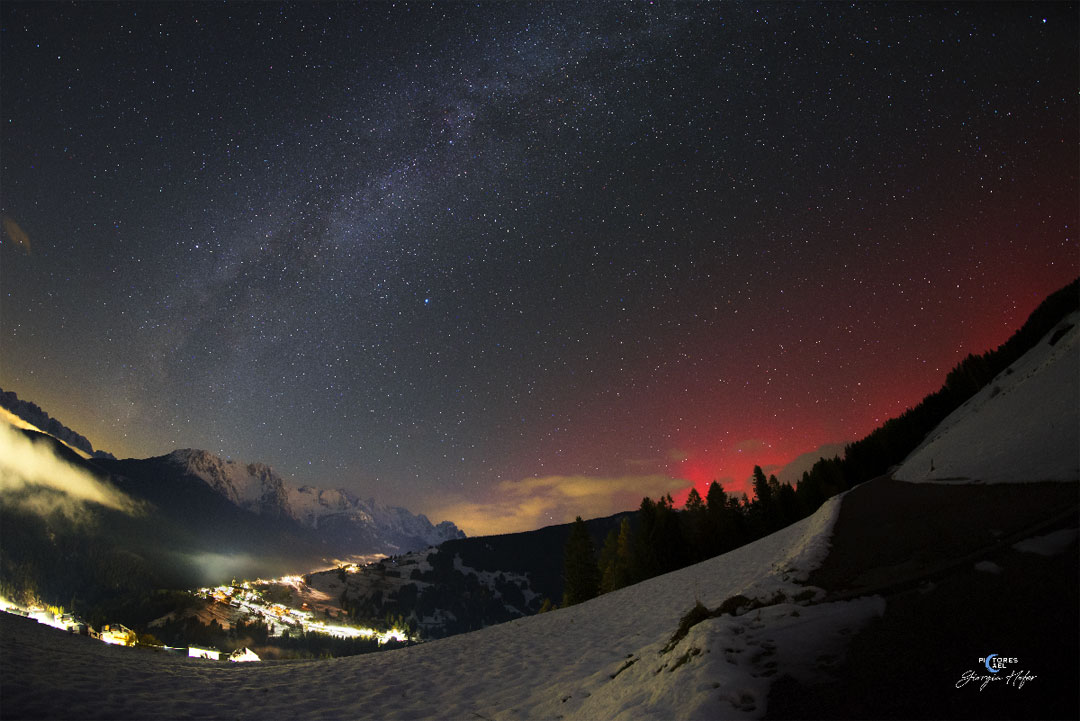

What was that red glow on the horizon last night? Aurora. Our unusually active Sun produced a surface explosion a few days ago that sent out a burst of electrons, protons, and more massive charged nuclei. This coronal mass ejection (CME) triggered auroras here on Earth that are being reported unusually far south in Earth’s northern hemisphere. For example, this was the first time that the astrophotographer captured aurora from her home country of Italy. Additionally, many images from these auroras appear quite red in color. In the featured image, the town of Comelico Superiore in the Italian Alps is visible in the foreground, with the central band of our Milky Way galaxy seen rising from the lower left. What draws the eye the most, though, is the bright red aurora on the far right. The featured image is a composite with the foreground and background images taken consecutively with the same camera and from the same location.

from NASA https://ift.tt/Ts6Q7D1
via IFTTT


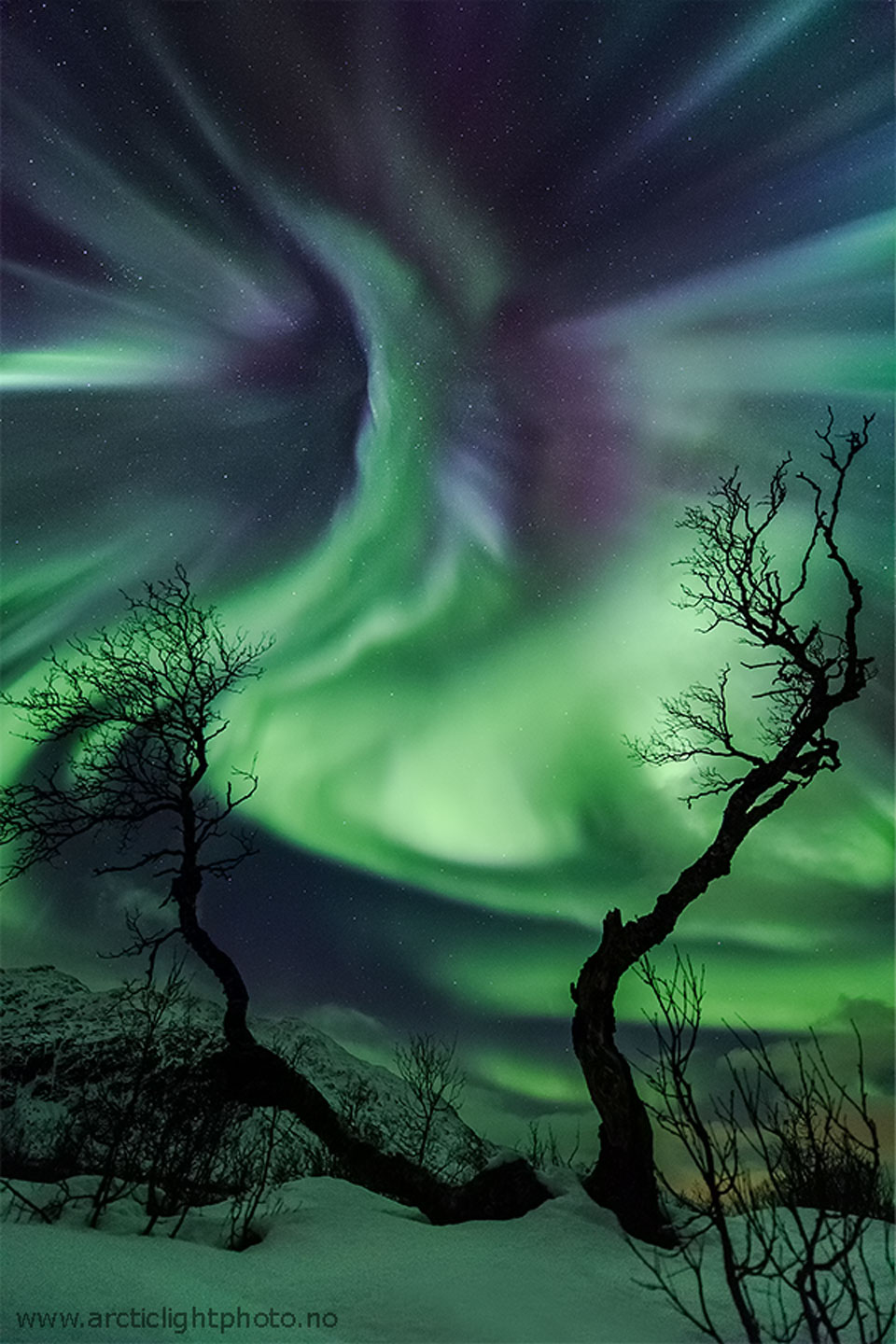
It was Halloween and the sky looked like a creature. Exactly which creature, the astrophotographer was unsure (but possibly you can suggest one). Exactly what caused this eerie apparition in 2013 was sure: one of the best auroral displays that year. This spectacular aurora had an unusually high degree of detail. Pictured here, the vivid green and purple auroral colors are caused by high atmospheric oxygen and nitrogen reacting to a burst of incoming electrons. Birch trees in Tromsø, Norway formed an also eerie foreground. Frequently, new photogenic auroras accompany new geomagnetic storms.

from NASA https://ift.tt/PQfH3On
via IFTTT

Dinkinesh Moonrise


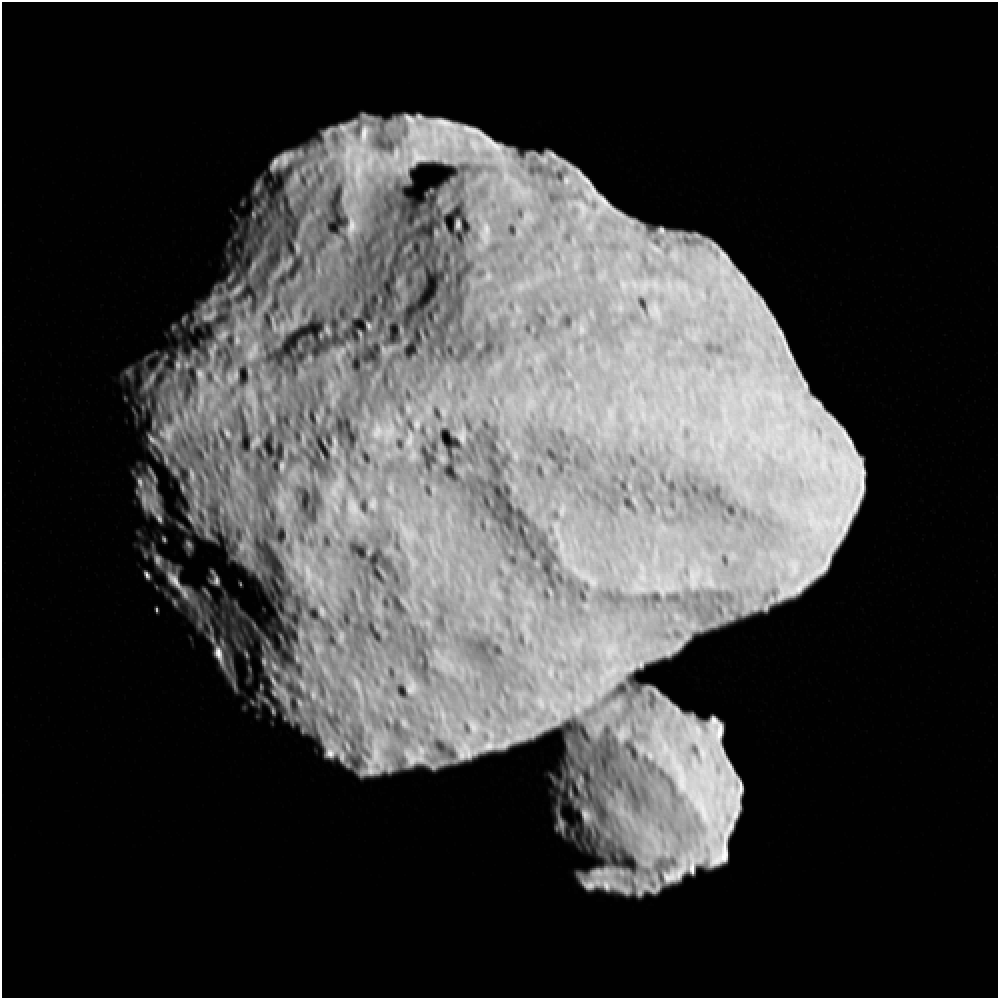
Last Wednesday the voyaging Lucy spacecraft encountered its first asteroid, 152830 Dinkinesh, and discovered the inner-main belt asteroid has a moon. From a distance of just over 400 kilometers, Lucy’s Long-Range Reconnaissance Imager captured this close-up of the binary system during a flyby at 4.5 kilometer per second or around 10,000 miles per hour. A marvelous world, Dinkinesh itself is small, less than 800 meters (about 0.5 miles) across at its widest. Its satellite is seen from the spacecraft’s perspective to emerge from behind the primary asteroid. The asteroid moon is estimated to be only about 220 meters wide.

from NASA https://ift.tt/KCqGpWu
via IFTTT

Jupiter by Moonlight


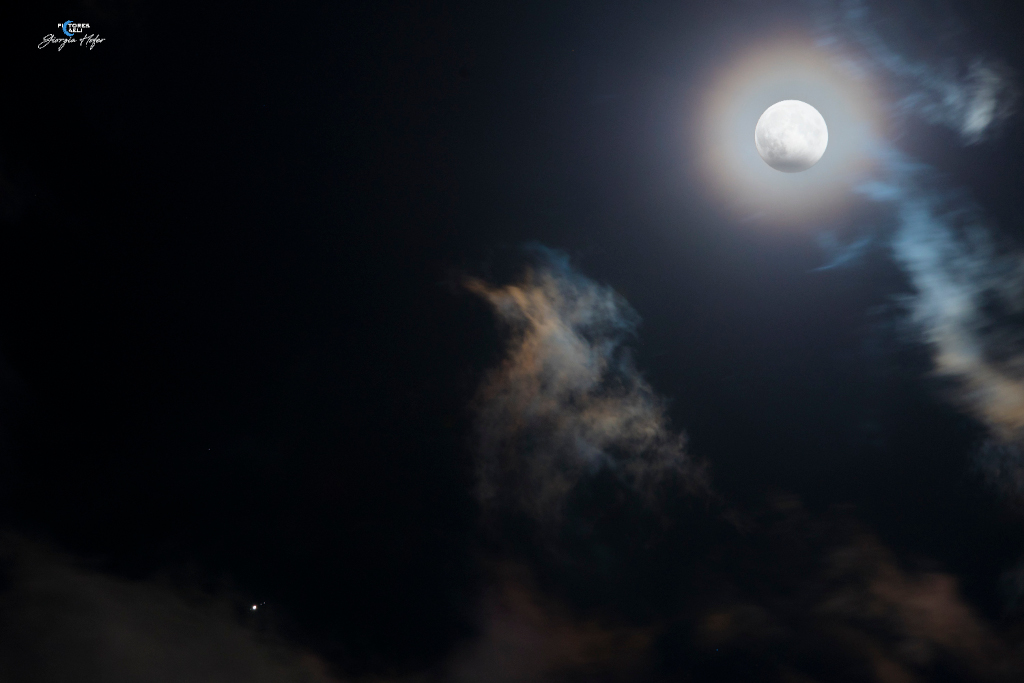
That bright beacon you’ve seen rising in the east just after sunset is Jupiter. Climbing high in midnight skies, our Solar System’s ruling gas giant was at its 2023 opposition, opposite the Sun in planet Earth’s sky, on November 2. But only a few days earlier, on October 28, the Moon was at its own opposition. Then both Full Moon and Jupiter could share this telephoto field of view. The celestial scene is composed from two exposures, one long and one short, blended to record bright planet and even brighter Moon during that evening’s partial lunar eclipse. Moonlight shining through the thin, high clouds over northern Italy creates the colorful iridescence and lunar corona. Look closely and you’ll also spot some of Jupiter’s Galilean moons.

from NASA https://ift.tt/E2yvqrp
via IFTTT

The Fornax Cluster of Galaxies


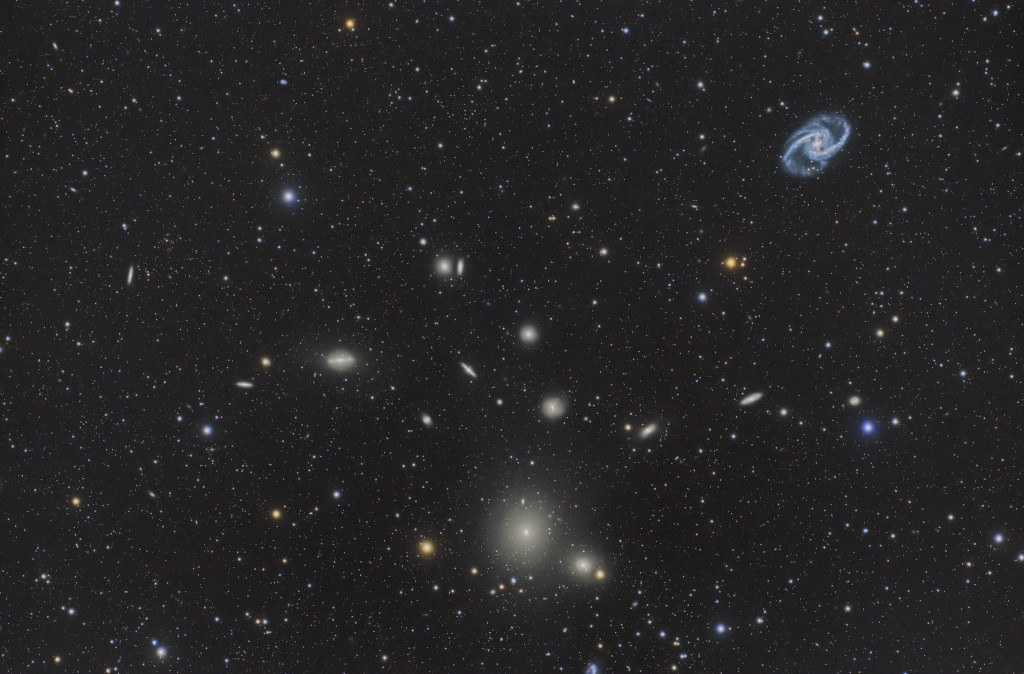
Named for the southern constellation toward which most of its galaxies can be found, the Fornax Cluster is one of the closest clusters of galaxies. About 62 million light-years away, it’s over 20 times more distant than our neighboring Andromeda Galaxy, but only about 10 percent farther along than the better known and more populated Virgo Galaxy Cluster. Seen across this three degree wide field-of-view, almost every yellowish splotch on the image is an elliptical galaxy in the Fornax cluster. Elliptical galaxies NGC 1399 and NGC 1404 are the dominant, bright cluster members toward the bottom center. A standout, large barred spiral galaxy, NGC 1365, is visible on the upper right as a prominent Fornax cluster member.

from NASA https://ift.tt/mUfWsSM
via IFTTT


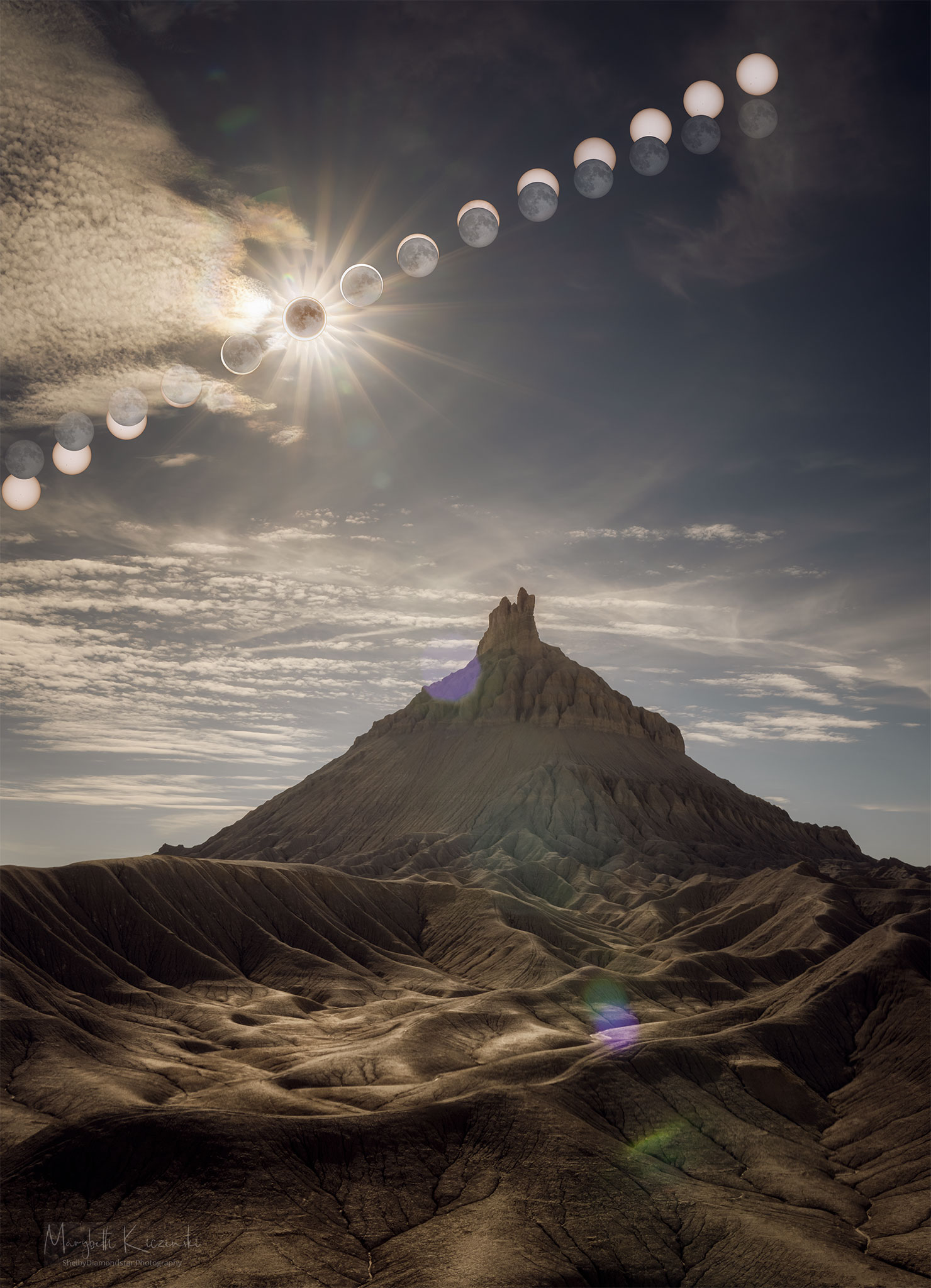
Part of the Sun disappeared earlier this month, but few people were worried. The missing part, which included the center from some locations, just went behind the Moon in what is known as an annular solar eclipse. Featured here is an eclipse sequence taken as the Moon was overtaking the rising Sun in the sky. The foreground hill is Factory Butte in Utah, USA. The rays flaring out from the Sun are not real — they result from camera aperture diffraction and are known as sunstar. The Moon is real, but it is artificially brightened to enhance its outline — which helps the viewer better visualize the Moon’s changing position during this ring-of-fire eclipse. As stunning as this eclipse sequence is, it was considered just practice by the astrophotographer. The reason? She hopes to use this experience to better photograph the total solar eclipse that will occur over North America on April 8, 2024.

from NASA https://ift.tt/wAOphqL
via IFTTT


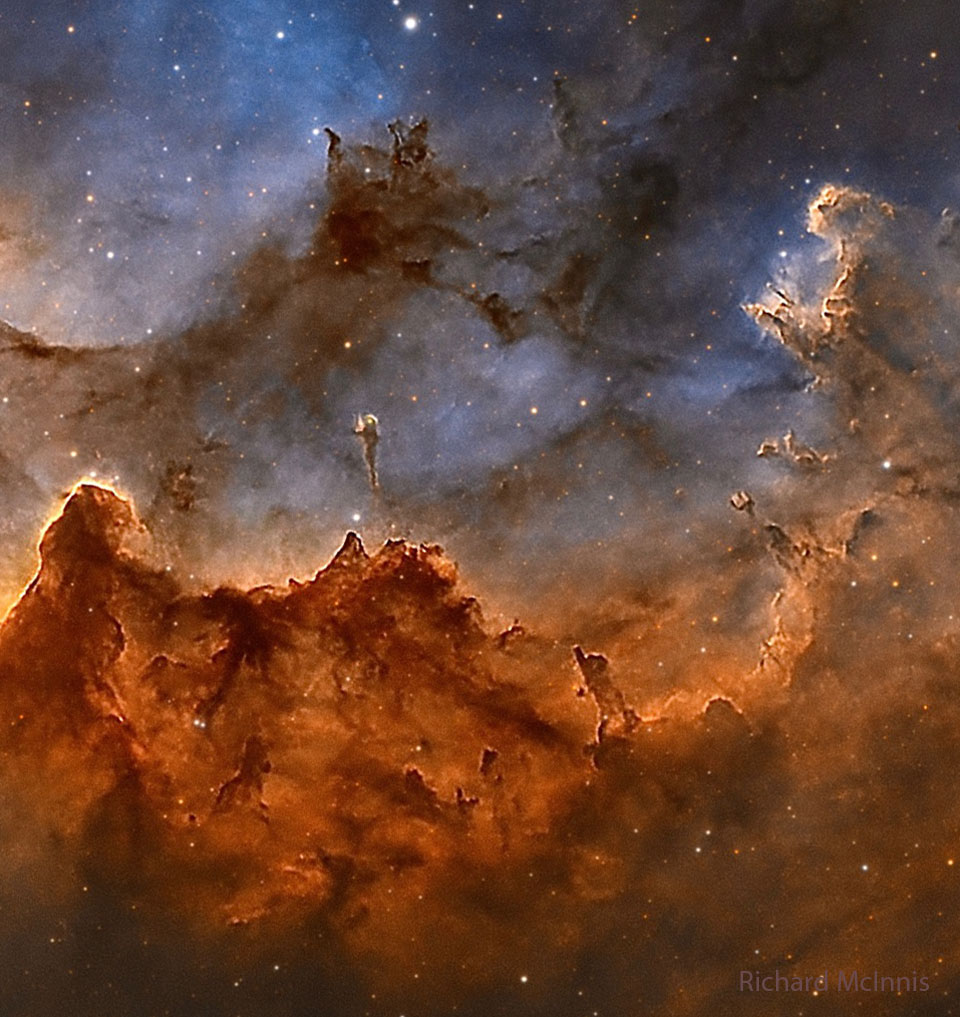
Halloween’s origin is ancient and astronomical. Since the fifth century BC, Halloween has been celebrated as a cross-quarter day, a day halfway between an equinox (equal day / equal night) and a solstice (minimum day / maximum night in the northern hemisphere). With a modern calendar however, even though Halloween occurs today, the real cross-quarter day will occur next week. Another cross-quarter day is Groundhog Day. Halloween’s modern celebration retains historic roots in dressing to scare away the spirits of the dead. Perhaps a fitting tribute to this ancient holiday is this closeup view of the Wizard Nebula (NGC 7380). Visually, the interplay of stars, gas, and dust has created a shape that appears to some like a fictional ancient sorcerer. Although the nebula may last only a few million years, some of the stars being conjured from the gas by the great gravitational powers may outlive our Sun.

from NASA https://ift.tt/AurUFnV
via IFTTT


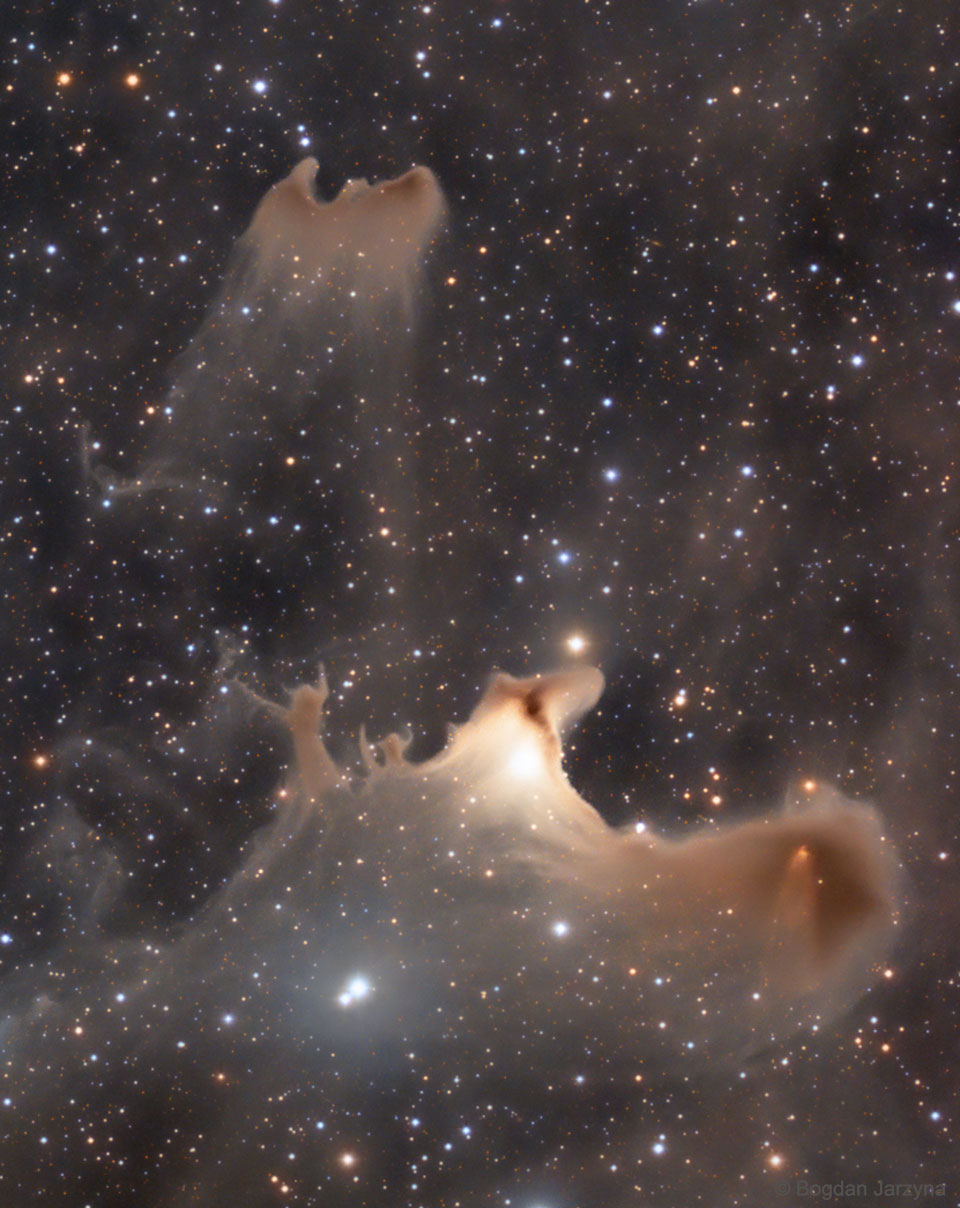
Do any shapes seem to jump out at you from this interstellar field of stars and dust? The jeweled expanse, filled with faint, starlight-reflecting clouds, drifts through the night in the royal constellation of Cepheus. Far from your own neighborhood on planet Earth, these ghostly apparitions lurk along the plane of the Milky Way at the edge of the Cepheus Flare molecular cloud complex some 1,200 light-years away. Over two light-years across and brighter than the other spooky chimeras, VdB 141 or Sh2-136 is also known as the Ghost Nebula, seen toward the bottom of the featured image. Within the reflection nebula are the telltale signs of dense cores collapsing in the early stages of star formation.

from NASA https://ift.tt/MjFhwbi
via IFTTT


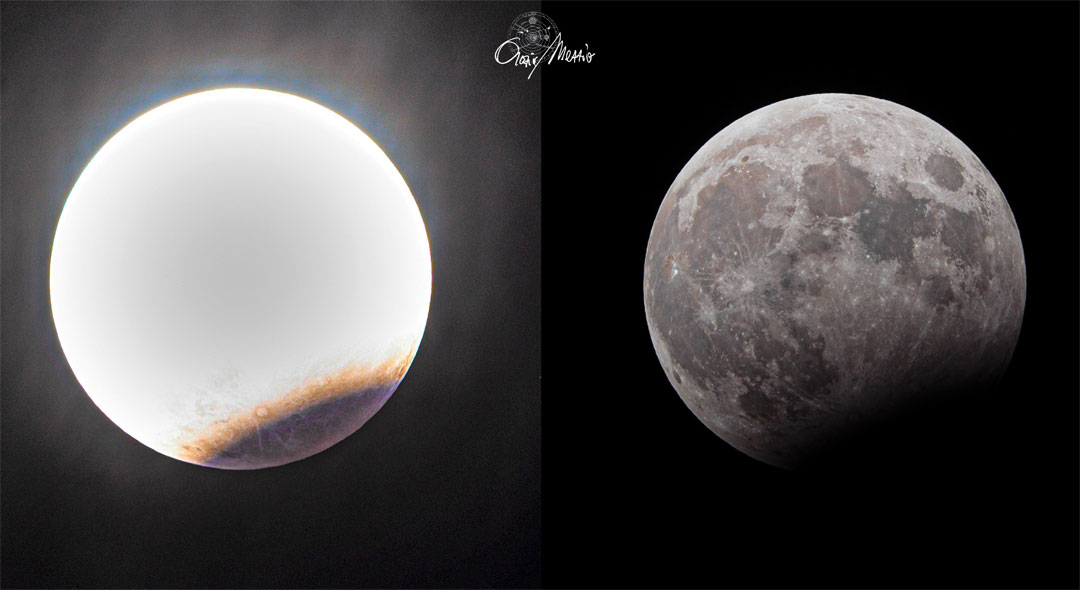
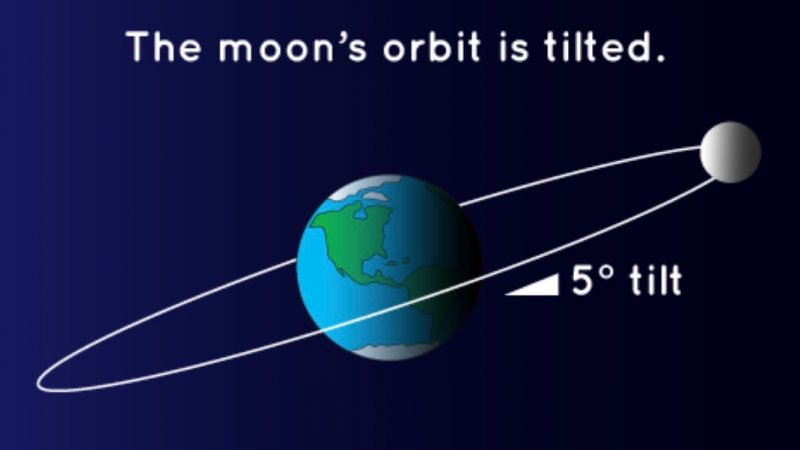
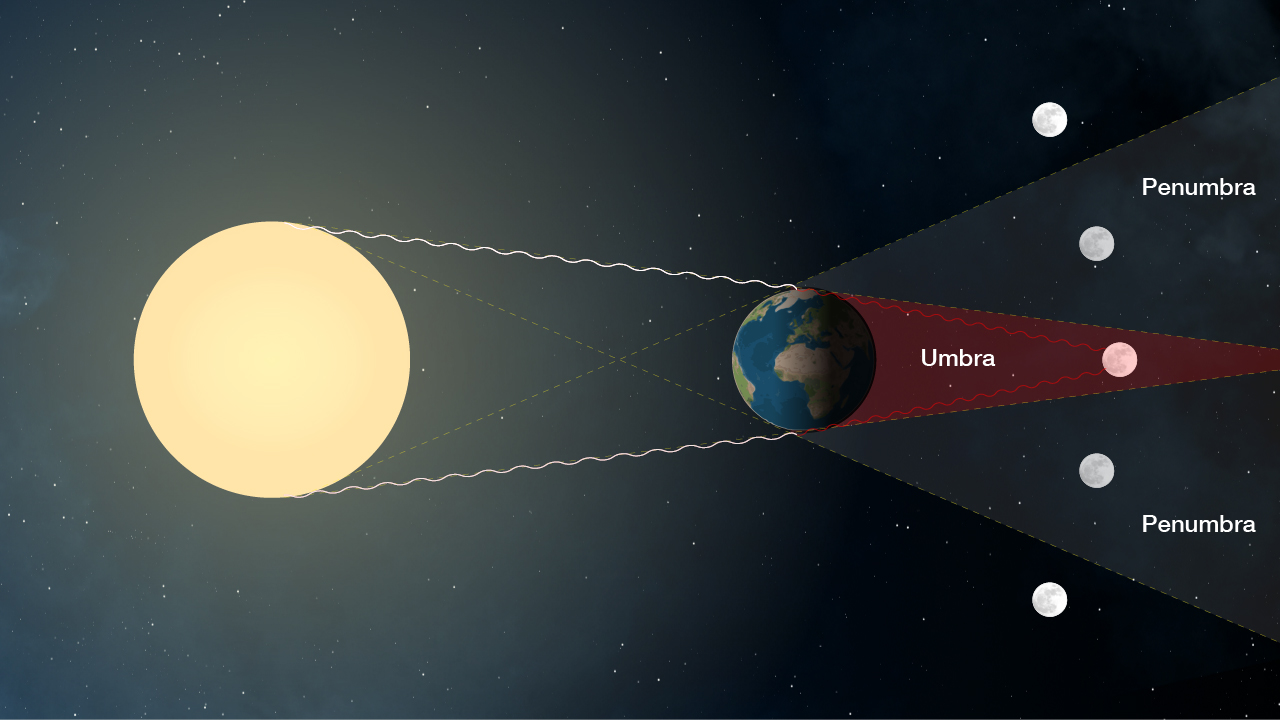
What’s happened to the Moon? Within the last day, part of the Moon moved through the Earth’s shadow. This happens about once or twice a year, but not every month since the Moon’s orbit around the Earth is slightly tilted. Pictured here, the face of a full Hunter’s Moon is shown twice from Italy during this partial lunar eclipse. On the left, most of the Moon appears overexposed except for the eclipsed bottom right, which shows some familiar lunar surface details. In contrast, on the right, most of the (same) Moon appears normally exposed, with the exception of the bottom right, which now appears dark. All lunar eclipses are visible from the half of the Earth facing the Moon at the time of the eclipse, but this eclipse was visible specifically from Europe, Africa, Asia, and Australia, clouds permitting. In April, a total solar eclipse will be visible from North America.

from NASA https://ift.tt/DxVLsFr
via IFTTT