Nightlights in Qeqertaq


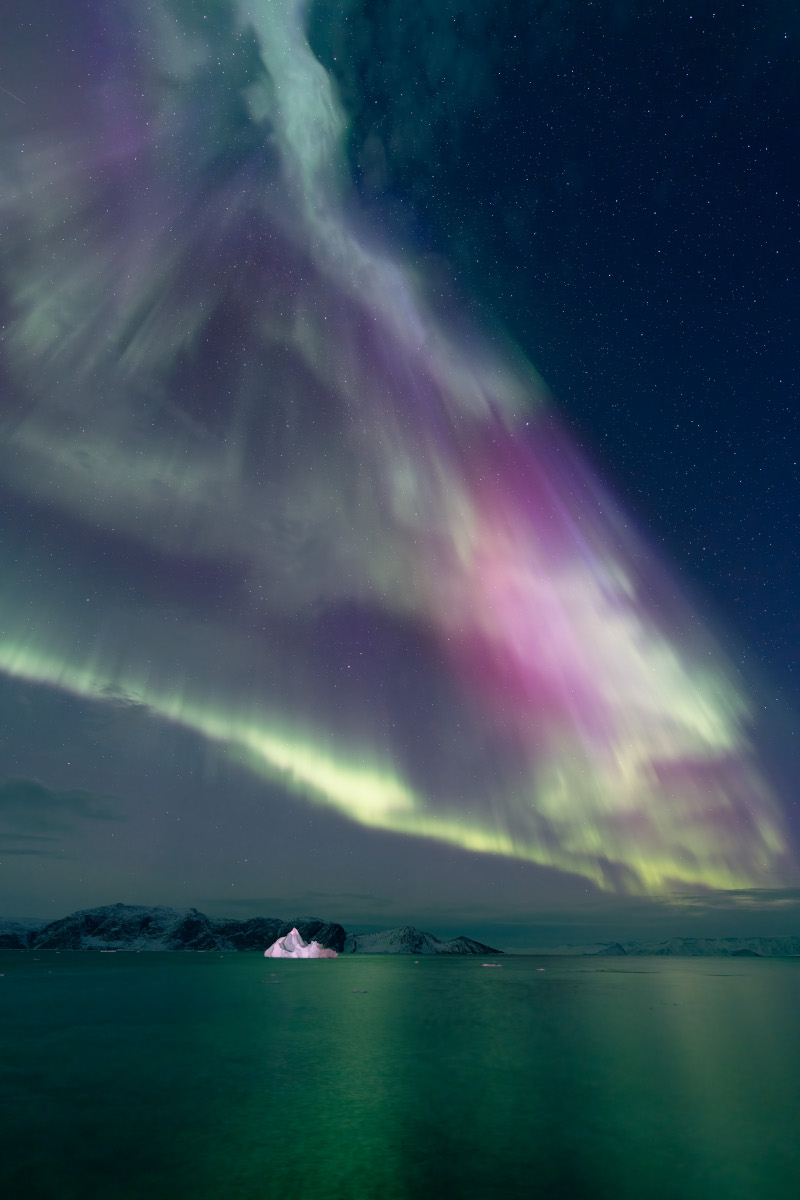
Light pollution is usually not a problem in Qeqertaq. In western Greenland the remote coastal village boasted a population of 114 in 2020. Lights still shine in its dark skies though. During planet Earth’s recent intense geomagnetic storm, on November 6 these beautiful curtains of aurora borealis fell over the arctic realm. On the eve of the coming weeks of polar night at 70 degrees north latitude, the inspiring display of northern lights is reflected in the waters of Disko Bay. In this view from the isolated settlement a lone iceberg is illuminated by shore lights as it drifts across the icy sea.

from NASA https://ift.tt/ajR0zIe
via IFTTT
Daytime Moon Meets Morning Star


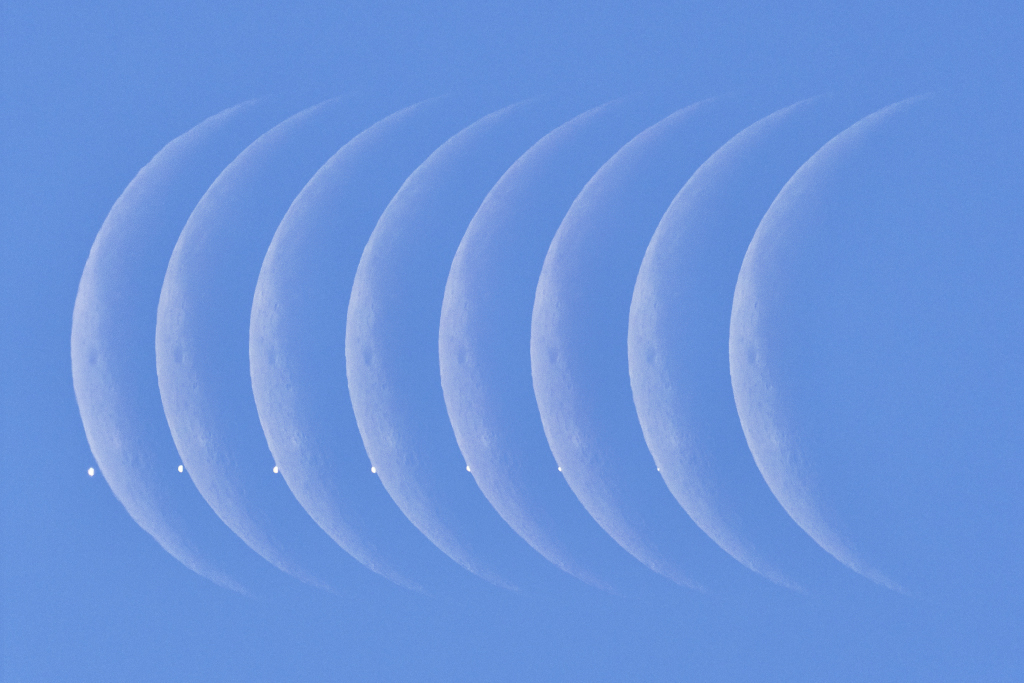
Venus now appears as Earth’s brilliant morning star, shining above the southeastern horizon before dawn. For early morning risers, the silvery celestial beacon rose predawn in a close pairing with a waning crescent Moon on Thursday, November 9. But from some northern locations, the Moon was seen to occult or pass in front of Venus. From much of Europe, the lunar occultation could be viewed in daylight skies. This time series composite follows the daytime approach of Moon and morning star in blue skies from Warsaw, Poland. The progression of eight sharp telescopic snapshots, made between 10:56am and 10:58am local time, runs from left to right, when Venus winked out behind the bright lunar limb.

from NASA https://ift.tt/rNtuz9Z
via IFTTT

M1: The Incredible Expanding Crab


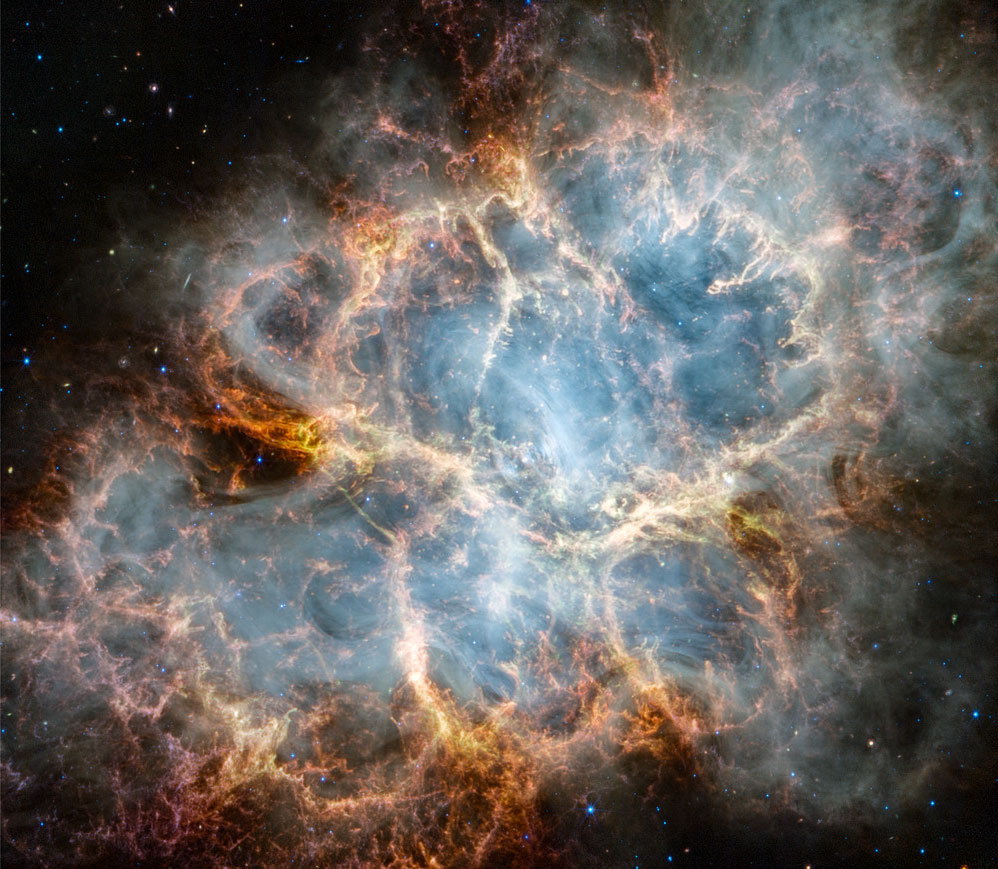
Cataloged as M1, the Crab Nebula is the first on Charles Messier’s famous list of things which are not comets. In fact, the Crab Nebula is now known to be a supernova remnant, an expanding cloud of debris from the death explosion of a massive star. The violent birth of the Crab was witnessed by astronomers in the year 1054. Roughly 10 light-years across, the nebula is still expanding at a rate of about 1,500 kilometers per second. You can see the expansion by comparing these sharp images from the Hubble Space Telescope and James Webb Space Telescope. The Crab’s dynamic, fragmented filaments were captured in visible light by Hubble in 2005 and Webb in infrared light in 2023. This cosmic crustacean lies about 6,500 light-years away in the constellation Taurus.

from NASA https://ift.tt/D712ZUT
via IFTTT


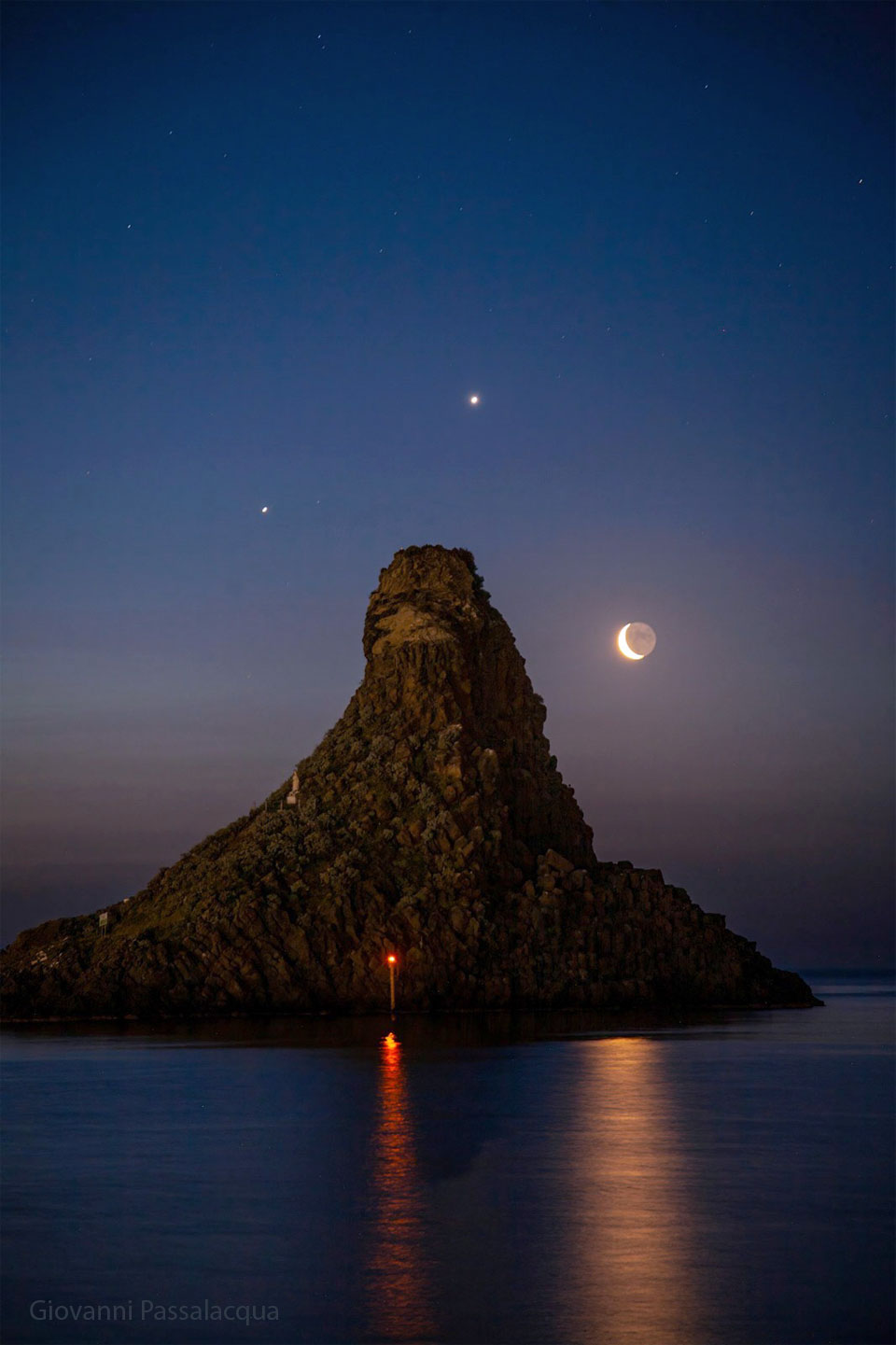
In the fading darkness before dawn, a tilted triangle appeared to balance atop a rock formation off the southern tip of Sicily. Making up the points of the triangle are three of the four brightest objects visible in Earth’s sky: Jupiter, Venus and the Moon. Though a thin waning crescent, most of the moon’s disk is visible due to earthshine. Captured in this image on 2022 April 27, Venus (center) and Jupiter (left) are roughly three degrees apart — and were headed toward a close conjunction. Conjunctions of Venus and Jupiter occur about once a year and are visible either in the east before sunrise or in the west after sunset. The featured image was taken about an hour before the arrival of the brightest object in Earth’s sky – the Sun.

from NASA https://ift.tt/bC5Vx4v
via IFTTT


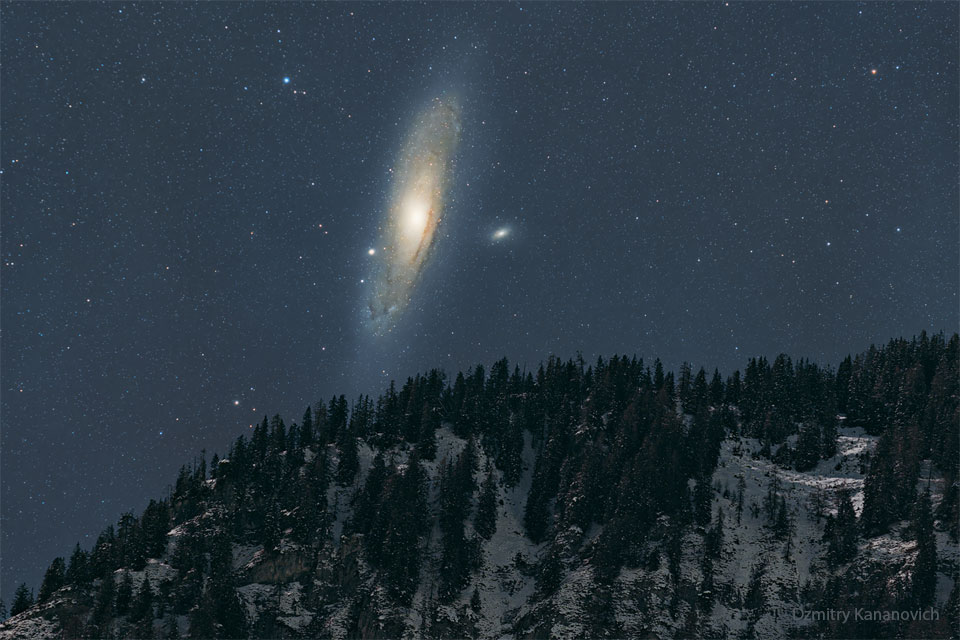
Have you ever seen the Andromeda galaxy? Although M31 appears as a faint and fuzzy blob to the unaided eye, the light you see will be over two million years old, making it likely the oldest light you ever will see directly. The featured image captured Andromeda just before it set behind the Swiss Alps early last year. As cool as it may be to see this neighboring galaxy to our Milky Way with your own eyes, long duration camera exposures can pick up many faint and breathtaking details. The image is composite of foreground and background images taken consecutively with the same camera and from the same location. Recent data indicate that our Milky Way Galaxy will collide and coalesce with Andromeda galaxy in a few billion years.

from NASA https://ift.tt/wpG2kQ6
via IFTTT


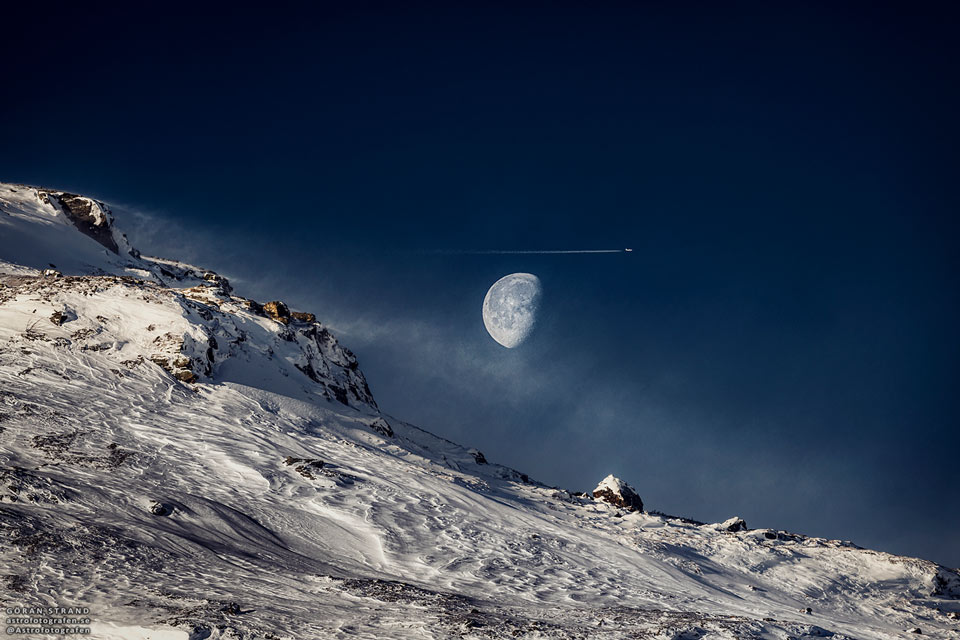
This is a gibbous Moon. More Earthlings are familiar with a full moon, when the entire face of Luna is lit by the Sun, and a crescent moon, when only a sliver of the Moon’s face is lit. When more than half of the Moon is illuminated, though, but still short of full illumination, the phase is called gibbous. Rarely seen in television and movies, gibbous moons are quite common in the actual night sky. The featured image was taken in Jämtland, Sweden near the end of 2018 October. That gibbous moon turned, in a few days, into a crescent moon, and then a new moon, then back to a crescent, and a few days past that, back to gibbous. Setting up to capture a picturesque gibbous moonscape, the photographer was quite surprised to find an airplane, surely well in the foreground, appearing to fly past it.

from NASA https://ift.tt/CrAcl0O
via IFTTT

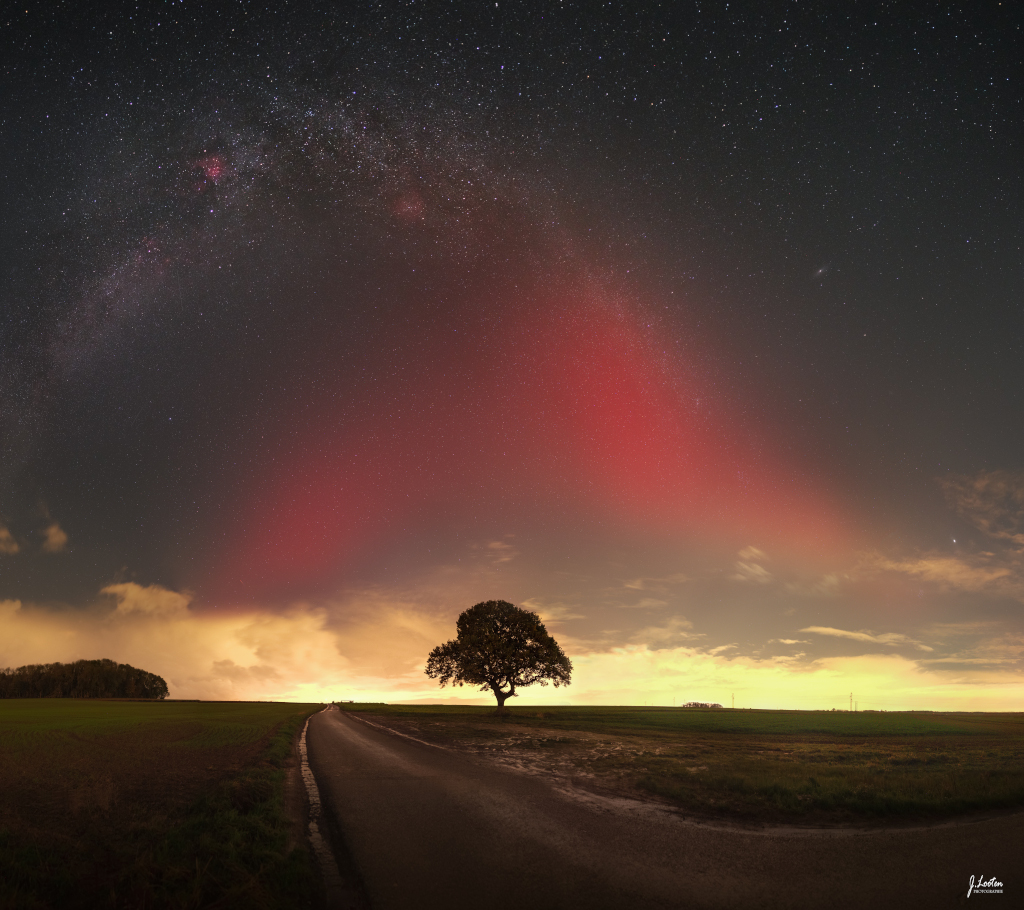
The SAR and the Milky Way


This broad, luminous red arc was a surprising visitor to partly cloudy evening skies over northern France. Captured extending toward the zenith in a west-to-east mosaic of images from November 5, the faint atmospheric ribbon of light is an example of a Stable Auroral Red (SAR) arc. The rare night sky phenomenon was also spotted at unusually low latitudes around world, along with more dynamic auroral displays during an intense geomagnetic storm. SAR arcs and their relation to auroral emission have been explored by citizen science and satellite investigations. From altitudes substantially above the normal auroral glow, the deep red SAR emission is thought to be caused by strong heating due to currents flowing in planet Earth’s inner magnetosphere. Beyond this SAR, the Milky Way arcs above the cloud banks along the horizon, a regular visitor to night skies over northern France.

from NASA https://ift.tt/crATW3f
via IFTTT

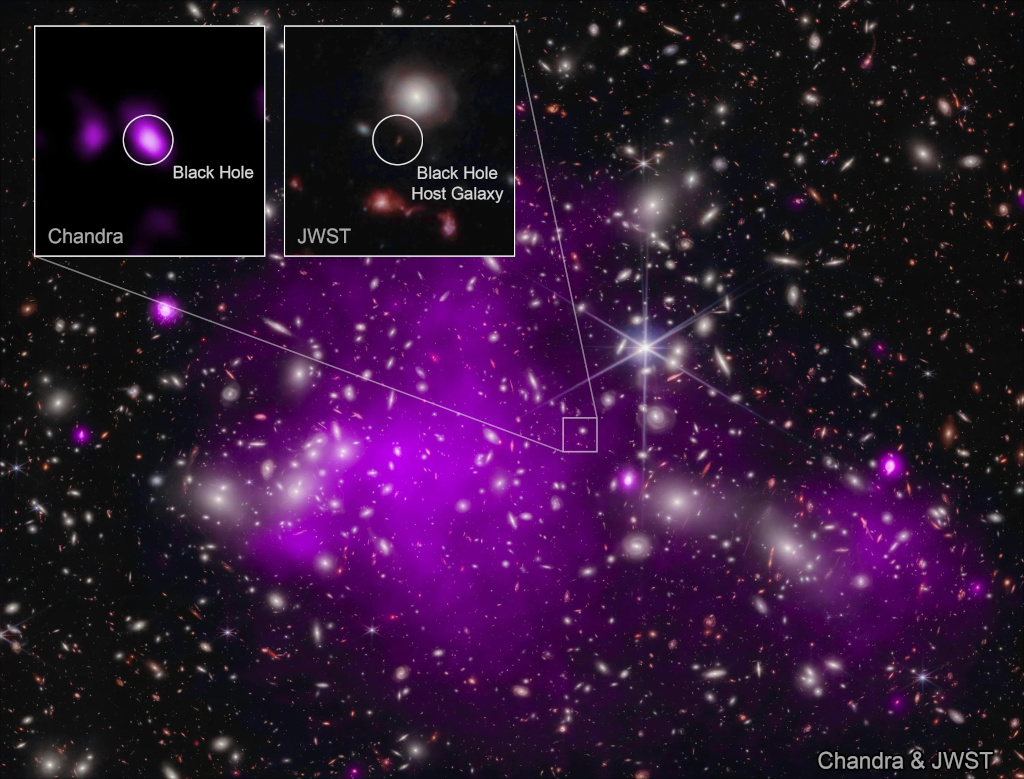
UHZ1: Distant Galaxy and Black Hole


Dominated by dark matter, massive cluster of galaxies Abell 2744 is known to some as Pandora’s Cluster. It lies 3.5 billion light-years away toward the constellation Sculptor. Using the galaxy cluster’s enormous mass as a gravitational lens to warp spacetime and magnify even more distant objects directly behind it, astronomers have found a background galaxy, UHZ1, at a remarkable redshift of Z=10.1. That puts UHZ1 far beyond Abell 2744, at a distance of 13.2 billion light-years, seen when our universe was about 3 percent of its current age. UHZ1 is identified in the insets of this composited image combining X-rays (purple hues) from the spacebased Chandra X-ray Observatory and infrared light from the James Webb Space Telescope. The X-ray emission from UHZ1 detected in the Chandra data is the telltale signature of a growing supermassive black hole at the center of the ultra high redshift galaxy. That makes UHZ1’s growing black hole the most distant black hole ever detected in X-rays, a result that now hints at how and when the first supermassive black holes in the universe formed.

from NASA https://ift.tt/Sct6rLx
via IFTTT

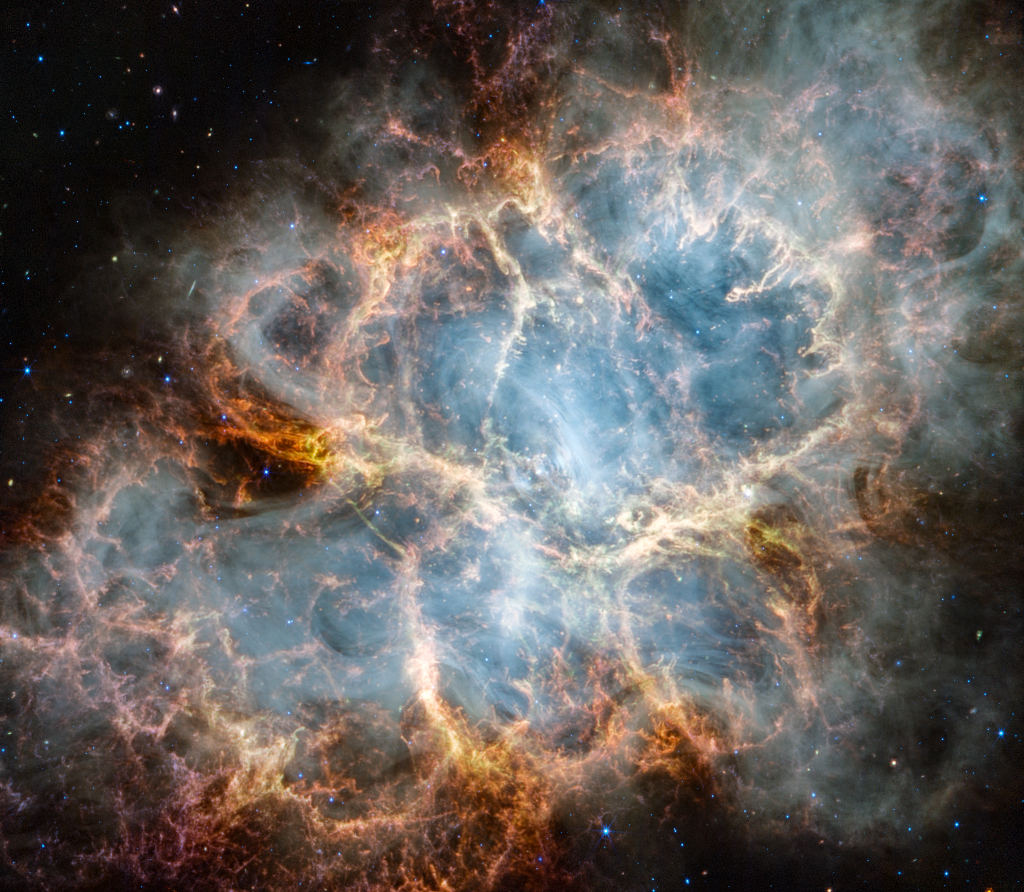
M1: The Crab Nebula


The Crab Nebula is cataloged as M1, the first object on Charles Messier’s famous 18th century list of things which are not comets. In fact, the Crab is now known to be a supernova remnant, debris from the death explosion of a massive star witnessed by astronomers in the year 1054. This sharp image from the James Webb Space Telescope’s NIRCam (Near-Infrared Camera) and MIRI (Mid-Infrared Instrument) explores the eerie glow and fragmented strands of the still expanding cloud of interstellar debris in infrared light. One of the most exotic objects known to modern astronomers, the Crab Pulsar, a neutron star spinning 30 times a second, is visible as a bright spot near the nebula’s center. Like a cosmic dynamo, this collapsed remnant of the stellar core powers the Crab’s emission across the electromagnetic spectrum. Spanning about 12 light-years, the Crab Nebula is a mere 6,500 light-years away in the head-strong constellation Taurus.

from NASA https://ift.tt/2K9GIxy
via IFTTT


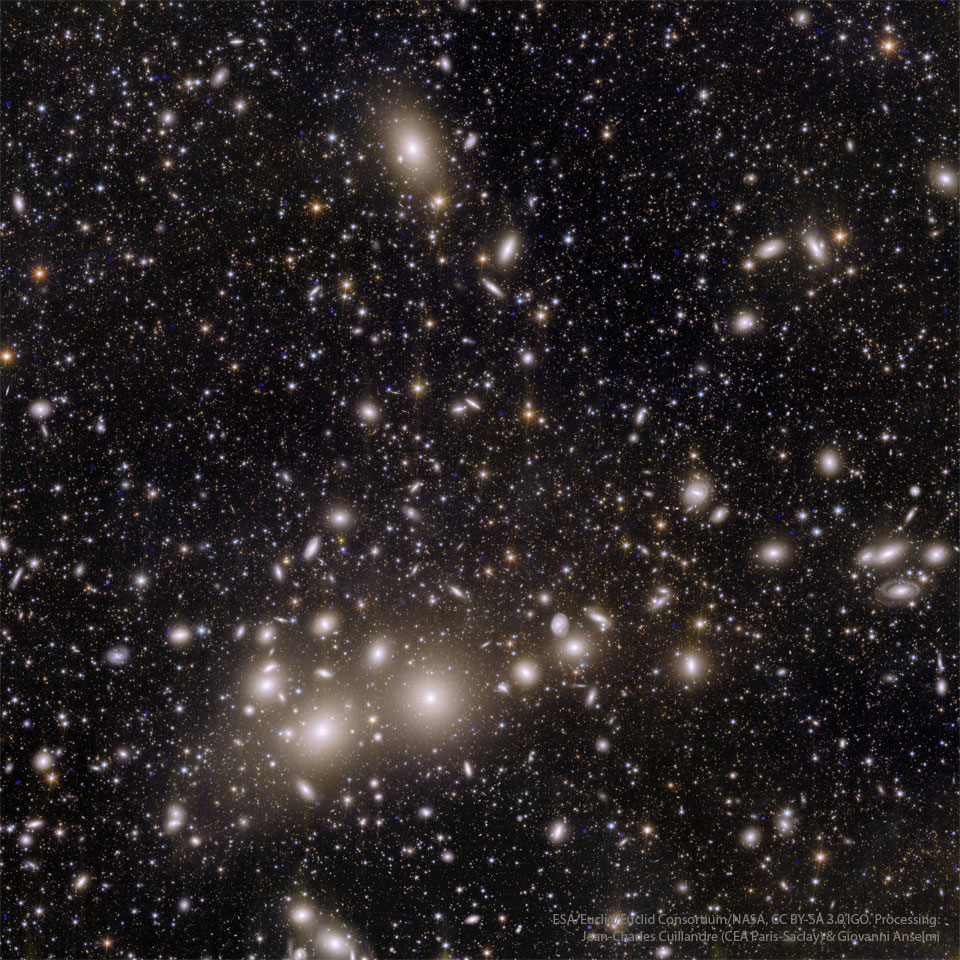
There’s a new space telescope in the sky: Euclid. Equipped with two large panoramic cameras, Euclid captures light from the visible to the near-infrared. It took five hours of observing for Euclid’s 1.2-meter diameter primary mirror to capture, through its sharp optics, the 1000+ galaxies in the Perseus cluster, which lies 250 million light years away. More than 100,000 galaxies are visible in the background, some as far away as 10 billion light years. The revolutionary nature of Euclid lies in the combination of its wide field of view (twice the area of the full moon), its high angular resolution (thanks to its 620 Megapixel camera), and its infrared vision, which captures both images and spectra. Euclid’s initial surveys, covering a third of the sky and recording over 2 billion galaxies, will enable a study of how dark matter and dark energy have shaped our universe.

from NASA https://ift.tt/j9wo1id
via IFTTT