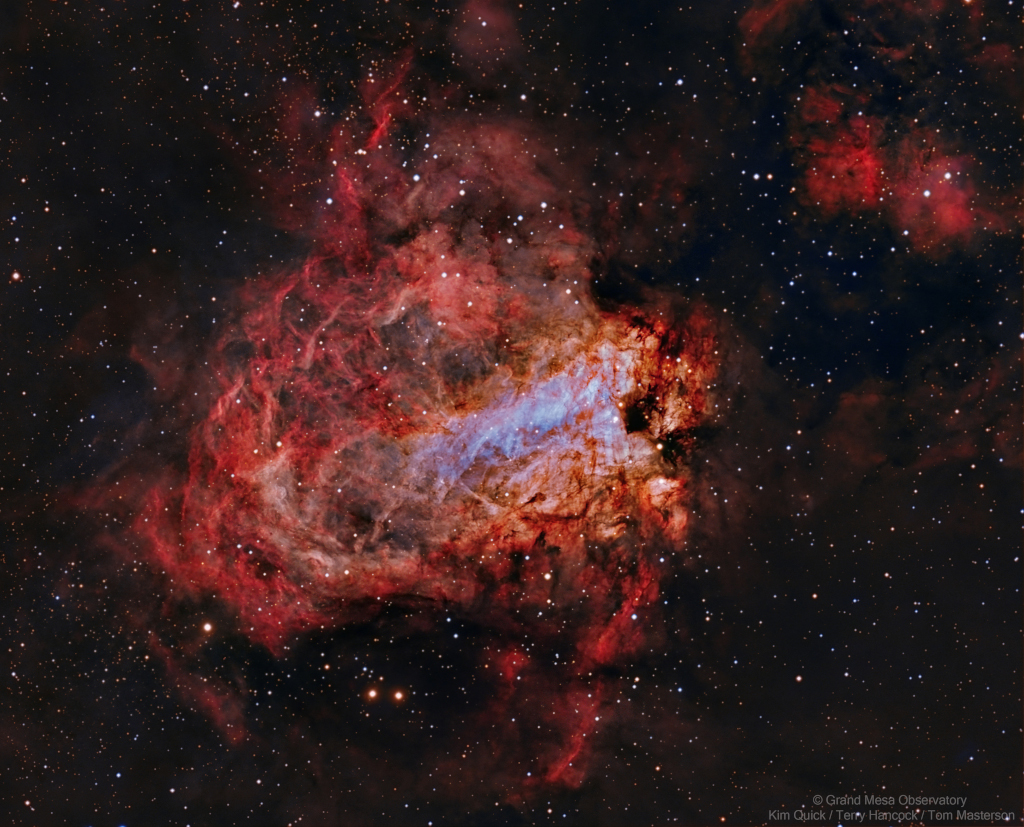
Star Factory Messier 17


Sculpted by stellar winds and radiation, the star factory known as Messier 17 lies some 5,500 light-years away in the nebula-rich constellation Sagittarius. At that distance, this 1/3 degree wide field of view spans over 30 light-years. The sharp composite, color image highlights faint details of the region’s gas and dust clouds against a backdrop of central Milky Way stars. Stellar winds and energetic light from hot, massive stars formed from M17’s stock of cosmic gas and dust have slowly carved away at the remaining interstellar material, producing the cavernous appearance and undulating shapes. M17 is also known as the Omega Nebula or the Swan Nebula.

from NASA https://ift.tt/7ZCav4u
via IFTTT
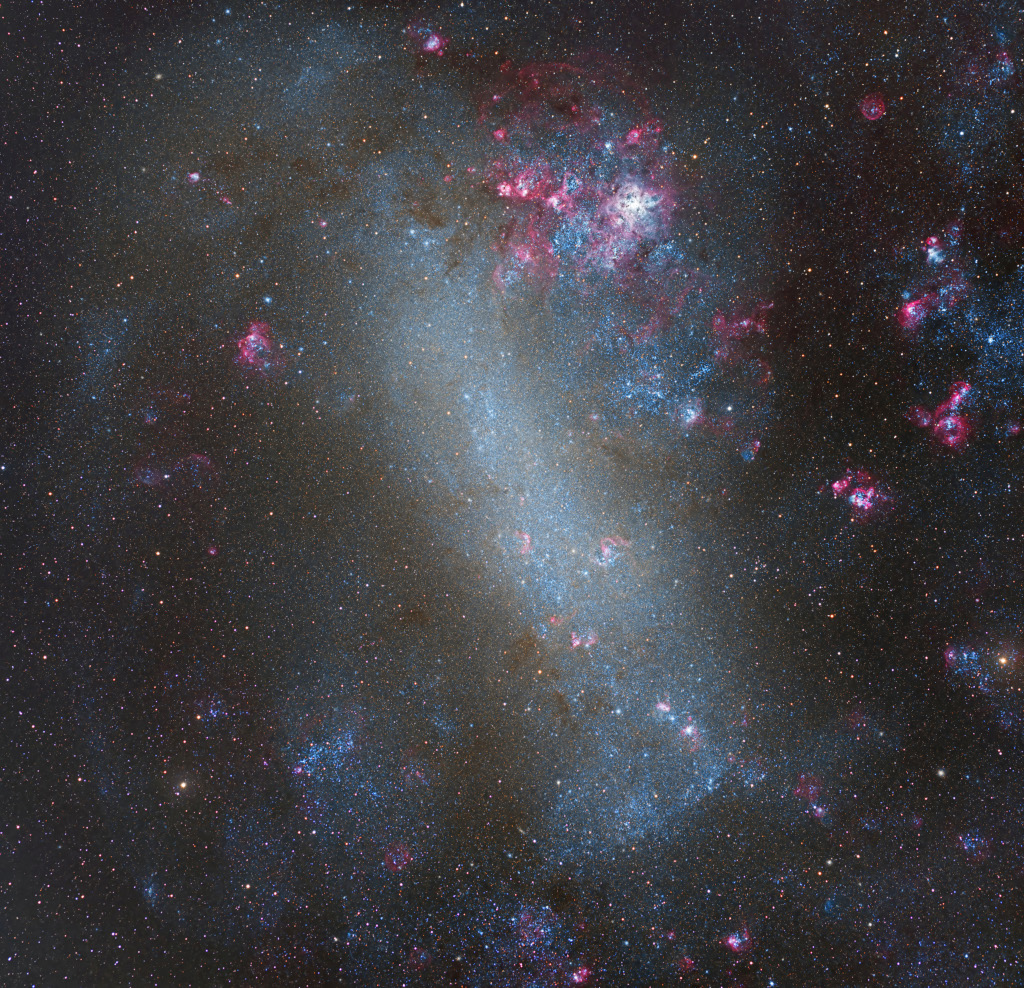
The Large Cloud of Magellan


The 16th century Portuguese navigator Ferdinand Magellan and his crew had plenty of time to study the southern sky during the first circumnavigation of planet Earth. As a result, two fuzzy cloud-like objects easily visible to southern hemisphere skygazers are known as the Clouds of Magellan, now understood to be satellite galaxies of our much larger, spiral Milky Way galaxy. About 160,000 light-years distant in the constellation Dorado, the Large Magellanic Cloud is seen in this sharp galaxy portrait. Spanning about 15,000 light-years or so, it is the most massive of the Milky Way’s satellite galaxies and is the home of the closest supernova in modern times, SN 1987A. The prominent patch above center is 30 Doradus, also known as the magnificent Tarantula Nebula, a giant star-forming region about 1,000 light-years across.

from NASA https://ift.tt/SlkMROz
via IFTTT


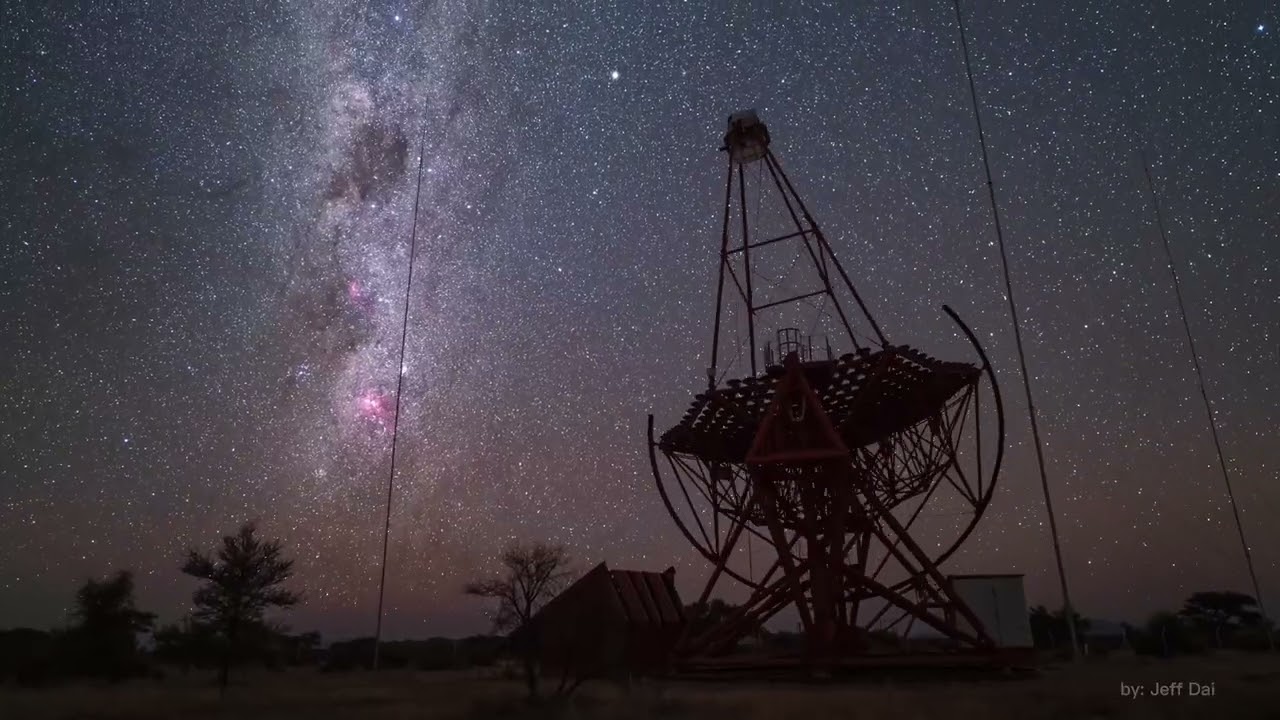
They may look like modern mechanical dinosaurs, but they are enormous swiveling eyes that watch the sky. The High Energy Stereoscopic System (H.E.S.S.) Observatory is composed of four 12-meter reflecting-mirror telescopes surrounding a larger telescope housing a 28-meter mirror. They are designed to detect strange flickers of blue light — Cherenkov radiation –emitted when charged particles move slightly faster than the speed of light in air. This light is emitted when a gamma ray from a distant source strikes a molecule in Earth’s atmosphere and starts a charged-particle shower. H.E.S.S. is sensitive to some of the highest energy photons (TeV) crossing the universe. Operating since 2003 in Namibia, H.E.S.S. has searched for dark matter and has discovered over 50 sources emitting high energy radiation including supernova remnants and the centers of galaxies that contain supermassive black holes. Pictured in June, H.E.S.S. telescopes swivel and stare in time-lapse sequences shot in front of our Milky Way Galaxy and the Magellanic Clouds — as the occasional Earth-orbiting satellite zips by.

from NASA https://ift.tt/Vfr85vN
via IFTTT


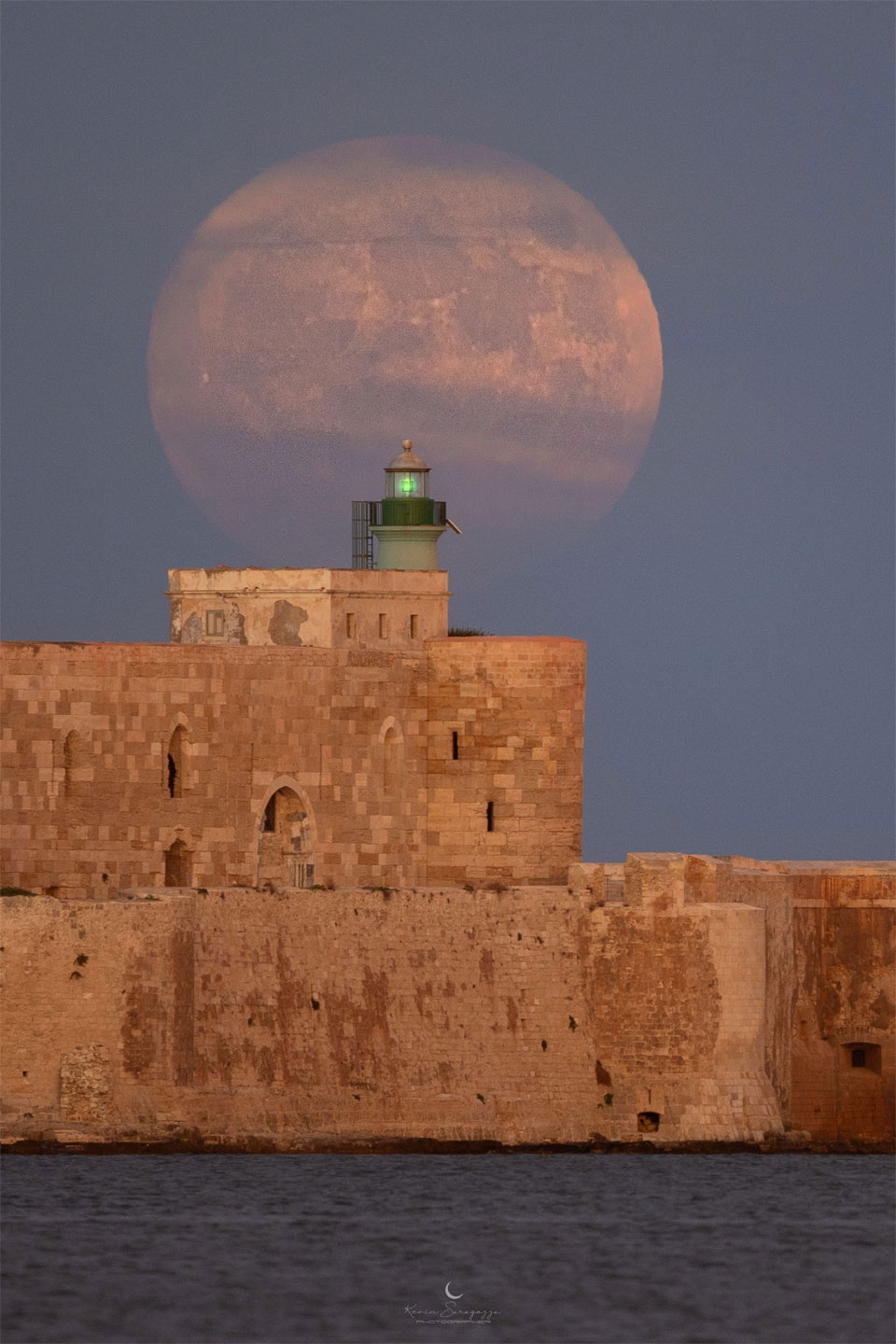
The last full moon was doubly unusual. First of all, it was a blue moon. A modern definition of a blue moon is a second full moon to occur during one calendar month. Since there are 13 full moons in 2023, one month has to have two — and that month was August. The first full moon was on August 1 and named a Sturgeon Moon. The second reason that the last full moon was unusual was because it was a supermoon. A modern definition of supermoon is a moon that reaches its full phase when it is relatively close to Earth — and so appears a bit larger and brighter than average. Pictured, the blue supermoon of 2023 was imaged hovering far behind a historic castle and lighthouse in Syracuse, Sicily, Italy.

from NASA https://ift.tt/JNoLuG5
via IFTTT


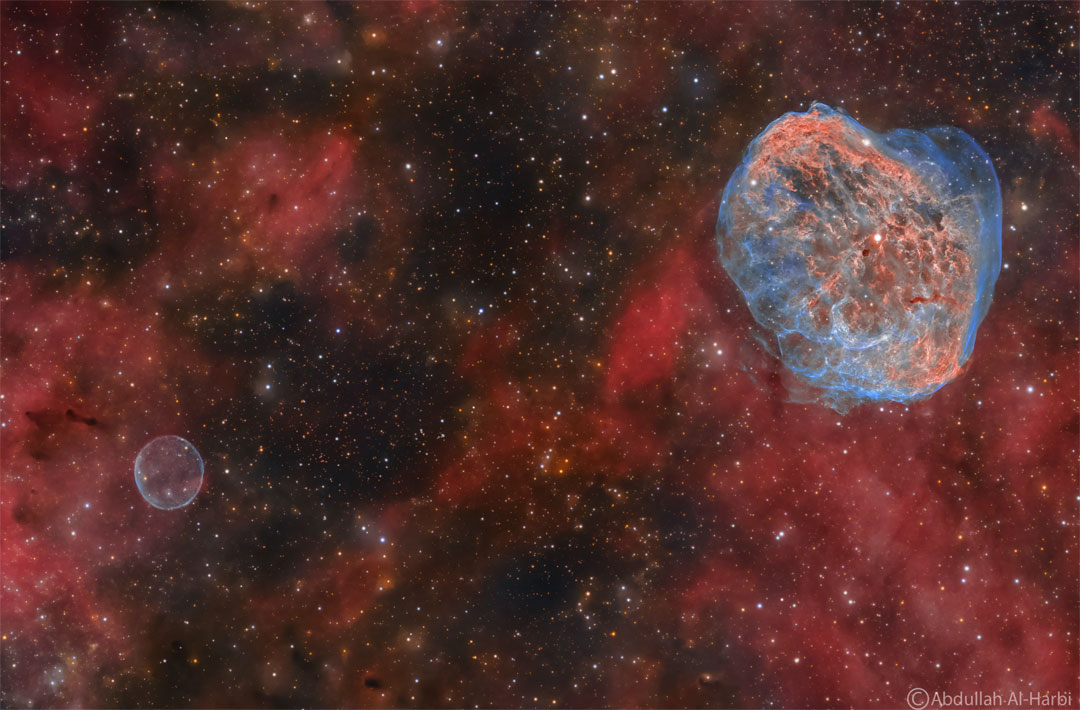
As stars die, they create clouds. Two stellar death clouds of gas and dust can be found toward the high-flying constellation of the Swan (Cygnus) as they drift through rich star fields in the plane of our Milky Way Galaxy. Caught here within the telescopic field of view are the Soap Bubble (lower left) and the Crescent Nebula (upper right). Both were formed at the final phase in the life of a star. Also known as NGC 6888, the Crescent Nebula was shaped as its bright, central massive Wolf-Rayet star, WR 136, shed its outer envelope in a strong stellar wind. Burning through fuel at a prodigious rate, WR 136 is near the end of a short life that should finish in a spectacular supernova explosion. Discovered in 2013, the Soap Bubble Nebula is likely a planetary nebula, the final shroud of a lower mass, long-lived, Sun-like star destined to become a slowly cooling white dwarf. Both stellar nebulas are about 5,000 light-years distant, with the larger Crescent Nebula spanning about 25 light-years across. Within a few million years, both will likely have dispersed.

from NASA https://ift.tt/I0OJZ4o
via IFTTT


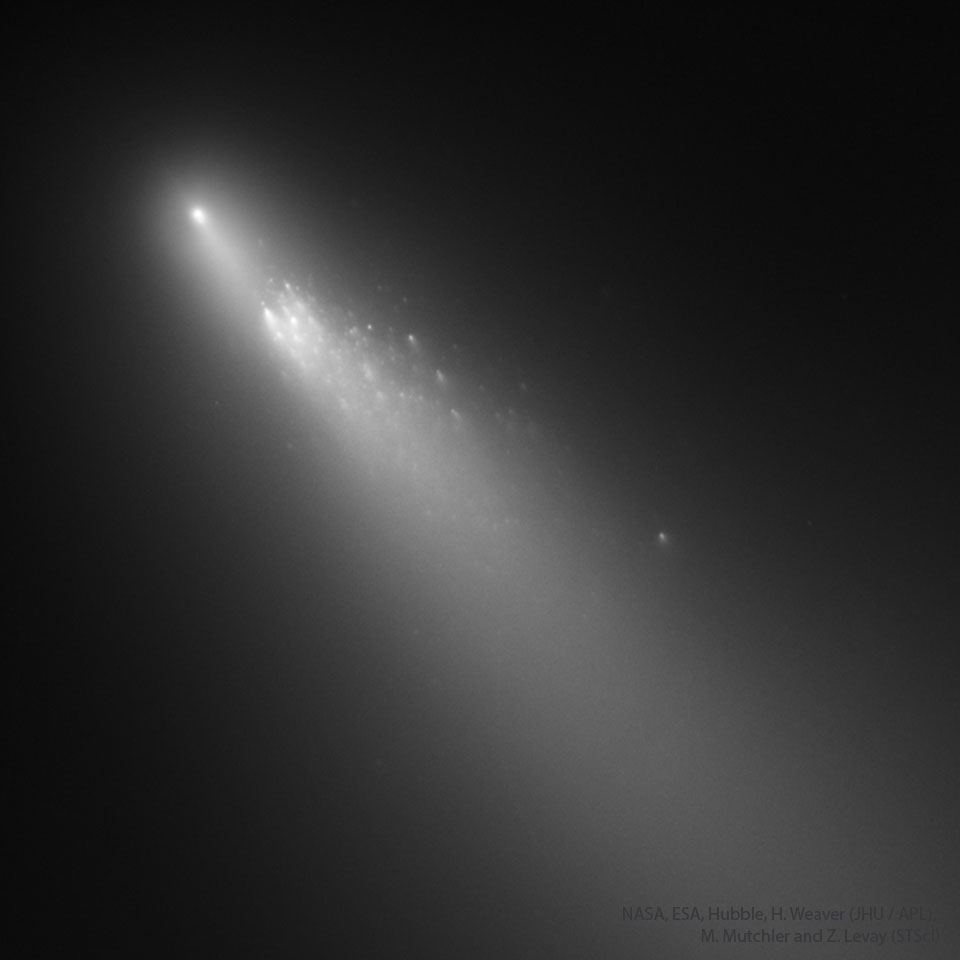
Periodic comet 73P/Schwassmann-Wachmann 3 has broken up at least twice. A cosmic souffle of ice and dust left over from the early solar system, this comet was first seen to split into several large pieces during the close-in part of its orbit in 1995. However, in the 2006 passage, it disintegrated into dozens of fragments that stretched several degrees across the sky. Since comets are relatively fragile, stresses from heat, gravity and outgassing, for example, could be responsible for their tendency to break up in such a spectacular fashion when they near the hot Sun. The Hubble Space Telescope recorded, in 2006, the featured sharp view of prolific Fragment B, itself trailing a multitude of smaller pieces, each with its own cometary coma and tail. The picture spans over 3,000 kilometers at the comet’s distance of 32 million kilometers from planet Earth.

from NASA https://ift.tt/GfzLv3K
via IFTTT

NGC 7023: The Iris Nebula


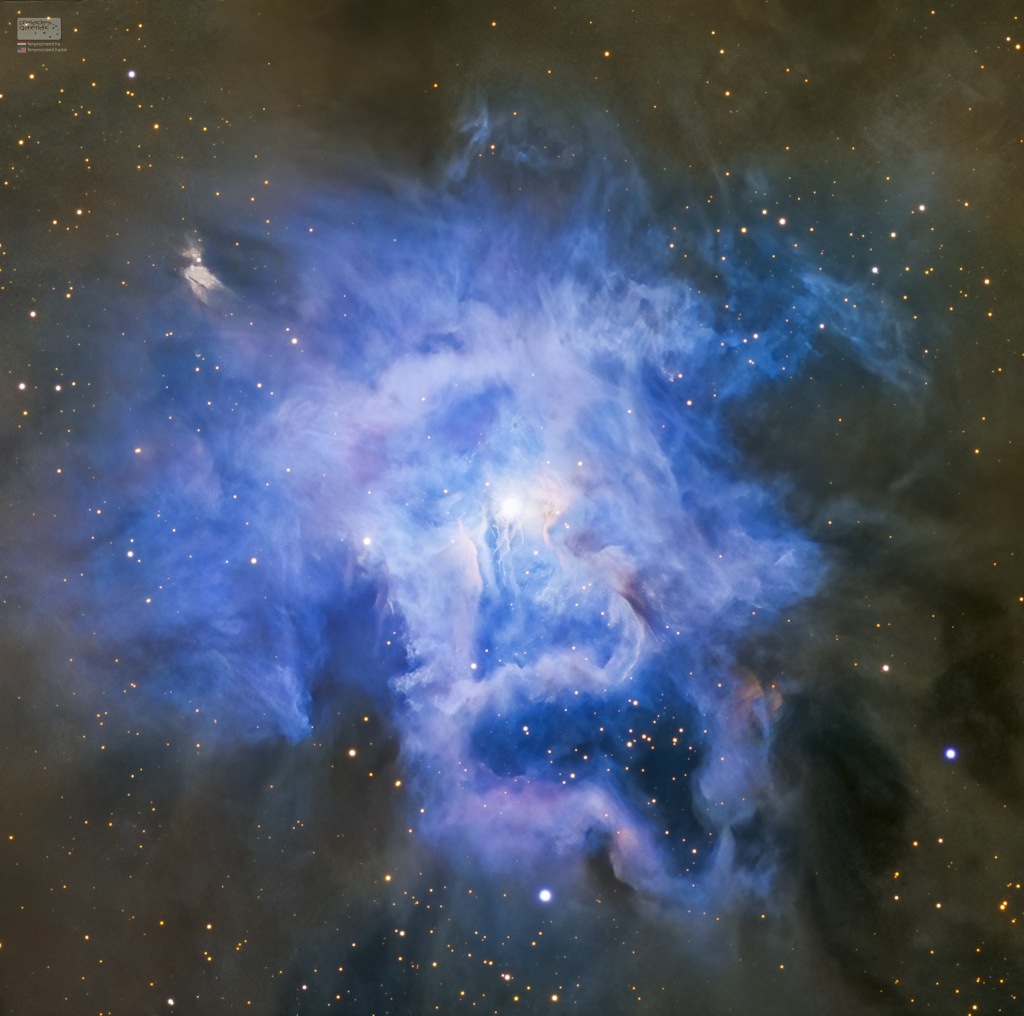
These cosmic clouds have blossomed 1,300 light-years away in the fertile starfields of the constellation Cepheus. Called the Iris Nebula, NGC 7023 is not the only nebula to evoke the imagery of flowers. Still, this deep telescopic image shows off the Iris Nebula’s range of colors and symmetries embedded in surrounding fields of interstellar dust. Within the Iris itself, dusty nebular material surrounds a hot, young star. The dominant color of the brighter reflection nebula is blue, characteristic of dust grains reflecting starlight. Central filaments of the reflection nebula glow with a faint reddish photoluminescence as some dust grains effectively convert the star’s invisible ultraviolet radiation to visible red light. Infrared observations indicate that this nebula contains complex carbon molecules known as PAHs. The dusty blue petals of the Iris Nebula span about six light-years.

from NASA https://ift.tt/WuQEVUh
via IFTTT

The Great Globular Cluster in Hercules


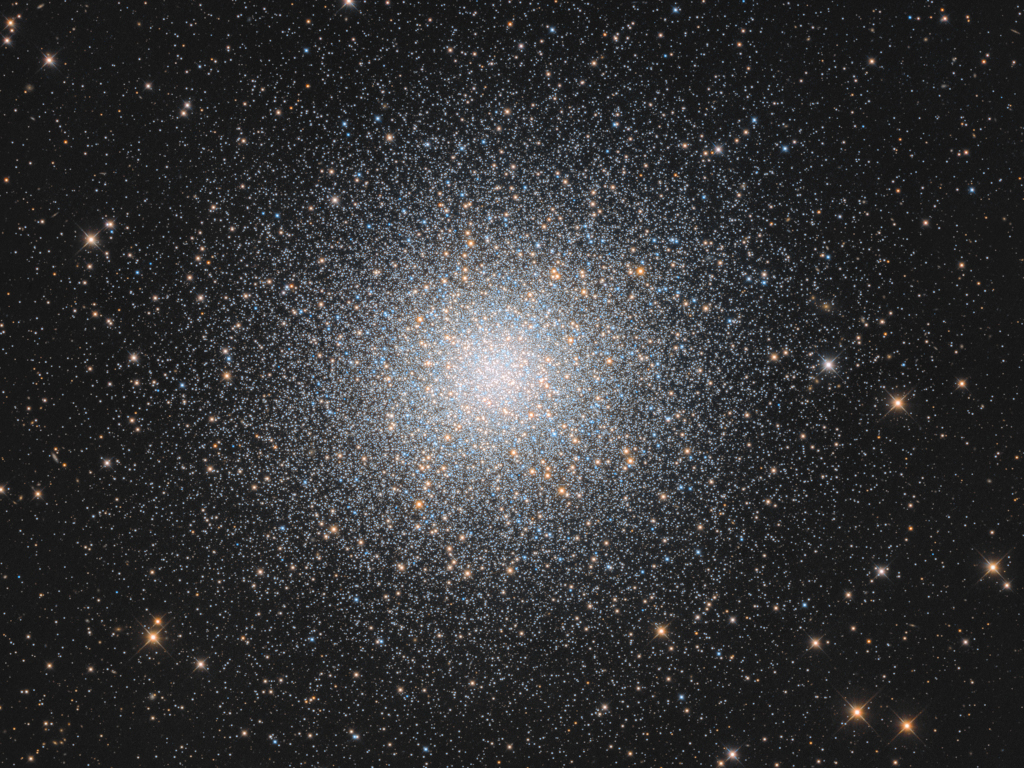
In 1716, English astronomer Edmond Halley noted, “This is but a little Patch, but it shows itself to the naked Eye, when the Sky is serene and the Moon absent.” Of course, M13 is now less modestly recognized as the Great Globular Cluster in Hercules, one of the brightest globular star clusters in the northern sky. Sharp telescopic views like this one reveal the spectacular cluster’s hundreds of thousands of stars. At a distance of 25,000 light-years, the cluster stars crowd into a region 150 light-years in diameter. Approaching the cluster core, upwards of 100 stars could be contained in a cube just 3 light-years on a side. For comparison, the closest star to the Sun is over 4 light-years away. The remarkable range of brightness recorded in this image follows stars into the dense cluster core.

from NASA https://ift.tt/Sd6vG2s
via IFTTT

The Crew 7 Nebula


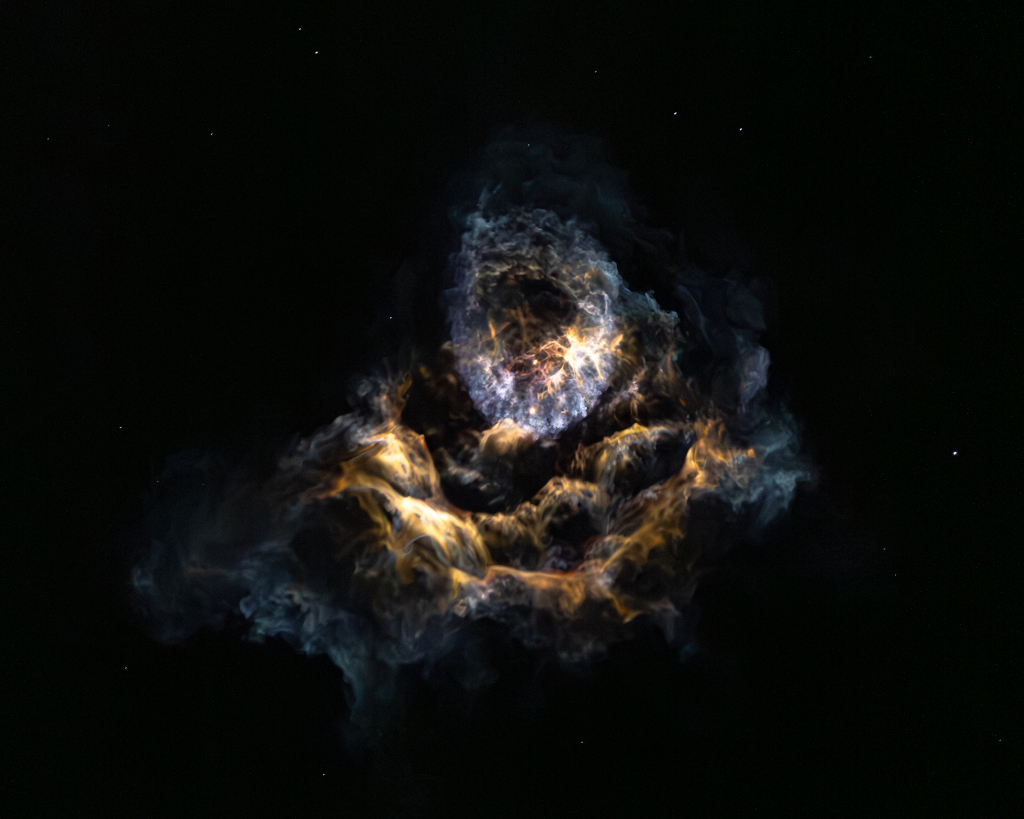
Not the James Webb Space Telescope’s latest view of a distant galactic nebula, this illuminated cloud of gas and dust dazzled early morning spacecoast skygazers on August 26. The snapshot was taken about 2 minutes after the launch of of a Falcon 9 rocket on the SpaceX Crew-7 mission, the seventh commercial crew rotation mission for the International Space Station. It captures drifting plumes and exhaust from the separated first and second stage illuminated against the still dark skies. Near the center of the image, within the ragged blueish ring, are two bright points of light. The lower one is the second stage of the rocket carrying 4 humans to space in a Crew Dragon spacecraft. The bright point above is the Falcon 9 first stage booster orienting itself for the trip back to Landing Zone-1 at Cape Canaveral, planet Earth.

from NASA https://ift.tt/9b10w7u
via IFTTT

Full Moons of August


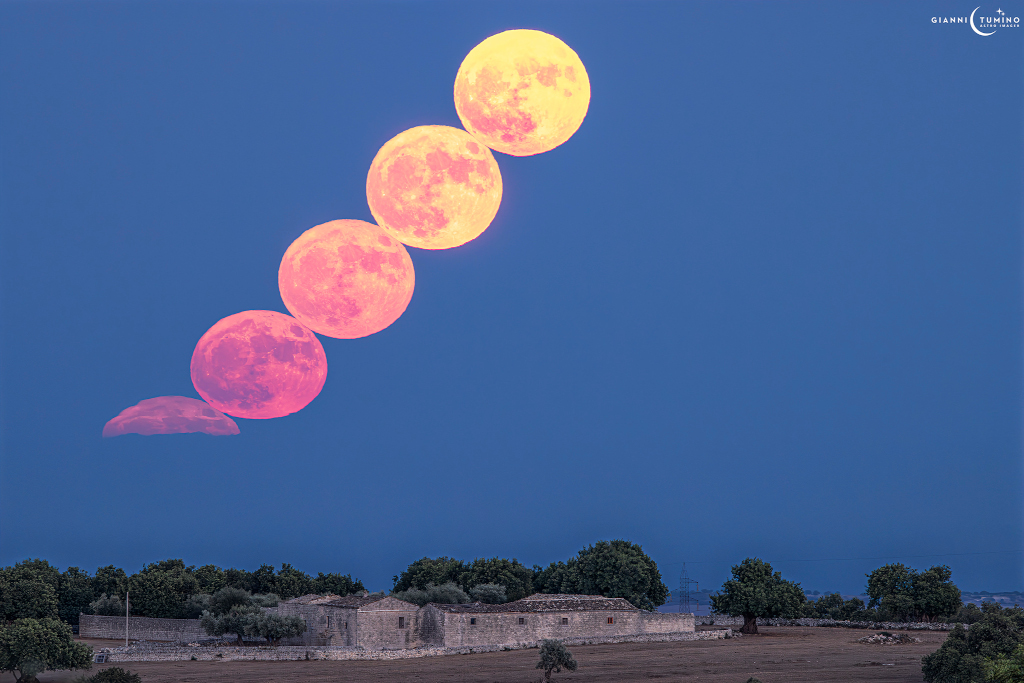
Near perigee, the closest point in its almost moonthly orbit, a Full Moon rose as the Sun set on August 1. Its brighter than average lunar disk was captured in this dramatic moonrise sequence over dense cloud banks along the eastern horizon from Ragusa, Sicily. Illuminating night skies around planet Earth it was the second supermoon of 2023. Yet again near perigee, the third supermoon of 2023 will also shine on an August night. Rising as the Sun sets tonight this second Full Moon in August will be known to some as a Blue Moon, even though scattered sunlight gives the lunar disk a reddened hue. Defined as the second full moon in a calendar month, blue moons occur only once every 2 or 3 years. That’s because lunar phases take 29.5 days, almost a calendar month, to go through a complete cycle. Tonight an August Blue Moon will find itself beside bright planet Saturn.

from NASA https://ift.tt/onAW8r9
via IFTTT