Perseid Rain


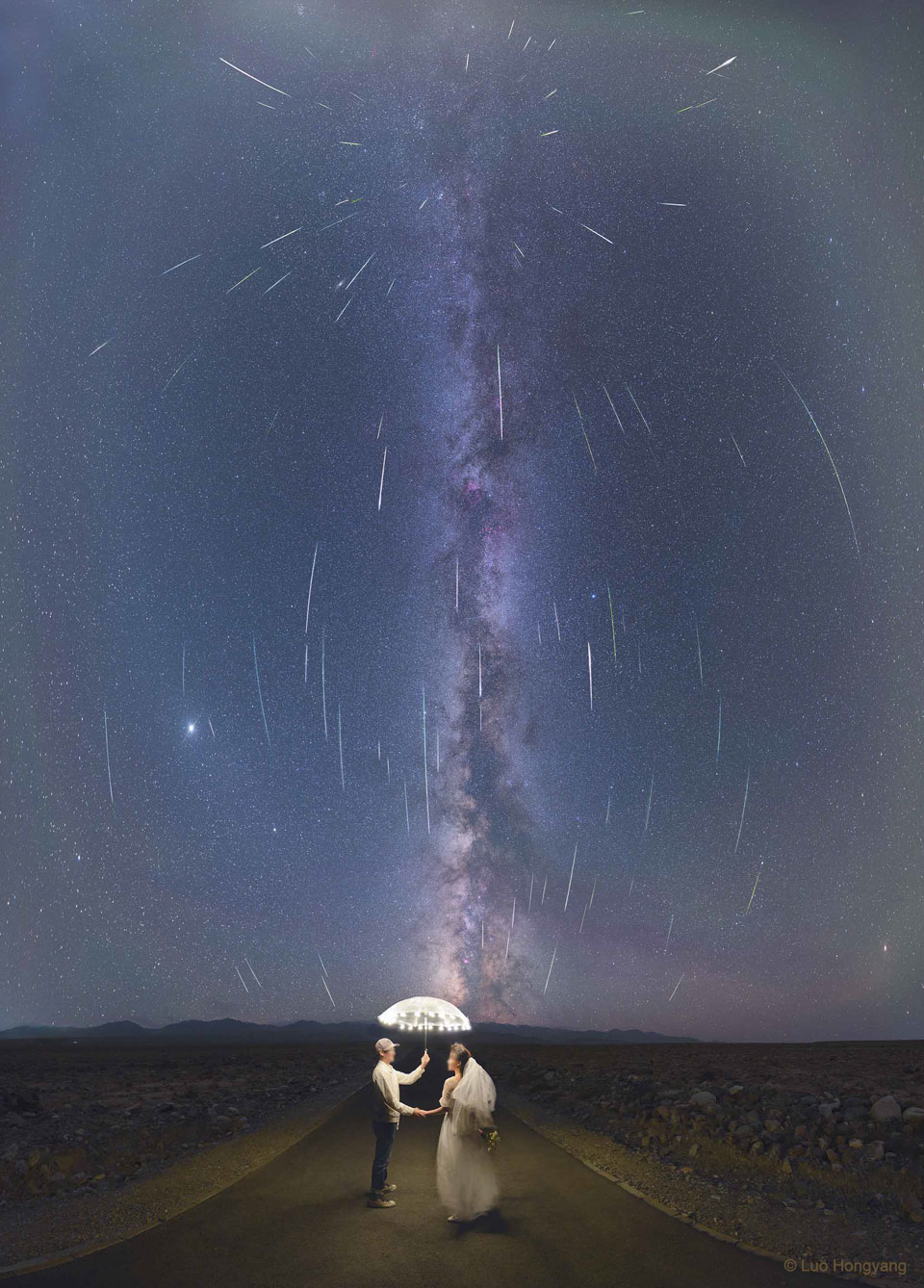
Comet dust rained down on planet Earth last week, streaking through dark skies in the annual Perseid meteor shower. The featured picture is a composite of many images taken from the same location over the peak night of the Perseids. The umbrella was not needed as a shield from meteors, since they almost entirely evaporate high in the Earth’s atmosphere. Many of the component images featured individual Perseids, while one image featured the foreground near Jiuquan City, Gansu Province, China. The stellar background includes the central band of our Milky Way Galaxy, appearing nearly vertical, as well as the planets Jupiter and Saturn on the left. Although the comet dust particles are traveling parallel to each other, the resulting shower meteors clearly seem to radiate from a single point on the sky — the radiant in the eponymous constellation Perseus. The image captured so long an angular field that the curvature of the sky is visible in the trajectory of the Perseids.

from NASA https://ift.tt/3g3IKb3
via IFTTT
Island Universe, Cosmic Sand


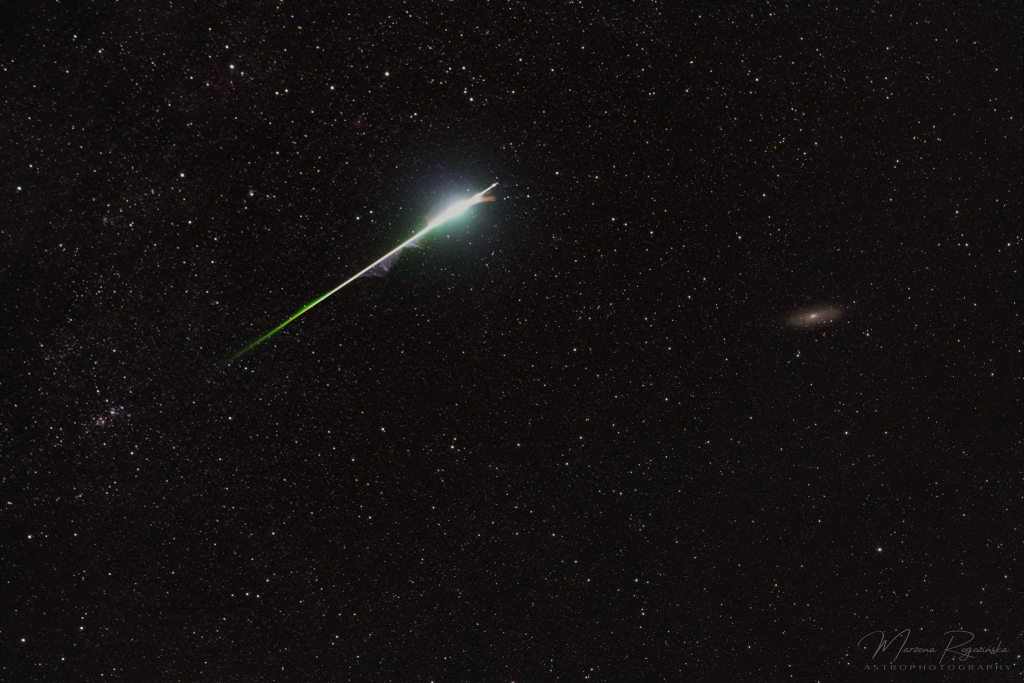
Stars in our own Milky Way Galaxy are scattered through this eye-catching field of view. From the early hours after midnight on August 13, the 30 second exposure of the night sky over Busko-Zdroj, Poland records the colorful and bright trail of a Perseid meteor. Seen near the peak of the annual Perseid meteor shower it flashes from lower left to upper right. The hurtling grain of cosmic sand, a piece of dust from periodic comet Swift-Tuttle, vaporized as it passed through planet Earth’s atmosphere at almost 60 kilometers per second. Just above and right of center, well beyond the stars of the Milky Way, lies the island universe known as M31 or the Andromeda Galaxy. The Andromeda Galaxy is the most distant object easily visible to the naked-eye, about 2.5 million light-years away. The visible meteor trail begins only about 100 kilometers above Earth’s surface, though. It points back to the meteor shower radiant in the constellation Perseus off the lower left edge of the frame. Follow this bright perseid meteor trail below and left to the stars of NGC 869and NGC 884, the double star cluster in Perseus.

from NASA https://ift.tt/3AEUVD0
via IFTTT

A Perfect Spiral


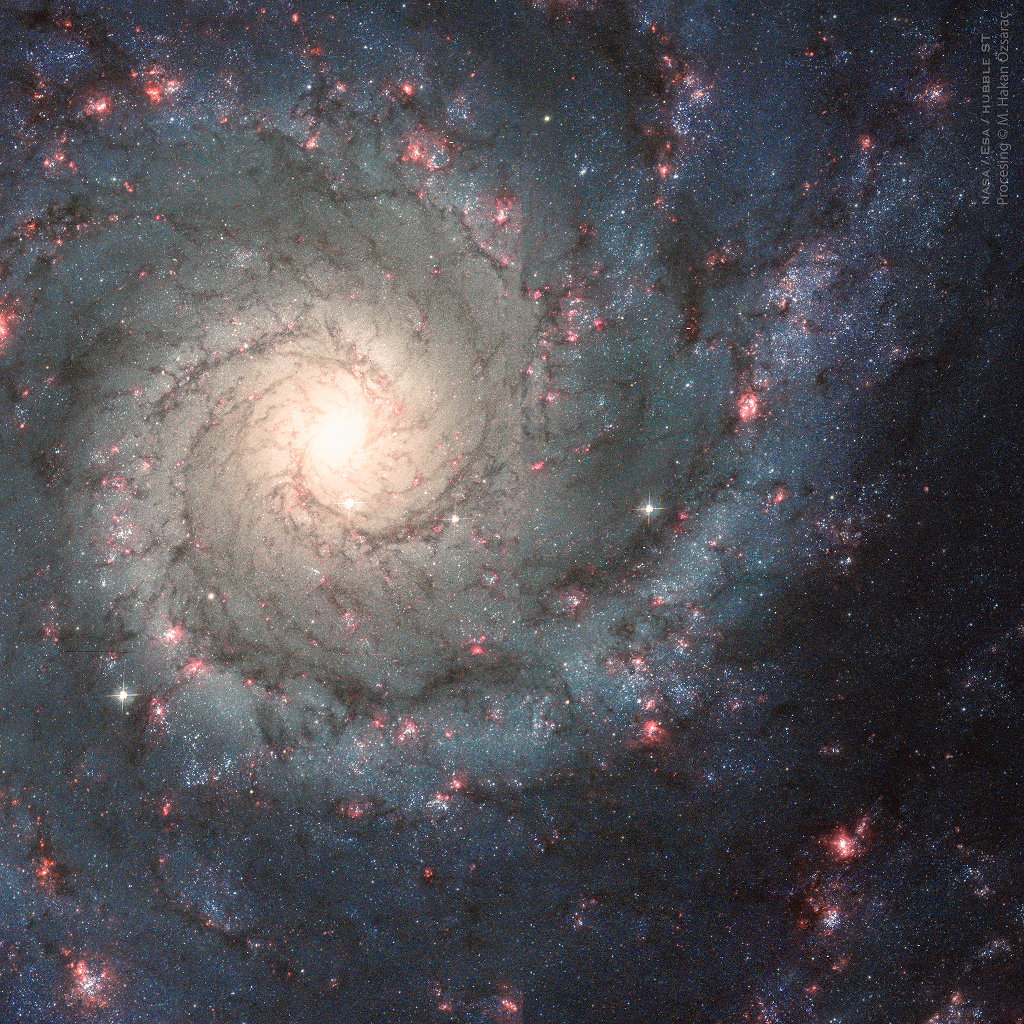
If not perfect then this spiral galaxy is at least one of the most photogenic. An island universe of about 100 billion stars, 32 million light-years away toward the constellation Pisces, M74 presents a gorgeous face-on view. Classified as an Sc galaxy, the grand design of M74’s graceful spiral arms are traced by bright blue star clusters and dark cosmic dust lanes. This sharp composite was constructed from image data recorded by the Hubble Space Telescope’s Advanced Camera for Surveys. Spanning about 30,000 light-years across the face of M74, it includes exposures recording emission from hydrogen atoms, highlighting the reddish glow of the galaxy’s large star-forming regions. With a lower surface brightness than most galaxies in the Messier catalog, M74 is sometimes known as the Phantom Galaxy.

from NASA https://ift.tt/3mdvuoj
via IFTTT

A Beautiful Trifid


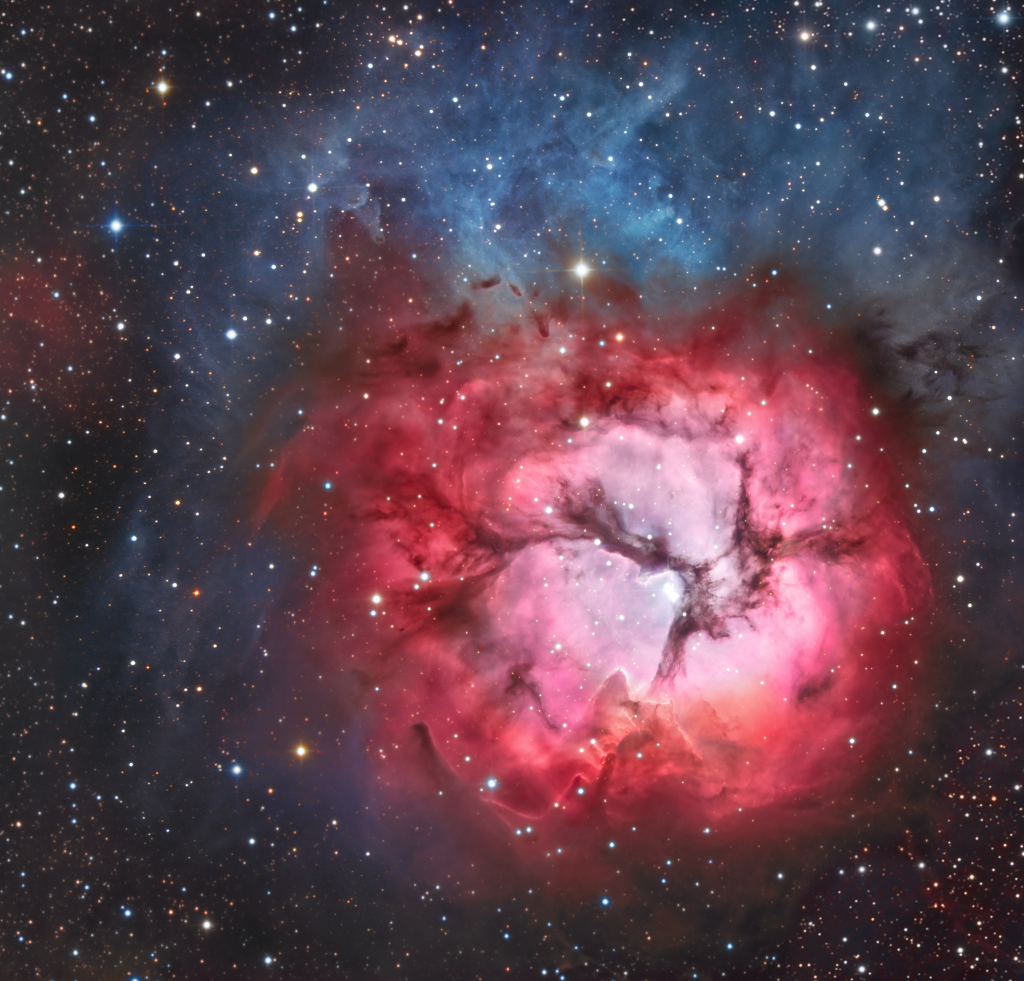
The beautiful Trifid Nebula is a cosmic study in contrasts. Also known as M20, it lies about 5,000 light-years away toward the nebula rich constellation Sagittarius. A star forming region in the plane of our galaxy, the Trifid does illustrate three different types of astronomical nebulae; red emission nebulae dominated by light from hydrogen atoms, blue reflection nebulae produced by dust reflecting starlight, and dark nebulae where dense dust clouds appear in silhouette. But the red emission region roughly separated into three parts by obscuring dust lanes is what lends the Trifid its popular name. Pillars and jets sculpted by newborn stars, below and left of the emission nebula’s center, appear in famous Hubble Space Telescope close-up images of the region. The Trifid Nebula is about 40 light-years across. Just too faint to be seen by the unaided eye, it almost covers the area of a full moon in planet Earth’s sky.

from NASA https://ift.tt/3Ayujn8
via IFTTT

Mammatus Clouds over Saskatchewan


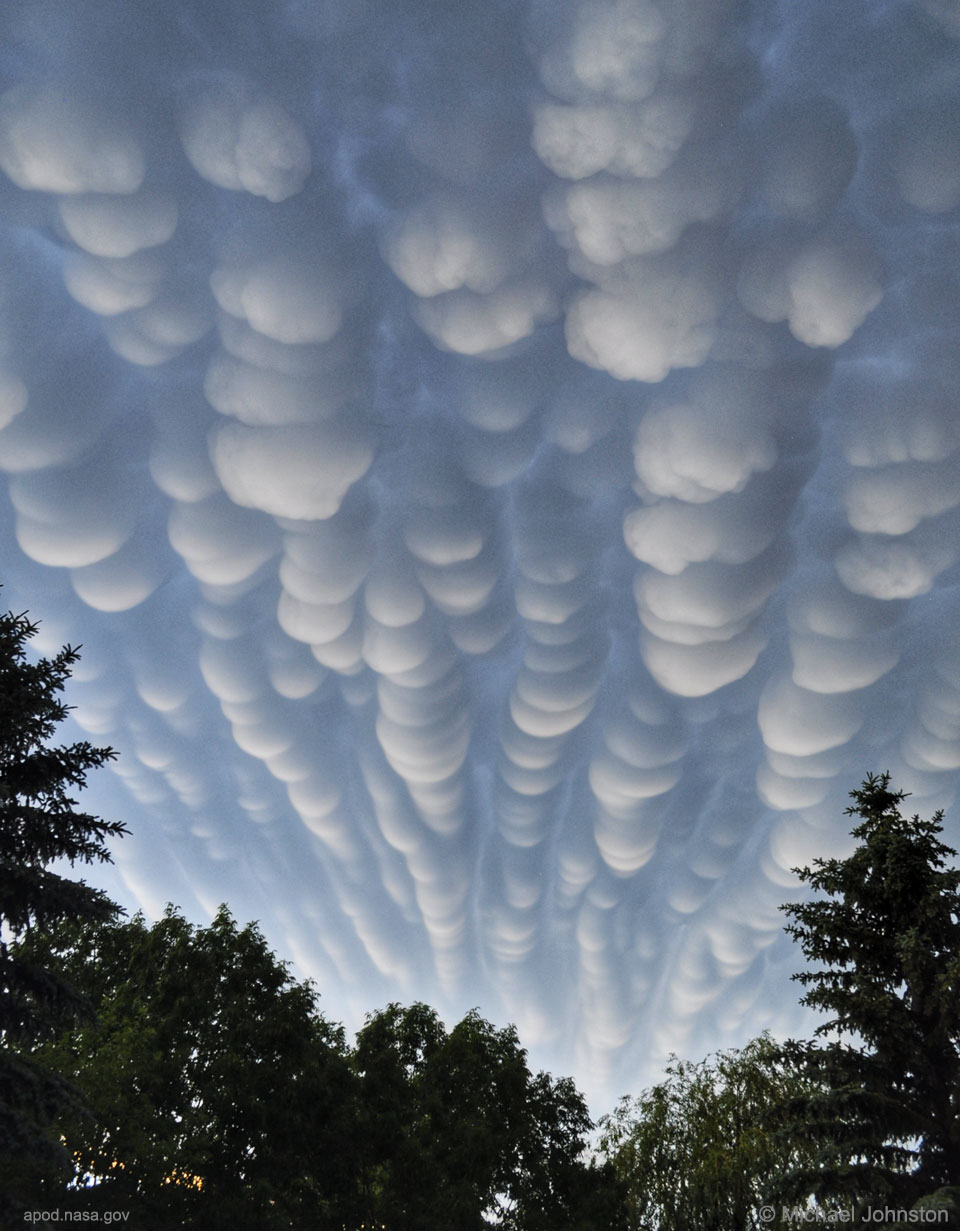
When do cloud bottoms appear like bubbles? Normally, cloud bottoms are flat. This is because moist warm air that rises and cools will condense into water droplets at a specific temperature, which usually corresponds to a very specific height. As water droplets grow, an opaque cloud forms. Under some conditions, however, cloud pockets can develop that contain large droplets of water or ice that fall into clear air as they evaporate. Such pockets may occur in turbulent air near a thunderstorm. Resulting mammatus clouds can appear especially dramatic if sunlit from the side. The mammatus clouds pictured here, lasting only a few minutes, were photographed over Regina, Saskatchewan, Canada, just after a storm in 2012.

from NASA https://ift.tt/3iHSVUB
via IFTTT

Fire in Space


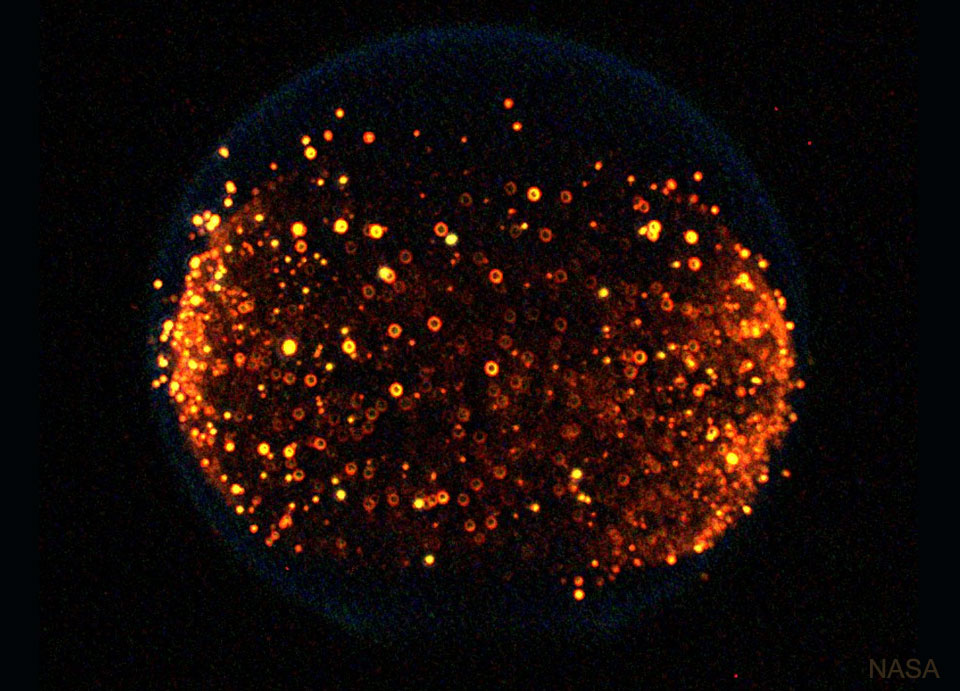
What does fire look like in space? In the gravity on Earth, heated air rises and expands, causing flames to be teardrop shaped. In the microgravity of the air-filled International Space Station (ISS), however, flames are spheres. Fire is the rapid acquisition of oxygen, and space flames meet new oxygen molecules when they float by randomly from all directions — creating the enveloping sphere. In the featured image taken in the ISS’s Combustion Integration Rack, a spherical flame envelopes clusters of hot glowing soot. Without oxygen, say in the vacuum of empty space, a fire would go out immediately. The many chemical reactions involved with fire are complex, and testing them in microgravity is helping humanity not only to better understand fire — but how to put out fire, too.

from NASA https://ift.tt/2XcRhls
via IFTTT

Perseus and the Lost Meteors


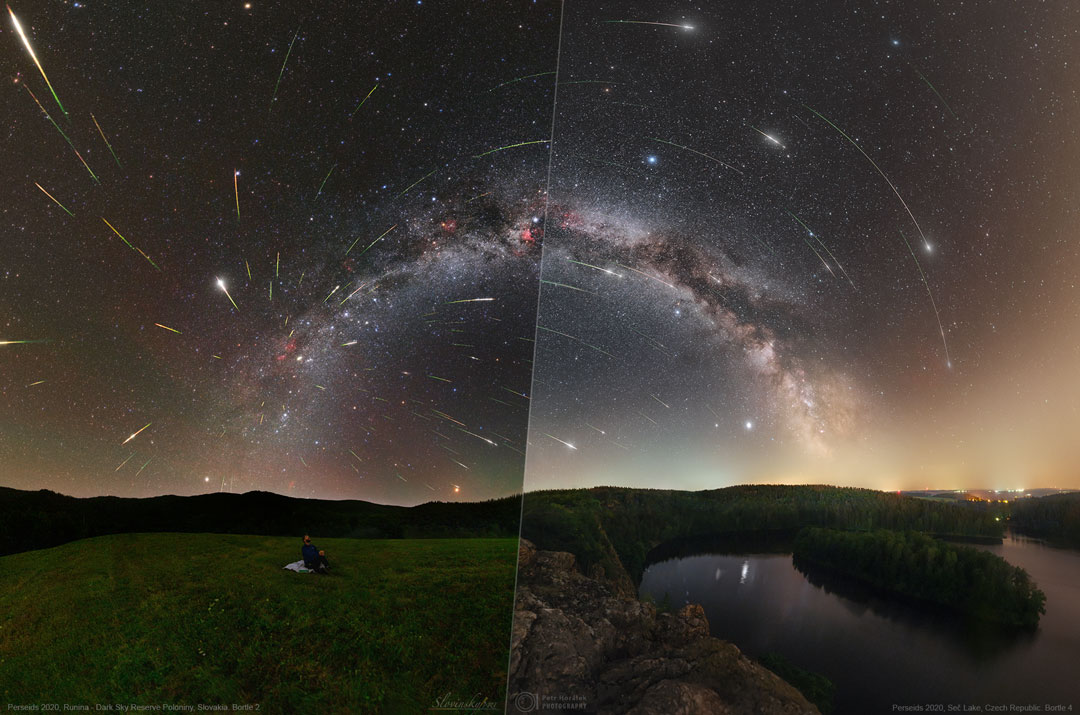
What’s the best way to watch a meteor shower? This question might come up later this week when the annual Perseid Meteor Shower peaks. One thing that is helpful is a dark sky, as demonstrated in the featured composite image of last year’s Perseids. Many more faint meteors are visible on the left image, taken through a very dark sky in Slovakia, than on the right image, taken through a moderately dark sky in the Czech Republic. The band of the Milky Way Galaxy bridges the two coordinated images, while the meteor shower radiant in the constellation of Perseus is clearly visible on the left. In sum, many faint meteors are lost through a bright sky. Light pollution is shrinking areas across our Earth with dark skies, although inexpensive ways to combat this might be implemented.

from NASA https://ift.tt/3lLkePM
via IFTTT

A Perseid Below


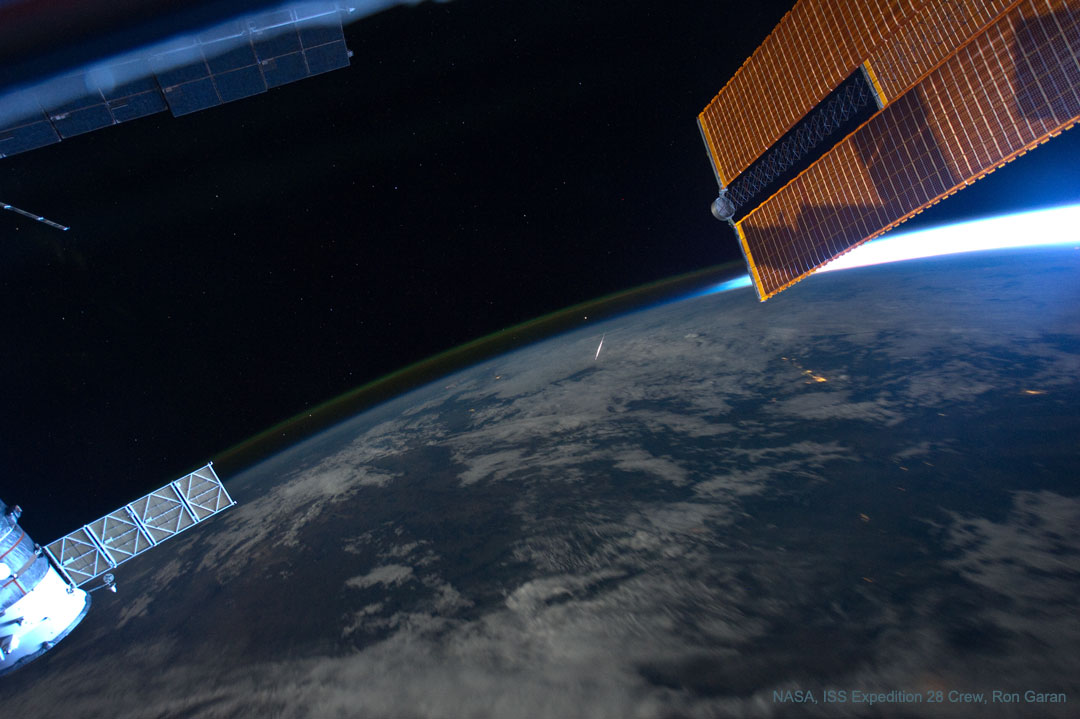
Earthlings typically watch meteor showers by looking up. But this remarkable view, captured on August 13, 2011 by astronaut Ron Garan, caught a Perseid meteor by looking down. From Garan’s perspective onboard the International Space Station orbiting at an altitude of about 380 kilometers, the Perseid meteors streak below, swept up dust left from comet Swift-Tuttle heated to incandescence. The glowing comet dust grains are traveling at about 60 kilometers per second through the denser atmosphere around 100 kilometers above Earth’s surface. In this case, the foreshortened meteor flash is right of frame center, below the curving limb of the Earth and a layer of greenish airglow, just below bright star Arcturus. Want to look up at a meteor shower? You’re in luck, as the 2021 Perseids meteor shower peaks this week. This year, even relatively faint meteors should be visible through clear skies from a dark location as the bright Moon will mostly absent.

from NASA https://ift.tt/2VAzlR5
via IFTTT

Jezero Crater: Raised Ridges in 3D


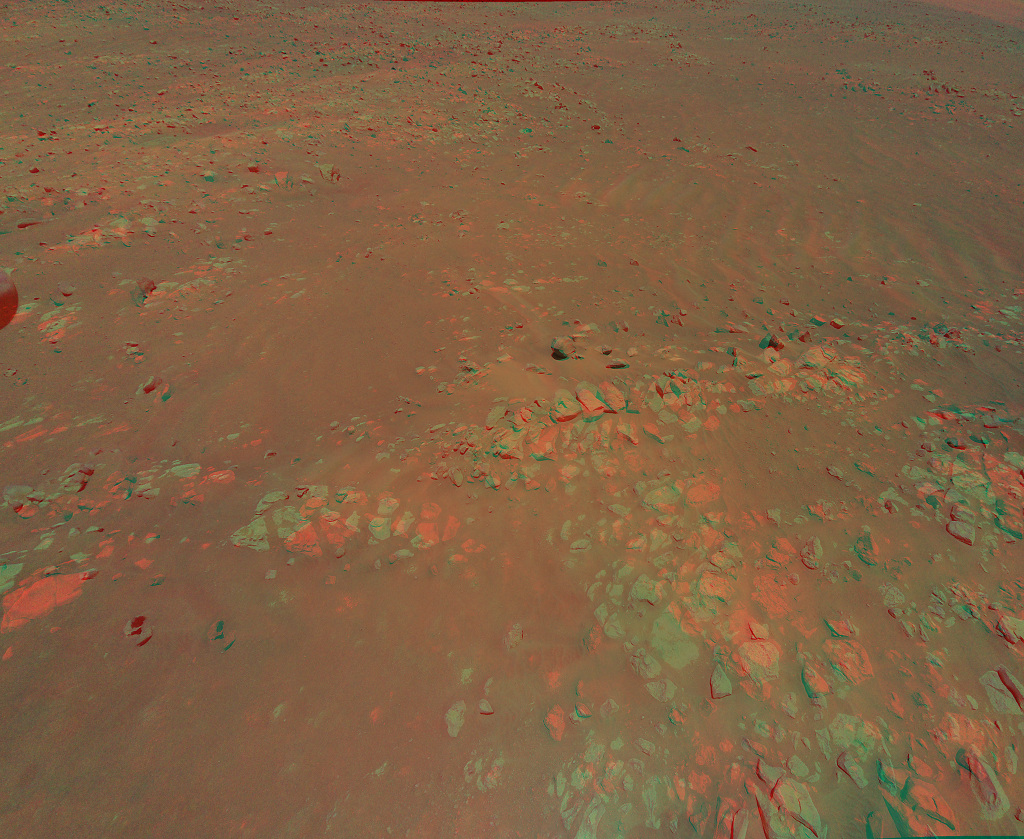
Get out your red-blue glasses and hover over the surface of Mars. Taken on July 24, the 3D color view is from the Mars Ingenuity Helicopter’s 10th flight above the Red Planet. Two images from Ingenuity’s color camera, both captured at an altitude of 12 meters (40 feet), but a few meters apart to provide a stereo perspective, were used to construct the color anaglyph. Ingenuity’s stereo images were made at the request of the Mars Perseverance rover science team. The team is considering a visit to these raised ridges on the floor of Jezero Crater during Perseverance’s first science campaign.

from NASA https://ift.tt/3Cqs7jh
via IFTTT

Stars and Dust Across Corona Australis


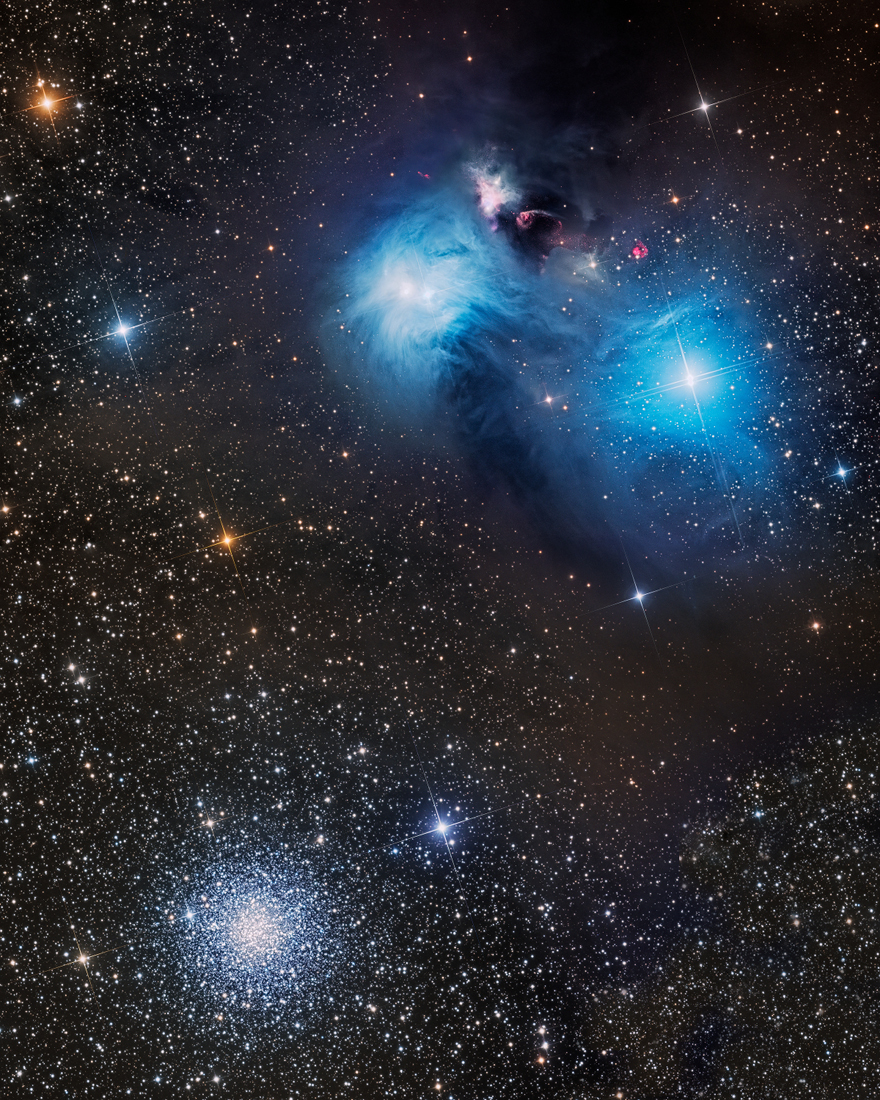
Cosmic dust clouds cross a rich field of stars in this telescopic vista near the northern boundary of Corona Australis, the Southern Crown. Less than 500 light-years away the dust clouds effectively block light from more distant background stars in the Milky Way. Top to bottom the frame spans about 2 degrees or over 15 light-years at the clouds’ estimated distance. At top right is a group of lovely reflection nebulae cataloged as NGC 6726, 6727, 6729, and IC 4812. A characteristic blue color is produced as light from hot stars is reflected by the cosmic dust. The dust also obscures from view stars in the region still in the process of formation. Just above the bluish reflection nebulae a smaller NGC 6729 surrounds young variable star R Coronae Australis. To its right are telltale reddish arcs and loops identified as Herbig Haro objects associated with energetic newborn stars. Magnificent globular star cluster NGC 6723 is at bottom left in the frame. Though NGC 6723 appears to be part of the group, its ancient stars actually lie nearly 30,000 light-years away, far beyond the young stars of the Corona Australis dust clouds.

from NASA https://ift.tt/3xmlvig
via IFTTT