A Falcon 9 Nebula


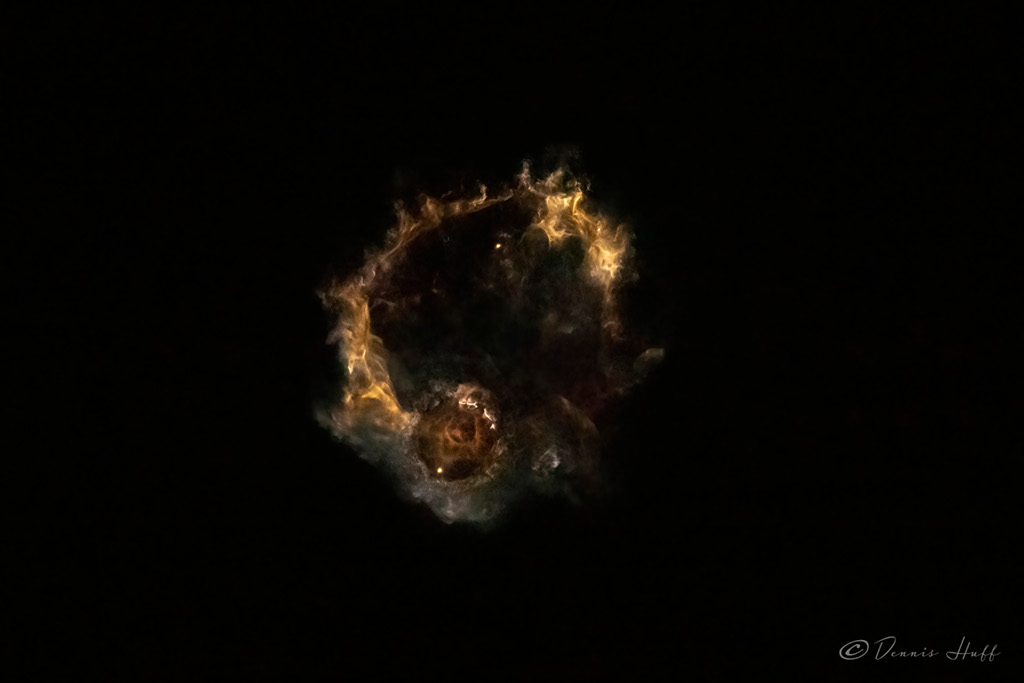
Not the Hubble Space Telescope’s latest view of a distant galactic nebula, this illuminated cloud of gas and dust dazzled early morning spacecoast skygazers on August 29. The snapshot was taken at 3:17am from Space View Park in Titusville, Florida. That’s about 3 minutes after the launch of a SpaceX Falcon 9 rocket on the CRS-23 mission to resupply the International Space Station. It captures drifting plumes and exhaust from the separated first and second stage of the rocket rising through still dark skies. The lower bright dot is the second stage continuing on to low Earth orbit. The upper one is the rocket’s first stage performing a boostback burn. Of course the first stage booster returned to make the first landing on the latest autonomous drone ship to arrive in the Atlantic, A Short Fall of Gravitas.

from NASA https://ift.tt/3n2C1SU
via IFTTT
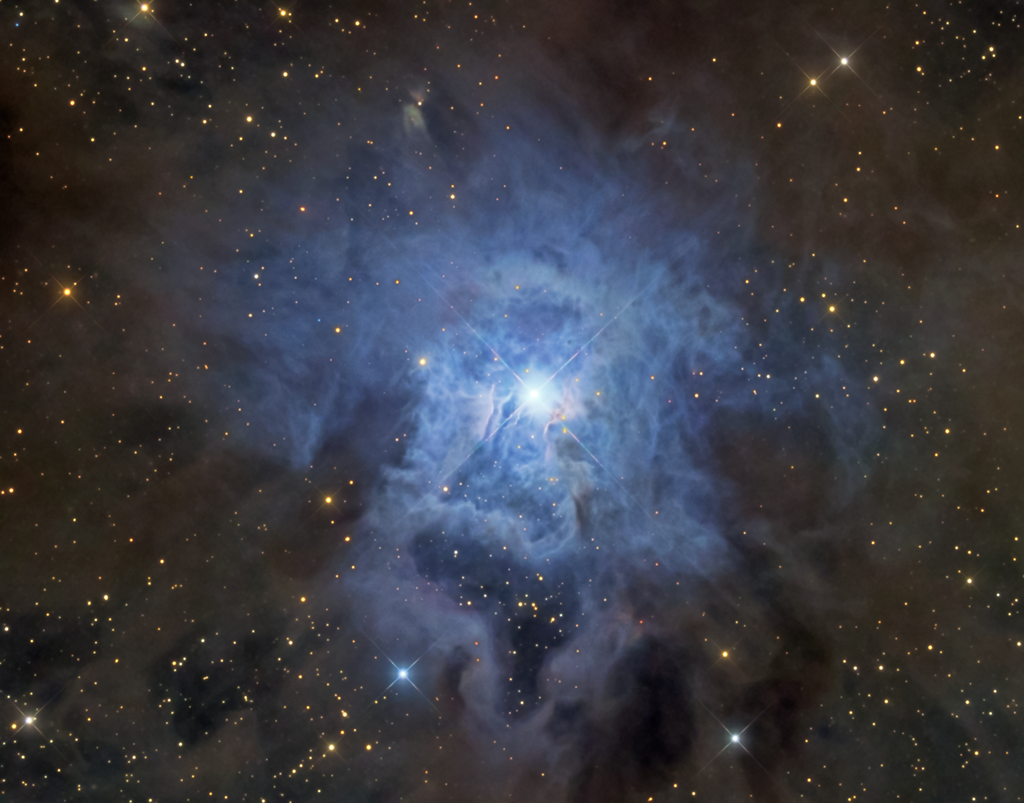
NGC 7023: The Iris Nebula


These cosmic clouds have blossomed 1,300 light-years away, in the fertile starfields of the constellation Cepheus. Called the Iris Nebula, NGC 7023 is not the only nebula to evoke the imagery of flowers. Still, this deep telescopic image shows off the Iris Nebula’s range of colors and symmetries, embedded in surrounding fields of interstellar dust. Within the Iris itself, dusty nebular material surrounds a hot, young star. The dominant color of the brighter reflection nebula is blue, characteristic of dust grains reflecting starlight. Central filaments of the reflection nebula glow with a faint reddish photoluminesence as some dust grains effectively convert the star’s invisible ultraviolet radiation to visible red light. Infrared observations indicate that this nebula contains complex carbon molecules known as PAHs. The dusty blue petals of the Iris Nebula span about six light-years.

from NASA https://ift.tt/3n0lsHk
via IFTTT

M51: The Whirlpool Galaxy


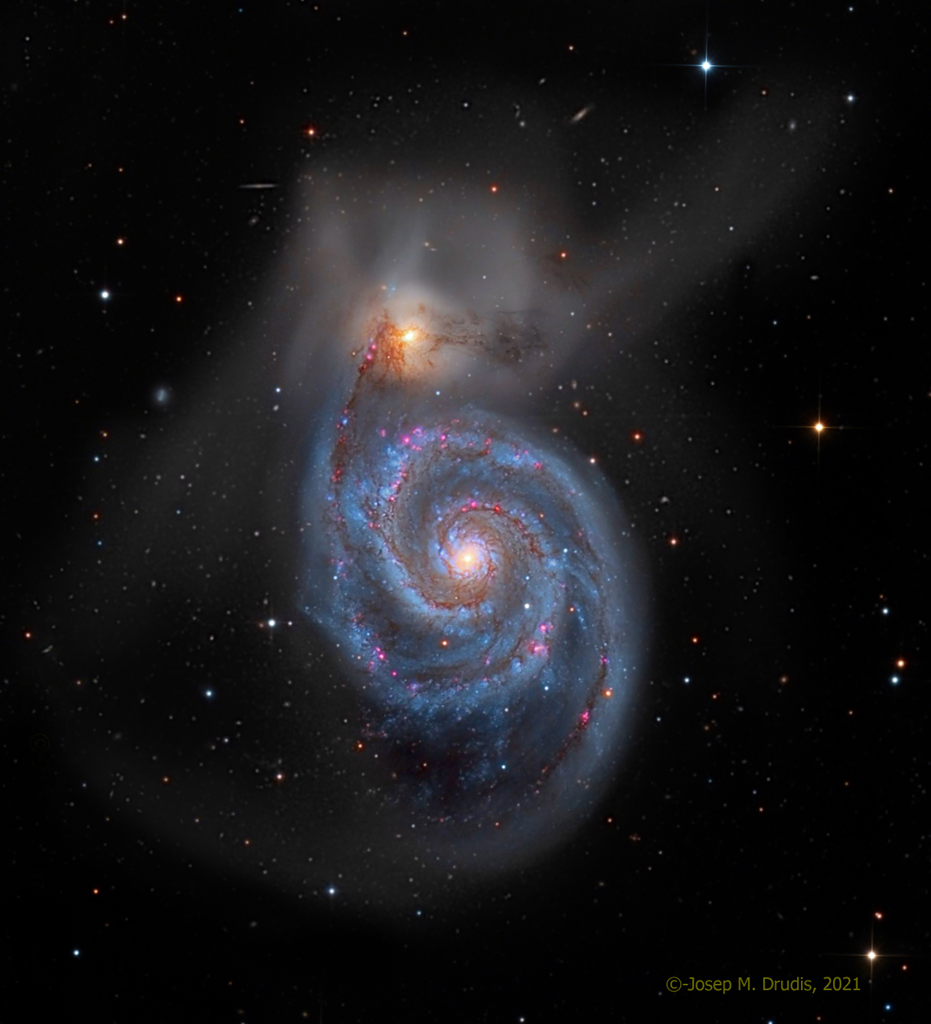
Find the Big Dipper and follow the handle away from the dipper’s bowl until you get to the last bright star. Then, just slide your telescope a little south and west and you’ll come upon this stunning pair of interacting galaxies, the 51st entry in Charles Messier’s famous catalog. Perhaps the original spiral nebula, the large galaxy with well defined spiral structure is also cataloged as NGC 5194. Its spiral arms and dust lanes clearly sweep in front of its companion galaxy (top), NGC 5195. The pair are about 31 million light-years distant and officially lie within the angular boundaries of the small constellation Canes Venatici. Though M51 looks faint and fuzzy to the eye, deep images like this one reveal its striking colors and galactic tidal debris.

from NASA https://ift.tt/2WIDtyX
via IFTTT

Dancing Ghosts: Curved Jets from Active Galaxies


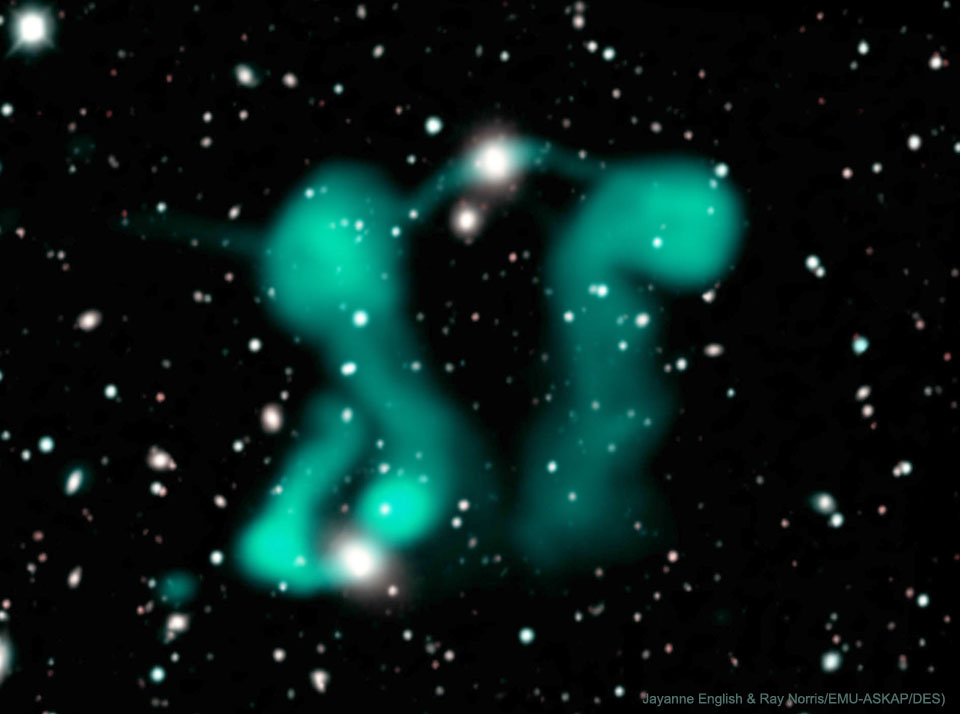
Why would galaxies emit jets that look like ghosts? And furthermore, why do they appear to be dancing? The curled and fluffy jets from the supermassive black holes at the centers of two host galaxies (top center and lower left) are unlike anything seen before. They were found by astronomers using the Australian Square Kilometer Array Pathfinder (ASKAP) radio telescope when creating maps tracing the evolution of galaxies. Images preceding this Evolutionary Map of the Universe survey only showed amorphous blobs. Eventually, comparisons of relative amounts of energy emitted revealed the glowing elongated structures were created by electrons streaming around magnetic field lines. Overlaying the radio data on an optical view of the sky (Dark Energy Survey) confirmed that the electron streams originated from the centers of active galaxies. Usually such Active Galactic Nuclei (AGN) produce straight jets. A leading hypothesis for the geometric origin of these unusually graceful shapes involves the flow of large-scale intergalactic winds.

from NASA https://ift.tt/2Wz1Mz7
via IFTTT

A Blue Moon in Exaggerated Colors


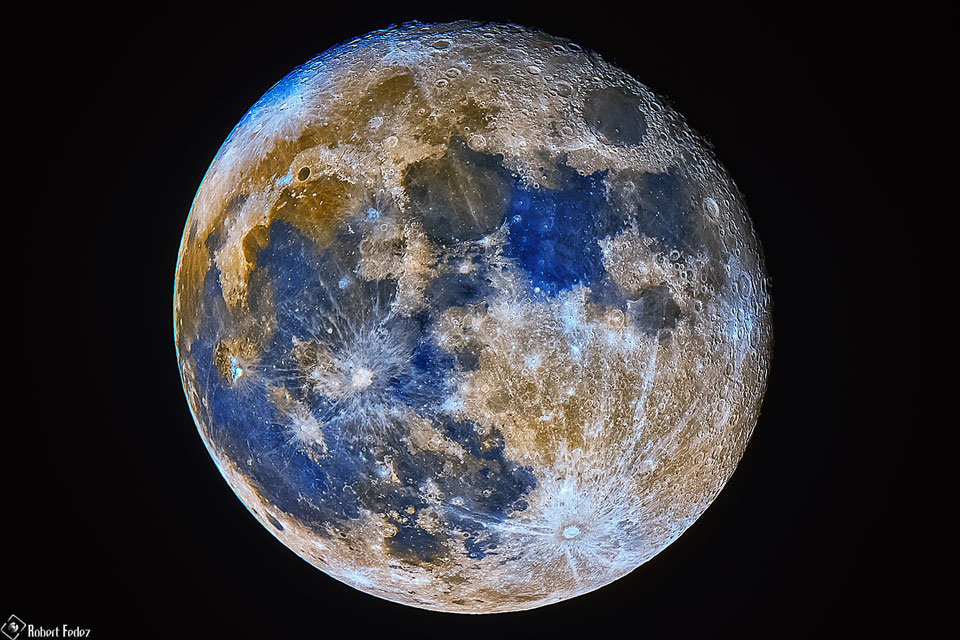
The Moon is normally seen in subtle shades of grey or gold. But small, measurable color differences have been greatly exaggerated to make this telescopic, multicolored, moonscape captured during the Moon’s full phase. The different colors are recognized to correspond to real differences in the chemical makeup of the lunar surface. Blue hues reveal titanium rich areas while orange and purple colors show regions relatively poor in titanium and iron. The familiar Sea of Tranquility, or Mare Tranquillitatis, is the blue area toward the upper right. White lines radiate across the orange-hued southern lunar highlands from 85-kilometer wide ray-crater Tycho at bottom right. The full moon that occurred earlier this month could be counted as a seasonal blue moon because it was, unusually, the third of four full moons to occur during northern summer (and hence southern winter). The featured 272-image composite demonstrates that the full Moon is always blue, but usually not blue enough in hue to ooh.

from NASA https://ift.tt/2Y0Fnvd
via IFTTT

A Fire Rainbow over West Virginia


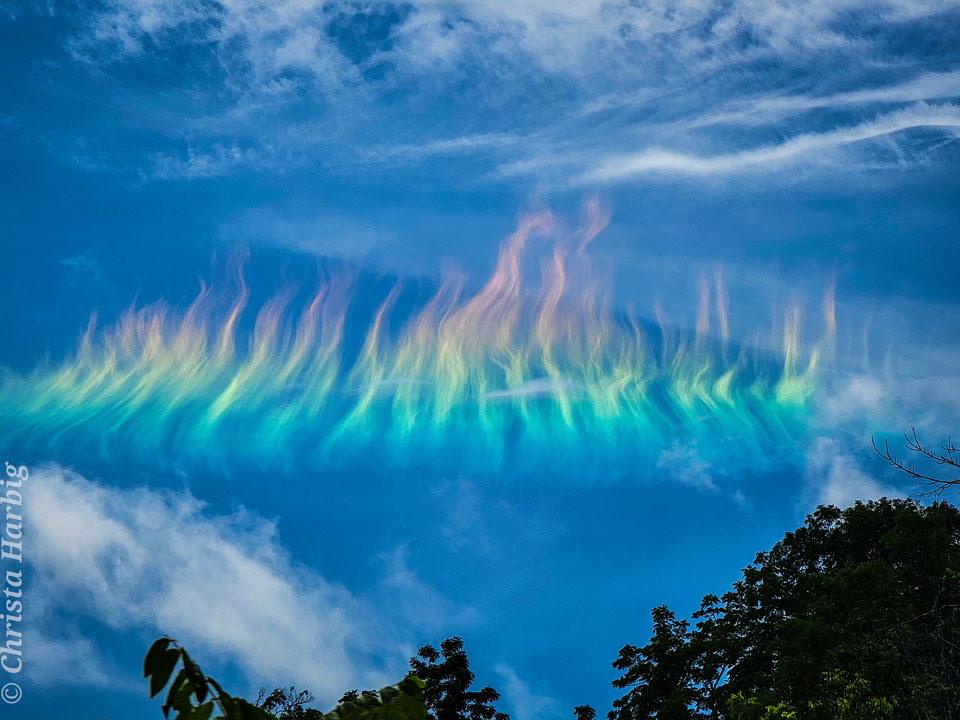
What’s happening to this cloud? Ice crystals in a distant cirrus cloud are acting like little floating prisms. Known informally as a fire rainbow for its flame-like appearance, a circumhorizon arc appears parallel to the horizon. For a circumhorizontal arc to be visible, the Sun must be at least 58 degrees high in a sky where cirrus clouds present below — in this case cirrus fibrates. The numerous, flat, hexagonal ice-crystals that compose the cirrus cloud must be aligned horizontally to properly refract sunlight in a collectively similar manner. Therefore, circumhorizontal arcs are somewhat unusual to see. The featured fire rainbow was photographed earlier this month near North Fork Mountain in West Virginia, USA.

from NASA https://ift.tt/3zsyAIN
via IFTTT

Orbits of Potentially Hazardous Asteroids


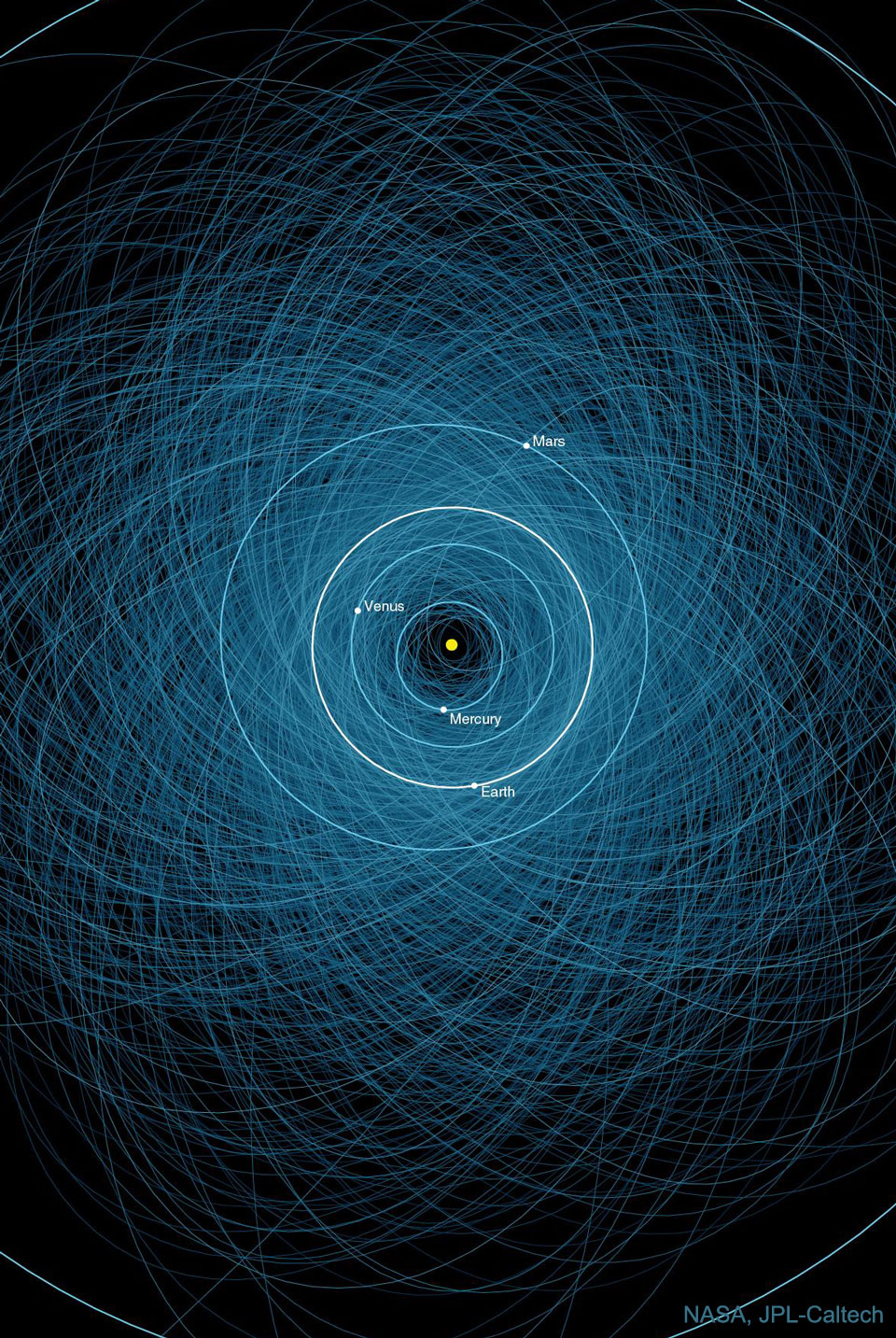
Are asteroids dangerous? Some are, but the likelihood of a dangerous asteroid striking the Earth during any given year is low. Because some past mass extinction events have been linked to asteroid impacts, however, humanity has made it a priority to find and catalog those asteroids that may one day affect life on Earth. Pictured here are the orbits of the over 1,000 known Potentially Hazardous Asteroids (PHAs). These documented tumbling boulders of rock and ice are over 140 meters across and will pass within 7.5 million kilometers of Earth — about 20 times the distance to the Moon. Although none of them will strike the Earth in the next 100 years — not all PHAs have been discovered, and past 100 years, many orbits become hard to predict. Were an asteroid of this size to impact the Earth, it could raise dangerous tsunamis, for example. To investigate Earth-saving strategies, NASA’s Double Asteroid Redirection Test (DART) is planned for launch later this year. Of course rocks and ice bits of much smaller size strike the Earth every day, usually pose no danger, and sometimes creating memorable fireball and meteor displays.

from NASA https://ift.tt/2XX0n64
via IFTTT

Mars Rock Rochette


Taken on mission sol 180 (August 22) this sharp image from a Hazard Camera on the Perseverance rover looks out across a rock strewn floor of Jezero crater on Mars. At 52.5 centimeters (21 inches) in diameter, one of the rover’s steerable front wheels is at lower left in the frame. Near center is a large rock nicknamed Rochette. Mission planners don’t want to avoid Rochette though. Instead Perseverance will be instructed to reach out with its 2 meter long robotic arm and abrade the rock’s surface, to determine whether it has a consistency suitable for obtaining a sample, slightly thicker than a pencil, using the rover’s coring bit. Samples collected by Perseverance would be returned to Earth by a future Mars mission.

from NASA https://ift.tt/3ztb8Lw
via IFTTT

Elephant s Trunk and Caravan


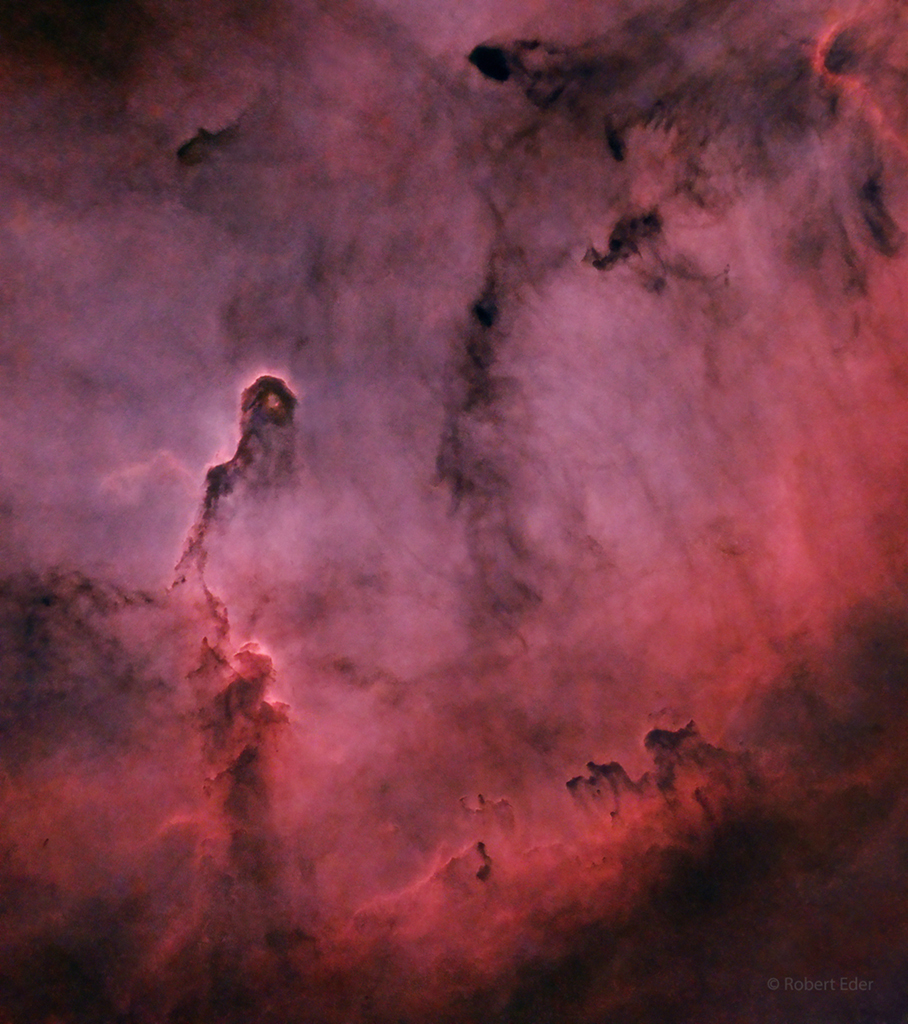
Like an illustration in a galactic Just So Story, the Elephant’s Trunk Nebula winds through the emission nebula and young star cluster complex IC 1396, in the high and far off constellation of Cepheus. Also known as vdB 142, seen on the left the cosmic elephant’s trunk is over 20 light-years long. Removed by digital processing, no visible stars are in this detailed telescopic close-up view highlighting the bright swept-back ridges that outline pockets of cool interstellar dust and gas. But the dark, tendril-shaped clouds contain the raw material for star formation and hide protostars within. Nearly 3,000 light-years distant, the relatively faint IC 1396 complex covers a large region on the sky, spanning over 5 degrees. This starless rendition spans a 1 degree wide field of view though, about the angular size of 2 full moons. Of course the dark shapes below and right, marching toward the winding Elephant’s Trunk, are known to some as The Caravan.

from NASA https://ift.tt/2Y5I8vz
via IFTTT

A Blue Hour Full Moon


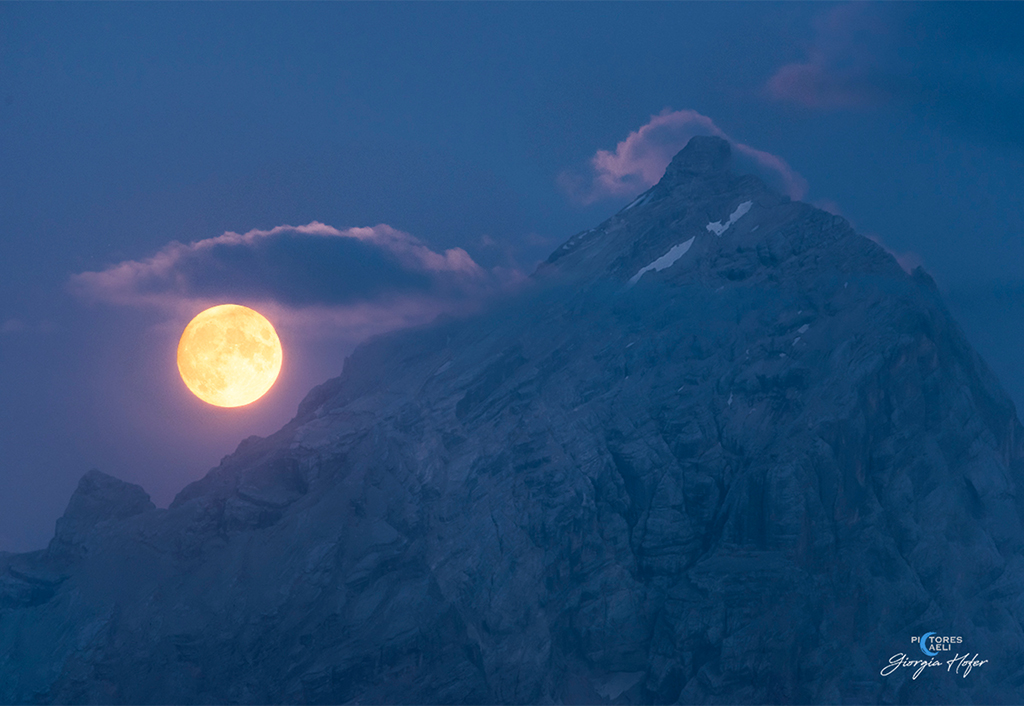
Nature photographers and other fans of planet Earth always look forward to the blue hour. That’s the transition in twilight, just before sunrise or after sunset, when the Sun is below the horizon but land and sky are still suffused with a beautiful blue light. After sunset on August 21, this blue hour snapshot captured the nearly full Moon as it rose opposite the Sun, above the rugged Italian Alps from Cortina d’Ampezzo, Italy. Sharing bluish hues with the sky, the rocky pyramid of Monte Antelao, also known as the King of the Dolomites, is the region’s prominent alpine peak. The moonlight is yellow, but even so this full Moon was known to some as a seasonal Blue Moon. That’s because by one definition the third full Moon of a season with four full moons in it is called a Blue Moon. Recognizing a season as the time between a solstice and an equinox, this season’s fourth full Moon will be rising in the blue hour of September 20, just before September’s equinox.

from NASA https://ift.tt/2WqrfdQ
via IFTTT