Meteor Fireballs in Light and Sound


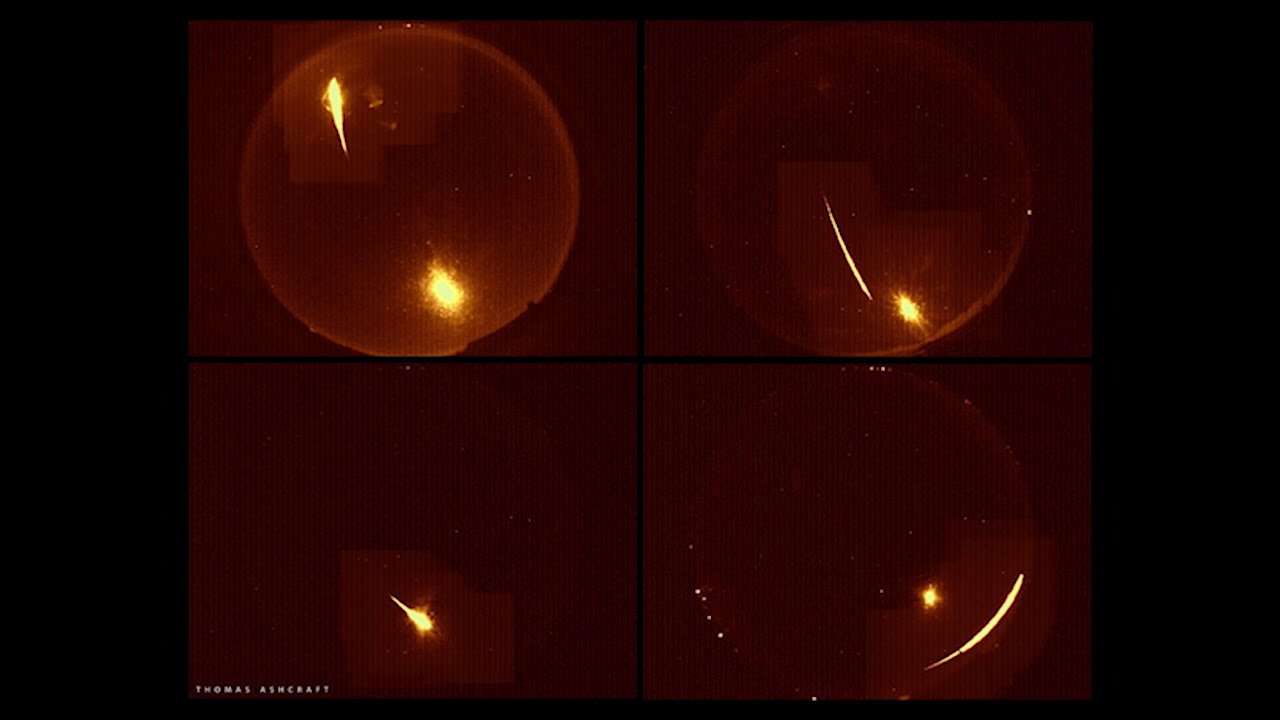
Yes, but have you ever heard a meteor? Usually, meteors are too far away to make any audible sound. However, a meteor will briefly create an ionization trail that can reflect a distant radio signal. If the geometry is right, you may momentarily hear — through your radio — a distant radio station even over static. In the featured video, the sounds of distant radio transmitters were caught reflecting from large meteor trails by a sensitive radio receiver — at the same time the bright streaks were captured by an all-sky video camera. In the video, the bright paths taken by four fireballs across the sky near Lamy, New Mexico, USA, are shown first. Next, after each static frame, a real-time video captures each meteor streaking across the sky, now paired with the sound recorded from its radio reflection. Projecting a meteor trail down to the Earth may lead to finding its impact site (if any), while projecting its trail back into the sky may lead to identifying its parent comet or asteroid.

from NASA https://ift.tt/3eCPxZi
via IFTTT
A Flag Shaped Aurora over Sweden


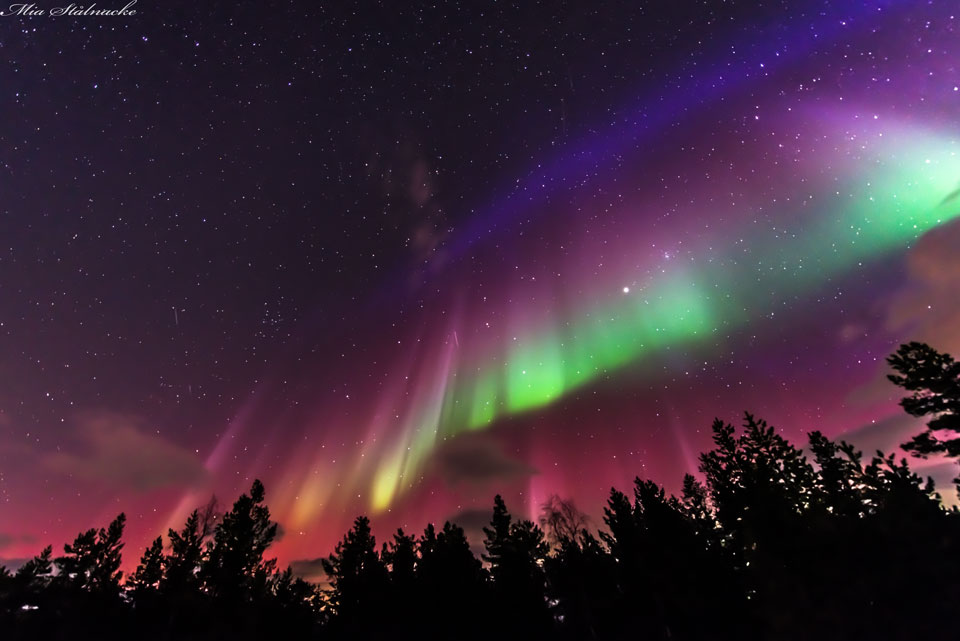
It appeared, momentarily, like a 50-km tall banded flag. In mid-March of 2015, an energetic Coronal Mass Ejection directed toward a clear magnetic channel to Earth led to one of the more intense geomagnetic storms of recent years. A visual result was wide spread auroras being seen over many countries near Earth’s magnetic poles. Captured over Kiruna, Sweden, the image features an unusually straight auroral curtain with the green color emitted low in the Earth’s atmosphere, and red many kilometers higher up. It is unclear where the rare purple aurora originates, but it might involve an unusual blue aurora at an even lower altitude than the green, seen superposed with a much higher red. Now past Solar Minimum, colorful nights of auroras over Earth are likely to increase.

from NASA https://ift.tt/3vk0QLP
via IFTTT

SuperCam Target on Maaz


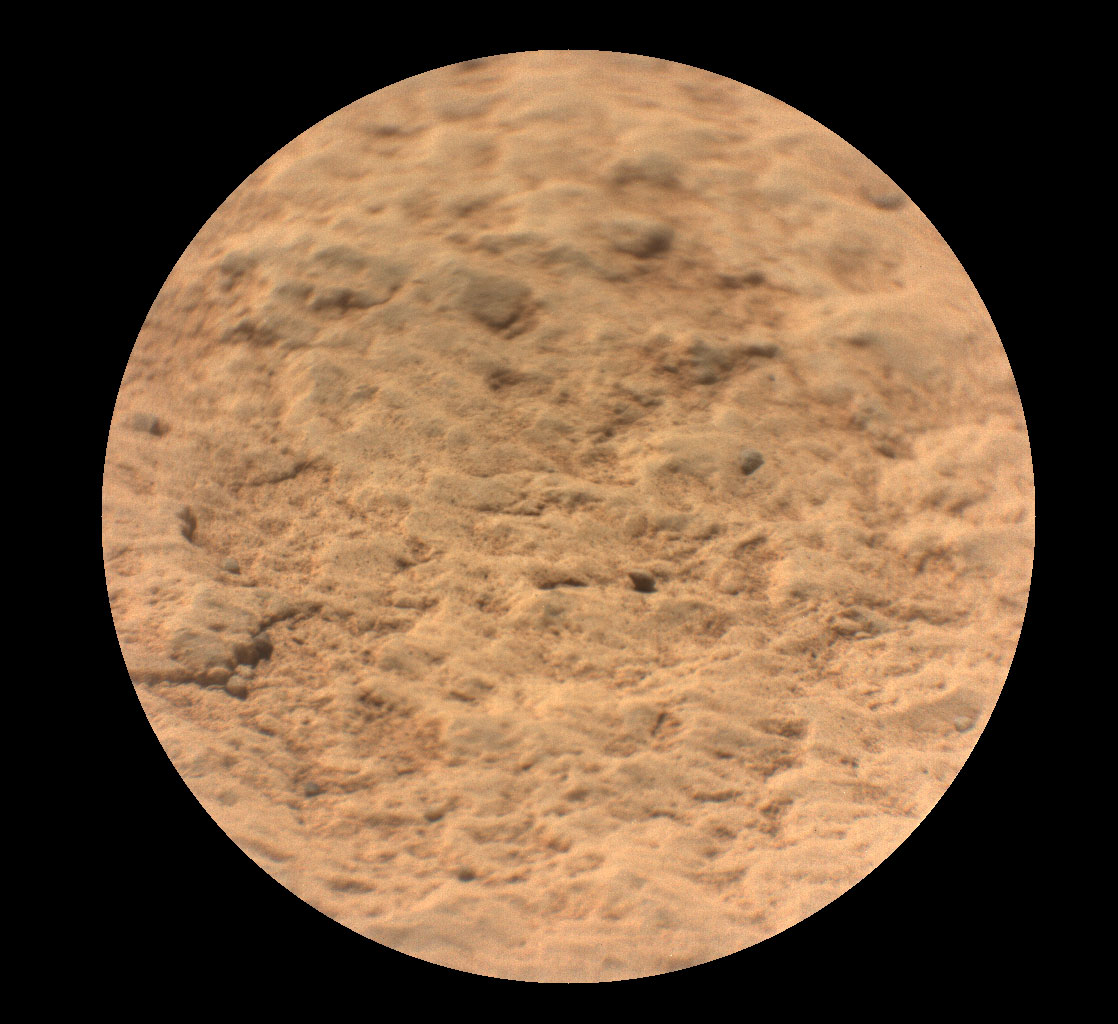
What’s the sound of one laser zapping? There’s no need to consult a Zen master to find out, just listen to the first acoustic recording of laser shots on Mars. On Perseverance mission sol 12 (March 2) the SuperCam instrument atop the rover’s mast zapped a rock dubbed Ma’az 30 times from a range of about 3.1 meters. Its microphone recorded the soft staccato popping sounds of the rapid series of SuperCam laser zaps. Shockwaves created in the thin martian atmosphere as bits of rock are vaporized by the laser shots make the popping sounds, sounds that offer clues to the physical structure of the target. This SuperCam close-up of the Ma’az target region is 6 centimeters (2.3 inches) across. Ma’az means Mars in the Navajo language.

from NASA https://ift.tt/3qRr317
via IFTTT

Messier 81


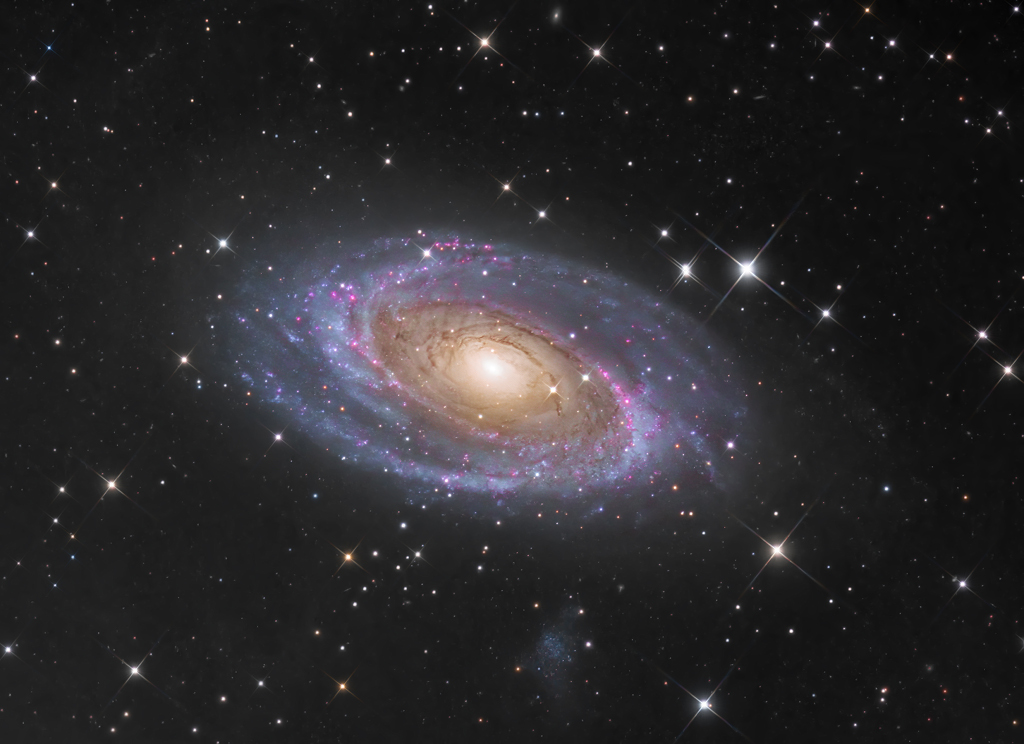
One of the brightest galaxies in planet Earth’s sky is similar in size to our Milky Way Galaxy: big, beautiful Messier 81. Also known as NGC 3031 or Bode’s galaxy for its 18th century discoverer, this grand spiral can be found toward the northern constellation of Ursa Major, the Great Bear. The sharp, detailed telescopic view reveals M81’s bright yellow nucleus, blue spiral arms, pinkish starforming regions, and sweeping cosmic dust lanes. Some dust lanes actually run through the galactic disk (left of center), contrary to other prominent spiral features though. The errant dust lanes may be the lingering result of a close encounter between M81 and the nearby galaxy M82 lurking outside of this frame. M81’s faint, dwarf irregular satellite galaxy, Holmberg IX, can be seen just below the large spiral. Scrutiny of variable stars in M81 has yielded a well-determined distance for an external galaxy — 11.8 million light-years.

from NASA https://ift.tt/38utOz2
via IFTTT

Zodiacal Light and Mars


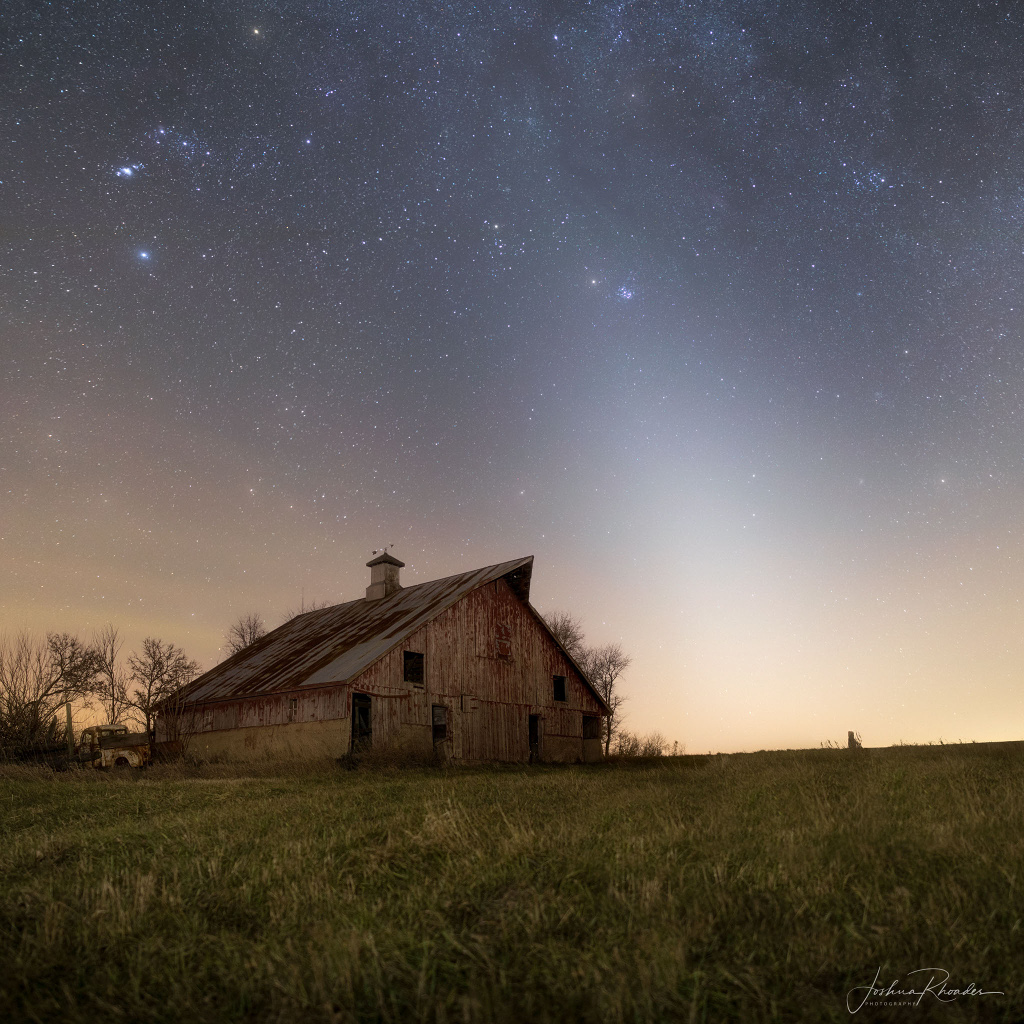
Just after sunset on March 7, a faint band of light still reaches above the western horizon in this serene, rural Illinois, night skyscape. Taken from an old farmstead, the luminous glow is zodiacal light, prominent in the west after sunset during planet Earth’s northern hemisphere spring. On that clear evening the band of zodiacal light seems to engulf bright yellowish Mars and the Pleiades star cluster. Their close conjunction is in the starry sky above the old barn’s roof. Zodiacal light is sunlight scattered by interplanetary dust particles that lie near the Solar System’s ecliptic plane. Of course all the Solar System’s planets orbit near the plane of the ecliptic, within the band of zodiacal light. But zodiacal light and Mars may have a deeper connection. A recent analysis of serendipitous detections of interplanetary dust by the Juno spacecraft during its Earth to Jupiter voyage suggest Mars is the likely source of the dust that produces zodiacal light.

from NASA https://ift.tt/38u50a8
via IFTTT

NGC 1499: The California Nebula


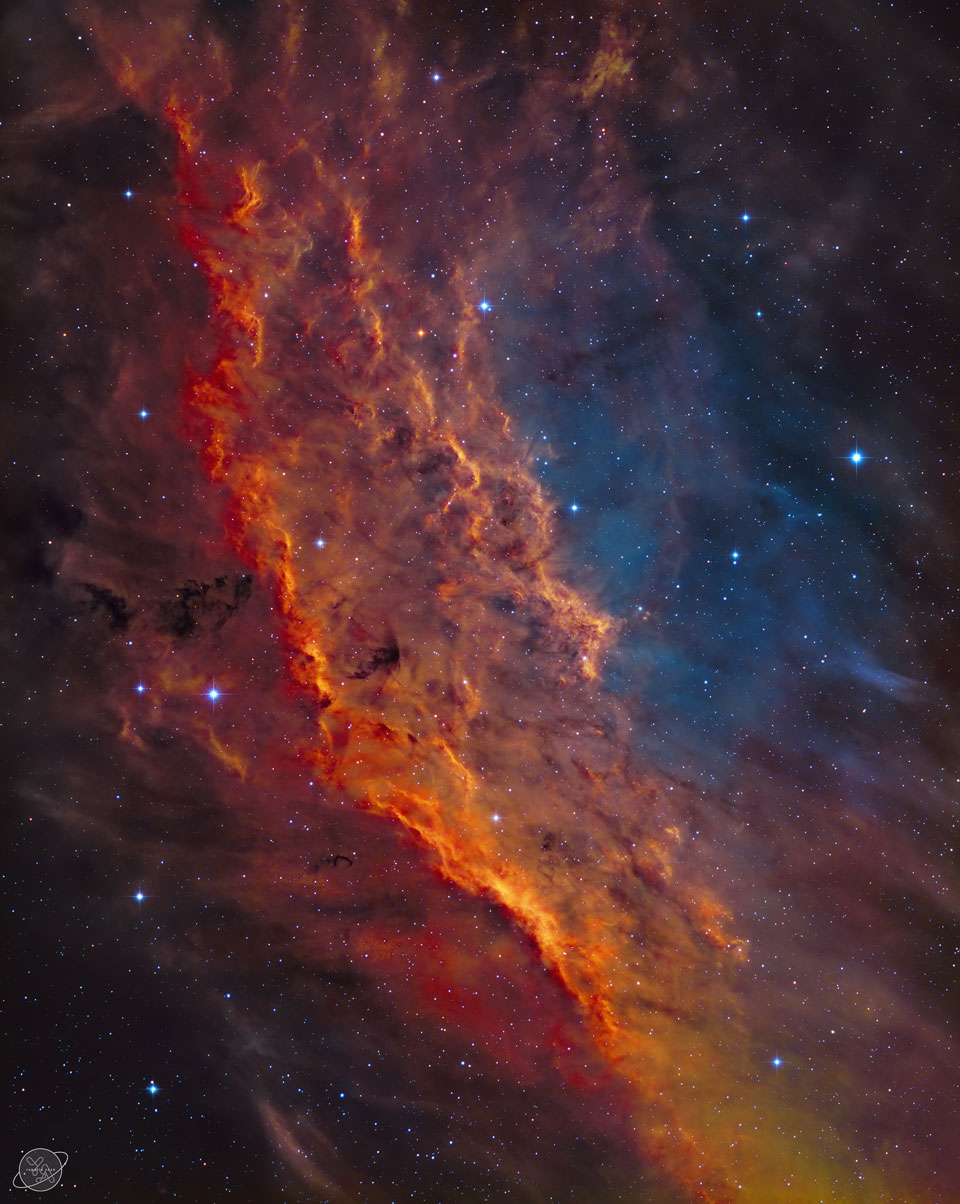
Could Queen Calafia‘s mythical island exist in space? Perhaps not, but by chance the outline of this molecular space cloud echoes the outline of the state of California, USA. Our Sun has its home within the Milky Way’s Orion Arm, only about 1,000 light-years from the California Nebula. Also known as NGC 1499, the classic emission nebula is around 100 light-years long. On the featured image, the most prominent glow of the California Nebula is the red light characteristic of hydrogen atoms recombining with long lost electrons, stripped away (ionized) by energetic starlight. The star most likely providing the energetic starlight that ionizes much of the nebular gas is the bright, hot, bluish Xi Persei just to the right of the nebula. A regular target for astrophotographers, the California Nebula can be spotted with a wide-field telescope under a dark sky toward the constellation of Perseus, not far from the Pleiades.

from NASA https://ift.tt/3l9sFly
via IFTTT

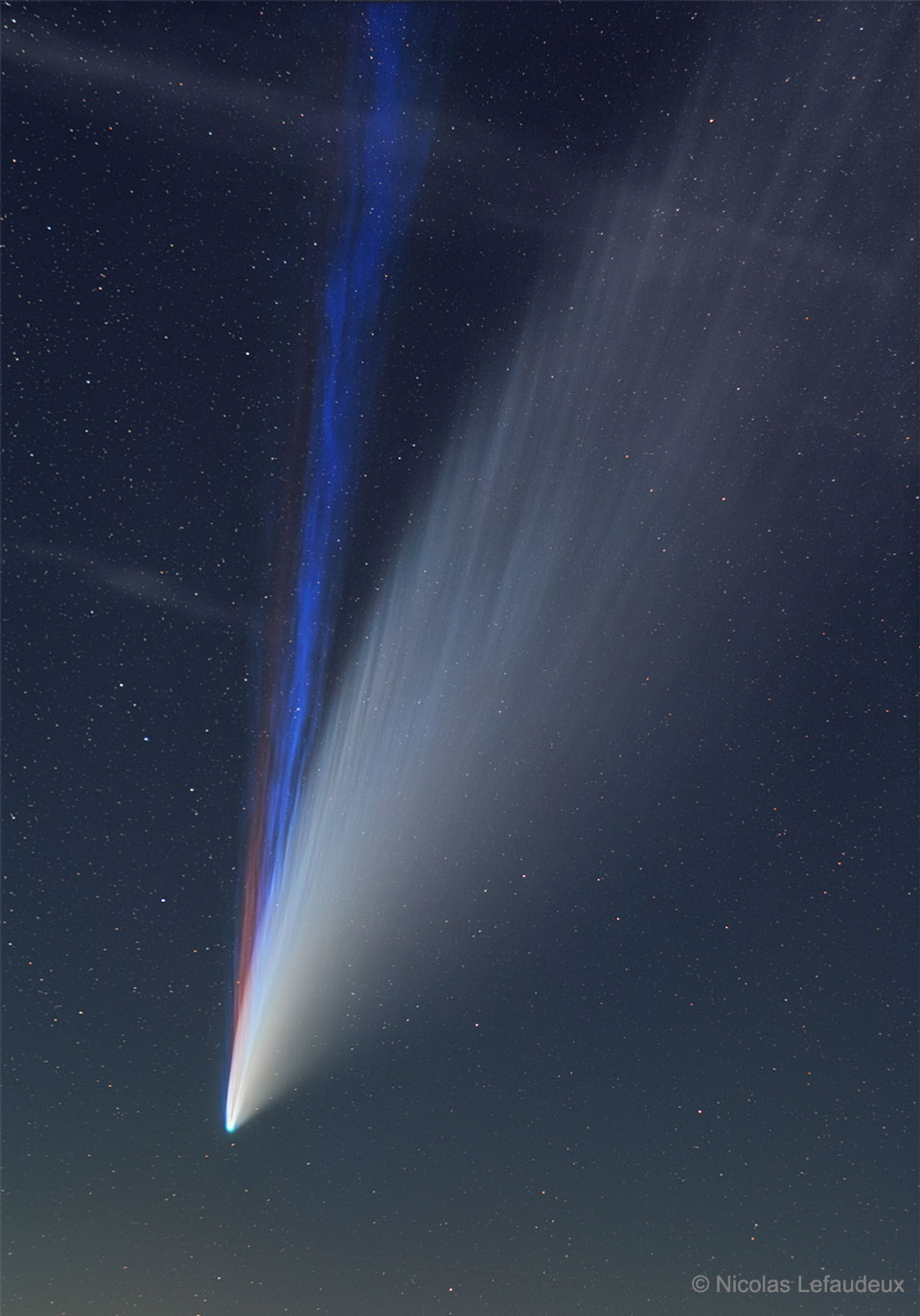
Three Tails of Comet NEOWISE


What created the unusual red tail in Comet NEOWISE? Sodium. A spectacular sight back in the summer of 2020, Comet NEOWISE, at times, displayed something more than just a surprisingly striated white dust tail and a pleasingly patchy blue ion tail. Some color sensitive images showed an unusual red tail, and analysis showed much of this third tail’s color was emitted by sodium. Gas rich in sodium atoms might have been liberated from Comet NEOWISE‘s warming nucleus in early July by bright sunlight, electrically charged by ultraviolet sunlight, and then pushed out by the solar wind. The featured image was captured in mid-July from Brittany, France and shows the real colors. Sodium comet tails have been seen before but are rare — this one disappeared by late July. Comet C/2020 F3 (NEOWISE) has since faded, lost all of its bright tails, and now approaches the orbit of Jupiter as it heads back to the outer Solar System, to return only in about 7,000 years.

from NASA https://ift.tt/3bn69Cn
via IFTTT

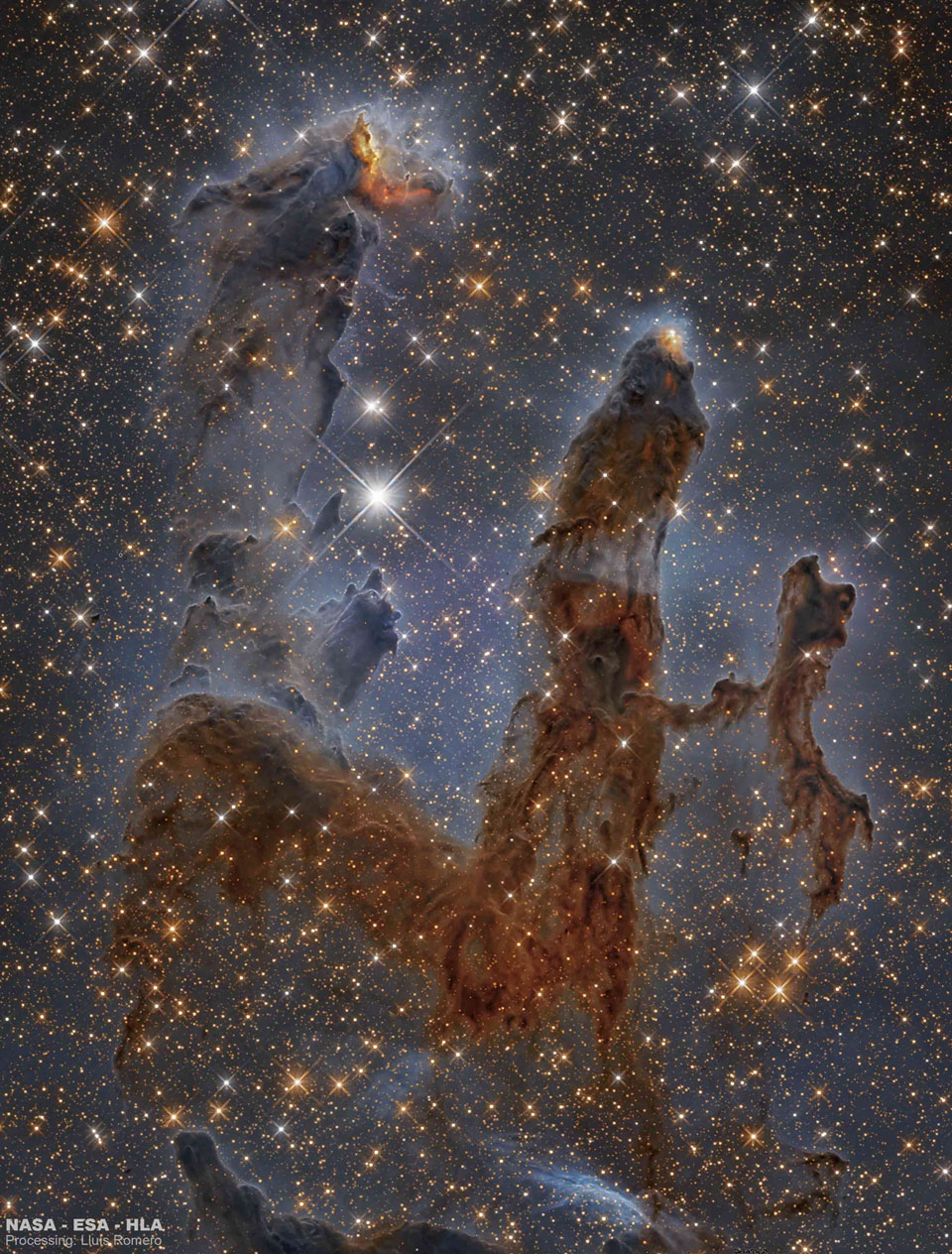
Pillars of the Eagle Nebula in Infrared


Newborn stars are forming in the Eagle Nebula. Gravitationally contracting in pillars of dense gas and dust, the intense radiation of these newly-formed bright stars is causing surrounding material to boil away. This image, taken with the Hubble Space Telescope in near infrared light, allows the viewer to see through much of the thick dust that makes the pillars opaque in visible light. The giant structures are light years in length and dubbed informally the Pillars of Creation. Associated with the open star cluster M16, the Eagle Nebula lies about 6,500 light years away. The Eagle Nebula is an easy target for small telescopes in a nebula-rich part of the sky toward the split constellation Serpens Cauda (the tail of the snake).

from NASA https://ift.tt/3roqTPR
via IFTTT

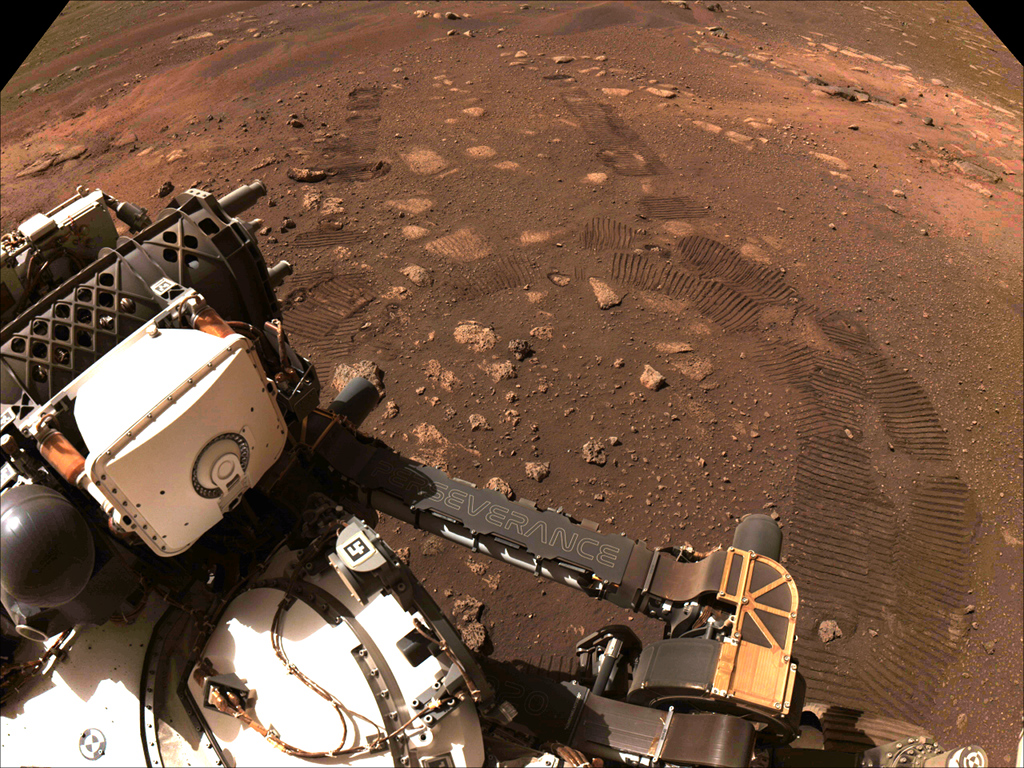
Perseverance Takes a Spin


After arriving at Jezero Crater on Mars, Perseverance went for a spin on March 4. This sharp image from the car-sized rover’s Navcam shows tracks left by its wheels in the martian soil. In preparation for operations on the surface of the Red Planet, its first drive lasted about 33 minutes. On a short and successful test drive Perseverance moved forward 4 meters, made a 150 degree turn, backed up for 2.5 meters, and now occupies a different parking space at its newly christened Octavia E. Butler Landing location. Though the total travel distance of the rover’s first outing was about 6.5 meters (21 feet), regular commutes of 200 meters or more can be expected in the future.

from NASA https://ift.tt/30kIiwG
via IFTTT

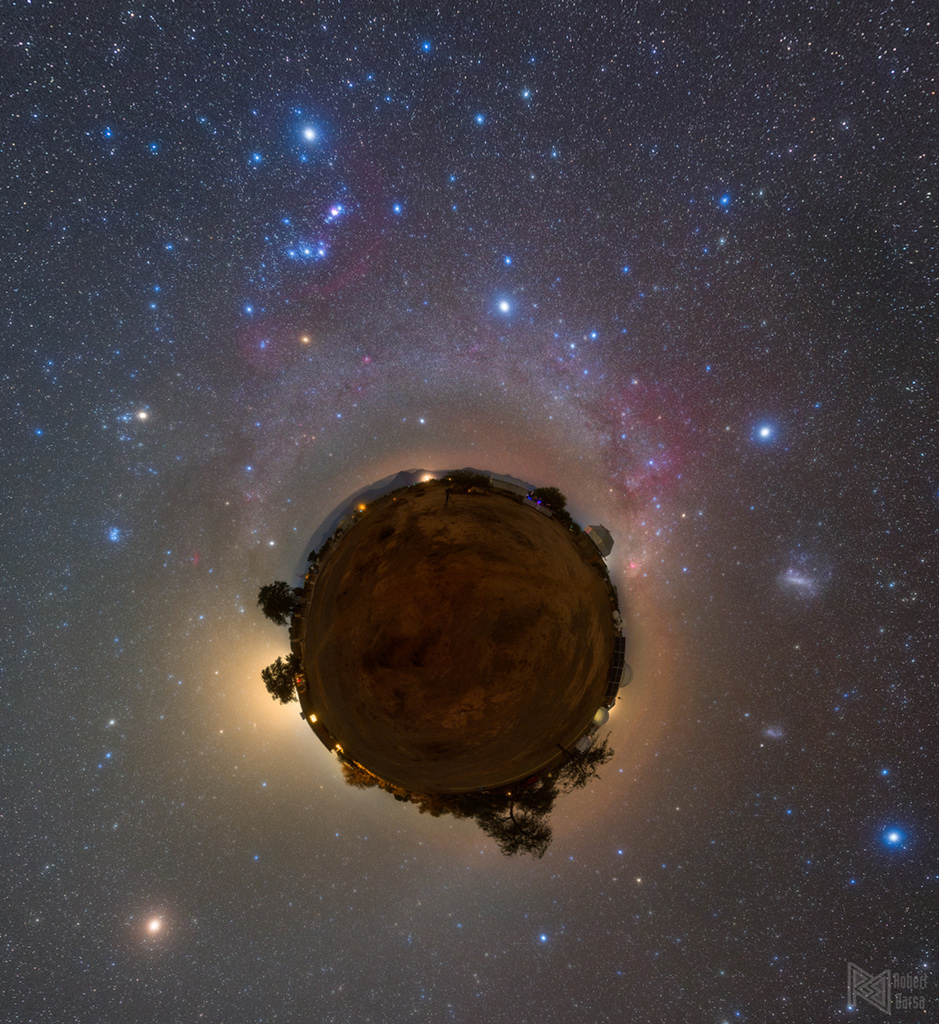
A Little Like Mars


The surface of this planet looks a little like Mars. It’s really planet Earth though. In a digitally stitched little planet projection, the 360 degree mosaic was captured near San Pedro in the Chilean Atacama desert. Telescopes in domes on the horizon are taking advantage of the region’s famously dark, clear nights. Taken in early December, a magnificent Milky Way arcs above the horizon for almost 180 degrees around the little planet with Orion prominent in the southern sky. A familiar constellation upside down for northern hemisphere skygazers, Orion shares that southern December night almost opposite the Large and Small Magellanic clouds. But the Red Planet itself is the brightest yellowish celestial beacon in this little planet sky.

from NASA https://ift.tt/3kMUFuR
via IFTTT