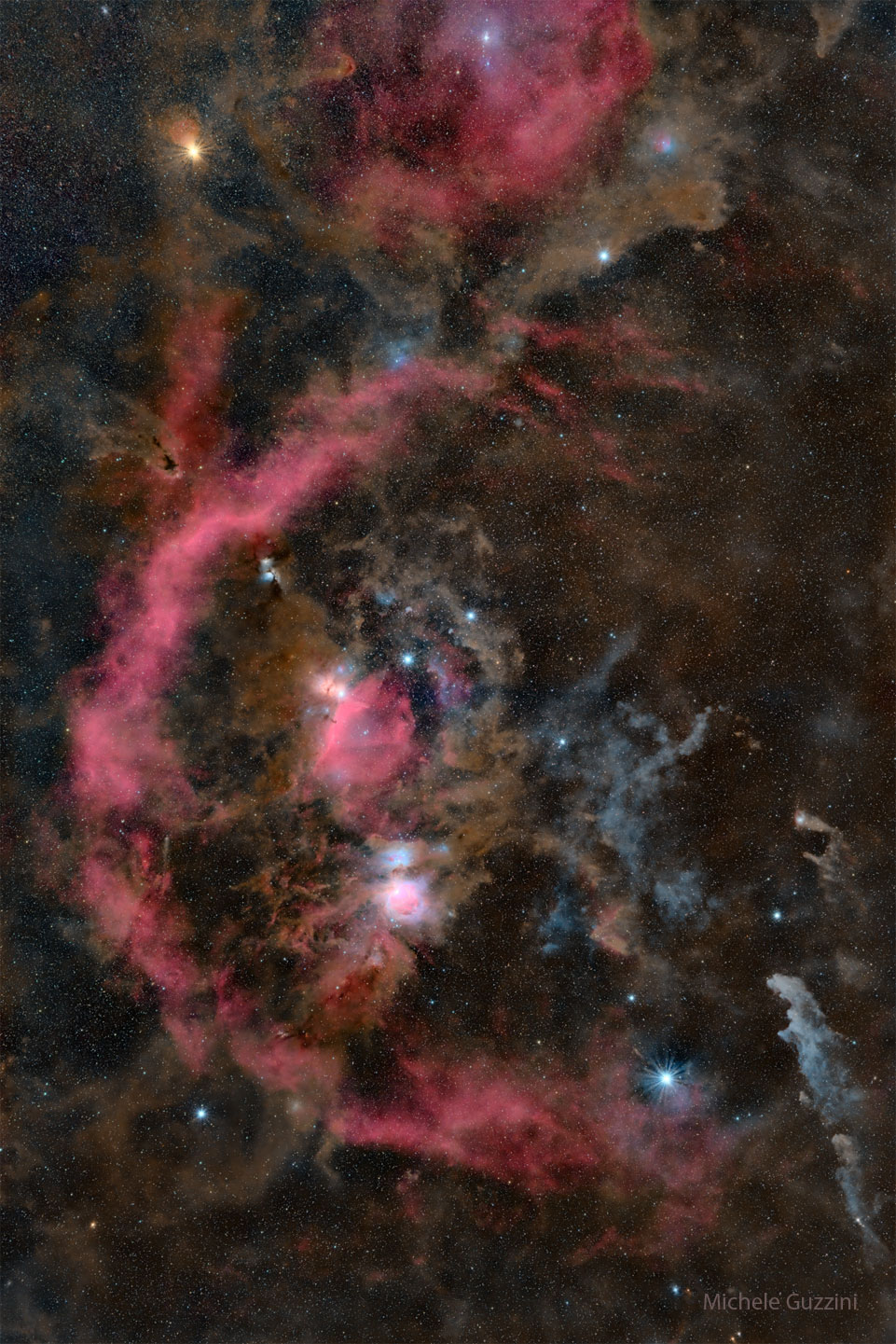
Do you recognize this constellation? Although it is one of the most recognizable star groupings on the sky, this is a more full Orion than you can see — an Orion only revealed with long exposure digital camera imaging and post processing. Here the cool red giant Betelgeuse takes on a strong orange tint as the brightest star on the upper left. Orion‘s hot blue stars are numerous, with supergiant Rigel balancing Betelgeuse on the lower right, and Bellatrix at the upper right. Lined up in Orion’s belt are three stars all about 1,500 light-years away, born from the constellation’s well-studied interstellar clouds. Just below Orion’s belt is a bright but fuzzy patch that might also look familiar — the stellar nursery known as Orion’s Nebula. Finally, just barely visible to the unaided eye but quite striking here is Barnard’s Loop — a huge gaseous emission nebula surrounding Orion’s Belt and Nebula discovered over 100 years ago by the pioneering Orion photographer E. E. Barnard.

from NASA https://ift.tt/vGZnkfs
via IFTTT
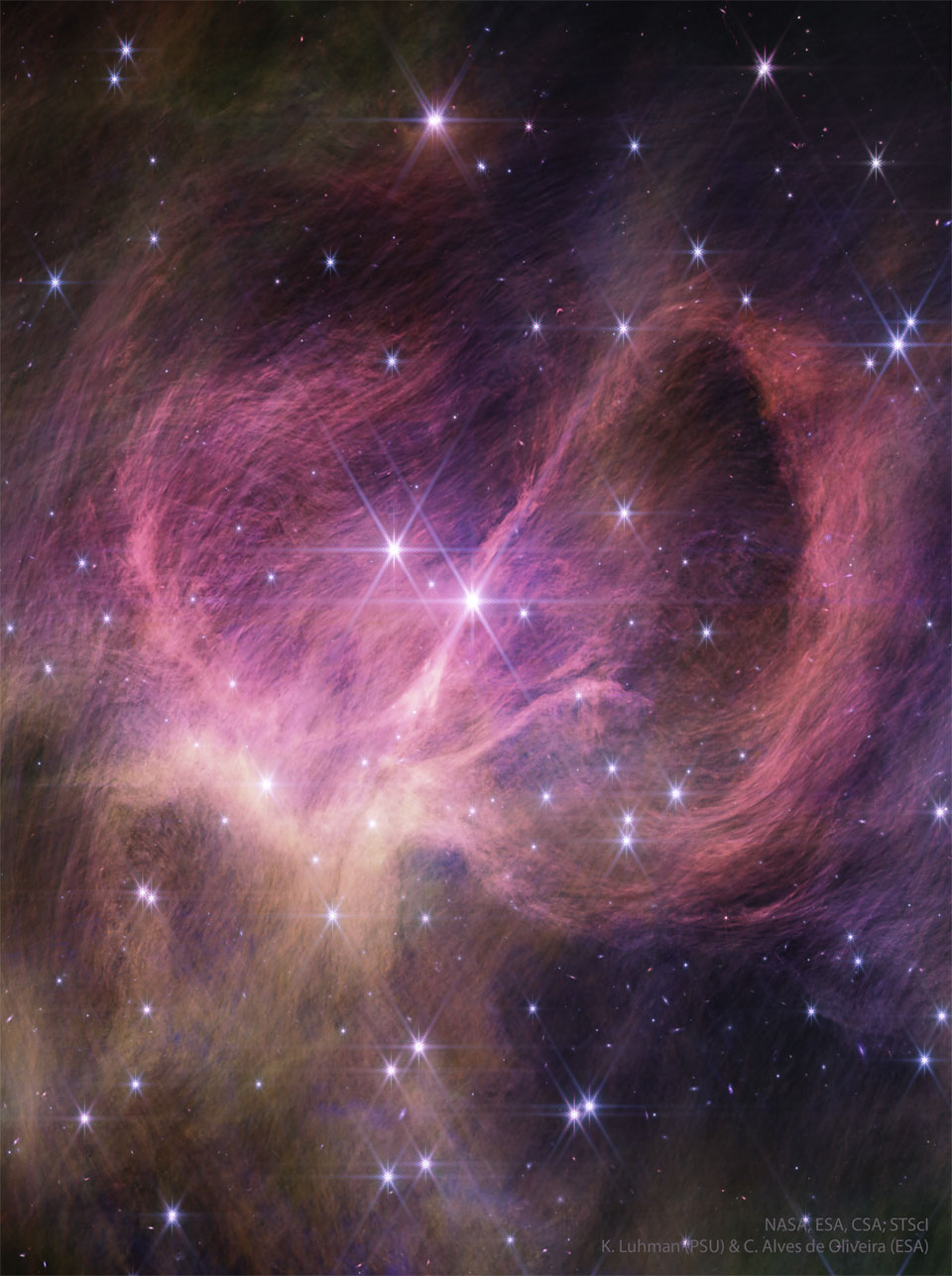

Sometimes, it’s the stars that are the hardest to see that are the most interesting. IC 348 is a young star cluster that illuminates surrounding filamentary dust. The stringy and winding dust appears pink in this recently released infrared image from the Webb Space Telescope. In visible light, this dust reflects mostly blue light, giving the surrounding material the familiar blue hue of a reflection nebula. Besides bright stars, several cool objects have been located in IC 348, visible because they glow brighter in infrared light. These objects are hypothesized to be low mass brown dwarfs. Evidence for this includes the detection of an unidentified atmospheric chemical, likely a hydrocarbon, seen previously in the atmosphere of Saturn. These objects appear to have masses slightly greater than known planets, only a few times greater than Jupiter. Together, these indicate that this young star cluster contains something noteworthy — young planet-mass brown dwarfs that float free, not orbiting any other star.

from NASA https://ift.tt/D1qePLB
via IFTTT


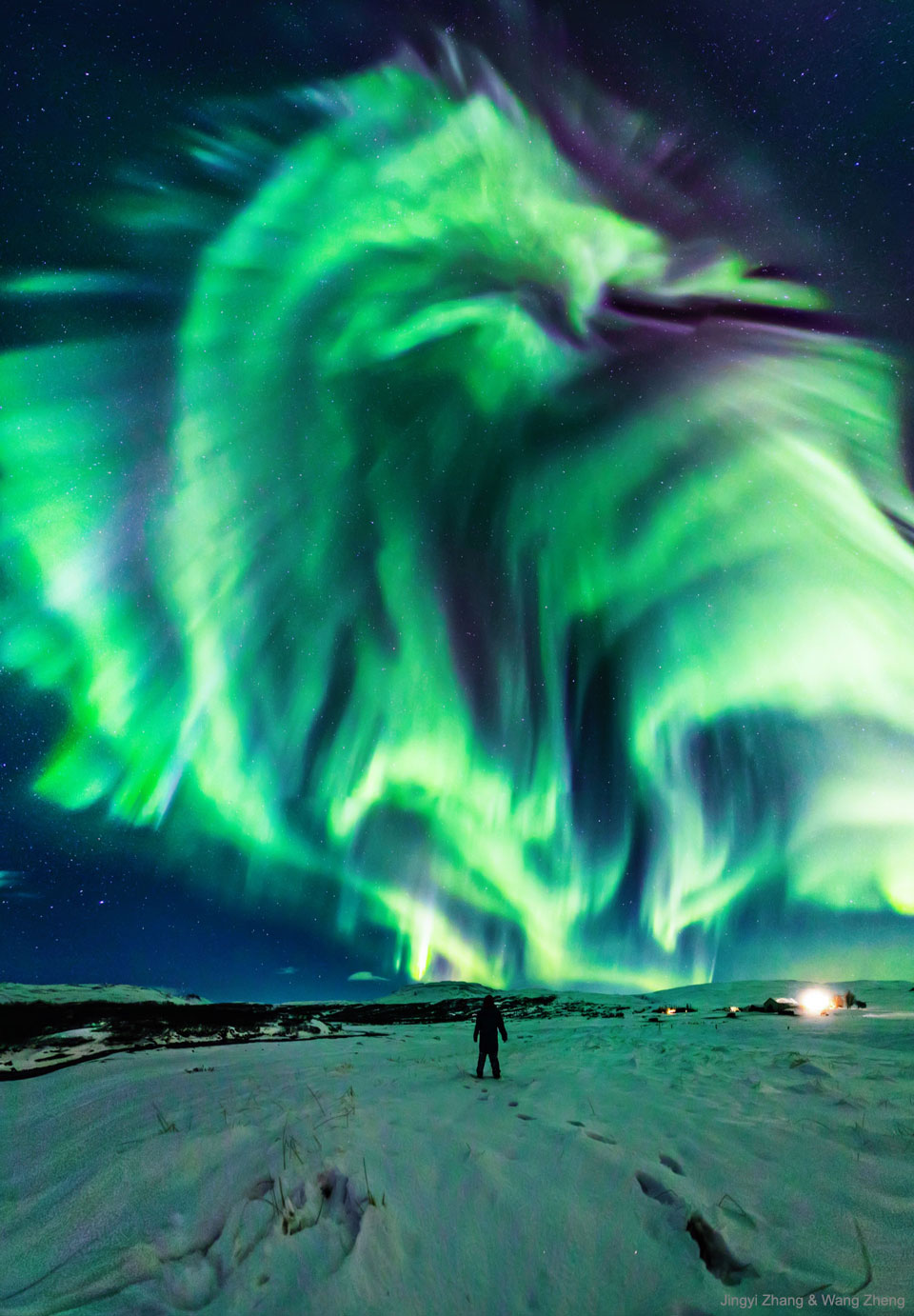
Have you ever seen a dragon in the sky? Although real flying dragons don’t exist, a huge dragon-shaped aurora developed in the sky over Iceland in 2019. The aurora was caused by a hole in the Sun’s corona that expelled charged particles into a solar wind that followed a changing interplanetary magnetic field to Earth’s magnetosphere. As some of those particles then struck Earth’s atmosphere, they excited atoms which subsequently emitted light: aurora. This iconic display was so enthralling that the photographer’s mother ran out to see it and was captured in the foreground. Our active Sun continues to show an unusually high number of prominences, filaments, sunspots, and large active regions as solar maximum approaches in 2025.

from NASA https://ift.tt/s0qOrKi
via IFTTT

Circling the Sun


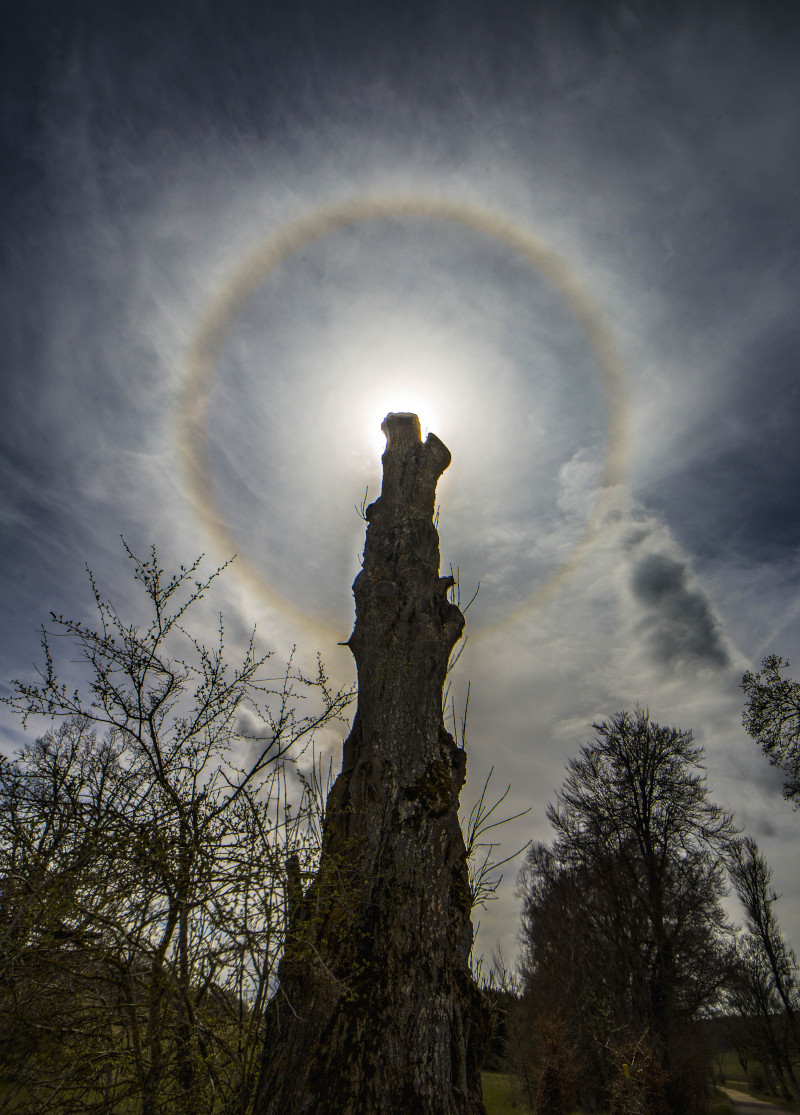
Earth’s orbit around the Sun is not a circle, it’s an ellipse. The point along its elliptical orbit where our fair planet is closest to the Sun is called perihelion. This year, perihelion was on January 2 at 01:00 UTC, with the Earth about 3 million miles closer to the Sun than it was at aphelion (last July 6), the farthest point in its elliptical orbit. Of course, distance from the Sun doesn’t determine the seasons, and it doesn’t the determine size of Sun halos. Easier to see with the Sun hidden behind a tall tree trunk, this beautiful ice halo forms a 22 degree-wide circle around the Sun, recorded while strolling through the countryside near Heroldstatt, Germany. The Sun halo’s 22 degree angular diameter is determined by the six-sided geometry of water ice crystals drifting high in planet Earth’s atmosphere.

from NASA https://ift.tt/9fSq4ij
via IFTTT

Good Morning Moon


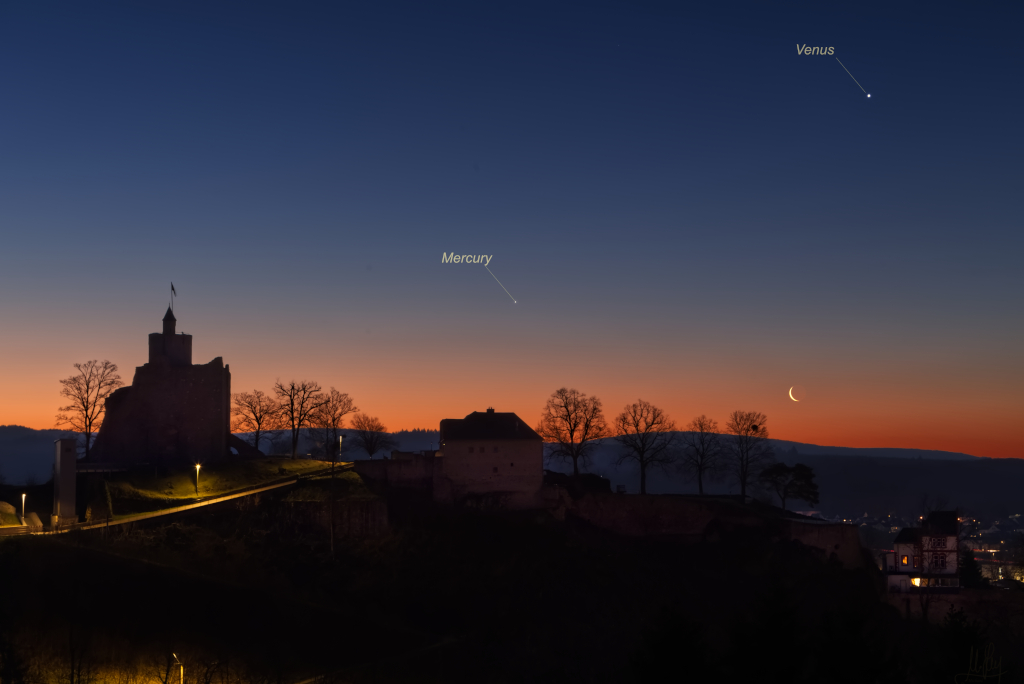
Yesterday, the Moon was New. But on January 9, early morning risers around planet Earth were treated to the sight of an old Moon, low in the east as the sky grew bright before dawn. Above the city of Saarburg in Rhineland-Palatinate, western Germany, this simple snapshot found the waning Moon’s sunlit crescent just before sunrise. But also never wandering far from the Sun in Earth’s sky, inner planets Venus and Mercury shared the cold morning skyview. In the foreground are the historic city’s tower and castle with ruins from the 10th century.

from NASA https://ift.tt/8P23E5B
via IFTTT

Quadrantids of the North


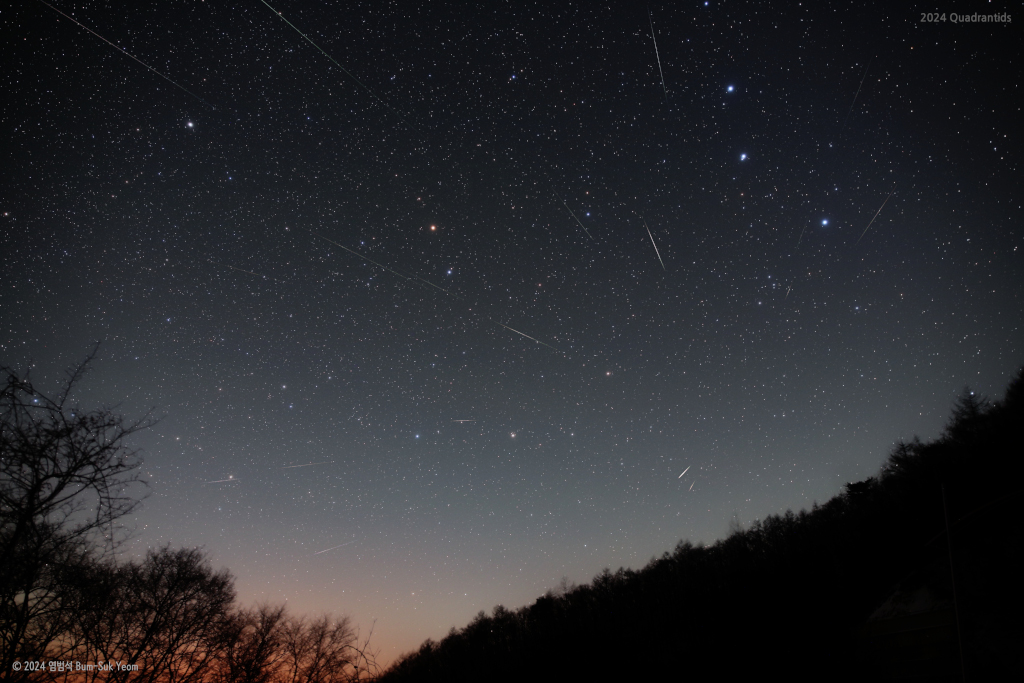
Named for a forgotten constellation, the Quadrantid Meteor Shower puts on an annual show for planet Earth’s northern hemisphere skygazers. The shower’s radiant on the sky lies within the old, astronomically obsolete constellation Quadrans Muralis. That location is not far from the Big Dipper asterism, known to some as the Plough, at the boundaries of the modern constellations Bootes and Draco. In fact the Big Dipper “handle” stars are near the upper right corner in this frame, with the meteor shower radiant just below. North star Polaris is toward the top left. Pointing back toward the radiant, Quadrantid meteors streak through the night in this skyscape from Jangsu, South Korea. The composite image was recorded in the hours around the shower’s peak on January 4, 2024. A likely source of the dust stream that produces Quadrantid meteors was identified in 2003 as an asteroid.

from NASA https://ift.tt/HfBdCKr
via IFTTT

The Light, the Dark, and the Dusty


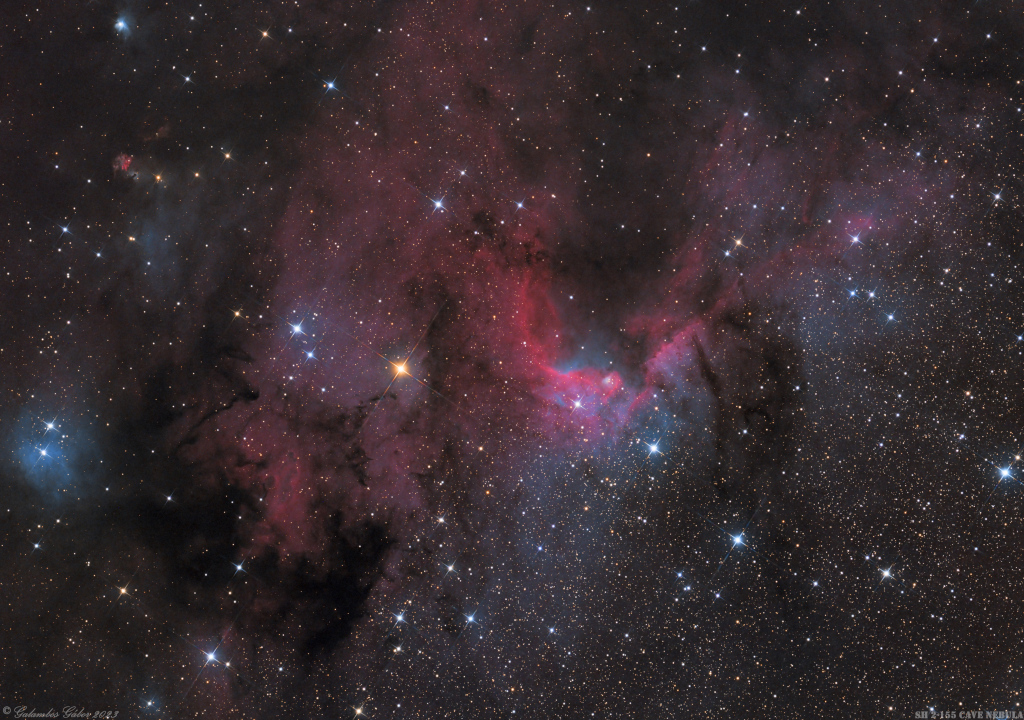
This colorful skyscape spans about three full moons across nebula rich starfields along the plane of our Milky Way Galaxy toward the royal northern constellation Cepheus. Near the edge of the region’s massive molecular cloud some 2,400 light-years away, bright reddish emission region Sharpless (Sh)2-155 is at the center of the frame, also known as the Cave Nebula. About 10 light-years across the cosmic cave’s bright walls of gas are ionized by ultraviolet light from the hot young stars around it. Dusty bluish reflection nebulae, like vdB 155 at the left, and dense obscuring clouds of dust also abound on the interstellar canvas. Astronomical explorations have revealed other dramatic signs of star formation, including the bright reddish fleck of Herbig-Haro (HH) 168. At the upper left in the frame, the Herbig-Haro object emission is generated by energetic jets from a newborn star.

from NASA https://ift.tt/pAQf3VI
via IFTTT


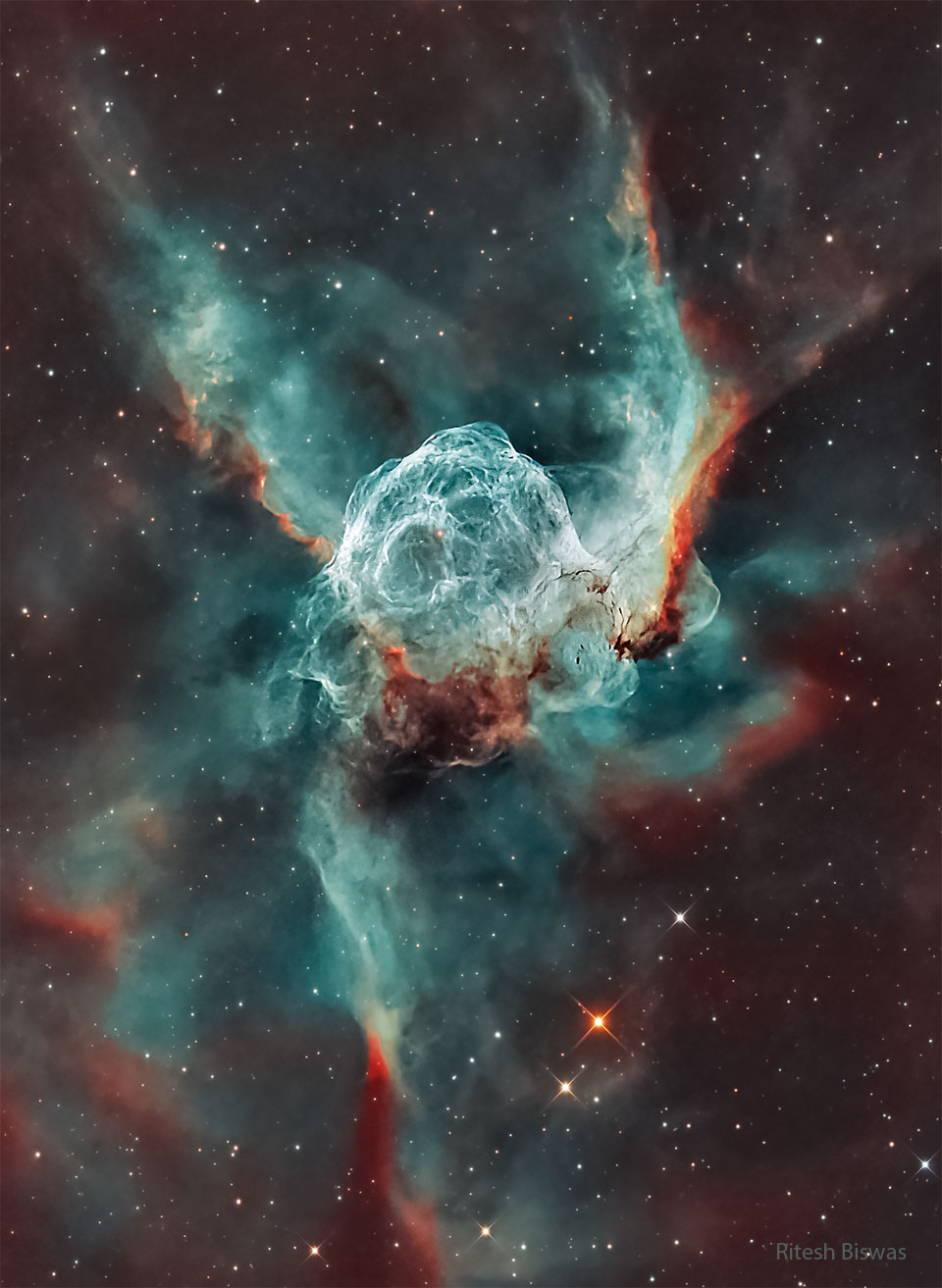
Thor not only has his own day (Thursday), but a helmet in the heavens. Popularly called Thor’s Helmet, NGC 2359 is a hat-shaped cosmic cloud with wing-like appendages. Heroically sized even for a Norse god, Thor’s Helmet is about 30 light-years across. In fact, the cosmic head-covering is more like an interstellar bubble, blown with a fast wind from the bright, massive star near the bubble’s center. Known as a Wolf-Rayet star, the central star is an extremely hot giant thought to be in a brief, pre-supernova stage of evolution. NGC 2359 is located about 15,000 light-years away toward the constellation of the Great Overdog. This remarkably sharp image is a mixed cocktail of data from narrowband filters, capturing not only natural looking stars but details of the nebula’s filamentary structures. The star in the center of Thor’s Helmet is expected to explode in a spectacular supernova sometime within the next few thousand years.

from NASA https://ift.tt/9T2CMcg
via IFTTT


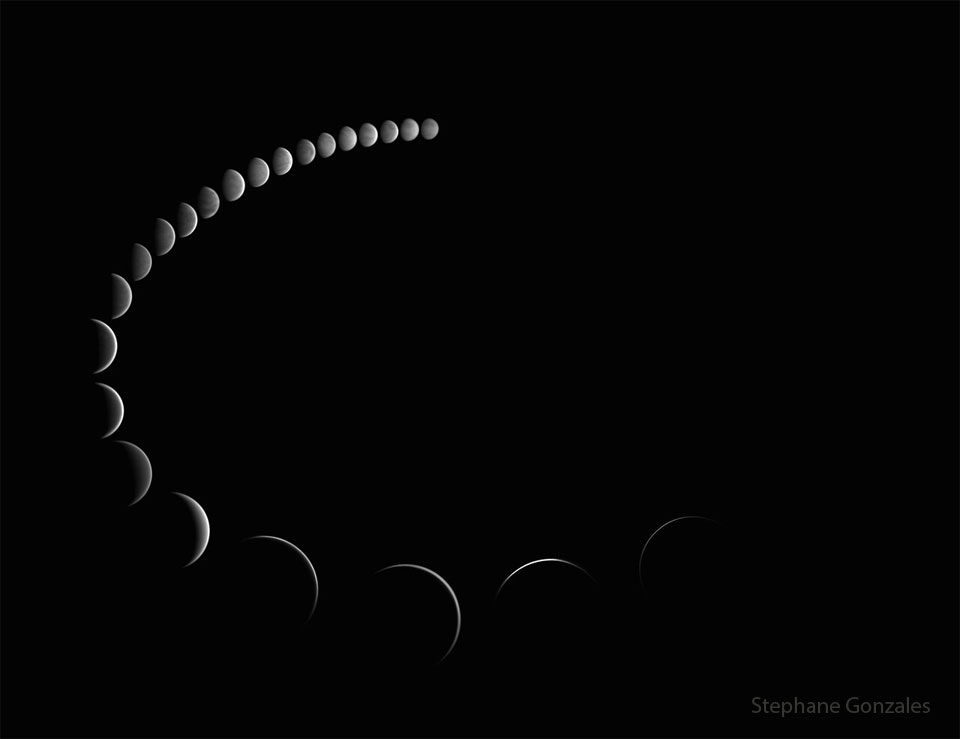
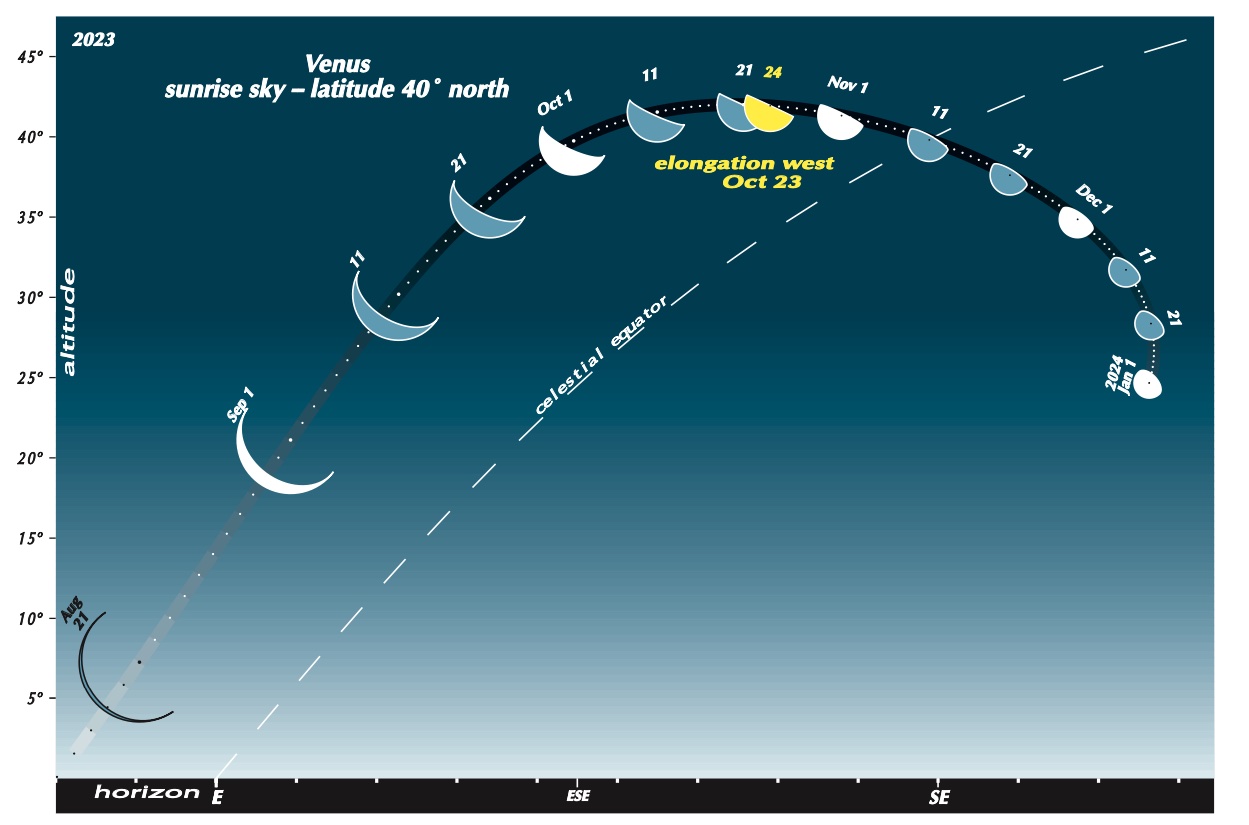
Venus goes through phases. Just like our Moon, Venus can appear as a full circular disk, a thin crescent, or anything in between. Venus, frequently the brightest object in the post-sunset or pre-sunrise sky, appears so small, however, that it usually requires binoculars or a small telescope to clearly see its current phase. The featured time-lapse sequence was taken over the course of six months in 2015 from Surgères, Charente-Maritime, France, and shows not only how Venus changes phase, but changes angular size as well. When Venus is on the far side of the Sun from the Earth, it appears angularly smallest and nearest to full phase, while when Venus and Earth are on the same side of the Sun, Venus appears larger, but as a crescent. This month Venus rises before dawn in waxing gibbous phases.

from NASA https://ift.tt/4Ds2HT5
via IFTTT


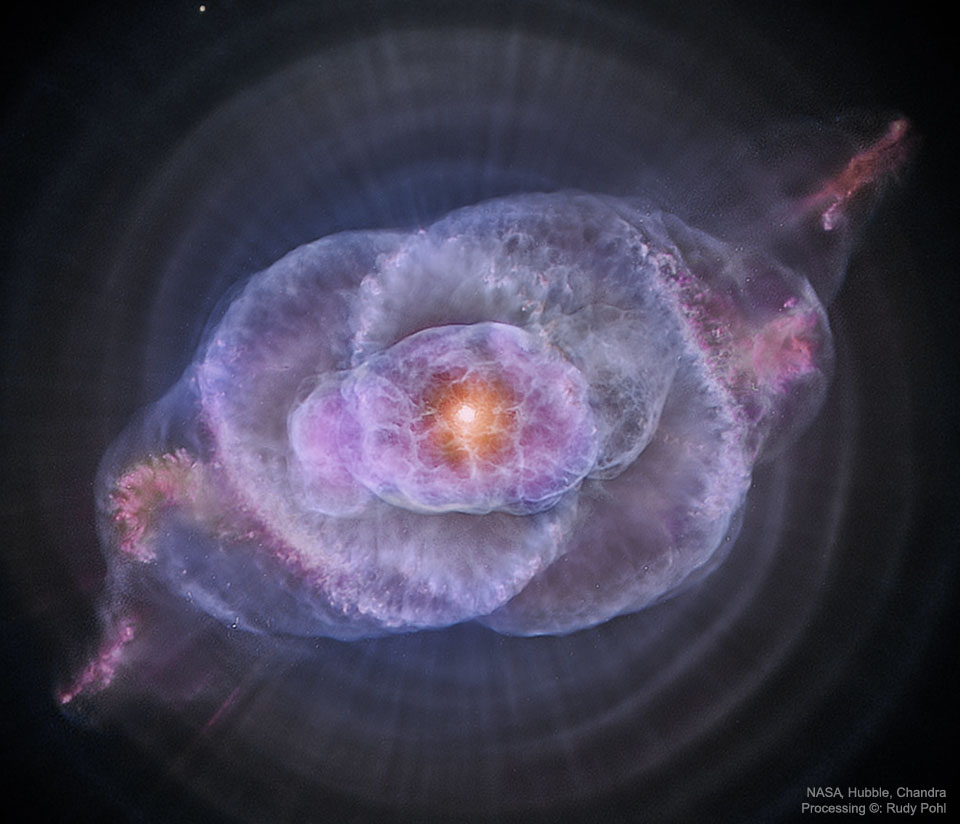
To some it looks like a cat’s eye. To others, perhaps like a giant cosmic conch shell. It is actually one of the brightest and most highly detailed planetary nebula known, composed of gas expelled in the brief yet glorious phase near the end of life of a Sun-like star. This nebula‘s dying central star may have produced the outer circular concentric shells by shrugging off outer layers in a series of regular convulsions. The formation of the beautiful, complex-yet-symmetric inner structures, however, is not well understood. The featured image is a composite of a digitally sharpened Hubble Space Telescope image with X-ray light captured by the orbiting Chandra Observatory. The exquisite floating space statue spans over half a light-year across. Of course, gazing into this Cat’s Eye, humanity may well be seeing the fate of our sun, destined to enter its own planetary nebula phase of evolution … in about 5 billion years.

from NASA https://ift.tt/iEc7qj2
via IFTTT