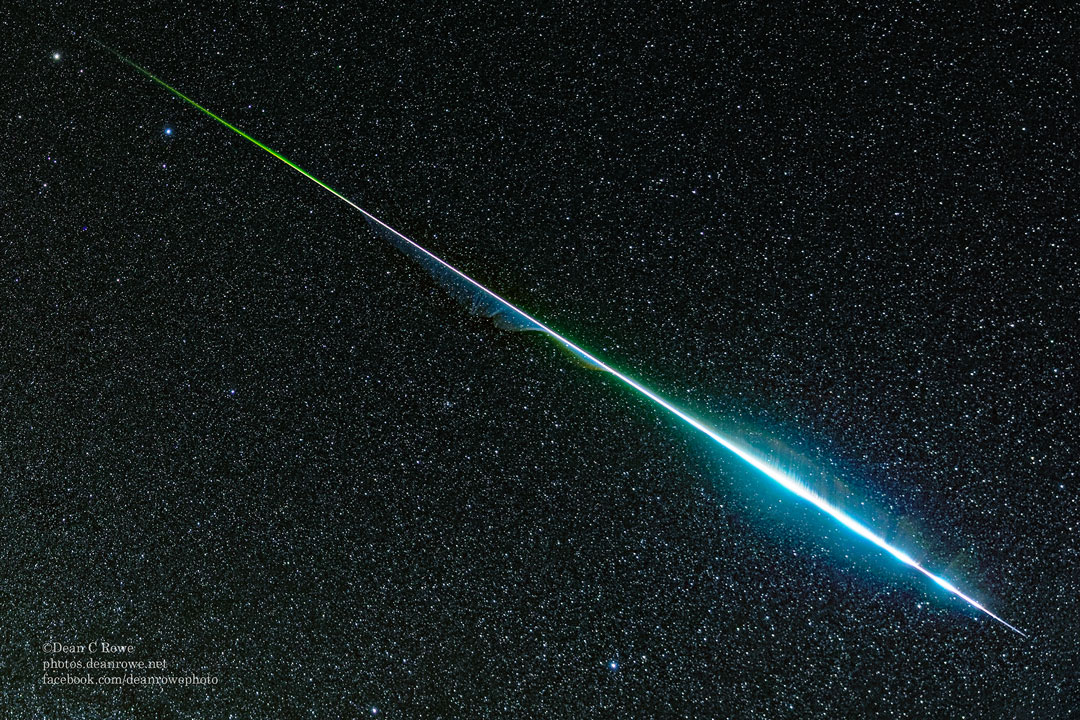
A Rainbow Geminid Meteor


Meteors can be colorful. While the human eye usually cannot discern many colors, cameras often can. Pictured is a Geminid captured by camera during last week’s meteor shower that was not only impressively bright, but colorful. The radiant grit cast off by asteroid 3200 Phaethon blazed a path across Earth’s atmosphere longer than 60 times the angular diameter of the Moon. Colors in meteors usually originate from ionized elements released as the meteor disintegrates, with blue-green typically originating from magnesium, calcium radiating violet, and nickel glowing green. Red, however, typically originates from energized nitrogen and oxygen in the Earth’s atmosphere. This bright meteoric fireball was gone in a flash — less than a second — but it left a wind-blown ionization trail that remained visible for several minutes, the start of which can be seen here.

from NASA https://ift.tt/2UX5vRY
via IFTTT

Methane Bubbles Frozen in Lake Baikal


What are these bubbles frozen into Lake Baikal? Methane. Lake Baikal, a UNESCO World Heritage Site in Russia, is the world’s largest (by volume), oldest, and deepest lake, containing over 20% of the world’s fresh water. The lake is also a vast storehouse of methane, a greenhouse gas that, if released, could potentially increase the amount of infrared light absorbed by Earth’s atmosphere, and so increase the average temperature of the entire planet. Fortunately, the amount of methane currently bubbling out is not climatologically important. It is not clear what would happen, though, were temperatures to significantly increase in the region, or if the water level in Lake Baikal were to drop. Pictured, bubbles of rising methane froze during winter into the exceptionally clear ice covering the lake.

from NASA https://ift.tt/2ECNWBN
via IFTTT

M31: The Andromeda Galaxy


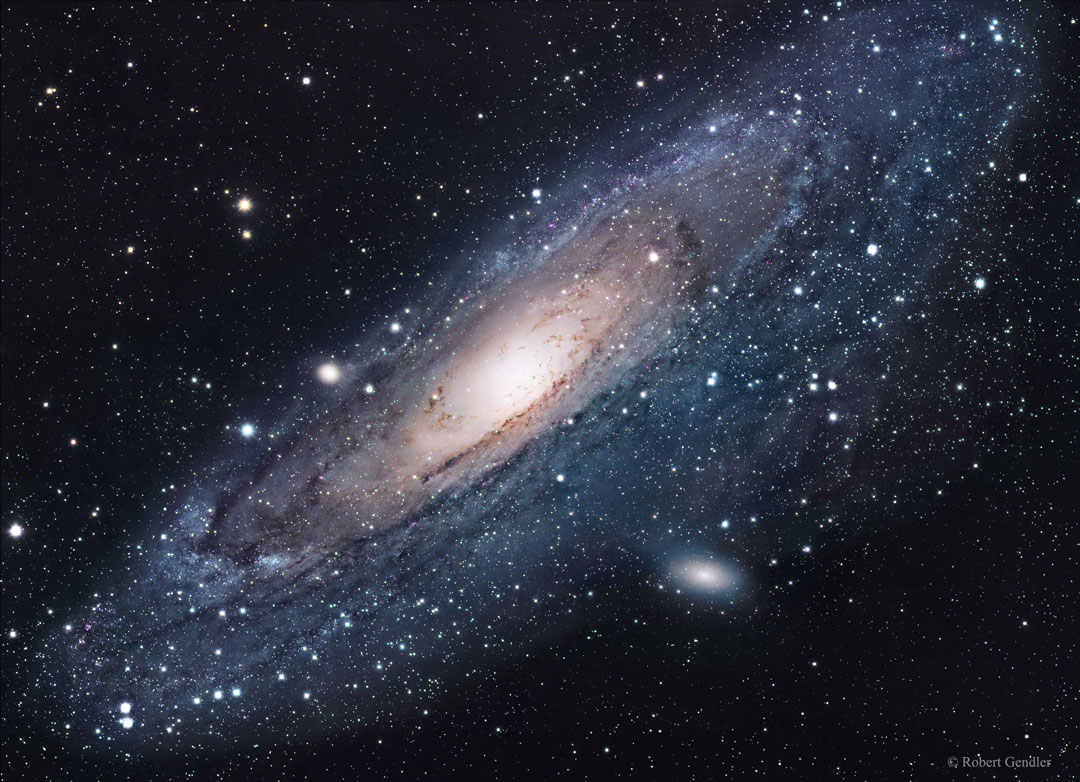
What is the nearest major galaxy to our own Milky Way Galaxy? Andromeda. In fact, our Galaxy is thought to look much like Andromeda. Together these two galaxies dominate the Local Group of galaxies. The diffuse light from Andromeda is caused by the hundreds of billions of stars that compose it. The several distinct stars that surround Andromeda‘s image are actually stars in our Galaxy that are well in front of the background object. Andromeda is frequently referred to as M31 since it is the 31st object on Messier‘s list of diffuse sky objects. M31 is so distant it takes about two million years for light to reach us from there. Although visible without aid, the featured image of M31 is a digital mosaic of 20 frames taken with a small telescope. Much about M31 remains unknown, including exactly how long it will before it collides with our home galaxy.

from NASA https://ift.tt/2S67zVE
via IFTTT

Geminids and Friends


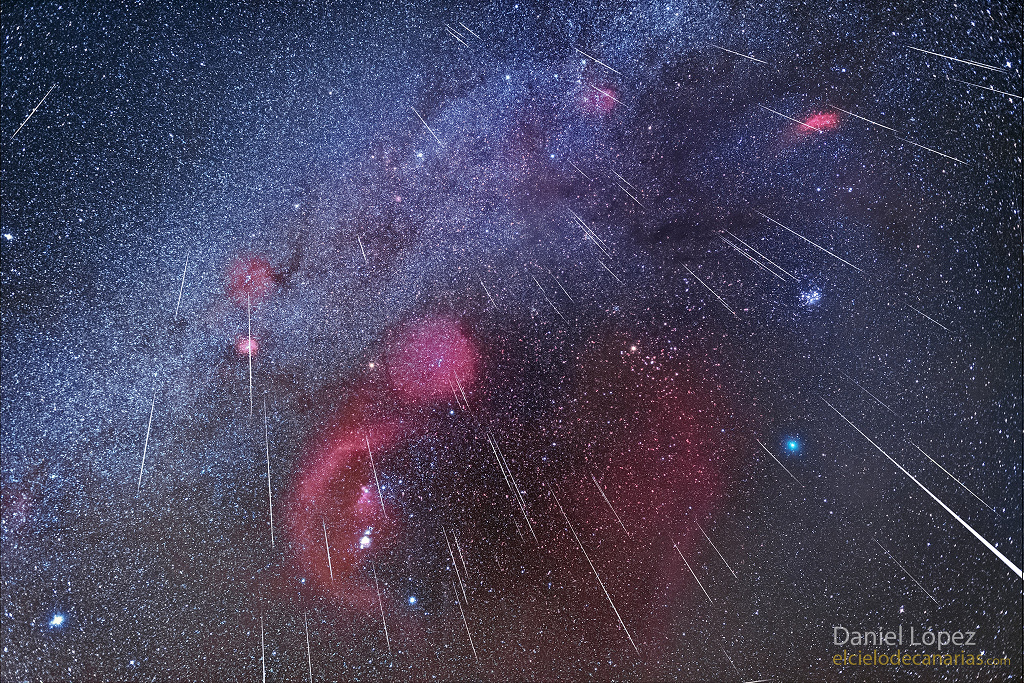
From a radiant in the constellation of the Twins, the annual Geminid meteor shower rained down on our fair planet this week. This beautiful skyscape collects about 70 of Gemini’s lovely shooting stars in a digital composition made from multiple exposures. The exposures were taken over a six hour period near the shower’s peak. The camera was tracking the dark predawn sky on December 14 from Teide National Park on the Canary Island Tenerife. Though Gemini lies off the top left of the frame, the Milky Way sweeps through the starry background. Sharing the sky below and left of center are recognizable stars and nebulosities of Orion. A yellowish Aldebaran and the Hyades are toward the right along with the Pleiades star cluster. Also a welcome visitor to this night sky, the faint green coma of Comet 46P Wirtanen, closest to Earth this weekend, lies below the Pleiades stars. Dust swept up from the orbit of active asteroid 3200 Phaethon, Gemini’s meteors enter Earth’s atmosphere traveling at about 35 kilometers per second.

from NASA https://ift.tt/2CfndbS
via IFTTT

Swimming on Jupiter


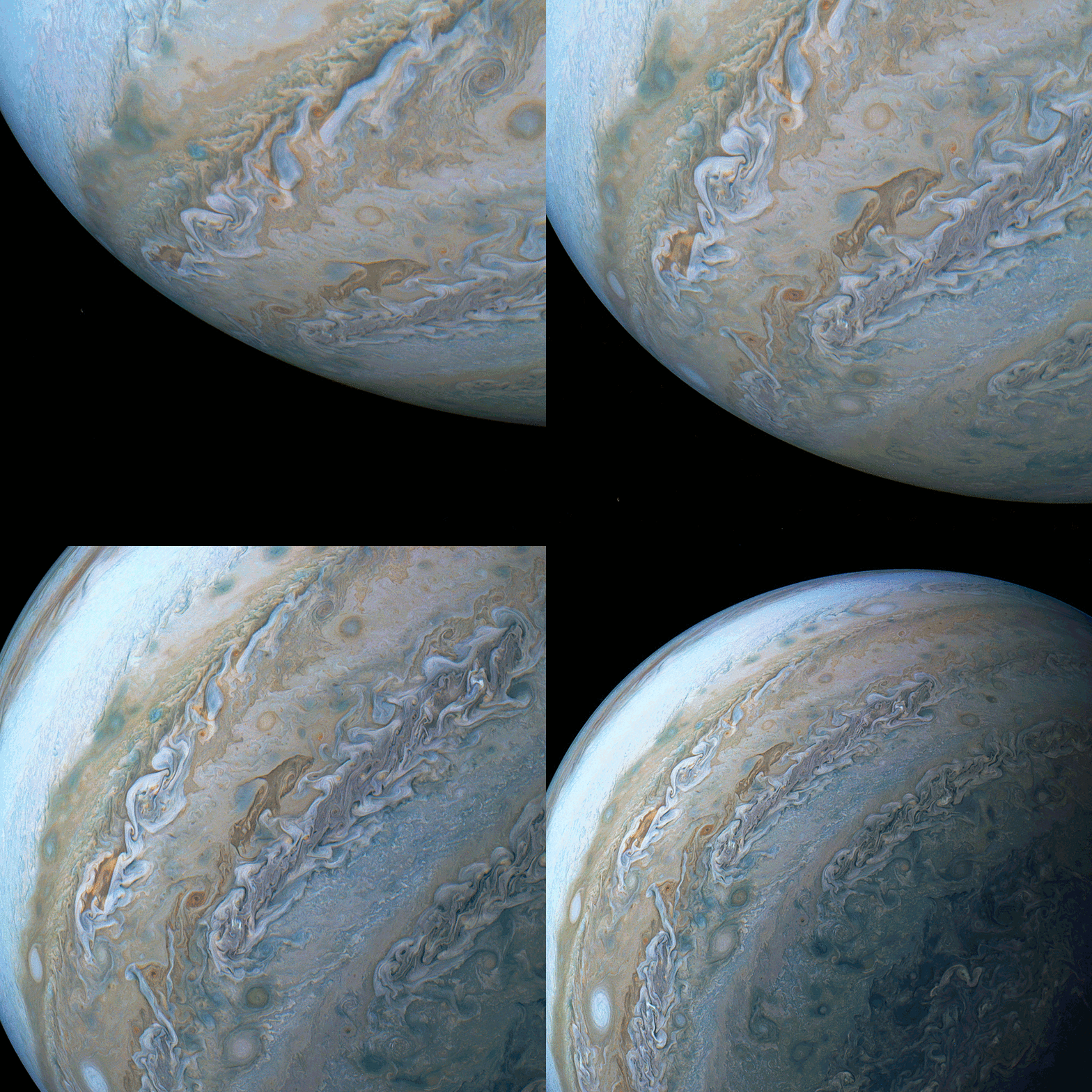
On October 29, the Juno spacecraft once again dove near the turbulent Jovian cloud tops. Its 16th orbital closest approach or perijove passage, brought Juno within 3,500 kilometers of the Solar System’s largest planetary atmosphere. These frames, recorded by JunoCam while the spacecraft cruised 20 – 50 thousand kilometers above the planet’s middle southern latitudes, seem to follow a swirling cloud shaped remarkably like a dolphin. Swimming along Jupiter’s darker South South Temperate Belt, this dolphin is itself planet-sized though, some thousands of kilometers across. Juno’s next perijove passage will be December 21.

from NASA https://ift.tt/2QuVigJ
via IFTTT

M43: Orion Falls


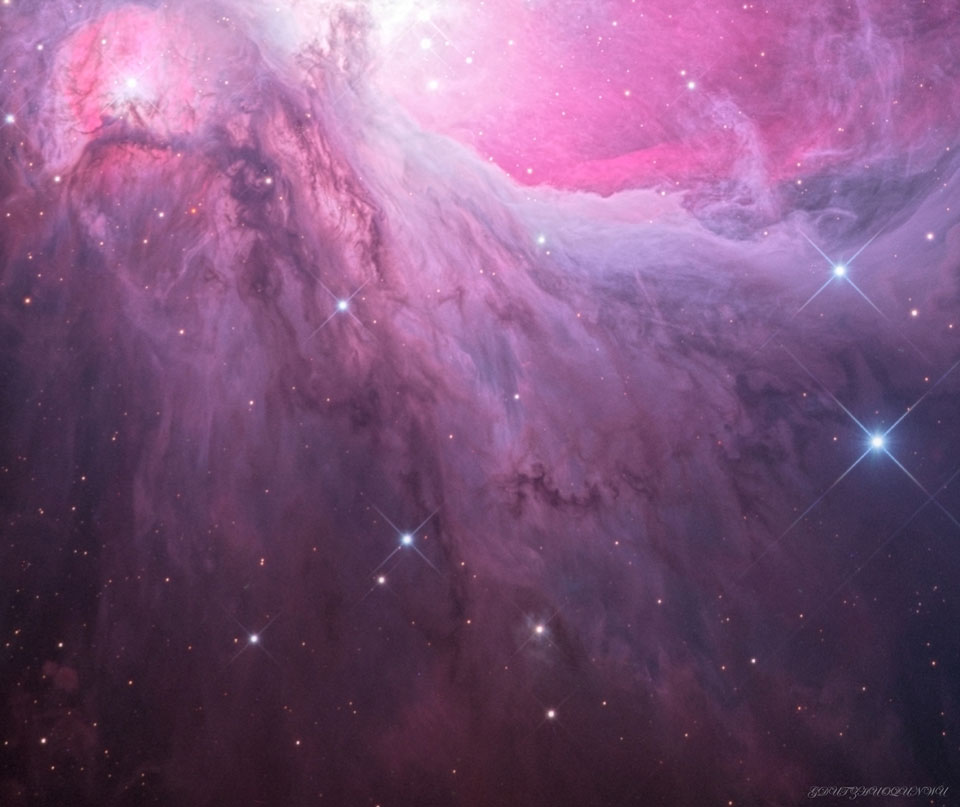
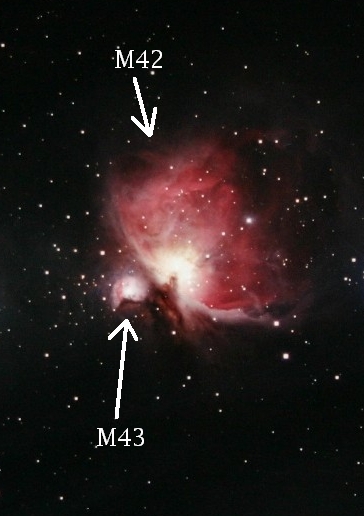
Is there a waterfall in Orion? No, but some of the dust in M43 appears similar to a waterfall on Earth. M43, part of the Orion Molecular Cloud Complex, is the often imaged but rarely mentioned neighbor of the more famous M42. M42, which includes many bright stars from the Trapezium cluster, lies above the featured scene. M43 is itself a star forming region and although laced with filaments of dark dust, is composed mostly of glowing hydrogen. The entire Orion field, located about 1600 light years away, is inundated with many intricate and picturesque filaments of dust. Opaque to visible light, dark dust is created in the outer atmosphere of massive cool stars and expelled by a strong outer wind of protons and electrons.

from NASA https://ift.tt/2QPdyRp
via IFTTT

Sound and Light Captured by Mars InSight


Your arm on Mars has unusual powers. For one thing it is nearly 2 meters long, has a scoop and grapple built into its hand, and has a camera built into its forearm. For another, it will soon deploy your ear — a sensitive seismometer that will listen for distant rumblings — onto the surface of Mars. Your SEISmomet-ear is the orange box in the foreground, while the gray dome behind it will be its protective cover. Your arm is attached to the InSight robotic lander that touched down on Mars two weeks ago. Somewhat unexpectedly, your ear has already heard something — slight vibrations caused by the Martian wind flowing over the solar panels. Light from the Sun is being collected by the solar panels, part of one being visible on the far right. Actually, at the present time, you have two arms operating on Mars, but they are separated by about 600 kilometers. That’s because your other active arm is connected to the Curiosity rover exploring a distant crater. Taken a week ago, rusty soil and rocks are visible in the featured image beyond Insight, as well as the orange sky of Mars.

from NASA https://ift.tt/2L5zB0U
via IFTTT

Aurora Shimmer, Meteor Flash


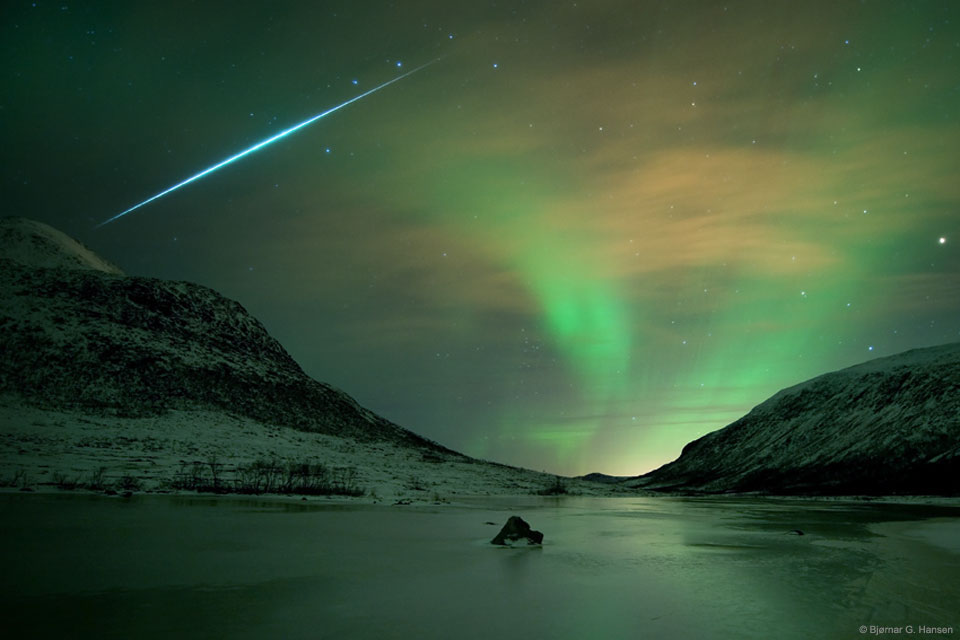
Some night skies are serene and passive — others shimmer and flash. The later, in the form of auroras and meteors, haunted skies over the island of Kvaløya, near Tromsø Norway on 2009 December 13. This 30 second long exposure records a shimmering auroral glow gently lighting the wintery coastal scene. A study in contrasts, the image also captures the sudden flash of a fireball meteor from the excellent Geminid meteor shower of 2009. Streaking past familiar stars in the handle of the Big Dipper, the trail points back toward the constellation Gemini, off the top of the view. Both auroras and meteors occur in Earth’s upper atmosphere at altitudes of 100 kilometers or so, but aurora caused by energetic charged particles from the magnetosphere, while meteors are trails of cosmic dust. Nine years after this photograph was taken, toward the end of this week, the yearly 2018 Geminids meteor shower will peak again, although this time their flashes will compete with the din of a half-lit first-quarter moon during the first half of the night.

from NASA https://ift.tt/2rtRAFs
via IFTTT

Tiny Planet Timelapse


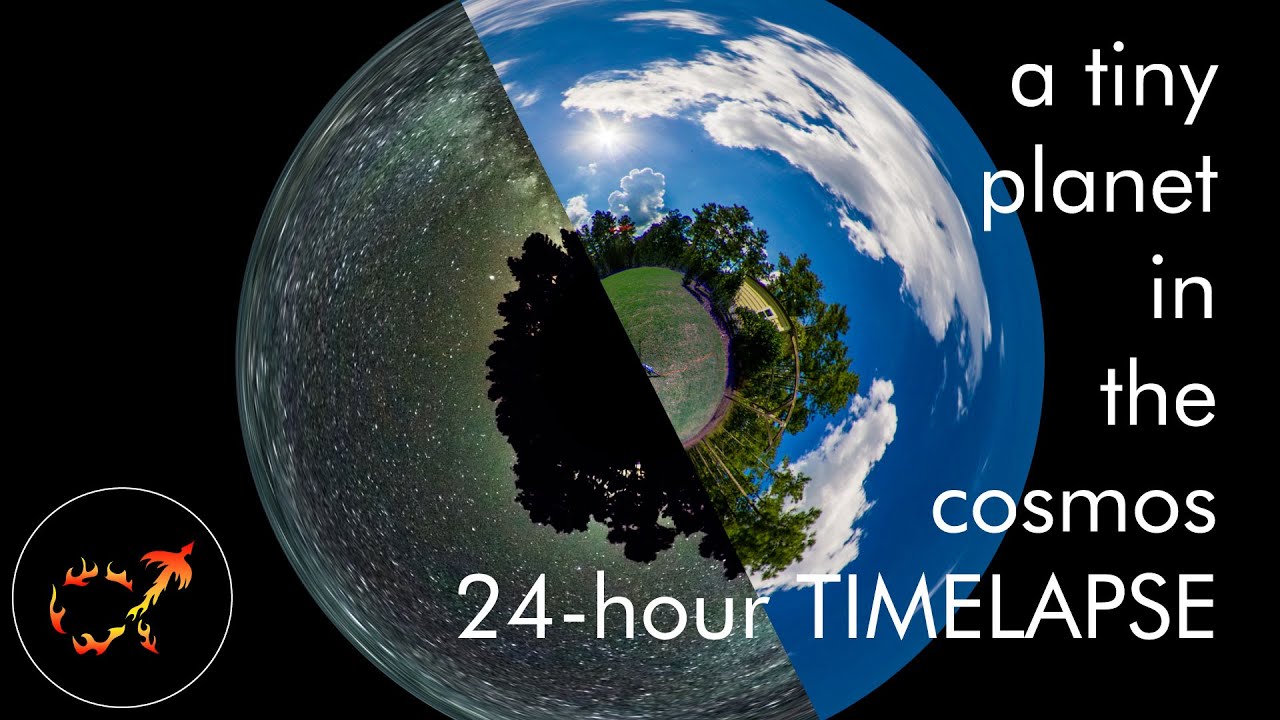
You can pack a lot of sky watching into 30 seconds on this tiny planet. Of course, the full spherical image timelapse video was recorded on planet Earth, from Grande Pines Observatory outside Pinehurst, North Carolina. It was shot in early September with a single camera and circular fisheye lens, digitally combining one 24-hour period with camera and lens pointed up with one taken with camera and lens pointed down. The resulting image data is processed and projected onto a flat frame centered on the nadir, the point directly below the camera. Watch as clouds pass, shadows creep, and the sky cycles from day to night when stars swirl around the horizon. Keep watching, though. In a second sequence the projected center is the south celestial pole, planet Earth’s axis of rotation below the tiny planet horizon. Holding the stars fixed, the horizon itself rotates as the tiny planet swings around the frame, hiding half the sky through day and night.

from NASA https://ift.tt/2PoHhfe
via IFTTT

December s Comet Wirtanen


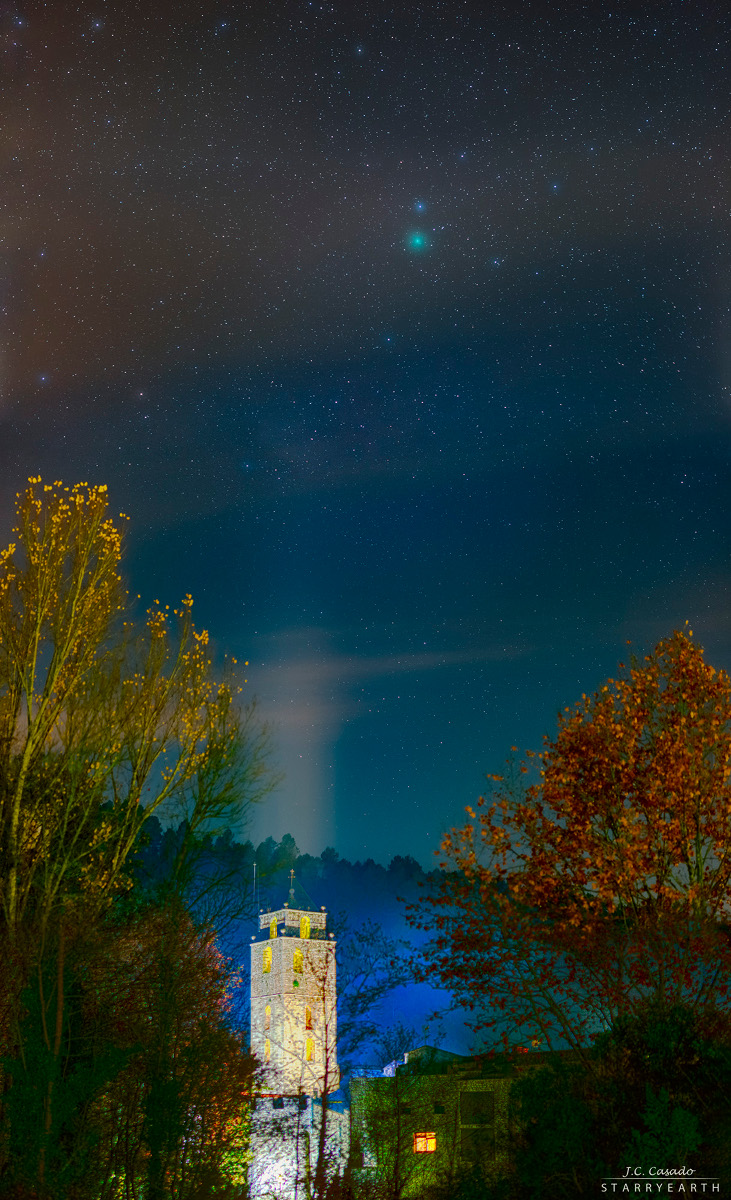
Coming close in mid-December, Comet 46P Wirtanen hangs in this starry sky over the bell tower of a Romanesque church. In the constructed vertical panorama, a series of digital exposures capture its greenish coma on December 3 from Sant Llorenc de la Muga, Girona, Catalonia, Spain, planet Earth. With an orbital period that is now about 5.4 years, the periodic comet’s perihelion, its closest approach, to the Sun will be on December 12. On December 16 it will be closest to Earth, passing at a distance of about 11.6 million kilometers or 39 light-seconds. That’s close for a comet, a mere 30 times the Earth-Moon distance. A good binocular target for comet watchers, Wirtanen could be visible to the unaided eye from a dark sky site. To spot it after dusk on December 16, look close on the sky to the Pleiades star cluster in Taurus.

from NASA https://ift.tt/2REMj9j
via IFTTT