Orion in Red and Blue


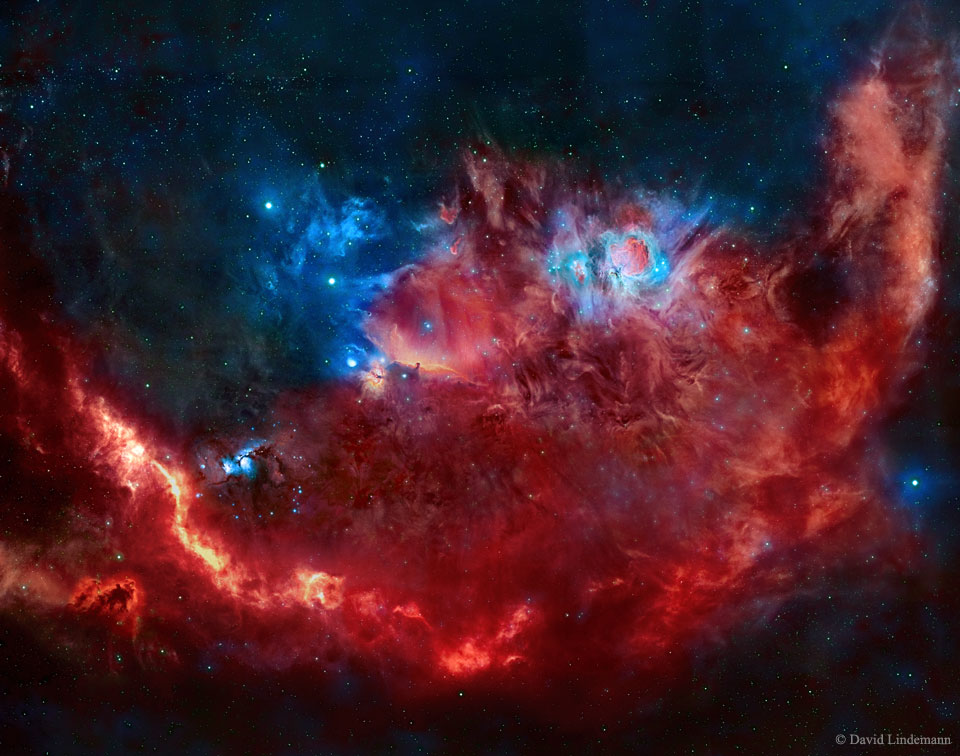
When did Orion become so flashy? This colorful rendition of part of the constellation of Orion comes from red light emitted by hydrogen and sulfur (SII), and blue-green light emitted by oxygen (OIII). Hues on the featured image were then digitally reassigned to be indicative of their elemental origins — but also striking to the human eye. The breathtaking composite was painstakingly composed from hundreds of images which took nearly 200 hours to collect. Pictured, Barnard’s Loop, across the image bottom, appears to cradle interstellar constructs including the intricate Orion Nebula seen just right of center. The Flame Nebula can also be quickly located, but it takes a careful eye to identify the slight indentation of the dark Horsehead Nebula. As to Orion’s flashiness — a leading explanation for the origin of Barnard’s Loop is a supernova blast that occurred about two million years ago.

from NASA https://ift.tt/2OpgeF4
via IFTTT
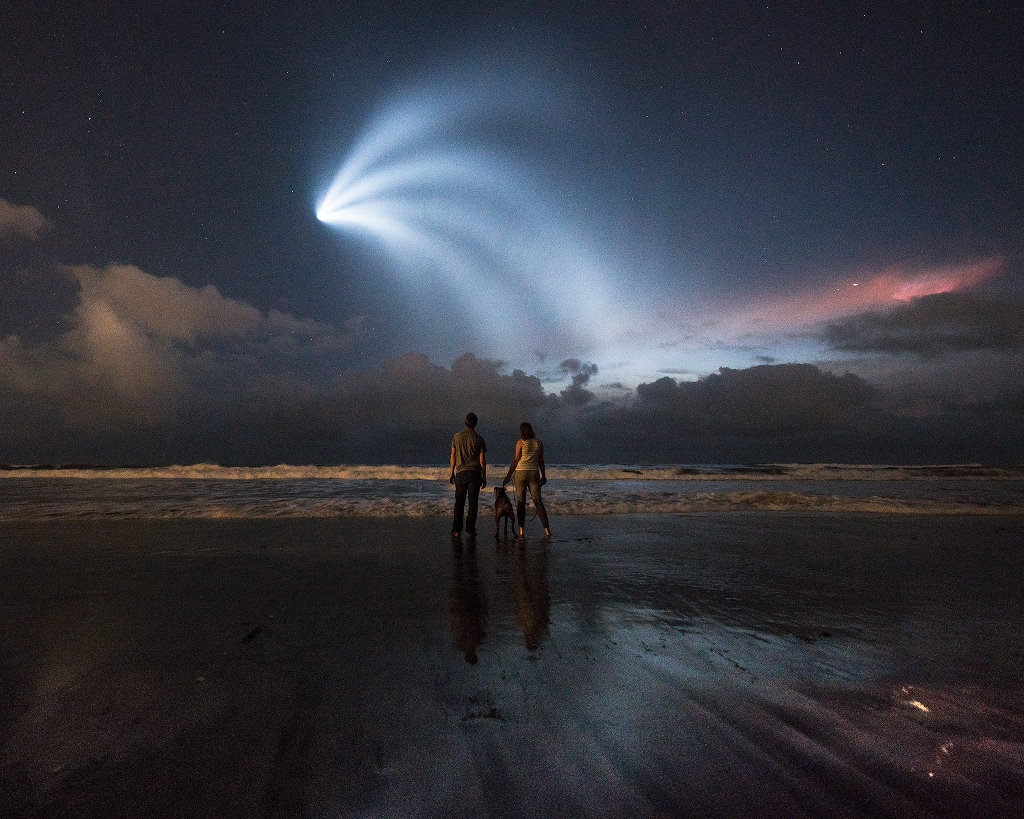
Skygazers on the Beach


Kona, a young boxer, is a dog who loves splashing in the waves along Solana Beach near San Diego, planet Earth. But he paused here, at least briefly, during an early evening romp on October 7. Along with two people friends he gazes skyward in this snapshot, dazzled by the flight of a Falcon 9 rocket. Their seaside view is of the sunlit exhaust plumes from the rocket’s first stage thrusters as it returns to Vandenberg Air Force base, its launch site over 250 miles to the north.

from NASA https://ift.tt/2EqIJ0C
via IFTTT

The Falcon 9 Nebula


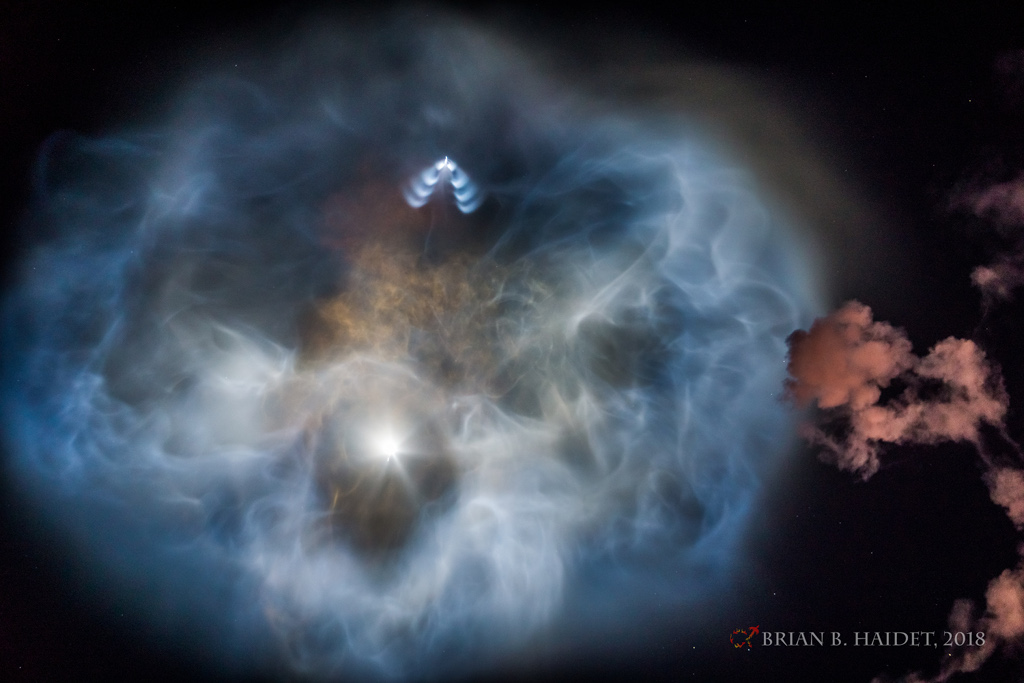
Not the Hubble Space Telescope’s latest view of a distant planetary nebula, this illuminated cloud of gas and dust dazzled even casual U.S. west coast skygazers on October 7. Taken about three miles north of Vandenberg Air Force Base, the image follows plumes and exhaust from the first and second stage of a SpaceX Falcon 9 rocket rising through southern California’s early evening skies. In the fading twilight, the reddish smoke drifting in the foreground at the right is from the initial ascent of the rocket. The expanding blue and orange filamentary plumes are from first and second stage separation and the first stage boostback burn, still in sunlight at extreme altitudes. But the bright spot below center is the second stage itself headed almost directly away from the camera, accelerating to orbital velocity and far downrange. Pulsed thrusters form the upside down V-shape at the top as they guide the reusable Falcon 9 first stage back to the landing site.

from NASA https://ift.tt/2QHTs83
via IFTTT

Sun Dance


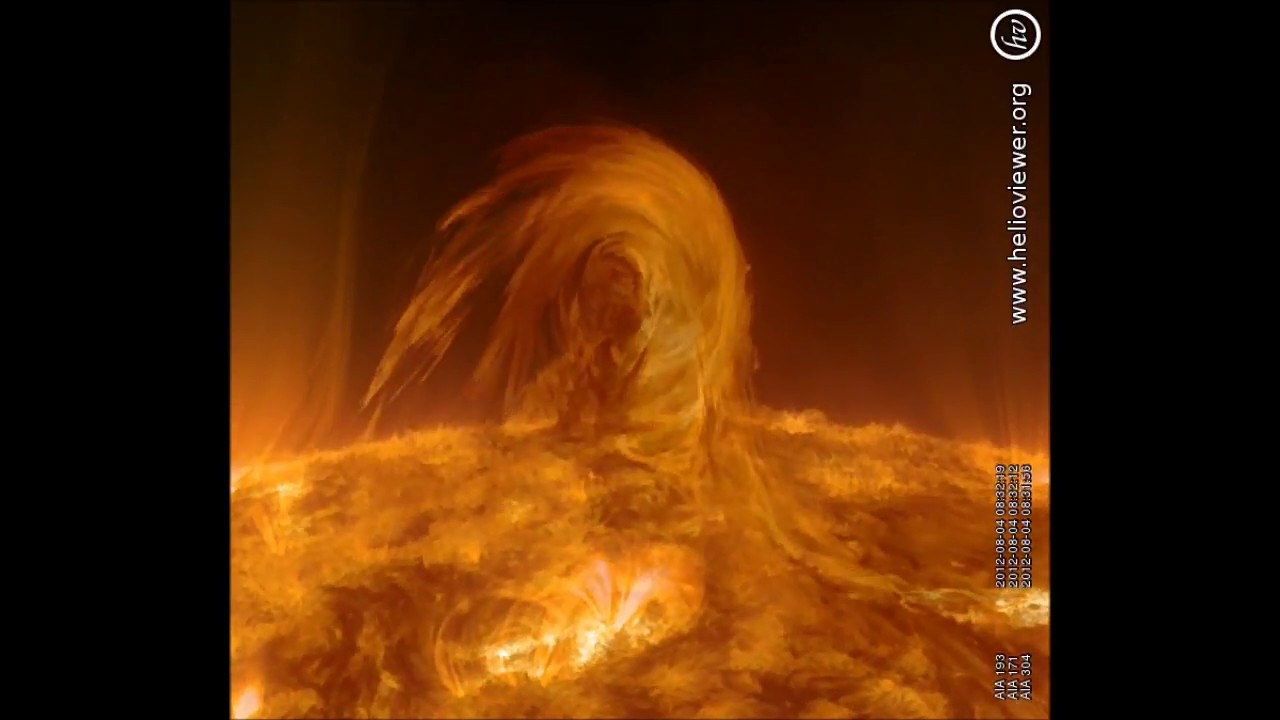
Sometimes, the surface of our Sun seems to dance. In the middle of 2012, for example, NASA’s Sun-orbiting Solar Dynamic Observatory spacecraft imaged an impressive prominence that seemed to perform a running dive roll like an acrobatic dancer. The dramatic explosion was captured in ultraviolet light in the featured time-lapse video covering about three hours. A looping magnetic field directed the flow of hot plasma on the Sun. The scale of the dancing prominence is huge — the entire Earth would easily fit under the flowing arch of hot gas. A quiescent prominence typically lasts about a month, and may erupt in a Coronal Mass Ejection (CME) expelling hot gas into the Solar System. The energy mechanism that creates a solar prominence is still a topic of research. Unlike 2012, this year the Sun’s surface is significantly more serene, featuring fewer spinning prominences, as it is near the minimum in its 11-year magnetic cycle.

from NASA https://ift.tt/2CyjGXp
via IFTTT

NGC 1672: Barred Spiral Galaxy from Hubble


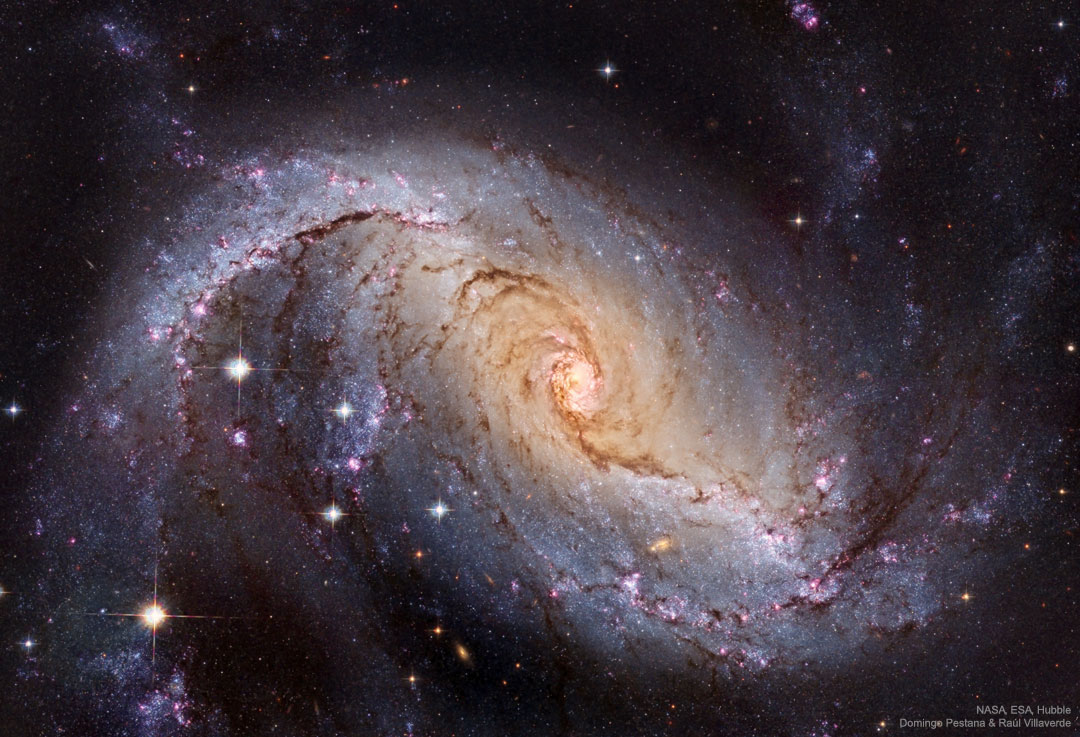
Many spiral galaxies have bars across their centers. Even our own Milky Way Galaxy is thought to have a modest central bar. Prominently barred spiral galaxy NGC 1672, featured here, was captured in spectacular detail in an image taken by the orbiting Hubble Space Telescope. Visible are dark filamentary dust lanes, young clusters of bright blue stars, red emission nebulas of glowing hydrogen gas, a long bright bar of stars across the center, and a bright active nucleus that likely houses a supermassive black hole. Light takes about 60 million years to reach us from NGC 1672, which spans about 75,000 light years across. NGC 1672, which appears toward the constellation of the Dolphinfish (Dorado), is being studied to find out how a spiral bar contributes to star formation in a galaxy’s central regions.

from NASA https://ift.tt/2Pol8yD
via IFTTT

Comet 12P Between Rosette and Cone Nebulas


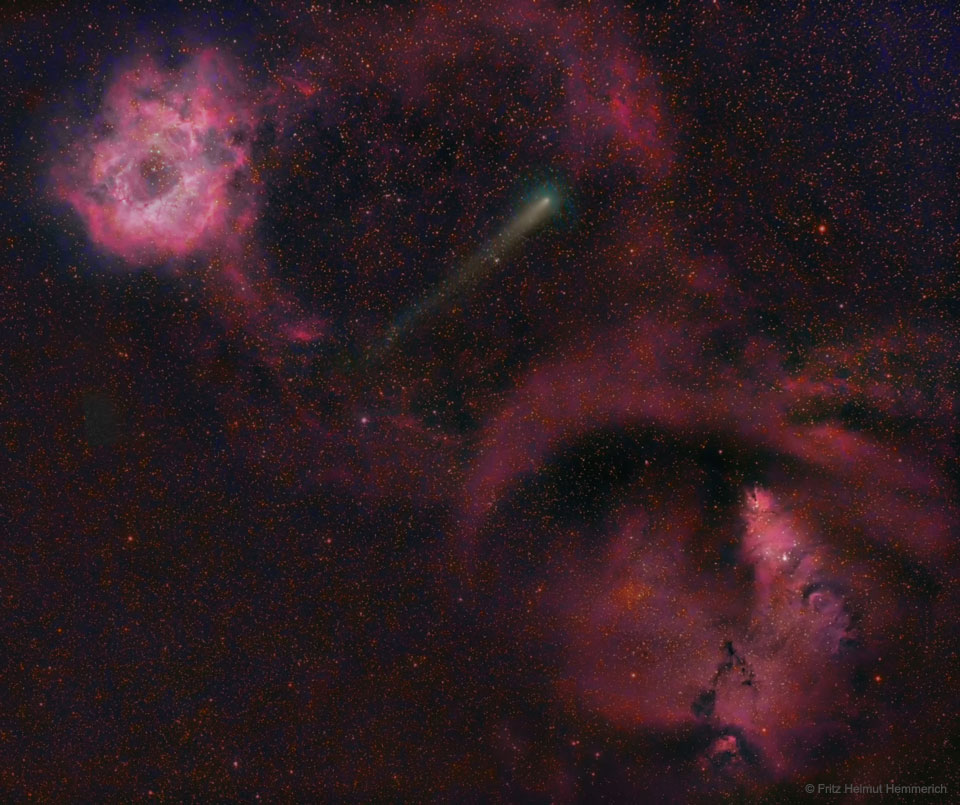
Small bits of this greenish-gray comet are expected to streak across Earth’s atmosphere tonight. Specifically, debris from the eroding nucleus of Comet 21P / Giacobini-Zinner, pictured, causes the annual Draconids meteor shower, which peaks this evening. Draconid meteors are easy to enjoy this year because meteor rates will likely peak soon after sunset with the Moon’s glare nearly absent. Patience may be needed, though, as last month’s passing of 21P near the Earth’s orbit is not expected to increase the Draconids’ normal meteor rate this year of (only) a few meteors per hour. Then again, meteor rates are notoriously hard to predict, and the Draconids were quite impressive in 1933, 1946, and 2011. Featured, Comet 21P gracefully posed between the Rosette (upper left) and Cone (lower right) nebulas two weeks ago before heading back out to near the orbit of Jupiter, to return again in about six and a half years.

from NASA https://ift.tt/2RyTU9U
via IFTTT

The Last Days of Venus as the Evening Star


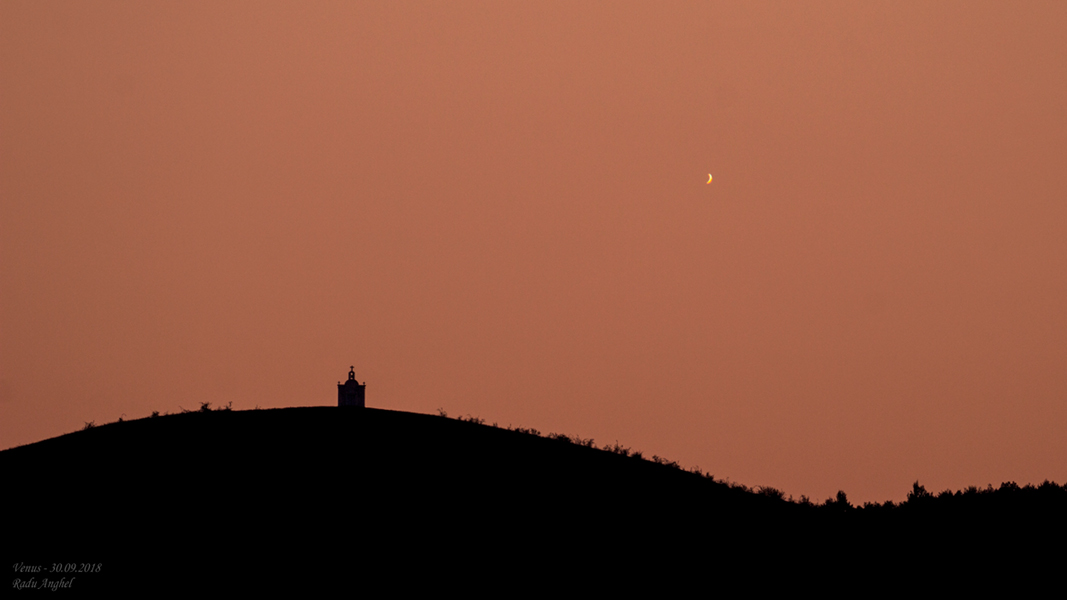
That’s not a young crescent Moon poised above the hills along the western horizon at sunset. It’s Venus in a crescent phase. About 54 million kilometers away and less than 20 percent illuminated, it was captured by telescope and camera on September 30 near Bacau, Romania. The bright celestial beacon is now languishing in the evening twilight, its days as the Evening Star in 2018 coming to a close. But it also grows larger in apparent size and becomes an ever thinner crescent in telescopic views. Heading toward an inferior conjunction (non-judgmental), the inner planet will be positioned between Earth and Sun on October 26 and lost from view in the solar glare. At month’s end a crescent Venus will reappear in the east though, rising just before the Sun as the brilliant Morning Star.

from NASA https://ift.tt/2O8yFxo
via IFTTT

NGC 1898: Globular Cluster in the LMC


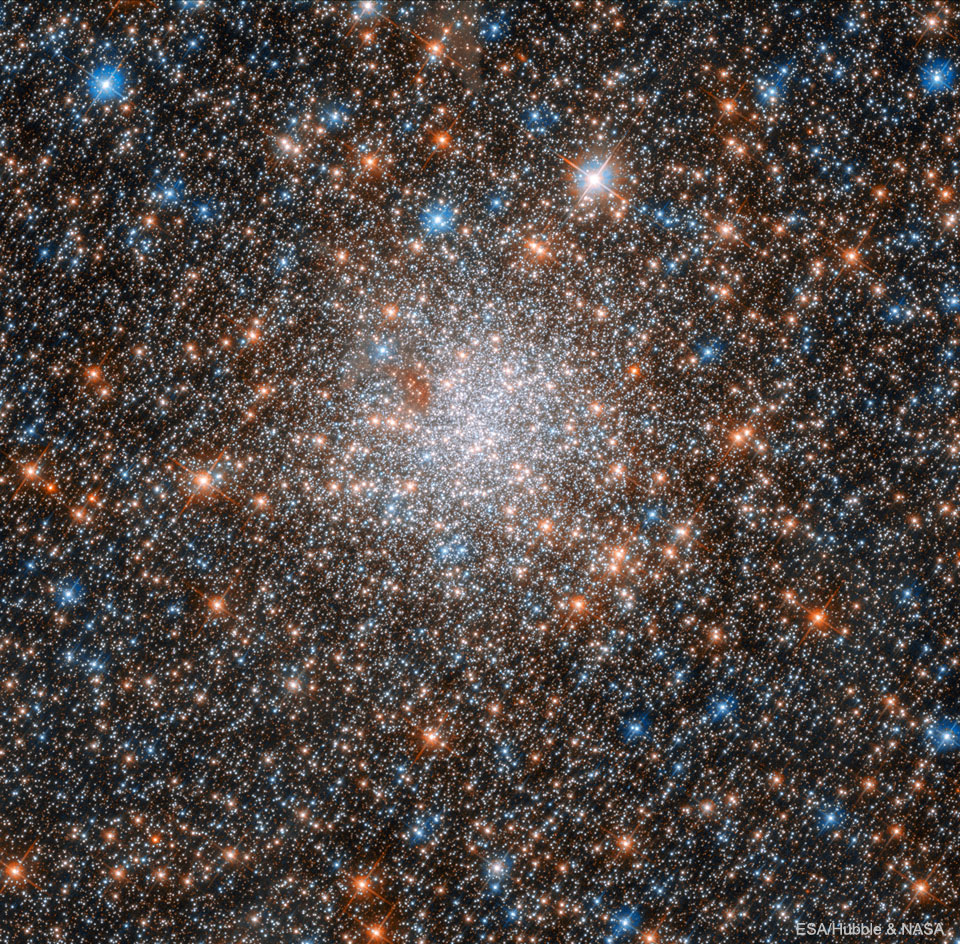
Jewels don’t shine this bright — only stars do. And almost every spot in this glittering jewel-box of an image from the Hubble Space Telescope is a star. Now some stars are more red than our Sun, and some more blue — but all of them are much farther away. Although it takes light about 8 minutes to reach Earth from the Sun, NGC 1898 is so far away that it takes light about 160,000 years to get here. This huge ball of stars, NGC 1898, is called a globular cluster and resides in the central bar of the Large Magellanic Cloud (LMC) — a satellite galaxy of our large Milky Way Galaxy. The featured multi-colored image includes light from the infrared to the ultraviolet and was taken to help determine if the stars of NGC 1898 all formed at the same time, or at different times. There are increasing indications that most globular clusters formed stars in stages, and that, in particular, stars from NGC 1898 formed shortly after ancient encounters with the Small Magellanic Cloud (SMC) and our Milky Way Galaxy.

from NASA https://ift.tt/2Qvy1Hl
via IFTTT

Supernumerary Rainbows over New Jersey


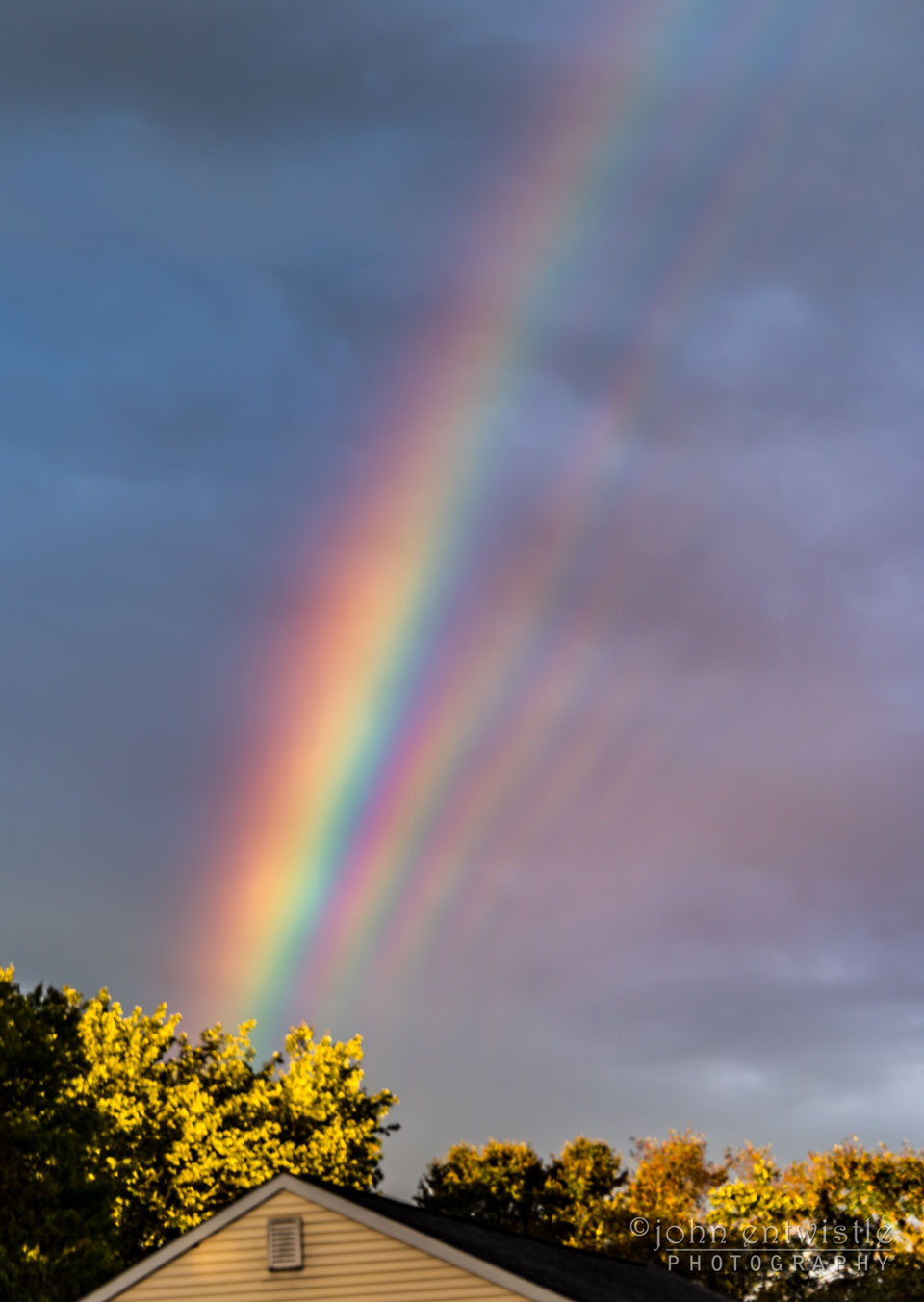
Yes, but can your rainbow do this? After the remnants of Hurricane Florence passed over Jersey Shore, New Jersey, USA last month, the Sun came out in one direction but something quite unusual appeared in the opposite direction: a hall of rainbows. Over the course of a next half hour, to the delight of the photographer and his daughter, vibrant supernumerary rainbows faded in and out, with at least five captured in this featured single shot. Supernumerary rainbows only form when falling water droplets are all nearly the same size and typically less than a millimeter across. Then, sunlight will not only reflect from inside the raindrops, but interfere, a wave phenomenon similar to ripples on a pond when a stone is thrown in. In fact, supernumerary rainbows can only be explained with waves, and their noted existence in the early 1800s was considered early evidence of light’s wave nature.

from NASA https://ift.tt/2NYPbzY
via IFTTT