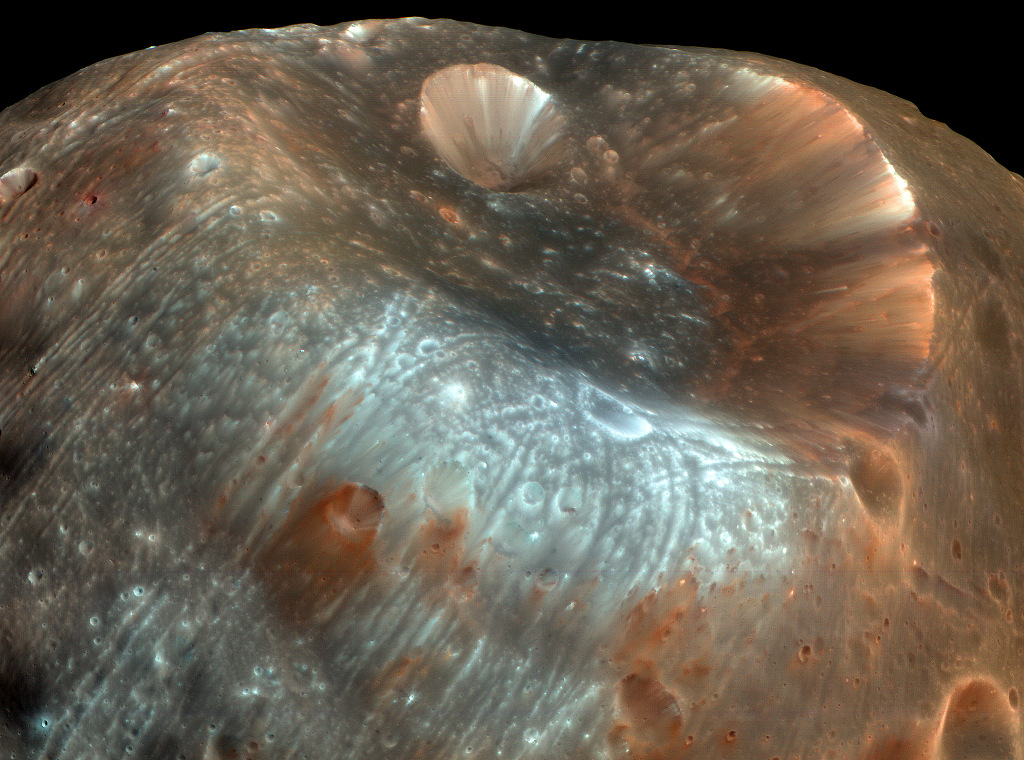
Stickney Crater


Stickney Crater, the largest crater on the martian moon Phobos, is named for Chloe Angeline Stickney Hall, mathematician and wife of astronomer Asaph Hall. Asaph Hall discovered both the Red Planet’s moons in 1877. Over 9 kilometers across, Stickney is nearly half the diameter of Phobos itself, so large that the impact that blasted out the crater likely came close to shattering the tiny moon. This stunning, enhanced-color image of Stickney and surroundings was recorded by the HiRISE camera onboard the Mars Reconnaissance Orbiter as it passed within some six thousand kilometers of Phobos in March of 2008. Even though the surface gravity of asteroid-like Phobos is less than 1/1000th Earth’s gravity, streaks suggest loose material slid down inside the crater walls over time. Light bluish regions near the crater’s rim could indicate a relatively freshly exposed surface. The origin of the curious grooves along the surface is mysterious but may be related to the crater-forming impact.

from NASA https://ift.tt/2rkUeNN
via IFTTT
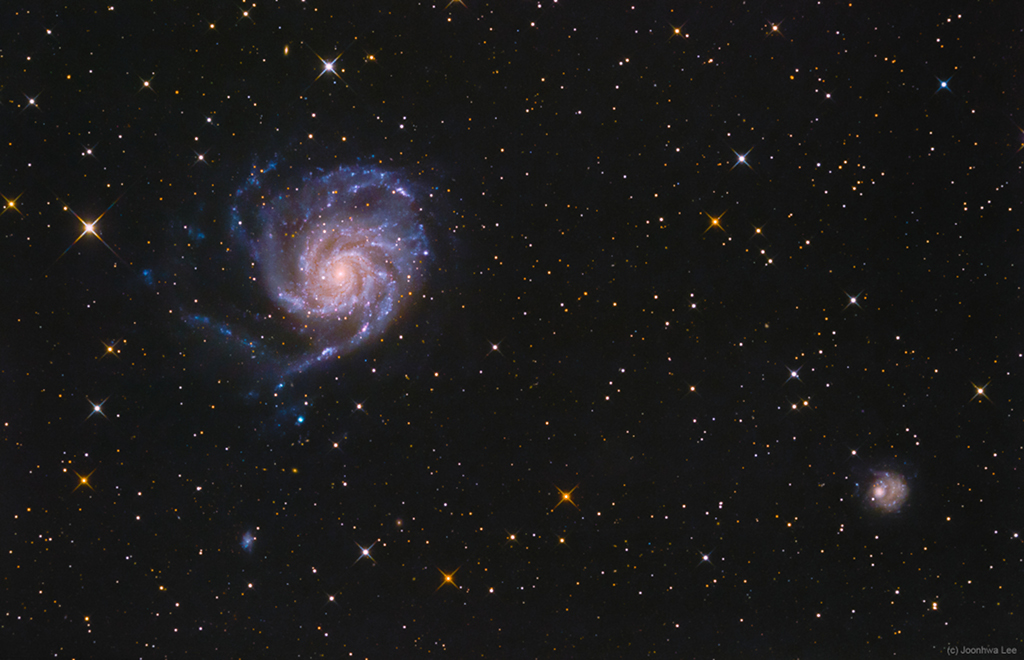
The View Toward M101


Big, beautiful spiral galaxy M101 is one of the last entries in Charles Messier’s famous catalog, but definitely not one of the least. About 170,000 light-years across, this galaxy is enormous, almost twice the size of our own Milky Way galaxy. M101 was also one of the original spiral nebulae observed by Lord Rosse’s large 19th century telescope, the Leviathan of Parsontown. M101 shares this modern telescopic field of view with spiky foreground stars within the Milky Way and a companion dwarf galaxy NGC 5474 (lower right). The colors of the Milky Way stars can also be found in the starlight from the large island universe. Its core is dominated by light from cool yellowish stars. Along its grand design spiral arms are the blue colors of hotter, young stars mixed with obscuring dust lanes and pinkish star forming regions. Also known as the Pinwheel Galaxy, M101 lies within the boundaries of the northern constellation Ursa Major, about 23 million light-years away. NGC 5474 has likely been distorted by its past gravitational interactions with the dominant M101.

from NASA https://ift.tt/2jqsjHW
via IFTTT

Opposite the Setting Sun


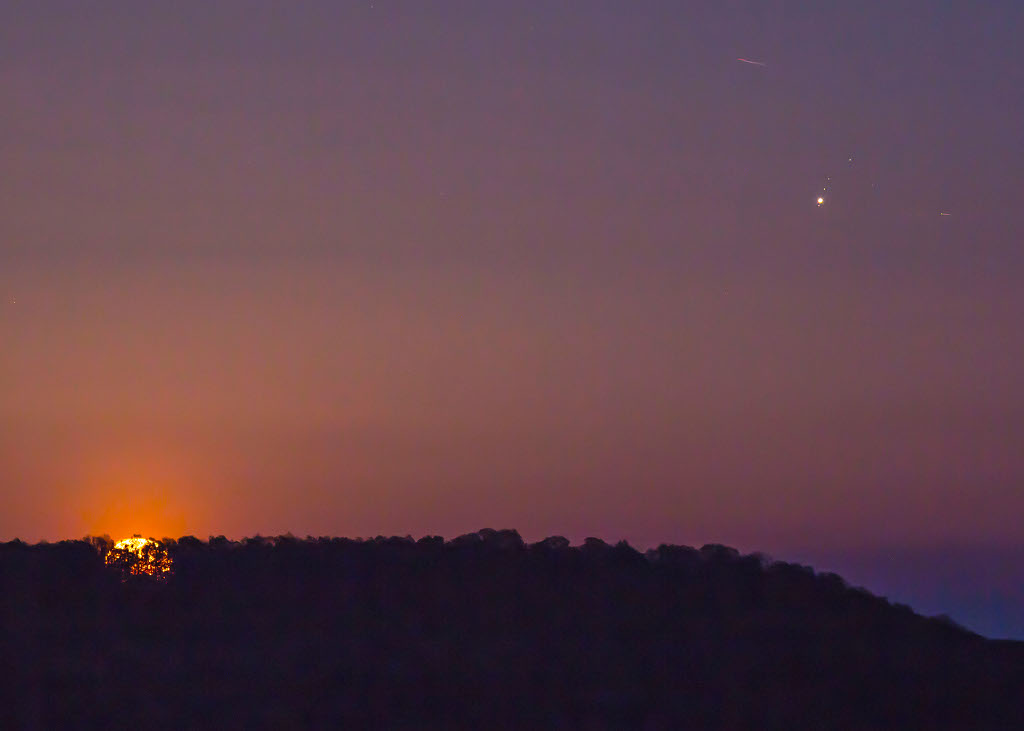
On April 30, a Full Moon rose opposite the setting Sun. Its yellowish moonglow silhouettes a low tree-lined ridge along Lewis Mountain in this northeastern Alabama skyscape. Sharing the telephoto field-of-view opposite the Sun are Earth’s grey shadow, the pinkish Belt of Venus, and bright planet Jupiter. Nearing its own 2018 opposition on May 8, Jupiter is flanked by tiny pinpricks of light, three of its large Galilean moons. Europa lies just below Jupiter, and Ganymede and Callisto are just above. Closer and brighter, our own natural satellite appears to loom large but the Moon is physically a little smaller than Ganymede and Callisto, and slightly larger than water world Europa. Sharp eyes will also spot the trails of two jets across the clear evening sky.

from NASA https://ift.tt/2HLrGr0
via IFTTT

Moon Halo over Stone Circle


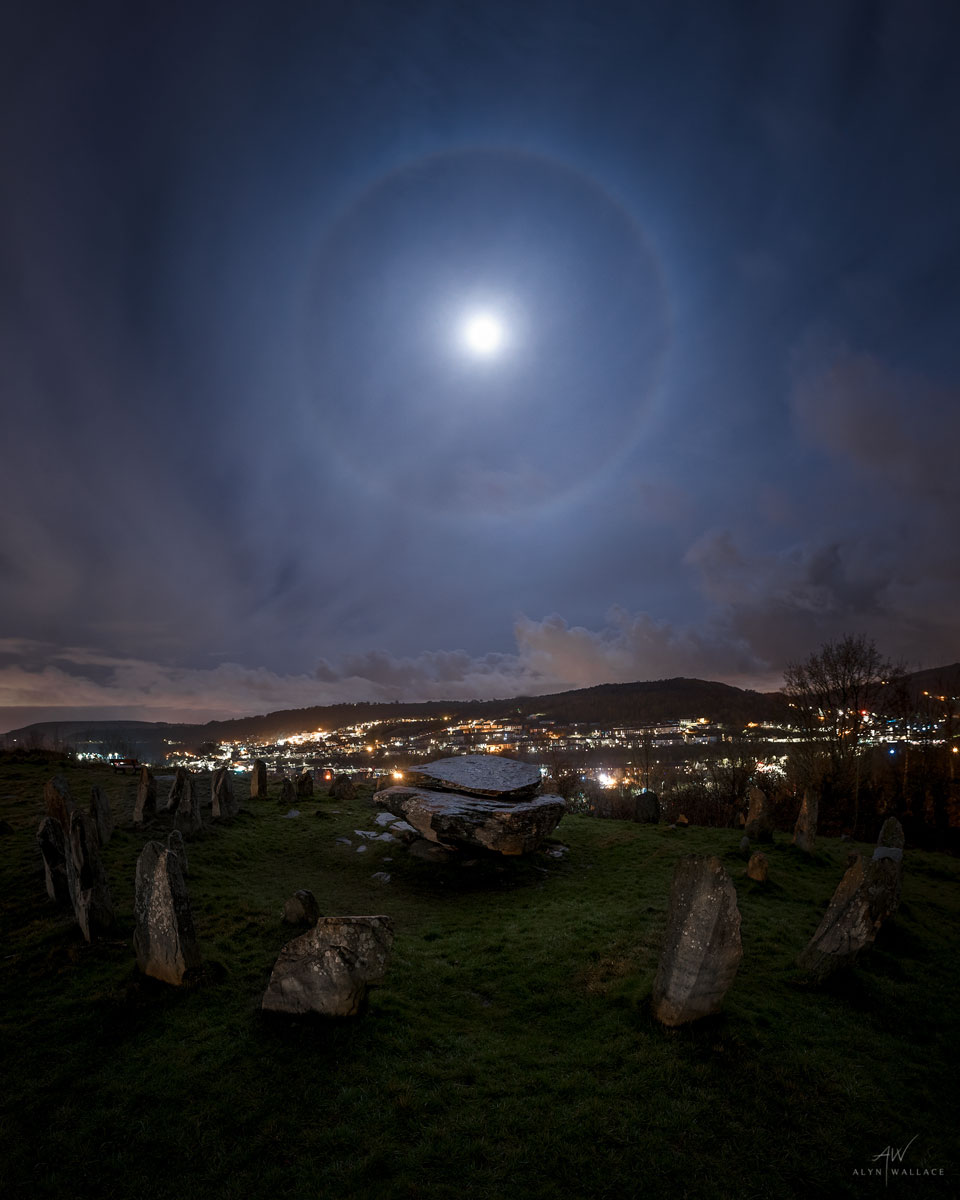
Have you ever seen a halo around the Moon? This fairly common sight occurs when high thin clouds containing millions of tiny ice crystals cover much of the sky. Each ice crystal acts like a miniature lens. Because most of the crystals have a similar elongated hexagonal shape, light entering one crystal face and exiting through the opposing face refracts 22 degrees, which corresponds to the radius of the Moon Halo. A similar Sun Halo may be visible during the day. Exactly how ice-crystals form in clouds remains under investigation. In the featured image, the ice circle in the sky is mirrored by a stone circle on the ground. Taken just over a month ago in Pontypridd Common, Wales, UK, the central Rocking Stone survives from the last ice age, while the surrounding stones in the circles were placed much more recently — during the 1800s.

from NASA https://ift.tt/2FzcDLd
via IFTTT

The Aurora and the Sunrise


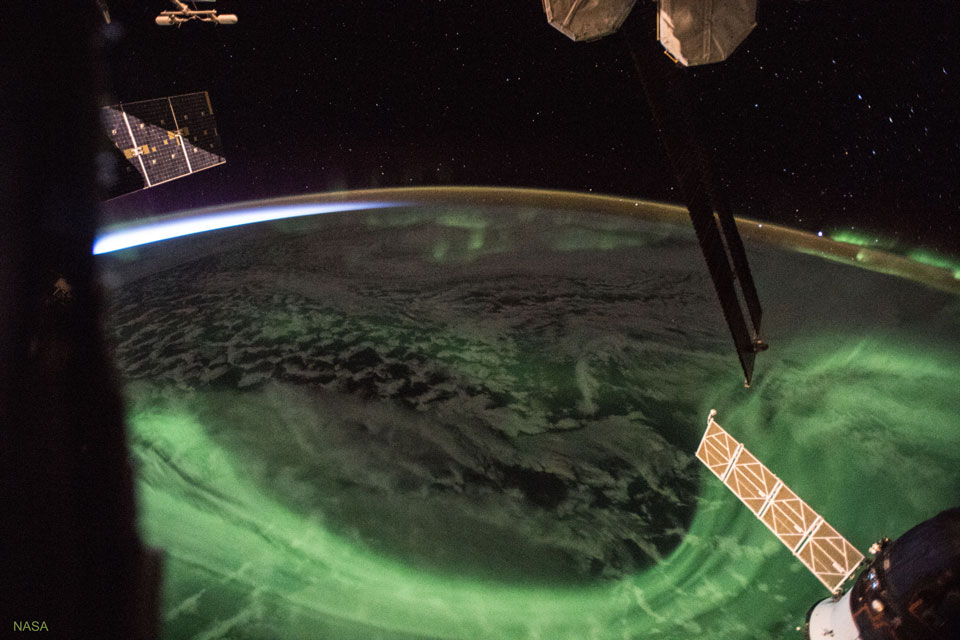
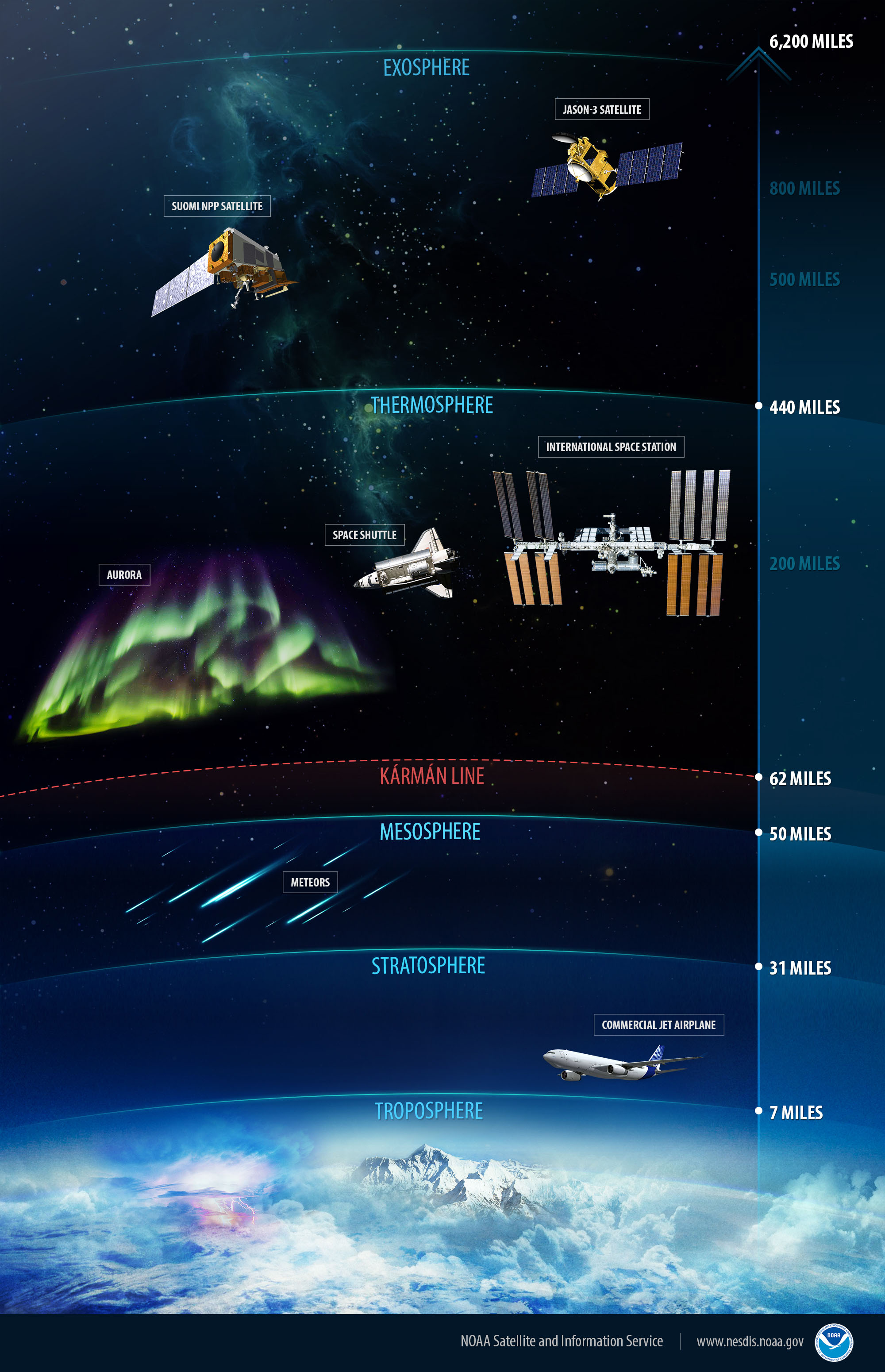
On the International Space Station (ISS), you can only admire an aurora until the sun rises. Then the background Earth becomes too bright. Unfortunately, after sunset, the rapid orbit of the ISS around the Earth means that sunrise is usually less than 47 minutes away. In the featured image, a green aurora is visible below the ISS — and on the horizon to the upper right, while sunrise approaches ominously from the upper left. Watching an aurora from space can be mesmerizing as its changing shape has been compared to a giant green amoeba. Auroras are composed of energetic electrons and protons from the Sun that impact the Earth’s magnetic field and then spiral down toward the Earth so fast that they cause atmospheric atoms and molecules to glow. The ISS orbits at nearly the same height as auroras, many times flying right through an aurora‘s thin upper layers, an event that neither harms astronauts nor changes the shape of the aurora.

from NASA https://ift.tt/2I2IGZs
via IFTTT