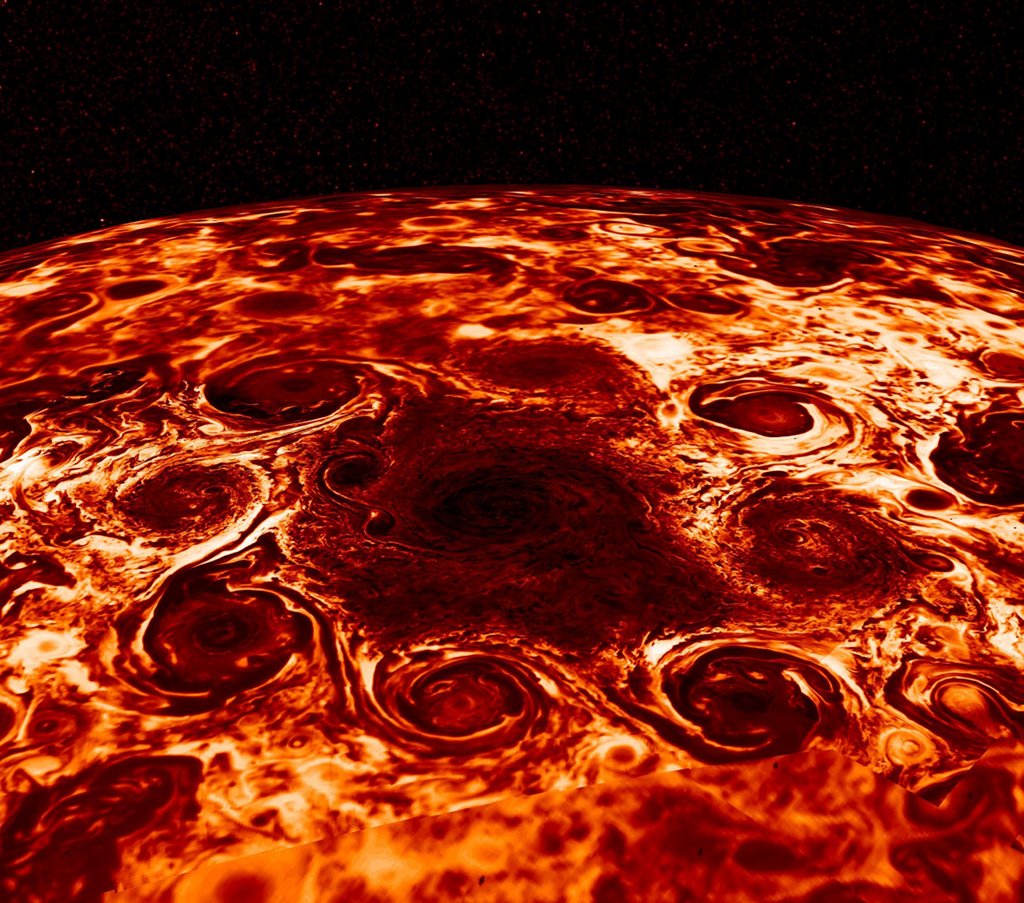
Cyclones at Jupiter s North Pole


Juno’s Jovian Infrared Auroral Mapper data was used to construct this stunning view of cyclones at Jupiter’s North Pole. Measuring the thermal emission from Jovian cloud tops, the infrared the observations are not restricted to the hemisphere illuminated by sunlight. They reveal eight cyclonic features that surround a cyclone about 4,000 kilometers in diameter, just offset from the giant planet’s geographic North Pole. Similar data show a cyclone at the Jovian South Pole with five circumpolar cyclones. The South Pole cyclones are slightly larger than their northern cousins. Cassini data has shown that gas giant Saturn’s north and south poles each have a single cyclonic storm system.

from NASA http://ift.tt/2Fq3HIN
via IFTTT
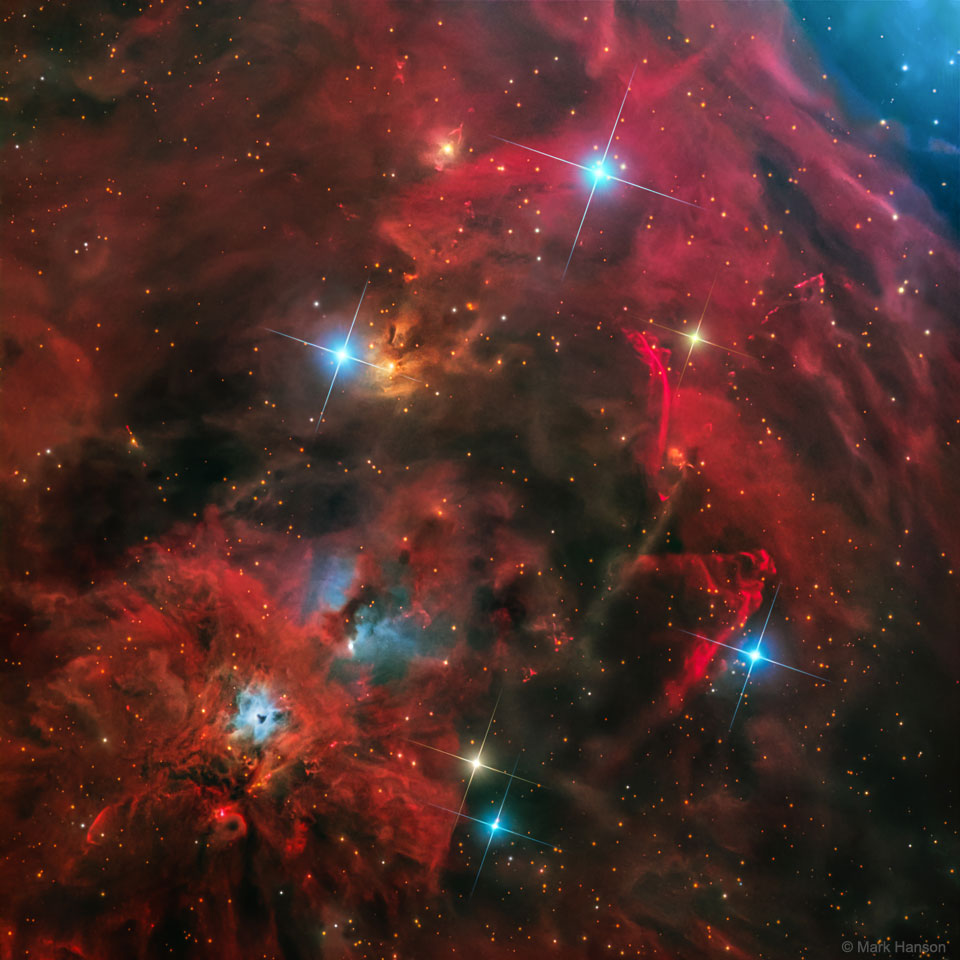
Arcs, Jets, and Shocks near NGC 1999


This tantalizing array of nebulas and stars can be found about two degrees south of the famous star-forming Orion Nebula. The region abounds with energetic young stars producing jets and outflows that push through the surrounding material at speeds of hundreds of kilometers per second. The interaction creates luminous shock waves known as Herbig-Haro (HH) objects. For example, the graceful, flowing arc just right of center is cataloged as HH 222, also called the Waterfall Nebula. Seen below the Waterfall, HH 401 has a distinctive cone shape. The bright bluish nebula below and left of center is NGC 1999, a dusty cloud reflecting light from an embedded variable star. The entire cosmic vista spans over 30 light-years, near the edge of the Orion Molecular Cloud Complex some 1,500 light-years distant.

from NASA http://ift.tt/2oPtLHf
via IFTTT

Colorful Airglow Bands Surround Milky Way


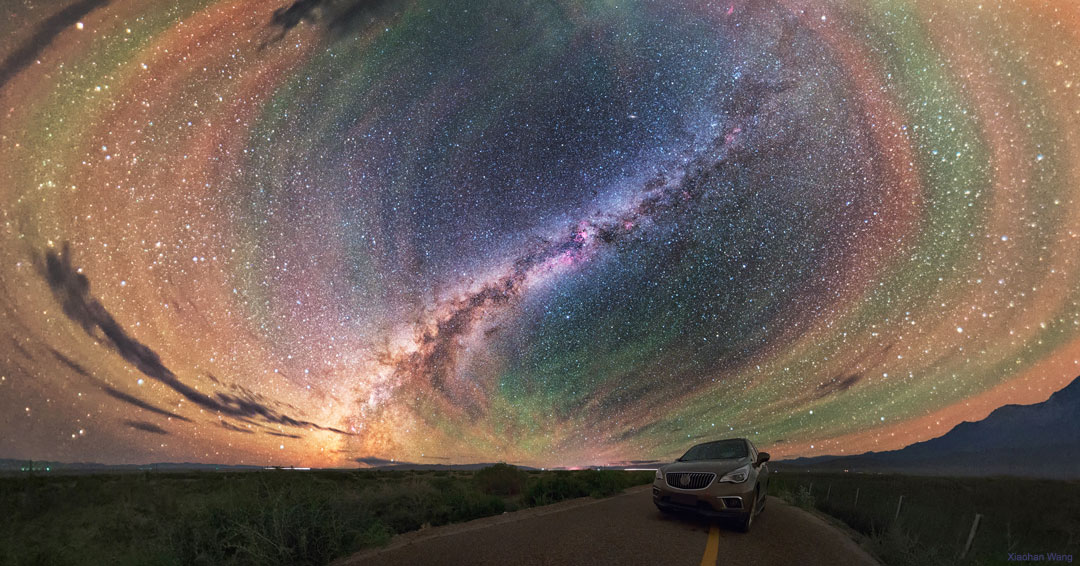
Why would the sky glow like a giant repeating rainbow? Airglow. Now air glows all of the time, but it is usually hard to see. A disturbance however — like an approaching storm — may cause noticeable rippling in the Earth’s atmosphere. These gravity waves are oscillations in air analogous to those created when a rock is thrown in calm water. Red airglow likely originates from OH molecules about 87-kilometers high, excited by ultraviolet light from the Sun, while orange and green airglow is likely caused by sodium and oxygen atoms slightly higher up. While driving near Keluke Lake in Qinghai Provence in China, the photographer originally noticed mainly the impressive central band of the Milky Way Galaxy. Stopping to photograph it, surprisingly, the resulting sensitive camera image showed airglow bands to be quite prominent and span the entire sky. The featured image has been digitally enhanced to make the colors more vibrant.

from NASA http://ift.tt/2FhJXqI
via IFTTT

Clouds, Birds, Moon, Venus


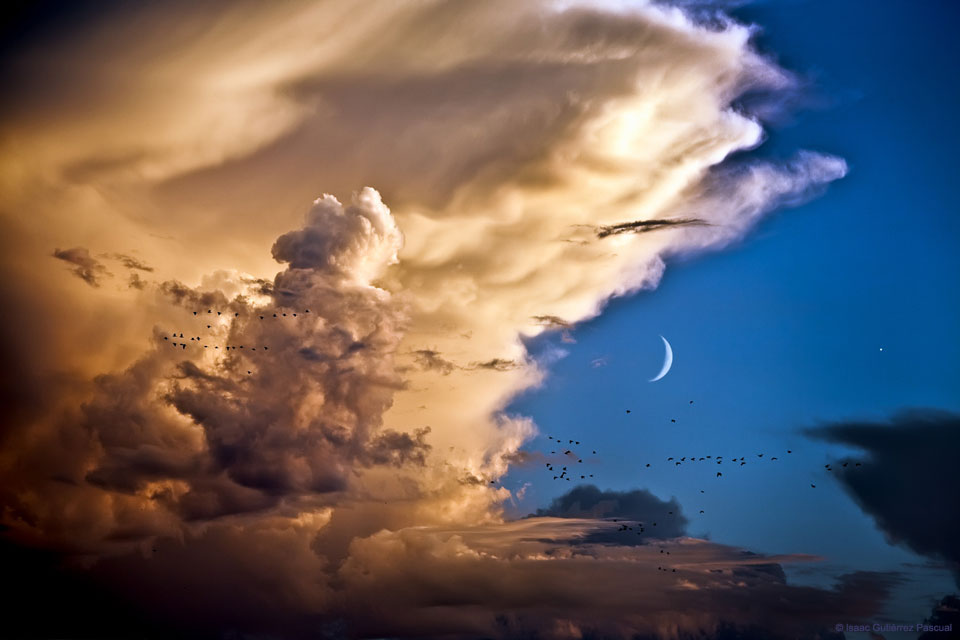
Sometimes the sky above can become quite a show. In early September of 2010, for example, the Moon and Venus converged, creating quite a sight by itself for sky enthusiasts around the globe. From some locations, though, the sky was even more picturesque. In the featured image taken in Spain, a crescent Moon and the planet Venus, on the far right, were captured during sunset posing against a deep blue sky. In the foreground, dark storm clouds loom across the image bottom, while a white anvil cloud shape appears above. Black specks dot the frame, caused by a flock of birds taking flight. Very soon after this picture was taken, however, the birds passed by, the storm ended, and Venus and the Moon set. Bright Venus is again visible just after sunset this month (2018 March) and will appear quite near Mercury tonight and the rest of this week.

from NASA http://ift.tt/2F7vb9Y
via IFTTT

Alborz Mountain Star Trails


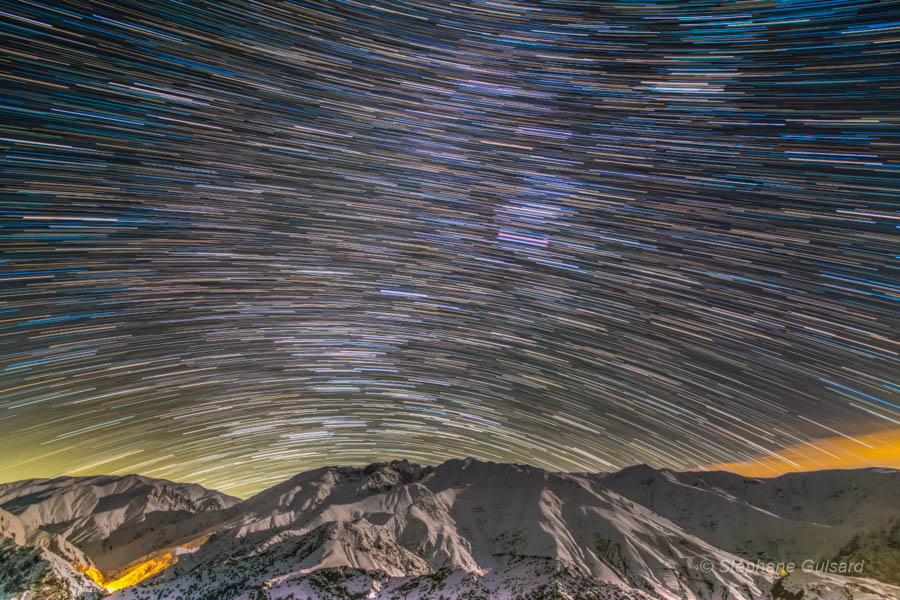
Colourful star trails arc through the night in this wide-angle mountain and skyscape. From a rotating planet, the digitally added consecutive exposures were made with a camera fixed to a tripod and looking south, over northern Iran’s Alborz Mountain range. The stars trace concentric arcs around the planet’s south celestial pole, below the scene’s rugged horizon. Combined, the many short exposures also bring out the pretty star colours. Bluish trails are from stars hotter than our Sun, while yellowish trails are from cooler stars. Near the center, the remarkably pinkish trail was traced by the star-forming Orion Nebula.

from NASA http://ift.tt/2oHRyrC
via IFTTT

The Lunar X


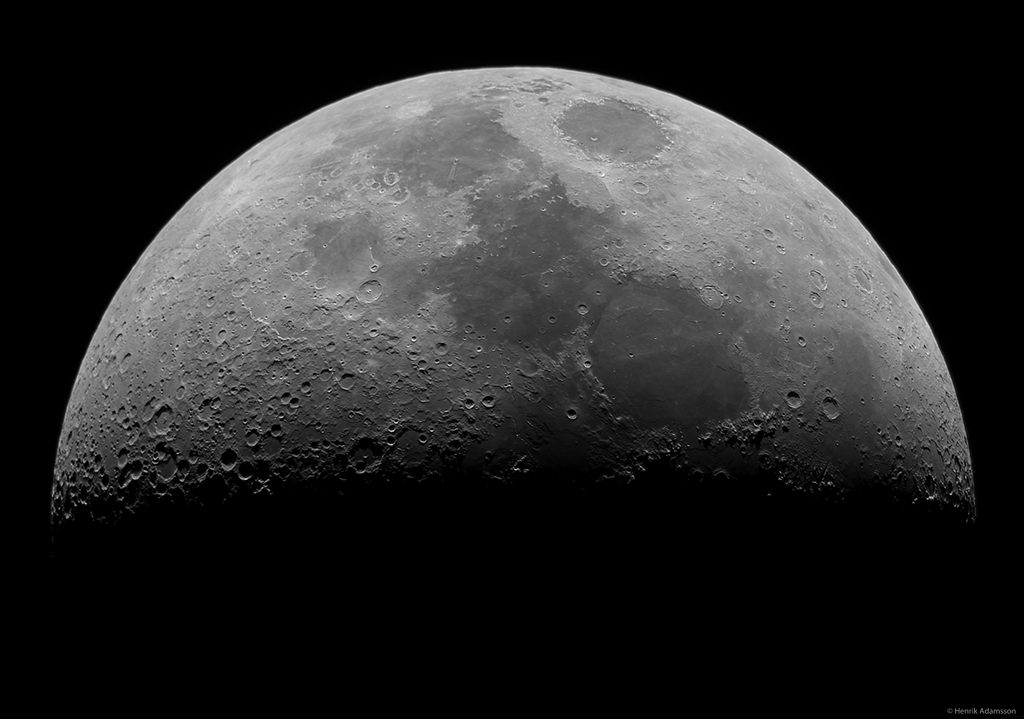
The striking X in this lunarscape is easily visible in binoculars or a small telescope, but not too many have seen it. The catch is, this lunar X is fleeting and only apparent in the hours before the Moon’s first quarter phase. Along the shadow line between lunar day and night, the X illusion is produced by a configuration of craters seen here toward the left, Blanchinus, La Caille and Purbach. Near the Moon’s first quarter phase, an astronaut standing close to the craters’ position would see the slowly rising Sun very near the horizon. Temporarily, crater walls would be in sunlight while crater floors would still be in darkness. Seen from planet Earth, contrasting sections of bright walls against the dark floors by chance look remarkably like an X. This sharp image of the Lunar X was captured on February 22nd. For extra credit, sweep your gaze along the lunar terminator and you can also spot the Lunar V.

from NASA http://ift.tt/2HSh71Q
via IFTTT