Enceladus in Silhouette


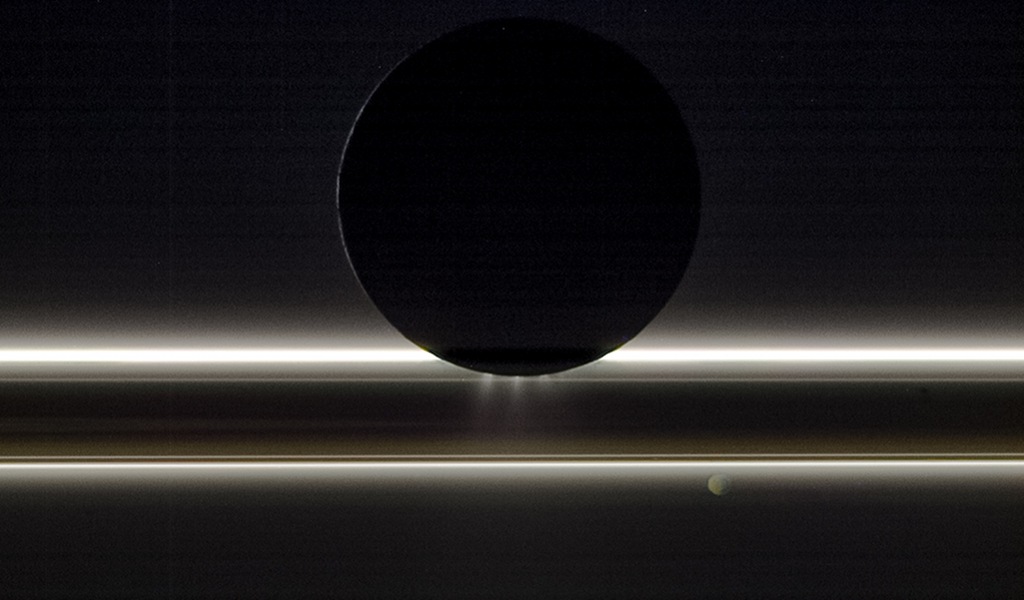
One of our Solar System’s most tantalizing worlds, Enceladus is backlit by the Sun in this Cassini spacecraft image from November 1, 2009. The dramatic illumination reveals the plumes that continuously spew into space from the south pole of Saturn’s 500 kilometer diameter moon. Discovered by Cassini in 2005, the icy plumes are likely connected to an ocean beneath the ice shell of Enceladus. They supply material directly to Saturn’s outer, tenuous E ring and make the surface of Enceladus as reflective as snow. Across the scene, Saturn’s icy rings scatter sunlight toward Cassini’s cameras. Beyond the rings, the night side of 80 kilometer diameter moon Pandora is faintly lit by Saturnlight.

from NASA http://ift.tt/2EsEHEh
via IFTTT
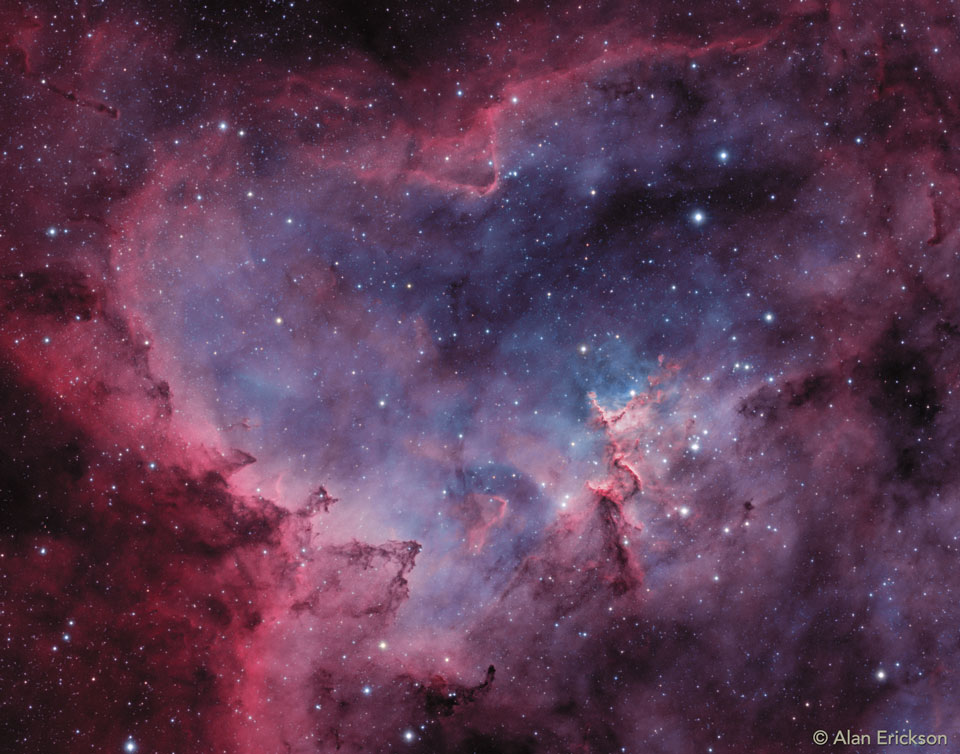
In the Heart of the Heart Nebula


What’s that inside the Heart Nebula? First, the large emission nebula dubbed IC 1805 looks, in whole, like a human heart. It’s shape perhaps fitting of the Valentine’s Day, this heart glows brightly in red light emitted by its most prominent element: hydrogen. The red glow and the larger shape are all created by a small group of stars near the nebula’s center. In the heart of the Heart Nebula are young stars from the open star cluster Melotte 15 that are eroding away several picturesque dust pillars with their energetic light and winds. The open cluster of stars contains a few bright stars nearly 50 times the mass of our Sun, many dim stars only a fraction of the mass of our Sun, and an absent microquasar that was expelled millions of years ago. The Heart Nebula is located about 7,500 light years away toward the constellation of the mythological Queen of Aethiopia (Cassiopeia).

from NASA http://ift.tt/2svXcCi
via IFTTT

Car Orbiting Earth


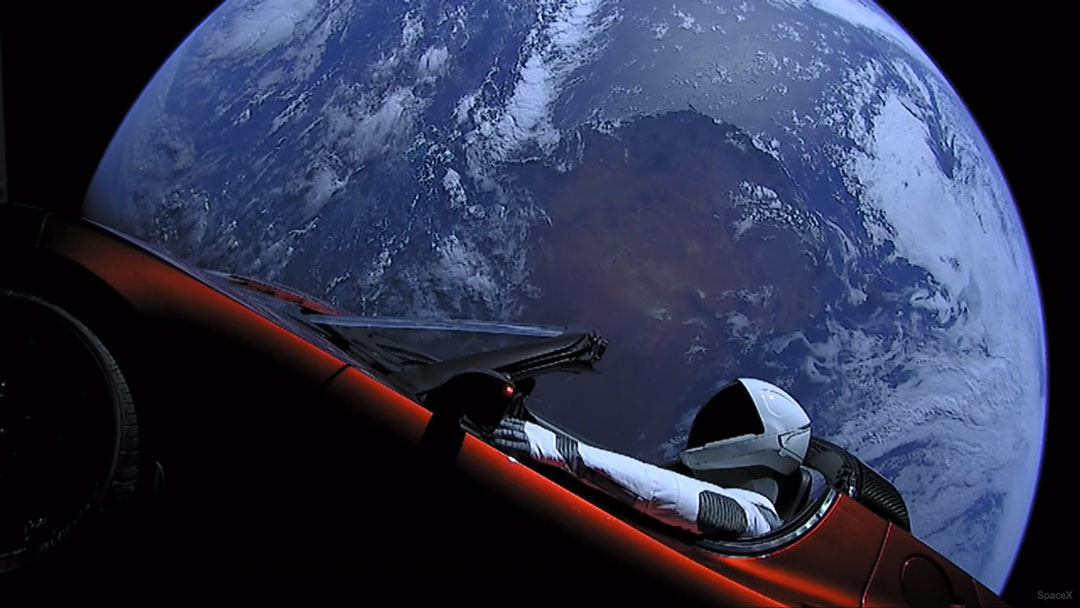
Last week, a car orbited the Earth. The car, created by humans and robots on the Earth, was launched by the SpaceX Company to demonstrate the ability of its Falcon Heavy Rocket to place spacecraft out in the Solar System. Purposely fashioned to be whimsical, the iconic car was thought a better demonstration object than concrete blocks. A mannequin clad in a spacesuit — dubbed the Starman — sits in the driver’s seat. The featured image is a frame from a video taken by one of three cameras mounted on the car. These cameras, connected to the car’s battery, are now out of power. The car, attached to a second stage booster, soon left Earth orbit and will orbit the Sun between Earth and the asteroid belt indefinitely — perhaps until billions of years from now when our Sun expands into a Red Giant. If ever recovered, what’s left of the car may become a unique window into technologies developed on Earth in the 20th and early 21st centuries.

from NASA http://ift.tt/2svyHoU
via IFTTT

A Partial Eclipse Over Manila Bay


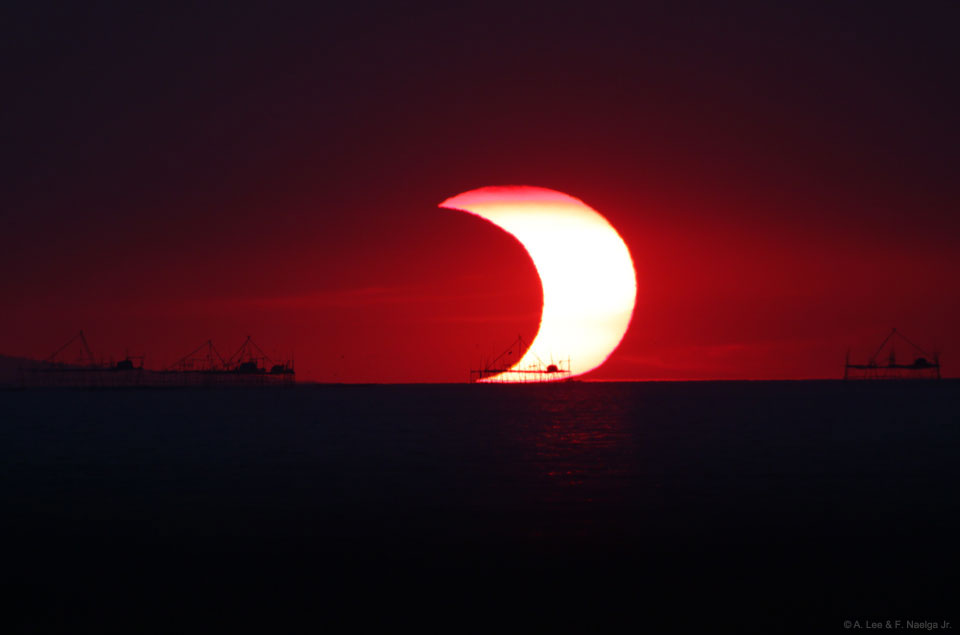
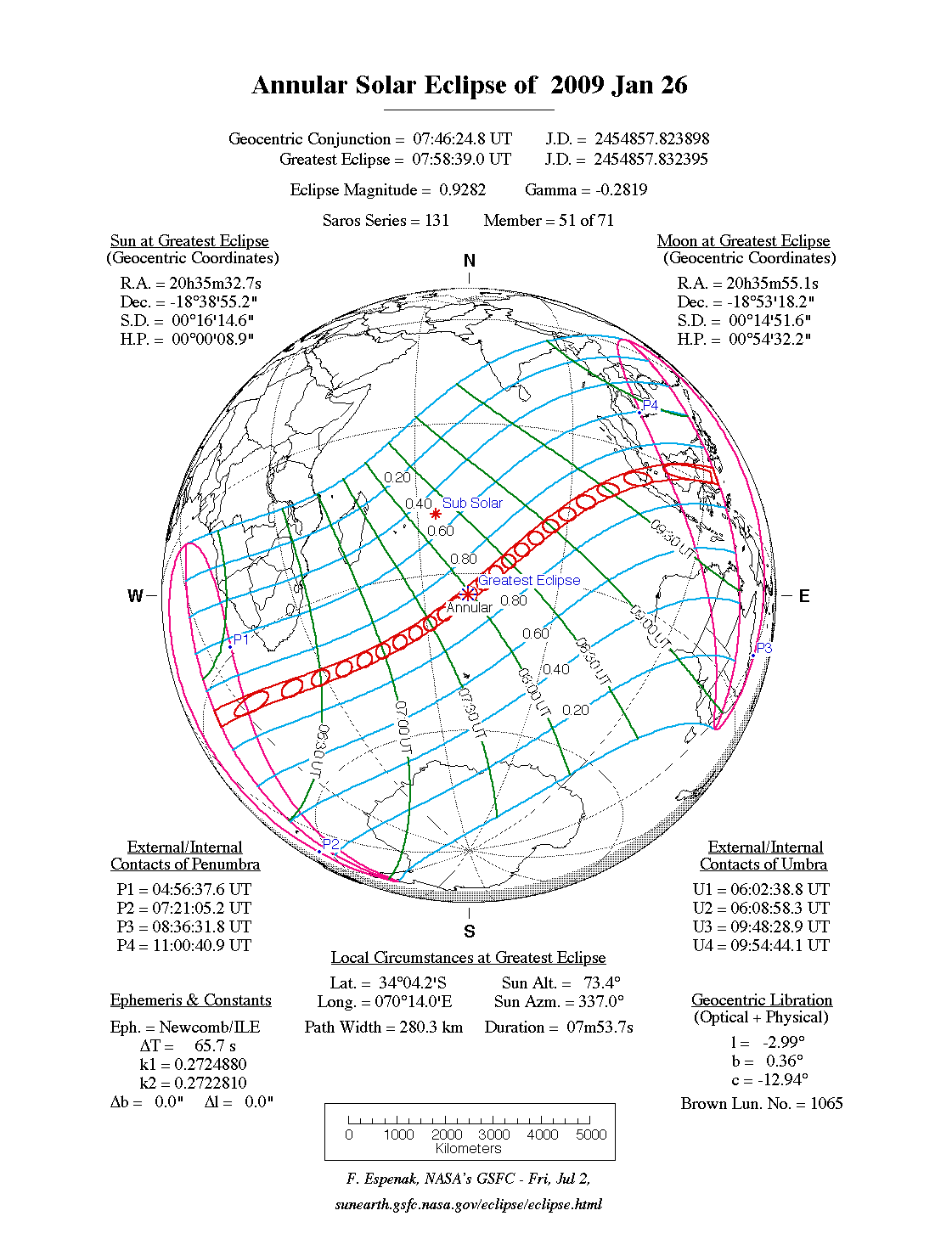
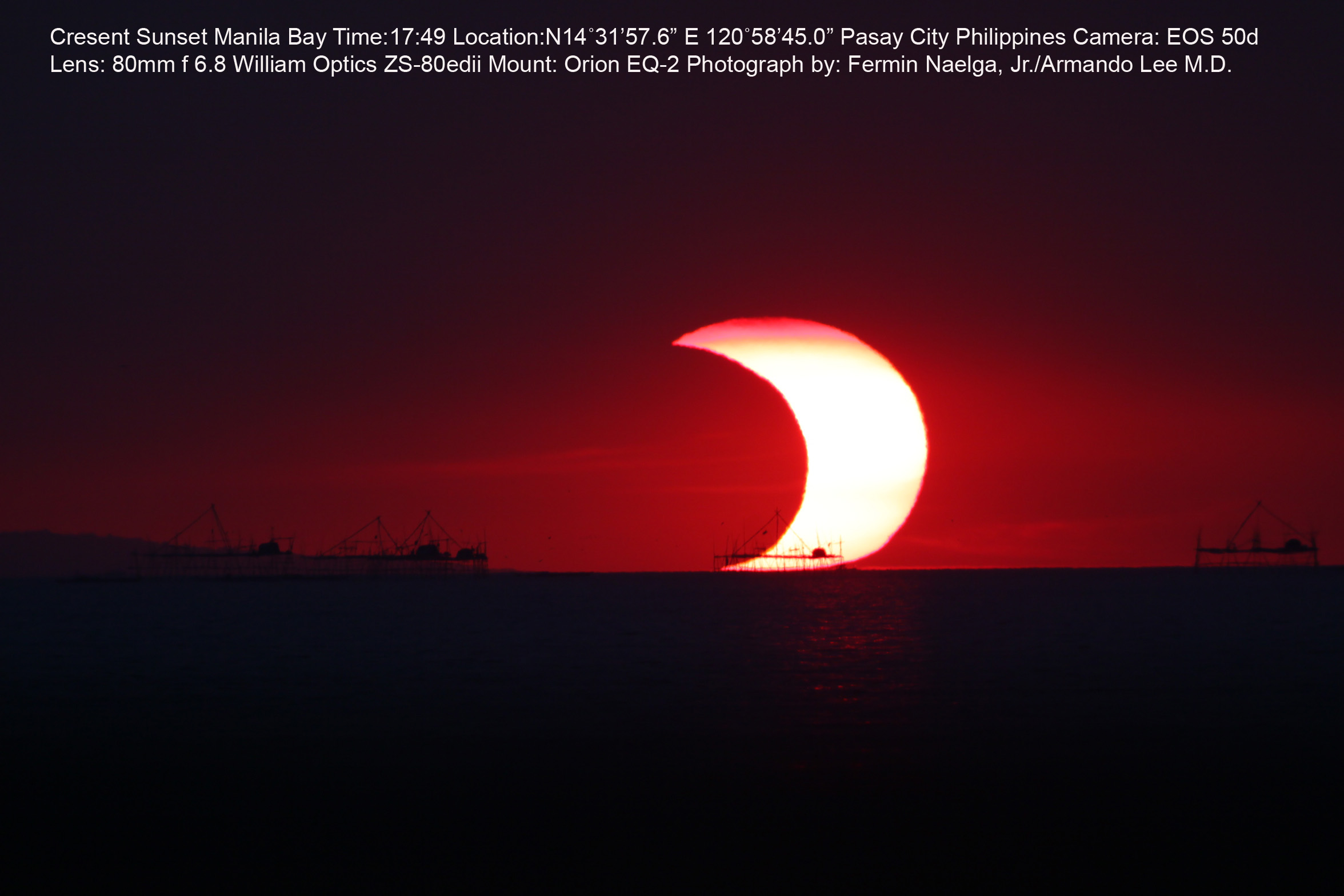
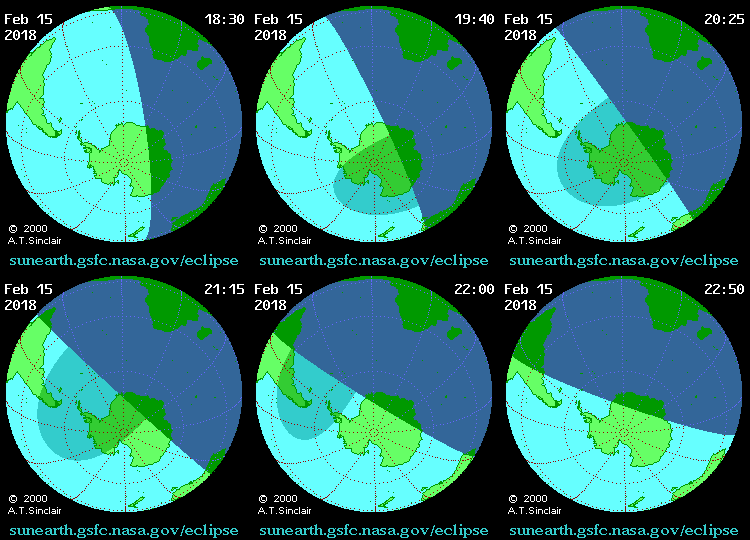
What’s happened to the setting Sun? An eclipse! In early 2009, the Moon eclipsed part of the Sun as visible from parts of Africa, Australia, and Asia. In particular the featured image, taken from the Mall of Asia seawall, caught a partially eclipsed Sun setting over Manila Bay in the Philippines. Piers are visible in silhouette in the foreground. Eclipse chasers and well placed sky enthusiasts captured many other interesting and artistic images of the year’s only annular solar eclipse, including movies, eclipse shadow arrays, and rings of fire. On Thursday parts of the Sun again will become briefly blocked by the Moon, again visible to some as a partial eclipse of the Sun. Thursday’s eclipse, however, will only be visible from parts of southern South America and Antarctica.

from NASA http://ift.tt/2Ei6EKV
via IFTTT

Roadster, Starman, Planet Earth


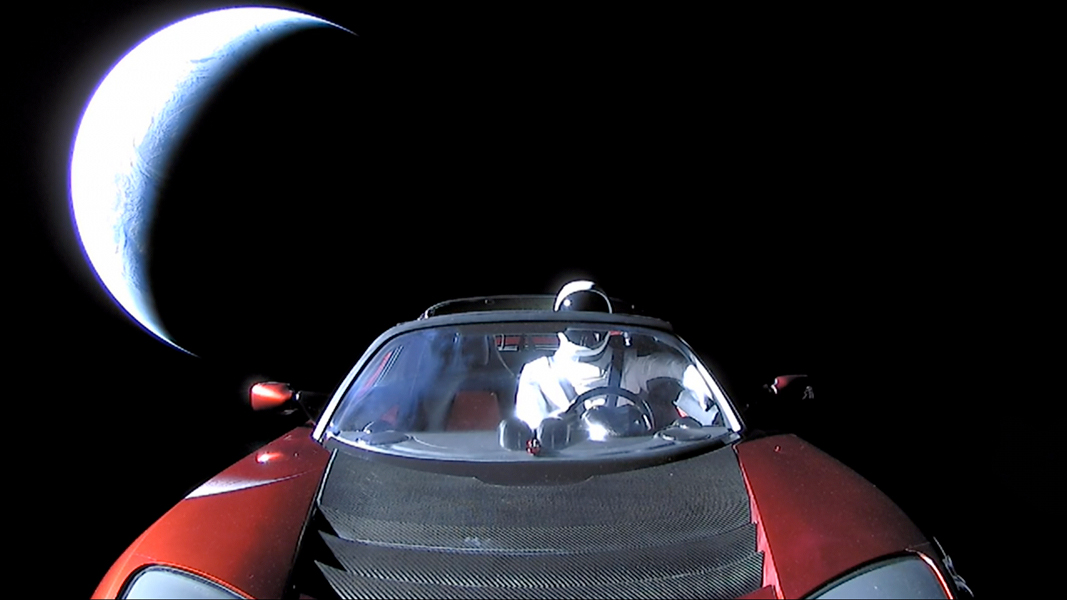
Don’t panic. It’s just a spacesuited mannequin named Starman. As the sunlit crescent of planet Earth recedes in the background, Starman is comfortably seated at the wheel of a Tesla Roadster in this final image of the payload launched by a Falcon Heavy rocket on February 6. Internationally designated 2018-017A, roadster and Starman are headed for space beyond the orbit of Mars. The successful Falcon Heavy rocket has now become the most powerful rocket in operation and the roadster one of four electric cars launched from planet Earth. The other three were launched to the Moon by historically more powerful (but not reusable) Saturn V rockets. Still, Starman’s roadster is probably the only one that would be considered street legal.

from NASA http://ift.tt/2C9n06N
via IFTTT

Bow Tie Moon and Star Trails


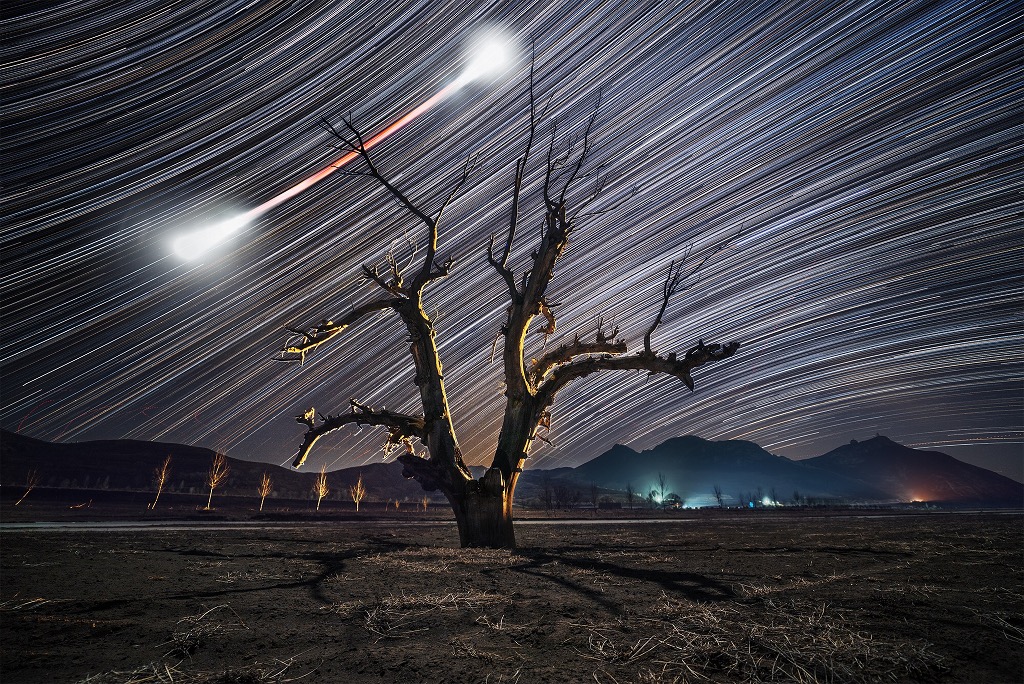
On January 31, a leisurely lunar eclipse was enjoyed from all over the night side of planet Earth, the first of three consecutive total eclipses of the Moon. This dramatic time-lapse image followed the celestial performance for over three hours in a combined series of exposures from Hebei Province in Northern China. Fixed to a tripod, the camera records the Full Moon sliding through a clear night sky. Too bright just before and after the eclipse, the Moon’s bow tie-shaped trail grows narrow and red during the darker total eclipse phase that lasted an hour and 16 minutes. In the distant background are the colorful trails of stars in concentric arcs above and below the celestial equator.

from NASA http://ift.tt/2nMd7aI
via IFTTT

NGC 7331 Close Up


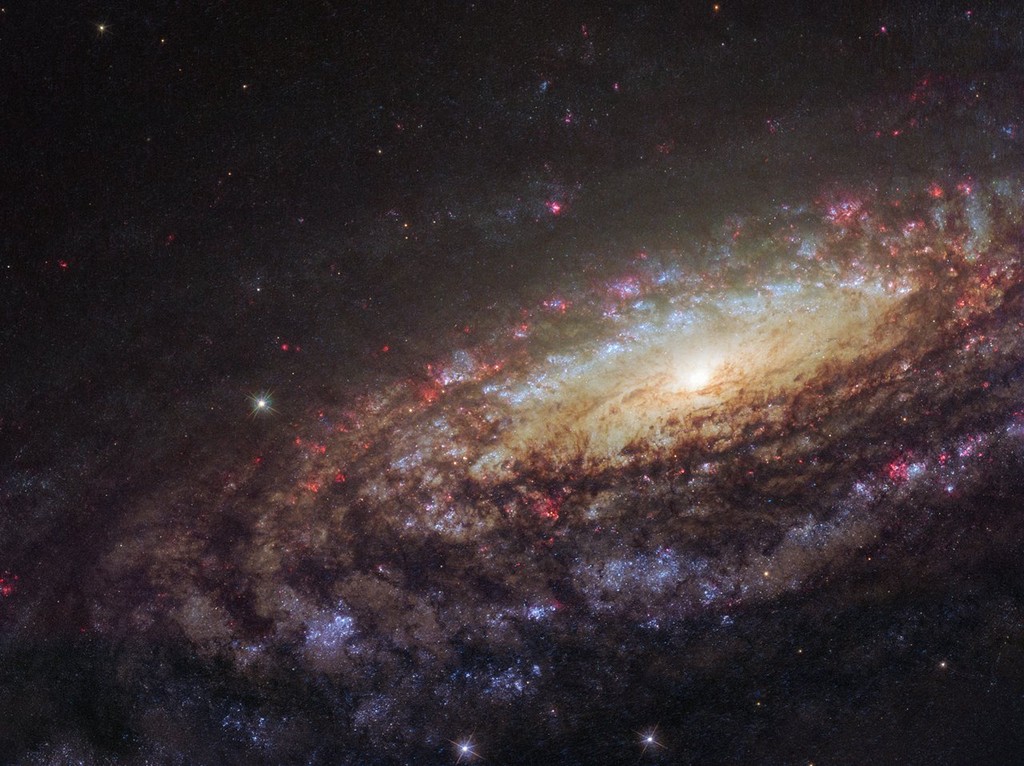
Big, beautiful spiral galaxy NGC 7331 is often touted as an analog to our own Milky Way. About 50 million light-years distant in the northern constellation Pegasus, NGC 7331 was recognized early on as a spiral nebula and is actually one of the brighter galaxies not included in Charles Messier’s famous 18th century catalog. Since the galaxy’s disk is inclined to our line-of-sight, long telescopic exposures often result in an image that evokes a strong sense of depth. In this Hubble Space Telescope close-up, the galaxy’s magnificent spiral arms feature dark obscuring dust lanes, bright bluish clusters of massive young stars, and the telltale reddish glow of active star forming regions. The bright yellowish central regions harbor populations of older, cooler stars. Like the Milky Way, a supermassive black hole lies at the core of of spiral galaxy NGC 7331.

from NASA http://ift.tt/2nSqeqm
via IFTTT

Galaxy NGC 474: Shells and Star Streams


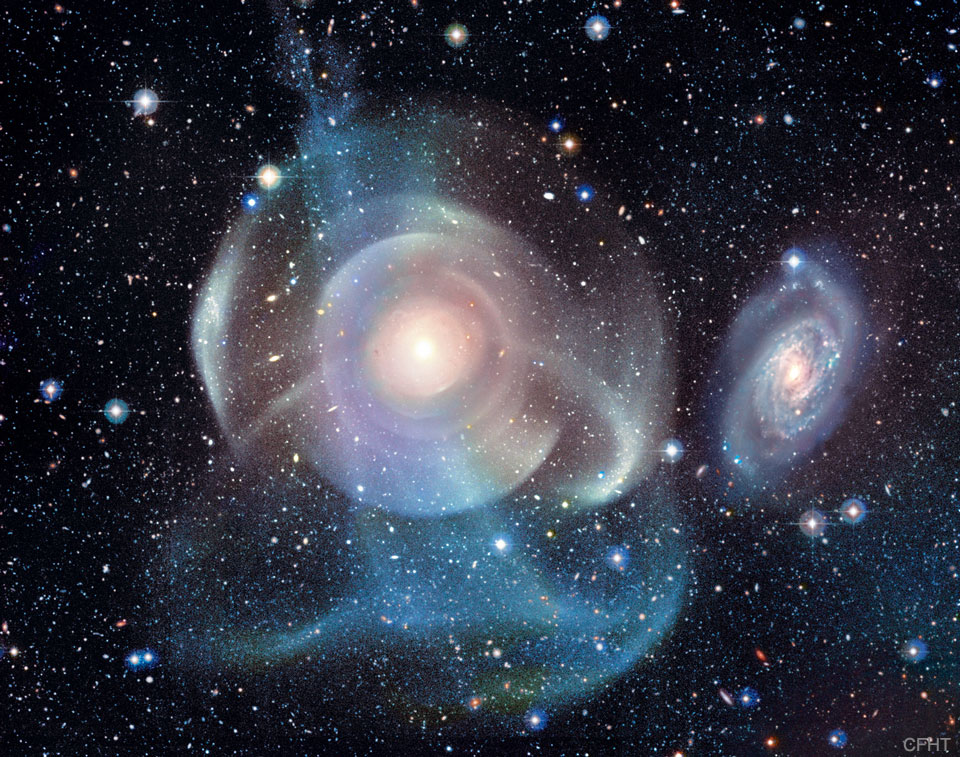
What’s happening to galaxy NGC 474? The multiple layers of emission appear strangely complex and unexpected given the relatively featureless appearance of the elliptical galaxy in less deep images. The cause of the shells is currently unknown, but possibly tidal tails related to debris left over from absorbing numerous small galaxies in the past billion years. Alternatively the shells may be like ripples in a pond, where the ongoing collision with the spiral galaxy just above NGC 474 is causing density waves to ripple through the galactic giant. Regardless of the actual cause, the featured image dramatically highlights the increasing consensus that at least some elliptical galaxies have formed in the recent past, and that the outer halos of most large galaxies are not really smooth but have complexities induced by frequent interactions with — and accretions of — smaller nearby galaxies. The halo of our own Milky Way Galaxy is one example of such unexpected complexity. NGC 474 spans about 250,000 light years and lies about 100 million light years distant toward the constellation of the Fish (Pisces).

from NASA http://ift.tt/2E2NEQx
via IFTTT

Venus and the Triply Ultraviolet Sun


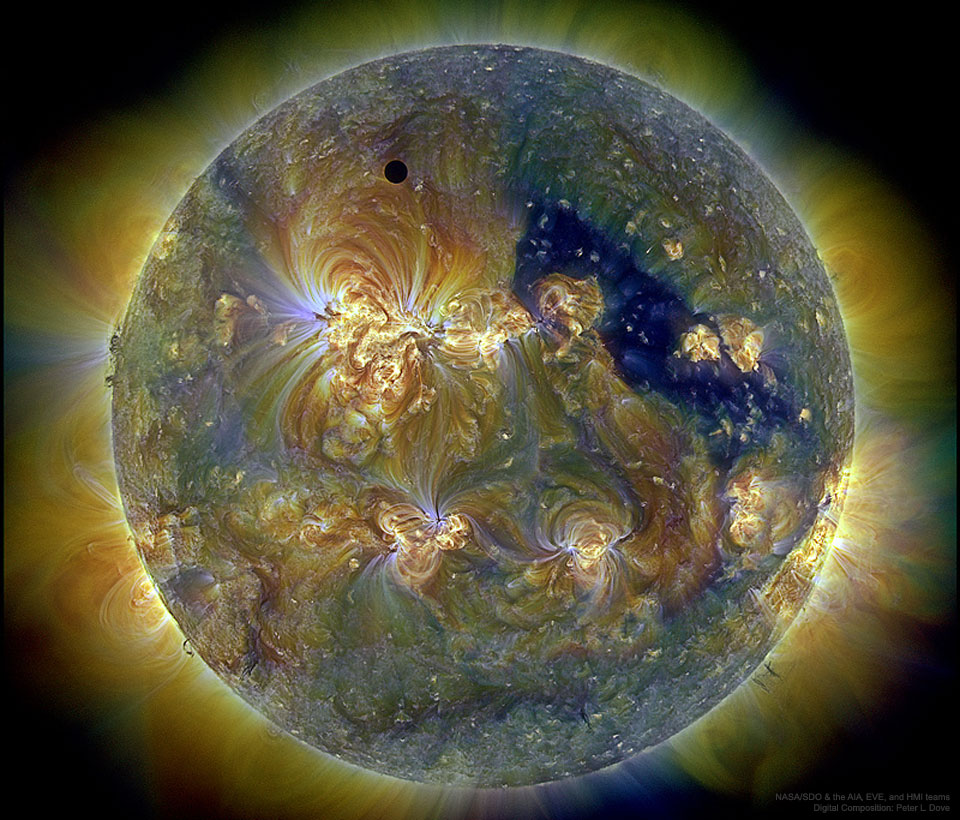
An unusual type of solar eclipse occurred in 2012. Usually it is the Earth’s Moon that eclipses the Sun. That year, most unusually, the planet Venus took a turn. Like a solar eclipse by the Moon, the phase of Venus became a continually thinner crescent as Venus became increasingly better aligned with the Sun. Eventually the alignment became perfect and the phase of Venus dropped to zero. The dark spot of Venus crossed our parent star. The situation could technically be labeled a Venusian annular eclipse with an extraordinarily large ring of fire. Pictured here during the occultation, the Sun was imaged in three colors of ultraviolet light by the Earth-orbiting Solar Dynamics Observatory, with the dark region toward the right corresponding to a coronal hole. Hours later, as Venus continued in its orbit, a slight crescent phase appeared again. The next Venusian transit across the Sun will occur in 2117.

from NASA http://ift.tt/2s6x54v
via IFTTT

Earthshadow and the Beehive


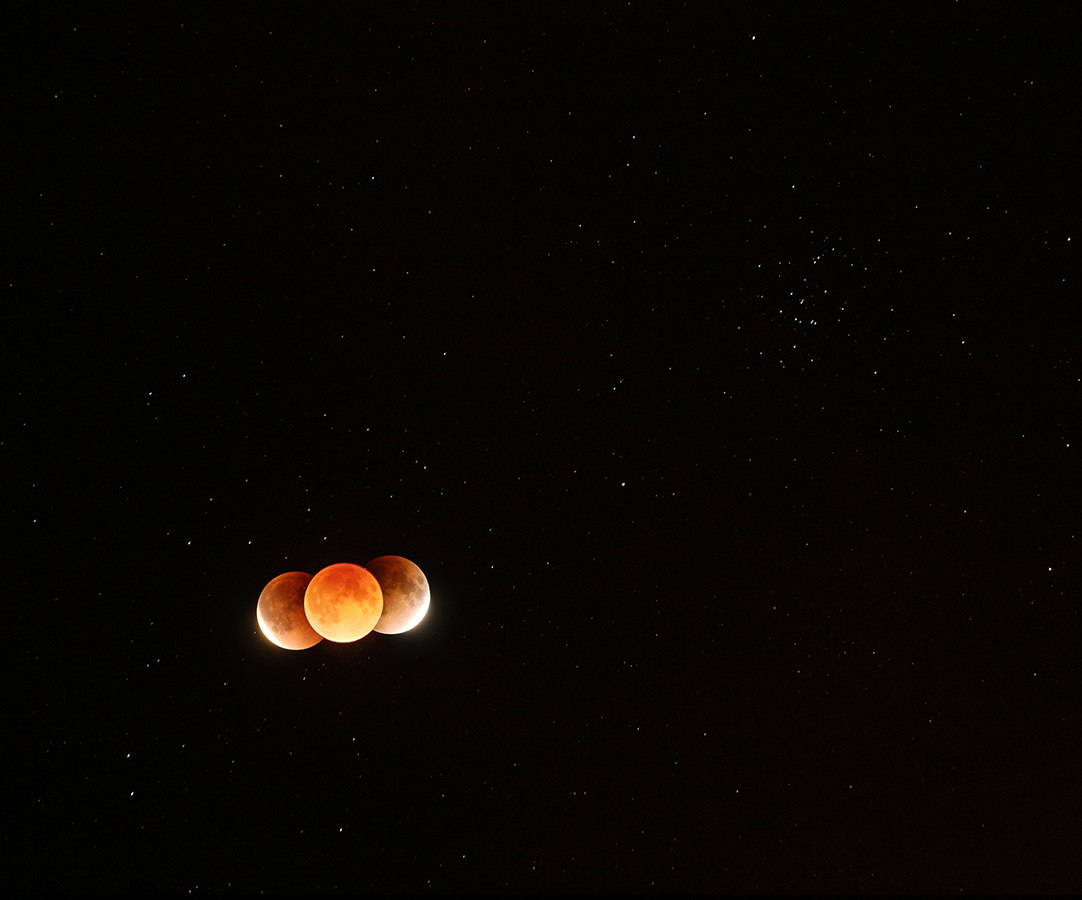
The Earth’s dark umbral shadow is shaped like a cone extending into space. Of course its circular cross section at the distance of the Moon is more easily seen during a lunar eclipse. In fact, in this composite telephoto image from Earth’s night side on January 31, the Earth’s shadow has taken on a reddish tinge. The extent of the shadow along the lunar orbit is illustrated by aligning three frames taken just before the start, near the middle of, and just after the end of the total eclipse phase that lasted about 76 minutes. At the upper right and more easily seen during the eclipse’s darker total phase is M44, one of the closest large star clusters. A mere 600 light-years away, M44 is also known as the Praesepe or the Beehive Cluster.

from NASA http://ift.tt/2BRYrLl
via IFTTT